‘Dvořák & Korngold’ @ Dallas Symphony Orchestra

—Wayne Lee Gay
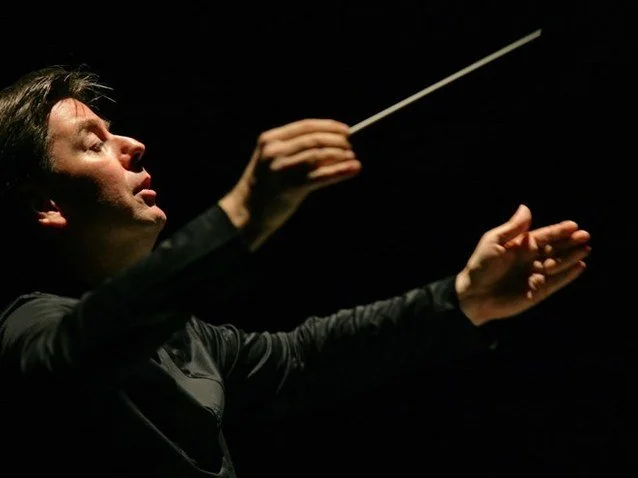
The Dallas Symphony Orchestra closes its 2025-26 season this weekend with a program devoted, under the baton of German guest conductor Sebastian Weigle, to nineteenth-century romanticism and twentieth-century neo-romanticism.
Austrian-born Erich Wolfgang Korngold began his career in the early years of the twentieth century as the "new Mozart." (His middle name indicates his parents' ambitions for him.) Substantially successful even as a teenager, he settled in the U.S. after the Nazi takeover of Austria, and turned his formidable talents to writing film scores, creating the opulent symphonic backdrop for the on-screen adventures of Errol Flynn, Olivia de Havilland, Bette Davis, and other Hollywood stars in blockbusters of the 1930s and 1940s. With fame and fortune secured, he returned to his intended vocation of "serious" composer in the classical sense to create two of the works on this weekend's agenda.
The opening item on the agenda, Straussiana, is Korngold's fond arrangement from 1953 of a polka, a mazurka, and a waltz of Johann Strauss, Jr. The nine-minute set shows off Korngold's remarkable skill as an orchestrator, creating an aura of sugary sweetness—or, possibly, musical decadence. The result, while hardly profound, is at least intriguing.
Next, Spanish violinist María Dueñas joins conductor Weigle for Korngold's Violin Concerto of 1947. The dramatic flavor of Korngold's film music is clearly evident here; indeed, he borrowed tunes and gestures from four of those scores.
The same sense of darkness, romance, and adventure that enlivened Korngold's movie music very successfully fits into a classic concerto structure. However, violinist Dueñas unfortunately offers a weak, almost anemic tone, barely rising above the orchestra even in the most intense passages. Her articulation is flawless, but her timbre is unremarkable.
That said, Friday's opening night audience responded enthusiastically to Dueñas’ performance, whereupon she joined DSO principal harp Emily Levin for a showy, effective (and unidentified) encore.
Conductor Weigle and the orchestra return after intermission for Dvorak's Symphony No. 7 in D minor, a work which, properly handled, can create nearly as much emotional intensity as that composer's more famous Ninth Symphony ("New World"). As in many of Dvorak's larger works, one can sense the presence of a good, kind human being who also happens to be a skilled musical craftsman and inspired creative spirit—but under Weigle, the sense of drama and conflict is minimal.
There are many built-in moments of lyricism and Slavic passion here, and the musicians in the orchestra perform with astute expertise. But the overall effect never rises above solid competence in terms of artistic interpretation on the part of the conductor, most noticeably in the journey toward D major in the final movement. As in the case of the Korngold Concerto, the Friday night audience clearly had more fun than I did, and responded with an enthusiastic, extended ovation.
WHEN: Saturday, May 30, 2026
WHERE: Meyerson Symphony Center, Dallas Arts District
WEB: dallassymphony.org