—Wayne Lee Gay
In the 1920s and 1930s, midway between the twin catastrophes of World Wars I and II, French culture, freshened up with American jazz and an infusion of American expatriates, exploded in cosmopolitan creativity.
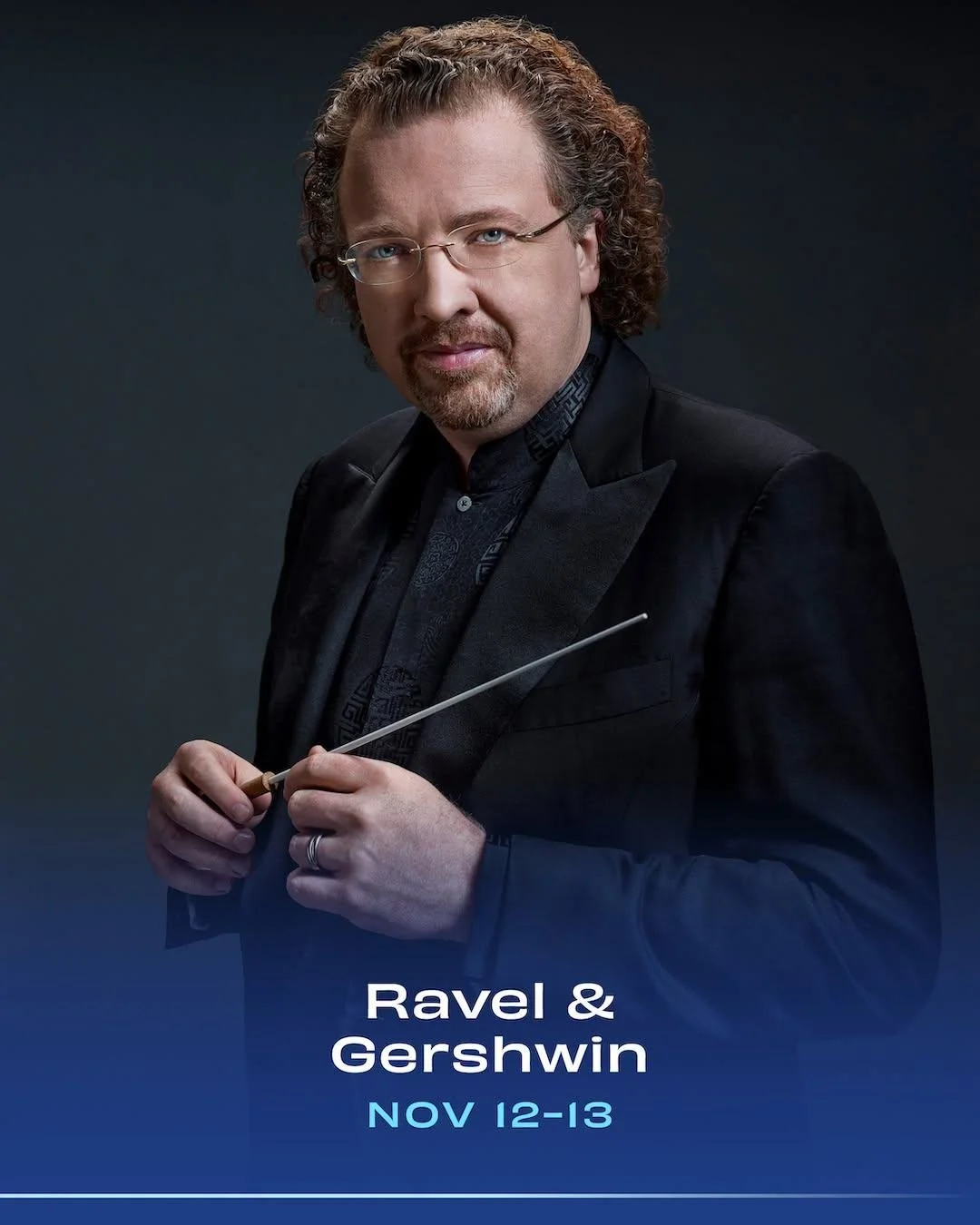
On Thursday and Friday evenings, the Dallas Symphony Orchestra joined French guest conductor Stéphane Denève and French pianist Cédric Tiberghien to explore a generous menu of French and American music from that period.
The agenda opened with its least familiar item, a Suite by Albert Roussel derived from that French composer's ballet Bacchus et Ariane of 1931. While the eight brief movements are naturally disjunct in character, they are unified by brilliant—and characteristically French—orchestral colors, with pleasant pastoral sections building toward an exciting climax, all ably handled by conductor Denève.
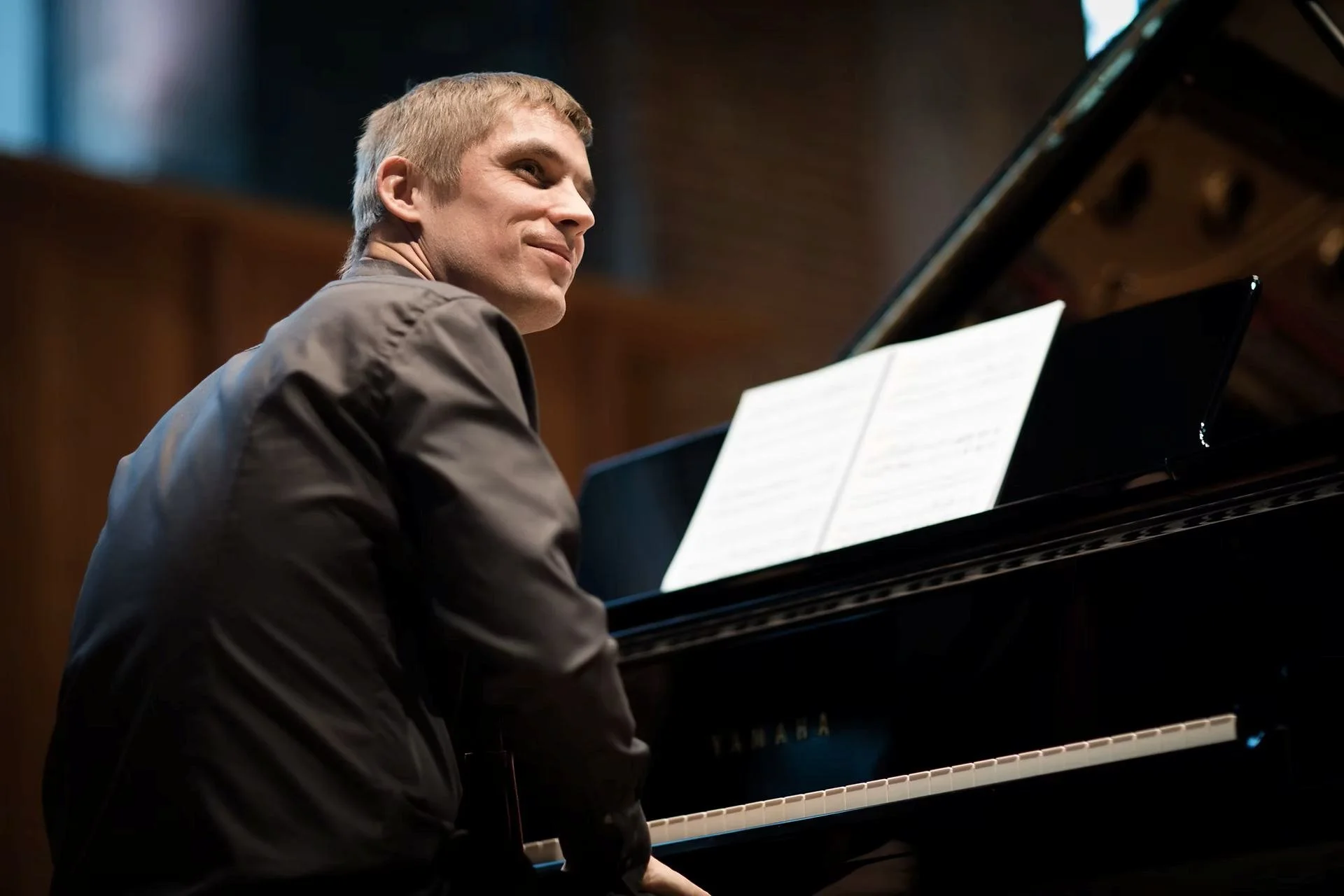
Pianist Tiberghien came onstage for another work from 1931, Ravel's Piano Concerto for the Left Hand. Austrian pianist Paul Wittgenstein, who lost his right arm in World War I, thereafter commissioned a number of composers to write large-scale works for left hand alone. Ravel's Concerto is undoubtedly the greatest of these: after a deliberately shadowy orchestral introduction, the piano enters with a volcanic eruption out of the lowest note on the piano. Pianist Tiberghien, while conquering the extreme technical difficulties of the score, joined conductor Denève and the orchestra to capture the grandeur and heroic undertones of a score that encapsulates, along with moments of Gallic brilliance, the tragedies and triumphs of the first half of the twentieth century.
At Friday night's performance, pianist Tiberghien rewarded a cheering audience with, as his encore, Debussy's Prelude "La cathédrale engloutie" ("The Sunken Cathedral"), which ranges from grand fortissimo chimes to almost inaudible (but still breathtaking) pianissimo.
Jazz as a very subtle influence infiltrates the music of Roussel and Ravel, but full-blown jazz broke out in the works of the program’s second half. The full DSO was reduced to an orchestra of eighteen—approximating the size adn makeup of jazz orchestras of the 1920s—for Darius Milhaud's La Création du mônde ("The Creation of the World"). Here, cheerful jazz rhythms emerge from a primordial sludge in what was surely, in 1923, a shocking re-thinking of Creation narratives. Under conductor Denève, principals of the Dallas Symphony became, momentarily, club musicians of the Jazz Age.
The full orchestra returned for the finale of the evening, Gershwin's evergreen An American in Paris of 1928. Denève uncovered numerous hidden inner melodies and subtleties while preserving the grand sweep of this fundamental masterpiece of twentieth-century American music—and bringing a superbly planned, beautifully executed concert to a close.
WHEN: November 12 and 13, 2026
WHERE: Meyerson Symphony Center, Dallas
WEB: dallassymphony.org