7 Plays, One Day: South Asian Theatre Festival
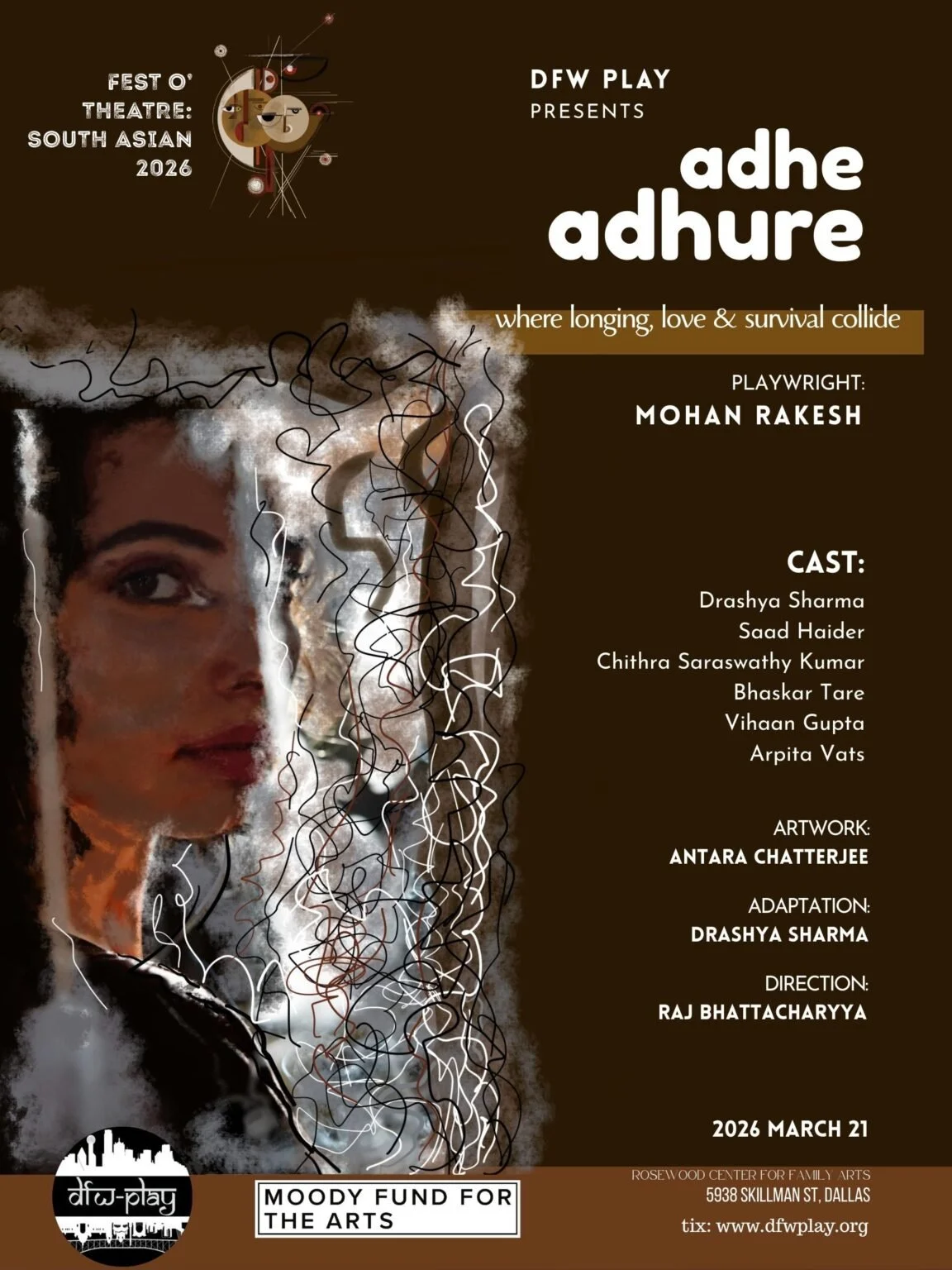
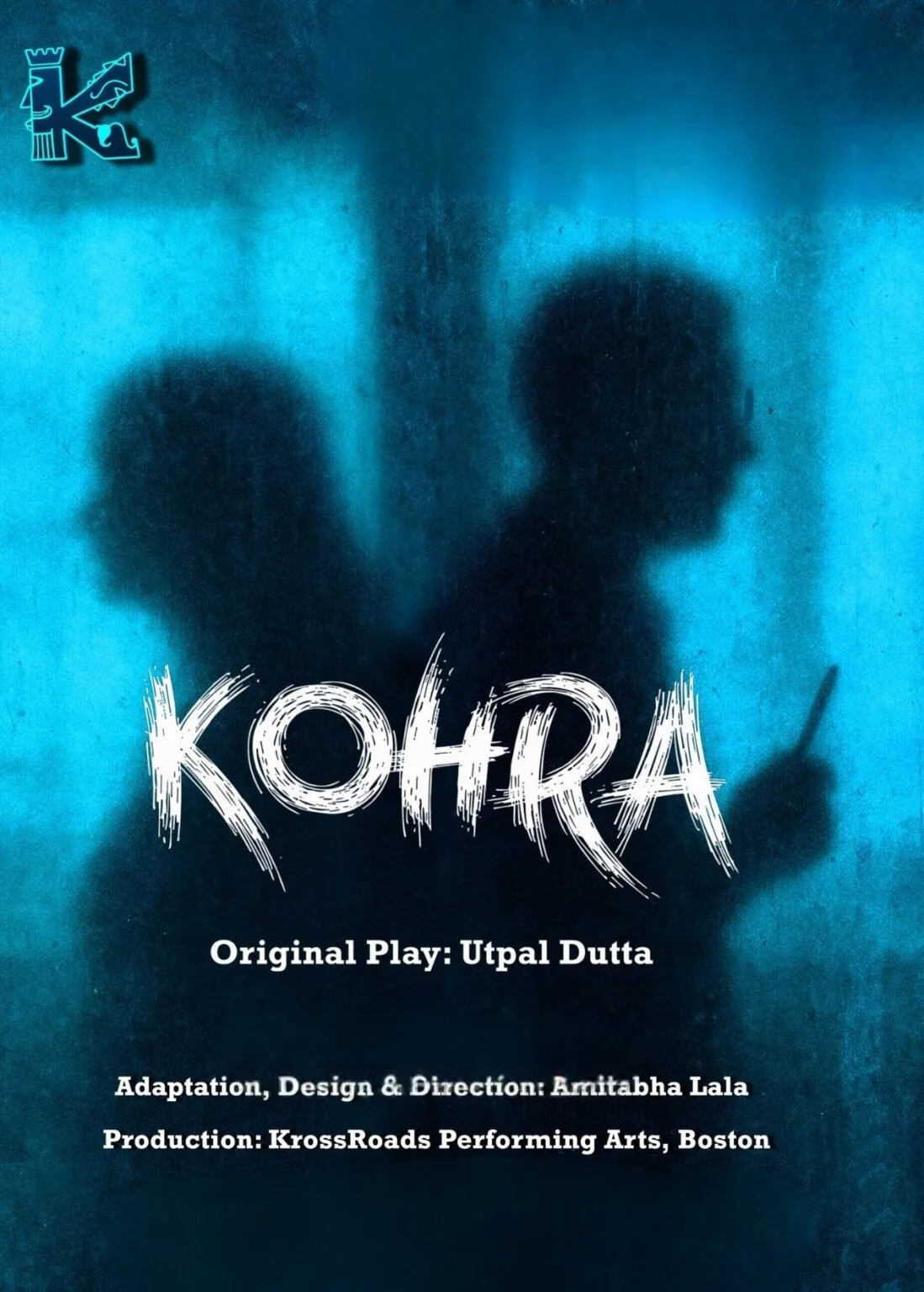

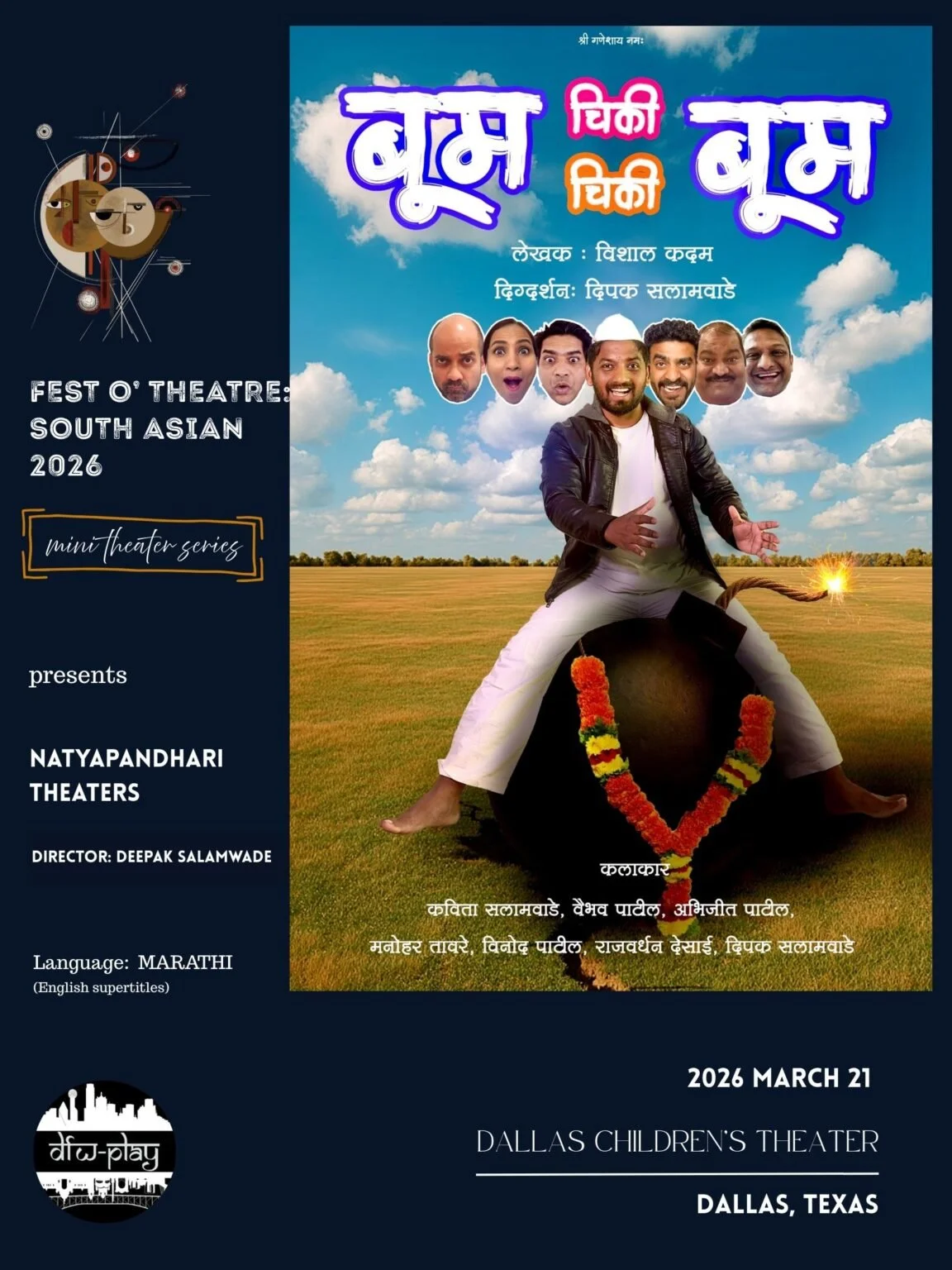
Graphic art (clockwise from UL): Antara Chatterjee, Dallas; Raja Bhattacharya, India; Artist unknown; Chatgpt
—Jan Farrington
In the lobby of the Rosewood Center For Family Arts (the usual venue for the Dallas Childrens Theatre), something different was happening last Saturday. The space was filled with a pleasant hum of conversation in Hindi and other languages, and the delicious scent of fresh samozas drew me toward the tables. Men looked elegant in long tunics and wide pants, and ladies swept by in lovely saris in endless colors and patterns.
This was Fest O’Theatre: South Asian 2026—the sixth and latest iteration of an annual one-day event from DFW Play ( DFWPLAY.ORG ) the Dallas area’s premiere Bengali-language theatre organization. Artistic director Raj Bhattacharyya, welcoming me on my first visit to the festival, noted that this year it had been expanded to focus on the many cultures of the Indian subcontinent and their performing arts traditions.
Bhattacharyya’s pride in the “Fest” was evident, and in his program notes he makes it clear that the artistry has an added goal—to create a “Third Space” for the large South Asian community in the area—“a sanctuary that exists between the heritage we carry and the North Texas geography we inhabit.”
It seems, from the warm atmosphere of community I experienced throughout the day, that these theatre-makers are succeeding in developing an event filled with human connection, warmth, and satisfying art—a place for the “diaspora” to feel at home.
“7 Plays, One Day” was the tagline—and between early afternoon and evening, I sat with an attentive, enthusiastic audience to watch a fascinating cluster of stage plays and dance pieces—some very short, others longer, some developed in Dallas, others by theater companies who came from Boston and Washington D.C. to participate. Languages heard were Hindi, Tamil, Telugu, Marathi, and English, with supertitles projected on screens as needed—and yes, I needed them, though I found listening to the quick-spoken flow of languages new to me a pleasure in itself.
Some notes on the day’s presentations:
I came in a few minutes late on the vivid dance-drama storytelling of Arupadai Veedu, an encounter between Lord Murugan and beautiful young Valli—though a gray-bearded Old Man (Murugan is testing Valli) seems to get comically in the way of true love. With the help of the god Ganesha) everyone ends up in the right spot. The lively dancers included young performers from Frisco’s Shreebala Nrithyalaya Bharatanatyam school, where performers are trained by founder/choreographer Guru Rajalakshmi Krishna in the traditions and expressiveness of traditional dance forms. Few words (Tamil was the language) were spoken, but the charming story told itself.
Lifeline, an unsettling modern-day play from Lewisville-based Sarasija Theatres (directed by and starring the playwright, Rajeswari Udayagiri), was performed in the Telegu language of southeastern India. (Telegu is, with Hindi and Bengali, one of more than 20 official languages spoken on the subcontinent.) The play asks the question: How is it that a woman of accomplishment and talent can remain unnoticed and unappreciated (even resented, in fact), and then belatedly “honored” in a perfunctory way after her death? Quick, almost blackout-style scenes show bits of the life and fate of Anitha (Udayagiri), an ambitious working woman, confident and independent…and undermined by others. She haunts her own story, newly aware of the currents that swirled around her. Lifeline was a surprisingly hard-hitting feminist story, performed in an economical style that lent it weight and intensity.
The ditzy, anarchic Boom Chiki Chiki Boom (from DFW-based Natyapandhari Theaters) was performed in the Marathi language of central and western India—and directed by its playwright Deepak Salamwade, who also played the “boss” whose revenge tour starts with gathering a bunch of hapless, aimless young men—and leading them through an increasingly bumbling and futile attempt at becoming bombers and terroristss. It’s an absurdist comedy that reminded me a bit of the Italian playwright Dario Fo in its mix of social thought and silliness. The gang gets a good talking-to in the end, the bombs (they didn’t work anyway) don’t go off, and everyone dances off to live another day. Thoughtful fun….
Washington D.C.’s Ebong Theatrix performed the recent drama Five Grains of Rice (in English) by the playwright Arindam Ghosh, who also played the only male role. An old girlfriend drops by a professional couple’s home, and what begins in politeness soon starts to devolve into resentments, anger, revelations, and even a “bet” involving five grains of rice. Can this volatile marriage survive truth—and where will these three humans be found at the end? Strong performances, and a story that starts to feel too big for one small living space.
Kohra, a mystery-drama from playwright Amitabha Lala and Boston-based KrossRoads Performing Arts (and with the playwright taking a mid-sized role in the cast), added a surreal, sometimes hallucinatory edge to the basic couple-in-an-isolated-house mystery trope—and did a fine job with both performances and staging. The plot kept us nicely unsure about what was happening…but in an honest, “earned” way: the intriguing finale let us see all the clues we’d missed! A great “freeze” effect added to the play’s odd energy as we tried (along with the novelist in the story) to sort reality from…whatever this was.
Katha: Draupadi, adapted by Dallas-based Vandita Parikh from the epic Mahabharata, is a story of female power and determination, and was danced in fine style under Parikh’s direction. (And I haven’t even mentioned the costumes throughout the day—gorgeous!) Set among the more modern dramas and comedies of the festival, this intense and very old story showed off the still-relevant richness of India’s centuries-old dance and theatrical artistry.
Back to the modern world: As the day’s final work, DFW Play presented the much-admired Adhe Adhure (1969) by Hindi playwright Mohan Rakesh. Directed by Bhattacharyya, it’s the edgy story of wife and mother Savitri, who leads a grueling, unhappy life in the city—she’s the “sole support” working to earn a living for her stay-at-home husband, keeps house, and tries to get help from an aimless son, a daughter who ran away to marry (but has come home), and an angry teenage daughter. The dysfunction feels circular—everyone treats everyone badly in some way, and Savitri looks for an “out” in flirtations and more with other men (all played, significantly, by the same actor). This is a classic, intense, well-told story of one family pressured both by their own flaws and society’s problems—and the final moment’s freeze-frame onstage tells us just how “stuck” they still are.
Be on the lookout for next year’s edition of the Festival—I enjoyed the experience! For more information about this year’s shows, go to: http://dfwplay.org/events/fest-o-theatre/fest-o-theatre-2026/