‘American Buffalo’ @ The Classics Theatre Project



Photos by Devon Rose
—Rickey Wax
When I see “written by David Mamet” on a playbill, I always know I’m in for a wild, intense ride. If you missed American Buffalo during its recent run at the Stone Cottage Theater in Addison, you missed something special. The Classics Theatre Project’s production, the second offering in its 26th season, delivered on all fronts. Under the direction of T.J. Walsh, this tightly wound drama evolved into a pressure cooker of suspicion, greed, friendship, and betrayal.
The beauty of Mamet’s writing has always been his ability to take characters who on paper should be completely unlikable—and somehow make us care about them. His people are small-time crooks, hustlers, and dreamers operating on the fringes of society. They speak in profanity-laced fragments and half-finished thoughts, yet beneath all the grit lies an unexpected poetry. Mamet finds humanity in desperation. He makes us understand these men even when we disagree with them, and that is what makes American Buffalo so compelling.
The Stone Cottage is the perfect venue for this kind of play. The intimate setting places the audience mere feet from the action, heightening every argument, every glance, and every moment of mounting paranoia. There is nowhere to hide from the tension. We become trapped inside Donny’s cluttered antique shop, right along with the characters.
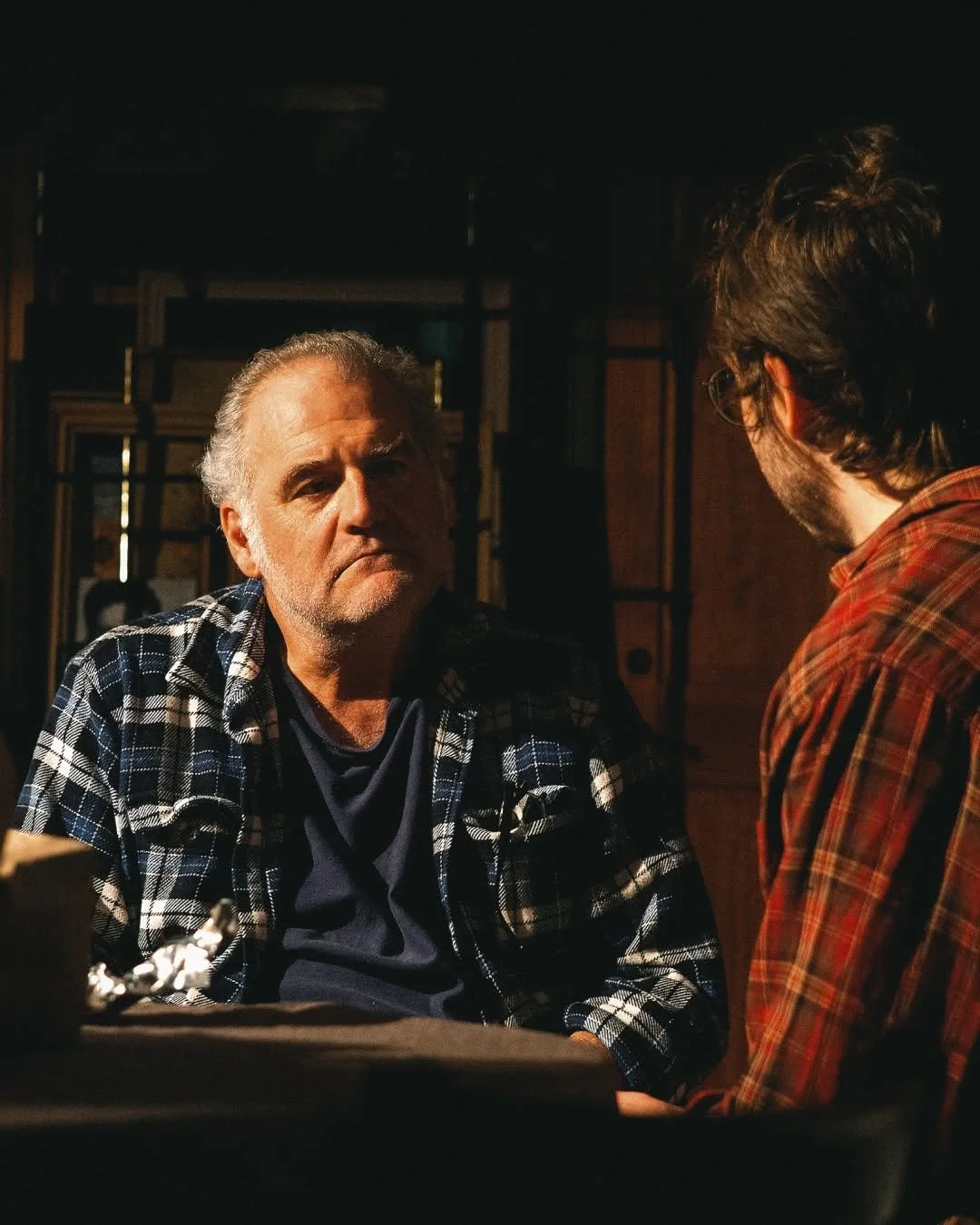
As the play opens, we see the remnants of a card game scattered across a table. Bobby sits quietly, puzzled and disappointed, while Donny attempts to explain the realities of a business transaction involving a valuable buffalo nickel. The atmosphere feels deceptively calm, but Mamet is already laying the groundwork for the emotional explosion to come. Joey Folsom’s Teach soon storms into the shop, and with his arrival the entire rhythm of the play changes.
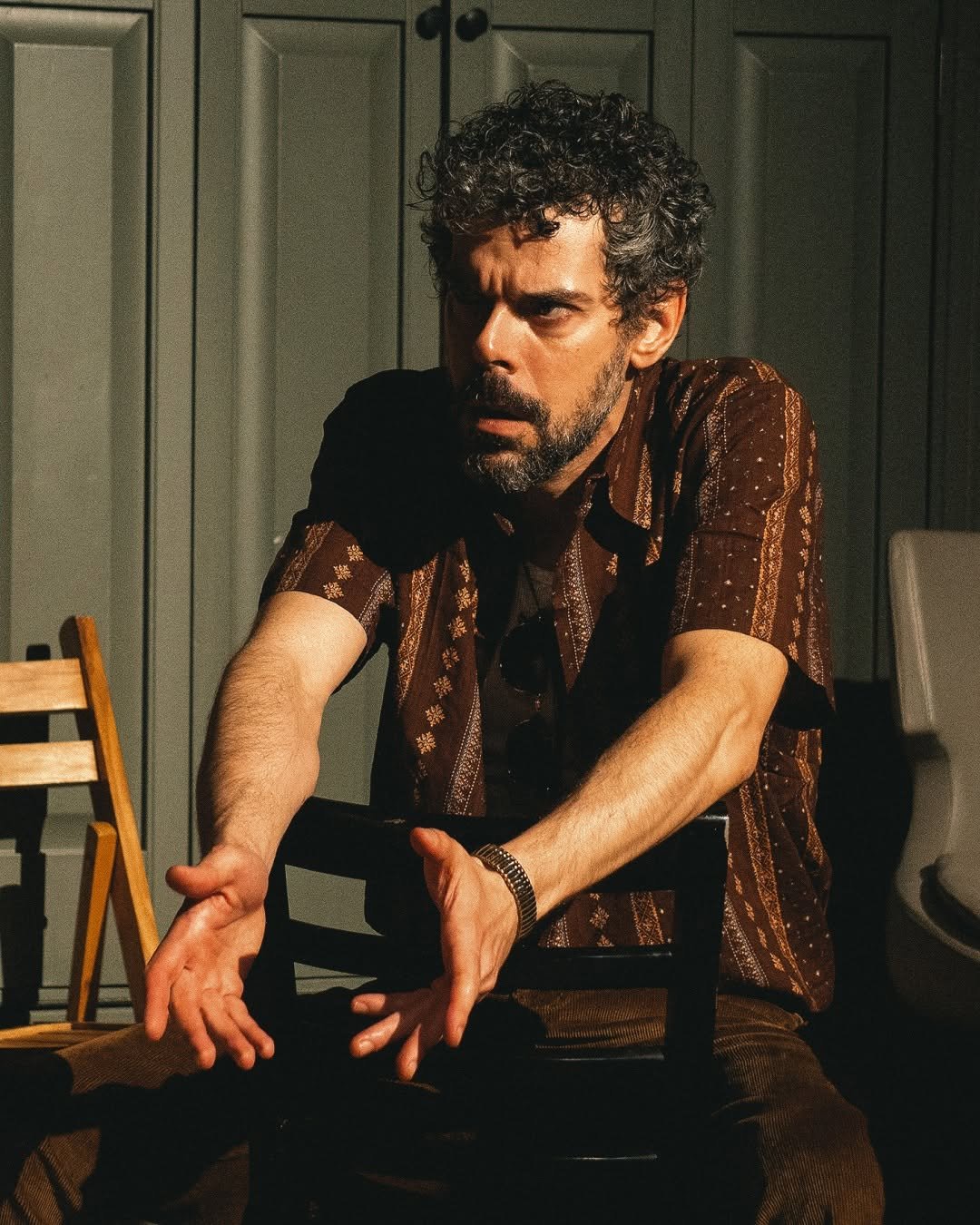
Folsom delivers a mesmerizing performance as Teach. He is funny, volatile, paranoid, and strangely charismatic all at once. Teach talks constantly, often contradicting himself within the same conversation, but every word serves a purpose. His language becomes a weapon. He bullies, manipulates, and wears down everyone around him through sheer force of personality.
Folsom conveys this beautifully through his jittery physicality, constantly moving, pacing, and shifting as though Teach’s mind is operating several steps ahead of everyone in the room. Combined with a gritty, greaser-like vocal quality, the performance feels perpetually on the verge of combustion. Watching Folsom navigate Mamet’s rapid-fire dialogue is like watching a boxer work an opponent into exhaustion.
John Daniel Pszyk brings warmth and complexity to Donny. At first glance, Donny appears to be the most grounded person in the room, but Pszyk reveals the character’s deep insecurities and conflicting loyalties. His relationship with Bobby forms the emotional core of the production. Donny genuinely cares about the young man, yet his desire for a score and his need to maintain respect among his peers constantly pull him in the opposite direction. What makes Pszyk’s performance particularly effective is his restraint. His voice remains steady and measured throughout much of the play, serving as an anchor amid the chaos Teach creates. As Donny’s confidence begins to crack, however, subtle shifts in inflection and pitch reveal the character losing his footing, allowing the audience to witness his unraveling in real time.
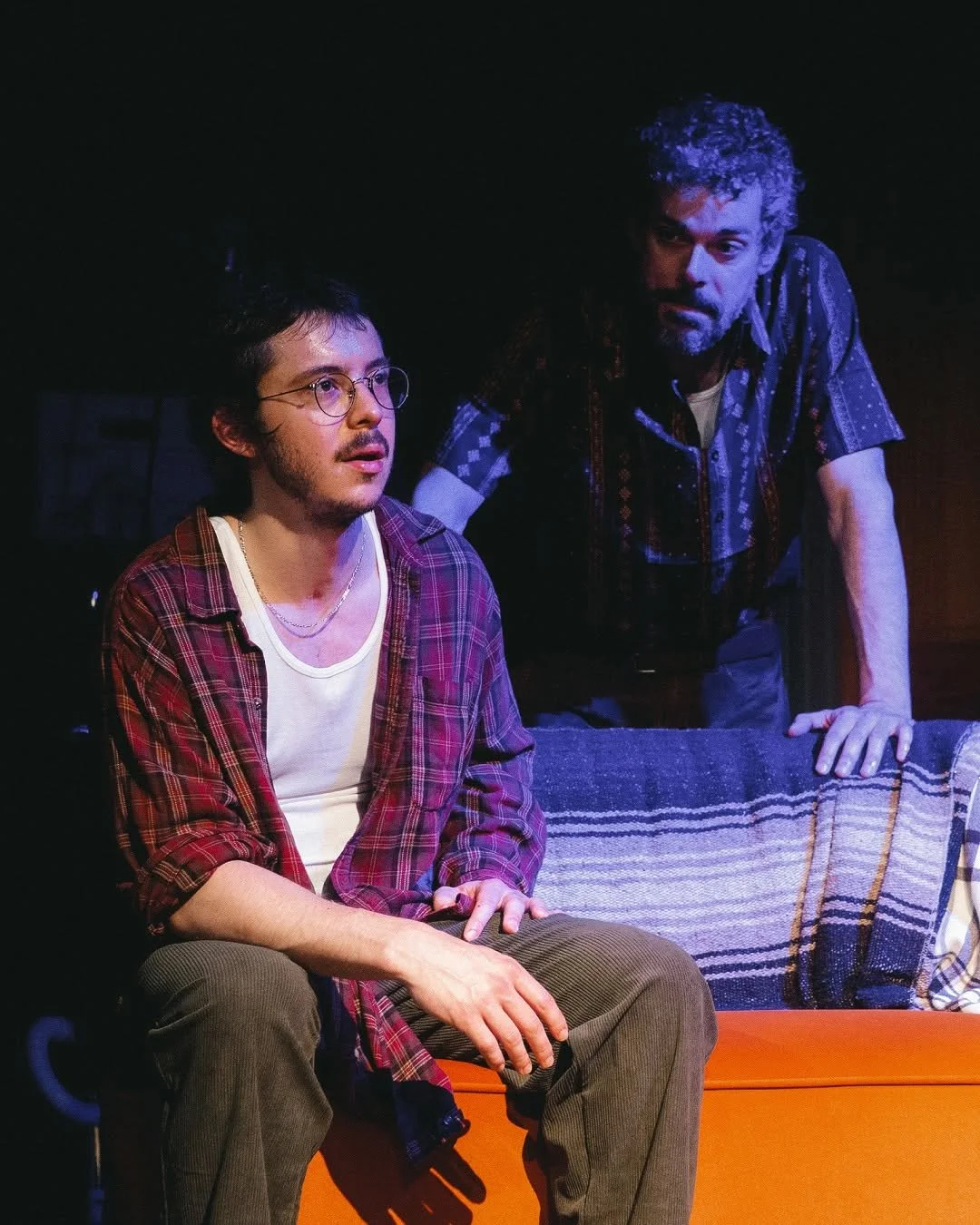
Noah Riddle’s Bobby is particularly effective because of his vulnerability. In a play filled with loud personalities and constant verbal sparring, Bobby often says the least, but his presence carries significant weight. Riddle captures the character’s eagerness to belong and his desperate need for approval. Rather than competing for attention, he relies on stillness, measured delivery, and an understated physical presence that allows his reactions to speak volumes. Some of Bobby’s most revealing moments occur not in what he says, but in the looks he gives and the emotions that quietly pass across his face. As the story progresses and trust begins to erode, Bobby becomes the play’s tragic center.
What makes American Buffalo remarkable is that almost nothing happens, yet everything happens. The plot revolves around a planned burglary that never quite seems to move forward; instead, Mamet focuses on conversations. Plans are made, abandoned, revised, and questioned. Every discussion becomes a battle for control. By the second act, the tension has become almost unbearable as loyalty, friendship, and self-interest collide like a madhouse.
Director Walsh understands that this play succeeds through rhythm. He allows the pauses to land and the silences to speak as loudly as the profanity. The result is a production that feels an examination of fragile masculinity.
Devon Rose’s set design deserves special mention. The antique and resale shop feels lived in, cluttered, and authentic, with knick-knacks hanging about. A large cardboard sign declaring “ALL SALES ARE FINAL” is a particularly nice touch. It could easily serve as a metaphor for life and the irreversible choices these men make throughout the play. (Or maybe it was just a sign.) John Cameron Potts completes the picture with warm amber and white lighting that gives the shop a welcoming glow before Mamet’s characters inevitably tear it apart in front of us.
By the time the play reaches its devastating climax, the burglary itself feels irrelevant. What remains is a heartbreaking portrait of damaged men searching for loyalty in a world they believe offers none. The Classics Theatre Project has delivered a gripping production that captures both the brutality and surprising beauty of Mamet’s writing.
WHEN: May15-June 20, 2026
WHERE: Stone Cottage Theater, 15650 Addison Rd, Addison, TX
WEB: www.theclassicstheatreproject.com