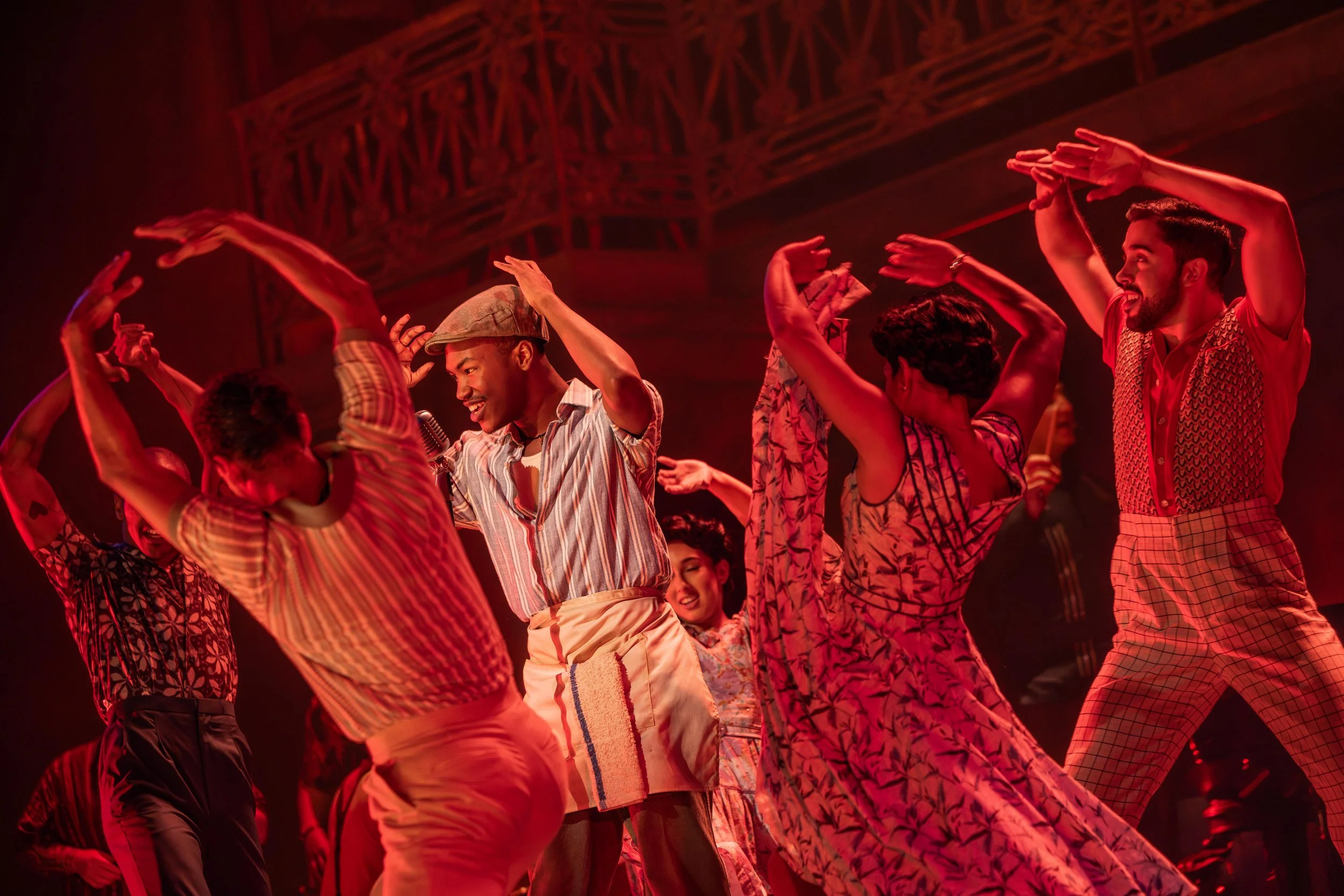
Stage Photography by Matthew Murphy
—Teresa Marrero
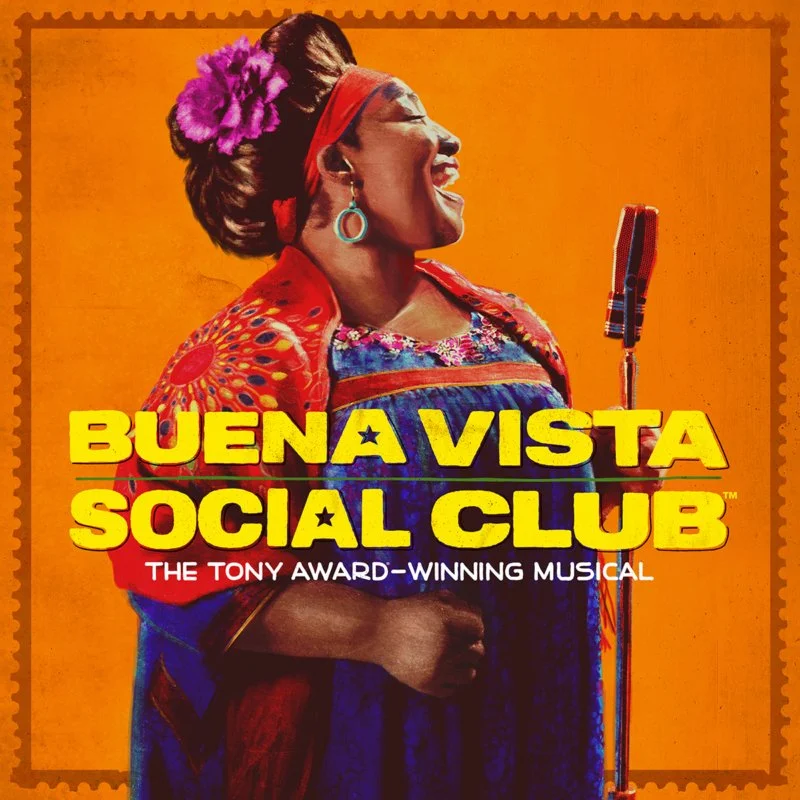
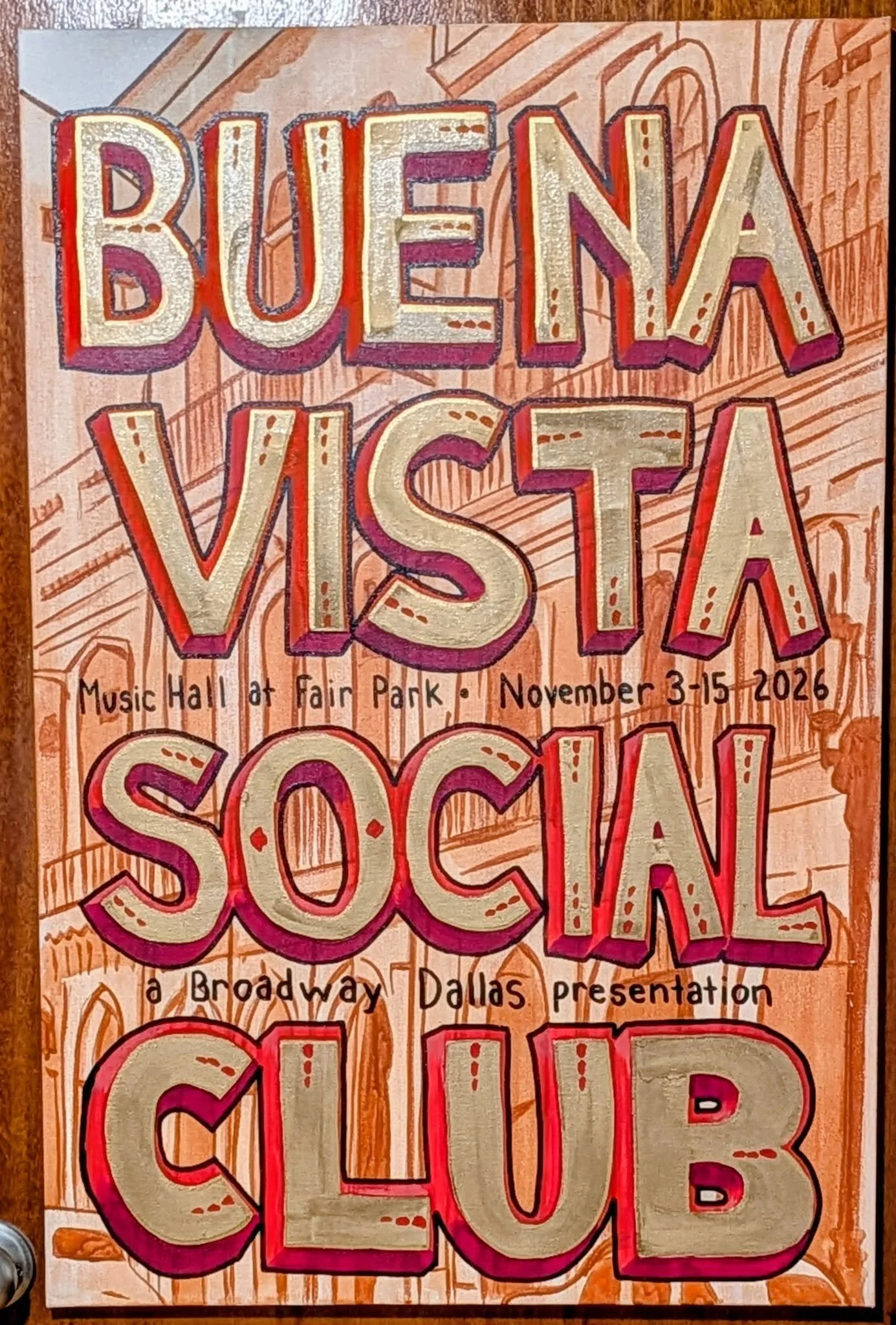
Do you feel the need of some well-deserved stress relief? How about enjoying a bit of euphoria at the Music Hall in Fair Park with the Broadway Dallas presentation of the much-lauded Buena Vista Social Club, featuring the original music of the legendary1997 recording. Set in 1956 and 1996, with book by Marco Ramirez and music by the Buena Vista Social Club™ this show is a sure crowd pleaser. Buy your ticket before they sell out!
Buena Vista is presently playing on Broadway…but closes in January. You might hop over the pond to catch it in London’s West End, or travel to catch up with another stop on the national tour. But why not see it right here in Dallas, now through next Sunday?
I was born in Cuba and still identify as Cuban, so this musical heritage is near and dear to my heart. And yes, I have listened to the DVD many times, and yes, I know the words to every song! And while the dialogue in the show is in English, these great songs remain in the original Cuban Spanish (in a diction and vocabulary unique to the Island).
This is a story that begins the pre-Revolutionary Cuba of 1956, when things were just beginning to get hot. The revolutionaries led by Fidel Castro and others were taking over the Island from Oriente province in the east all the way to Havana in the northwest. The American puppet dictator, Fulgencio Batista, was getting ready to flee with the Cuban people’s treasury monies. The Revolution officially marched into the capital Havana on December 31, 1959. As a child, I saw them march in on the Malecón, a euphoric people looking forward to freedom and democracy.
What came next is history, and the reason I am living in the United States now with a hyphenated identity: Cuban-American. My Cuban-ness comes from a concerted effort to learn about my country of birth, and music is a key factor in its history.
To say “Cuban” is to acknowledge a mix of Spanish, African, Indigenous, and later Chinese roots, primarily from the Spanish and their importation of African slaves from West and Central Africa — the Yoruba of Nigeria, Congo, the Dahomey among others. These people survived the slave trade by anchoring themselves to their African roots and blending into their mostly Spanish environment.
Songs like ¨Drume Negrita¨ (duerme negrita, or sleep my little black child) is a lullaby that speaks in bozal, the mix of Spanish and African languages that surged uniquely in Cuba. ¨Bruca maniguá,¨ ¨La Negra Tomasa,¨ and ¨Chan Chan¨ all tell Afrocentric stories.
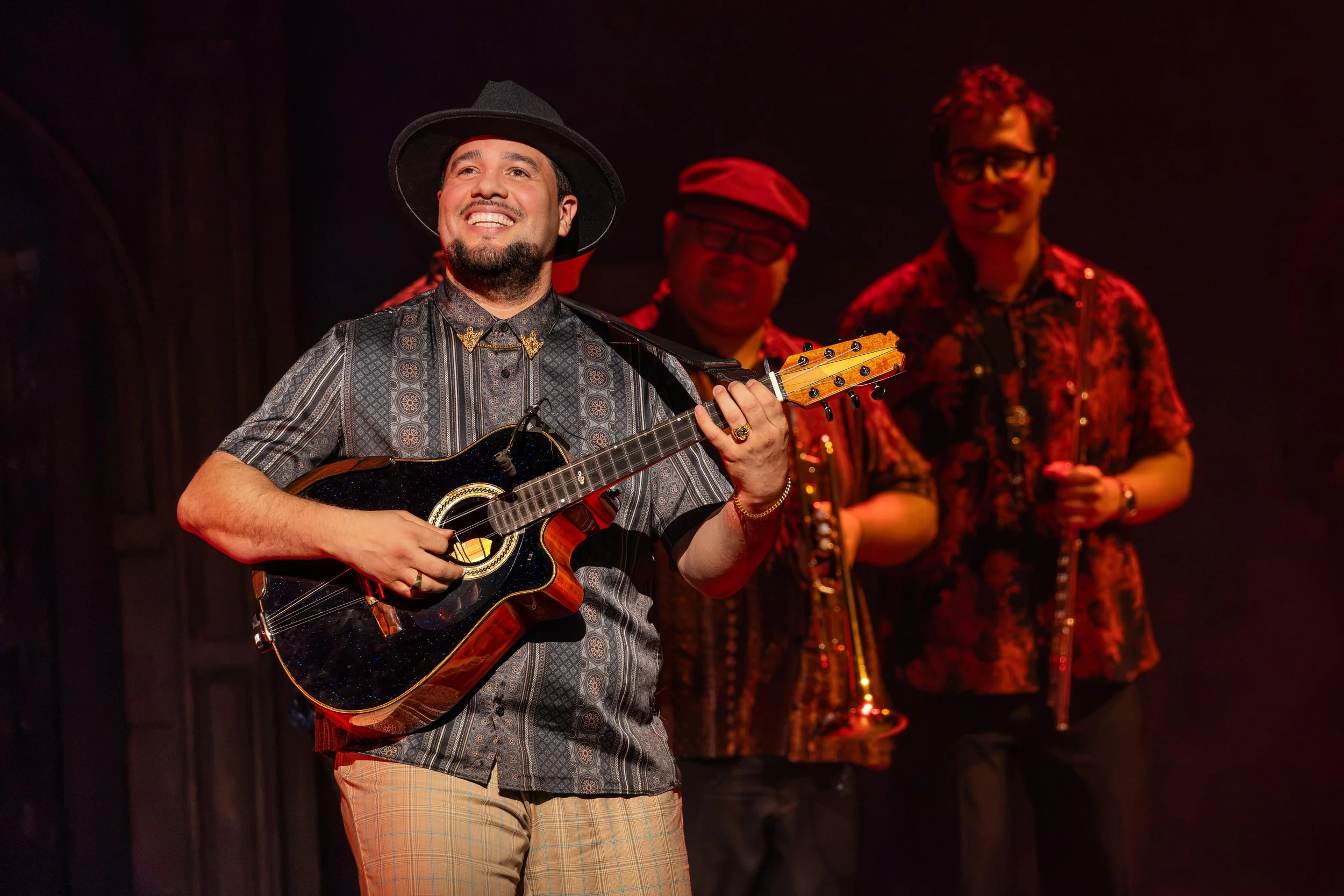
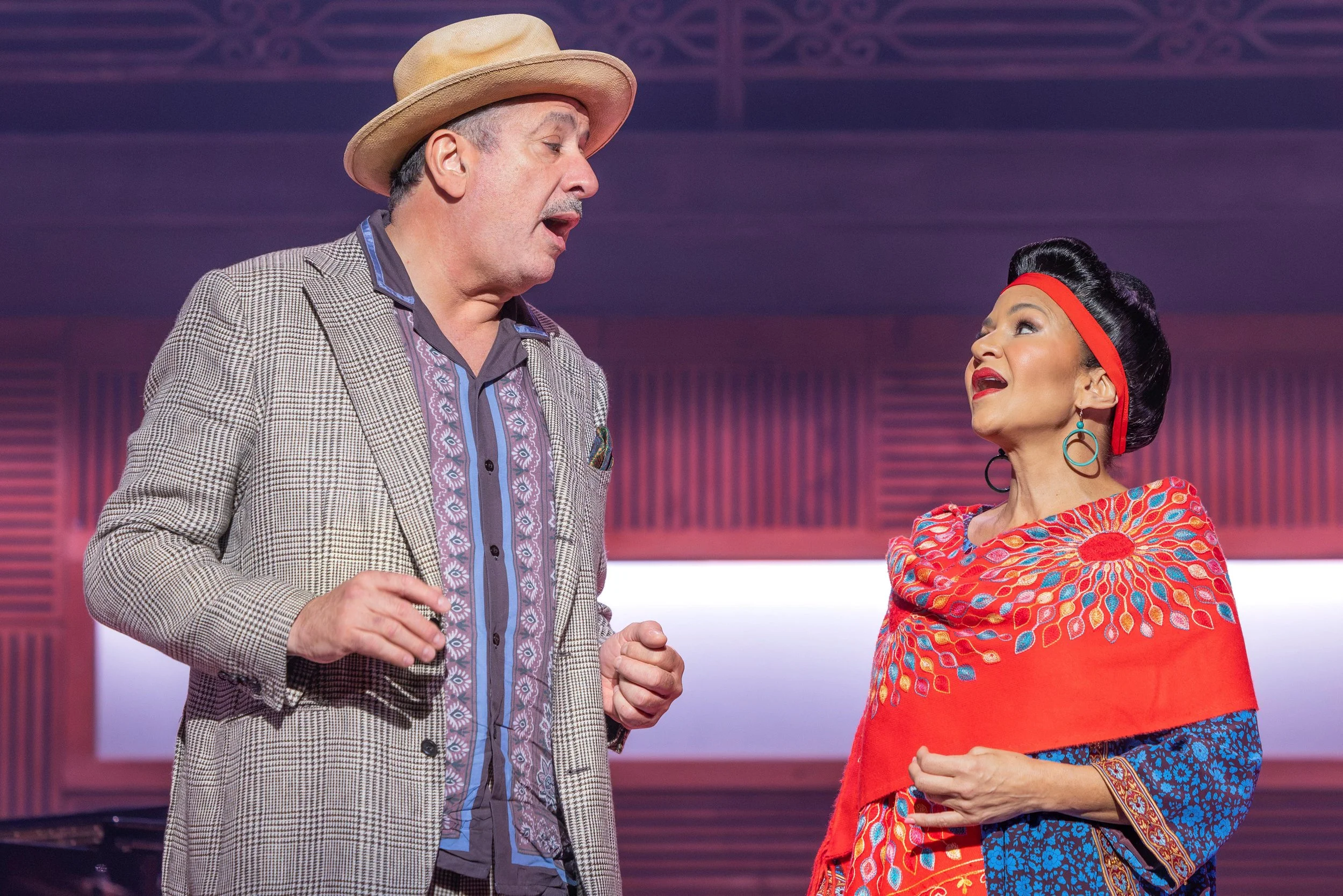
Both the album and the repertoire of Buena Vista the musical is centrally built around son cubano, a foundational Afro-Cuban musical style that blends Spanish guitar/tres melodies with African percussion and call-and-response vocals. Compay Segundo, played by Frank Rodriguez, is said to be a master of the Cuban son. From the son traditions are: ¨Chan Chan,¨ ¨De Camino a la Vereda,¨ the very famous ¨El cuarto de Tula¨ (still a staple of salsa clubs today, along with ¨Que Bueno Baila Usted¨), and ¨El Carretero¨ (featured in the album but not the show).
If you can sit still through ¨El cuarto de Tula,¨ check yourself into a hospital to make sure you have a pulse. This is a lyrically simple song that speaks about a woman by the name of Tula, whose room caught on fire because she fell asleep and forgot to blow out the candle! The complexity of the orchestration includes all the following: the Laúd / Tres Cubano, a prominent 12-string plucked instrument from the lute family, famously soloed by Barbarito Torres. … Guitars: Standard acoustic and electric/plucked guitars providing the rhythmic and harmonic foundation. … Double Bass (Contrappunto / Bajo): Plucked upright bass driving the groove. … Trumpet & Trombone: Blown brass instruments providing punchy horn lines and solos. … Percussion: Timbales (played live by guest Julian Oviedo Sánchez in the Buena Vista version); Congas and Bongos (hand-played skin drums) Maracas (shaken); Cowbell (cencerro) and Vocals: Lead and backing male vocals (soneros). So, a simple song about a room burning down turns into a complex and exquisite orchestration.
And, if when you listen to the Cuban son, you can hear its musical daughter, the cha cha chá, you are correct! That catchy rhythm that at one point caught the world like a storm is based on the son.
And then there are the boleros! In the recording “Dos Gardenias,” sung by Ibrahim Ferrer, but in the show by Karime Alers playing with Omara Portuondo. Other boleros in the álbum that did not make the show are “Veinte Años” (originally sung by Omara Portuondo and Compay Segundo), “Amor de loca juventud” (written by Rafael Ortiz, sung by Compay Segundo), “Orgullecida” (written by Eliseo Silveira, sung by Compay Segundo), and “Murmullo” (written by Electo Rosell, sung by Ibrahim Ferrer).
¨Lagrimas negras,¨ written in 1930 by Miguel Matamoros and recorded by Trío Matamoros, is widely cited as the defining work establishing the bolero-son genre. The song was recorded by Afro-Cuban pianist Bebo Valdés and Spanish gypsy Diego el Cigala in 2003. Unforgettable. In the show it was sung twice by Alers as Portuondo, once in the prelude and then again in Act II. ¨Lagrimas negras¨ (which translates to “Black Tears”) is also played as an Argentinean tango in many a milonga.
The cast of the travelling show is composed of Karmine Alers as Omara Portuondo, whose story in relationship to her sister Haydee and their ideological split frames the narrative. Young Omara is played by Isabel González. They were both wonderful in their roles.
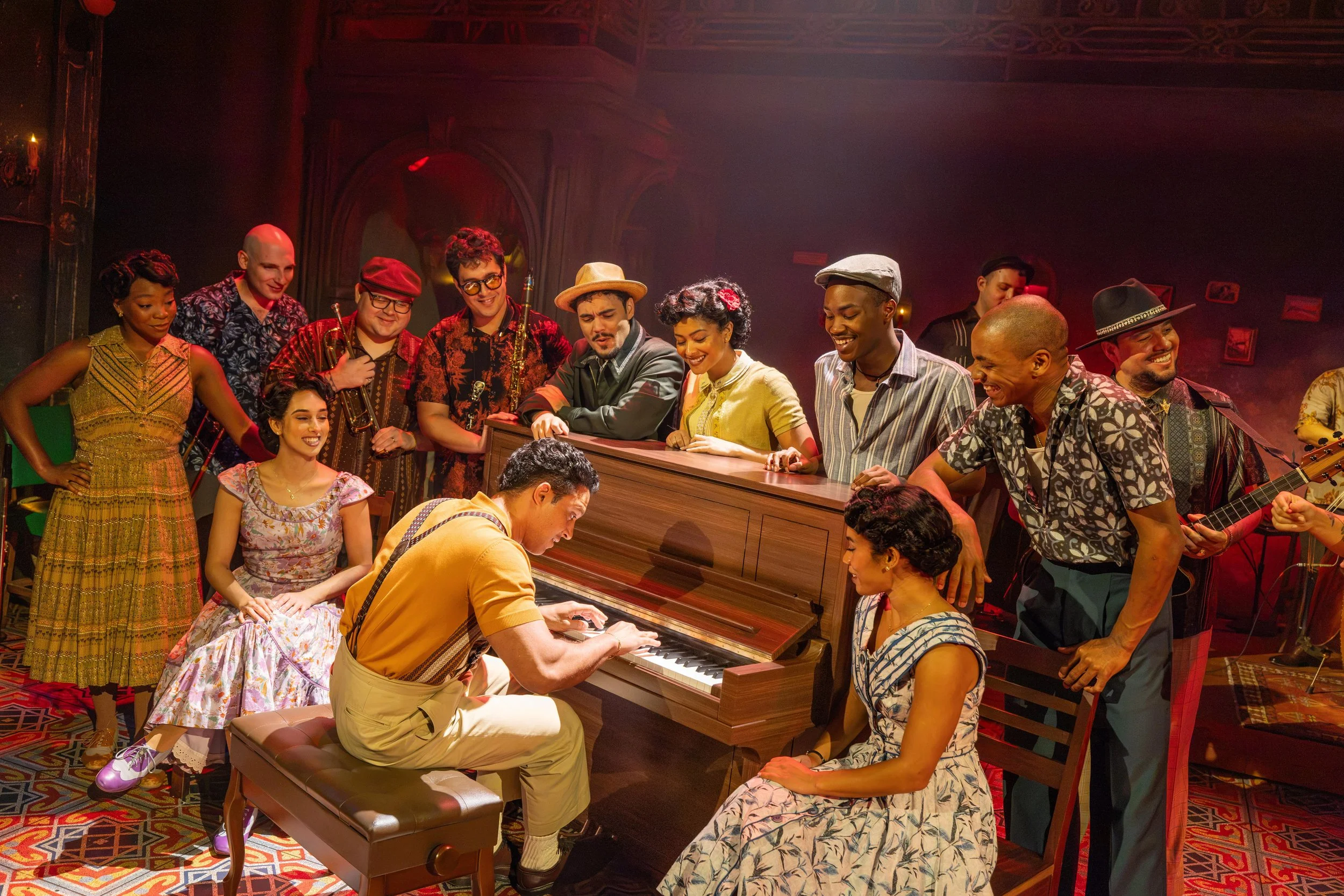
The frustrated love story between Omara and Ibrahim Ferrer plays out tenderly as Young Ibrahim (Jaleel Battles Jr.) and tragically later as older Ibrahim (Mauro Castillo). Young Compay (Aidan Olmos) and Compay (Frank Rodriguez) brilliantly narrate the story of this group of Black musicians in the traditionally black barrio of Marianao — the humble space in which they sang and danced, mostly Blacks only. The neighborhood was shunned by white and white-aspiring Blacks (including Haydee, Omara´s sister). Juan de Marco is played by Holiday, Rubén by Robert M. Jimenez, Elíades by San Miguel Pérez. They all gave performances more than worthy of the standing ovation they received.
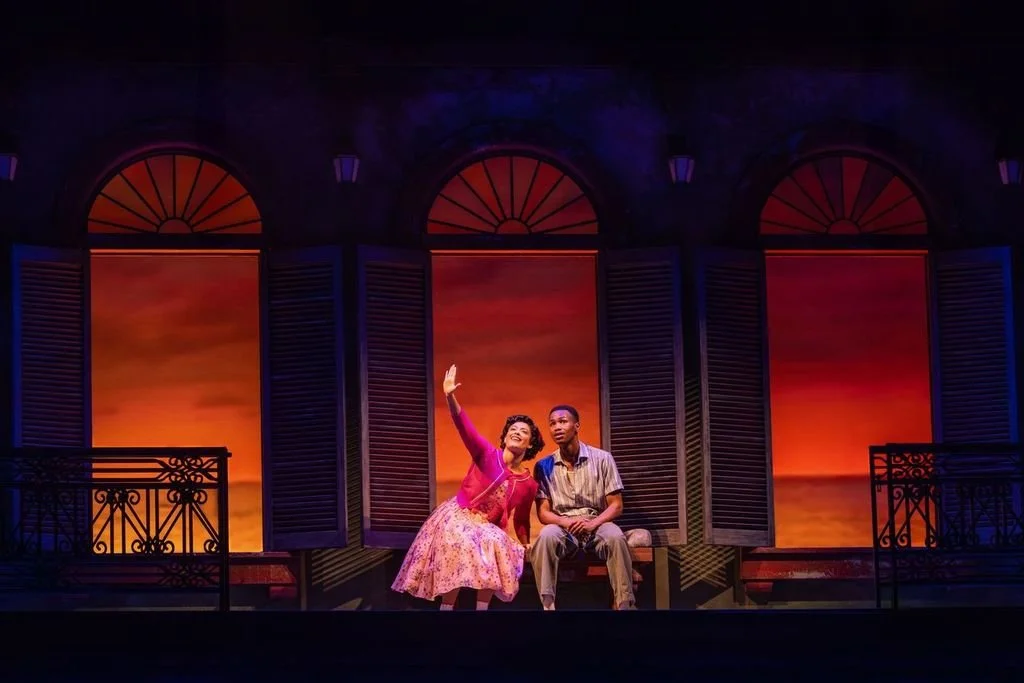
The staging illustrates two key spaces on two distinct levels. At the bottom is the space for both the Social Club and the Tropicana Club. At the top is a suggestion of Old Havana with its colonial arched windows and the Caribbean Sea in the background. While the lower level is the space for the songs and much of the action, the upper level is a space for nostalgia.
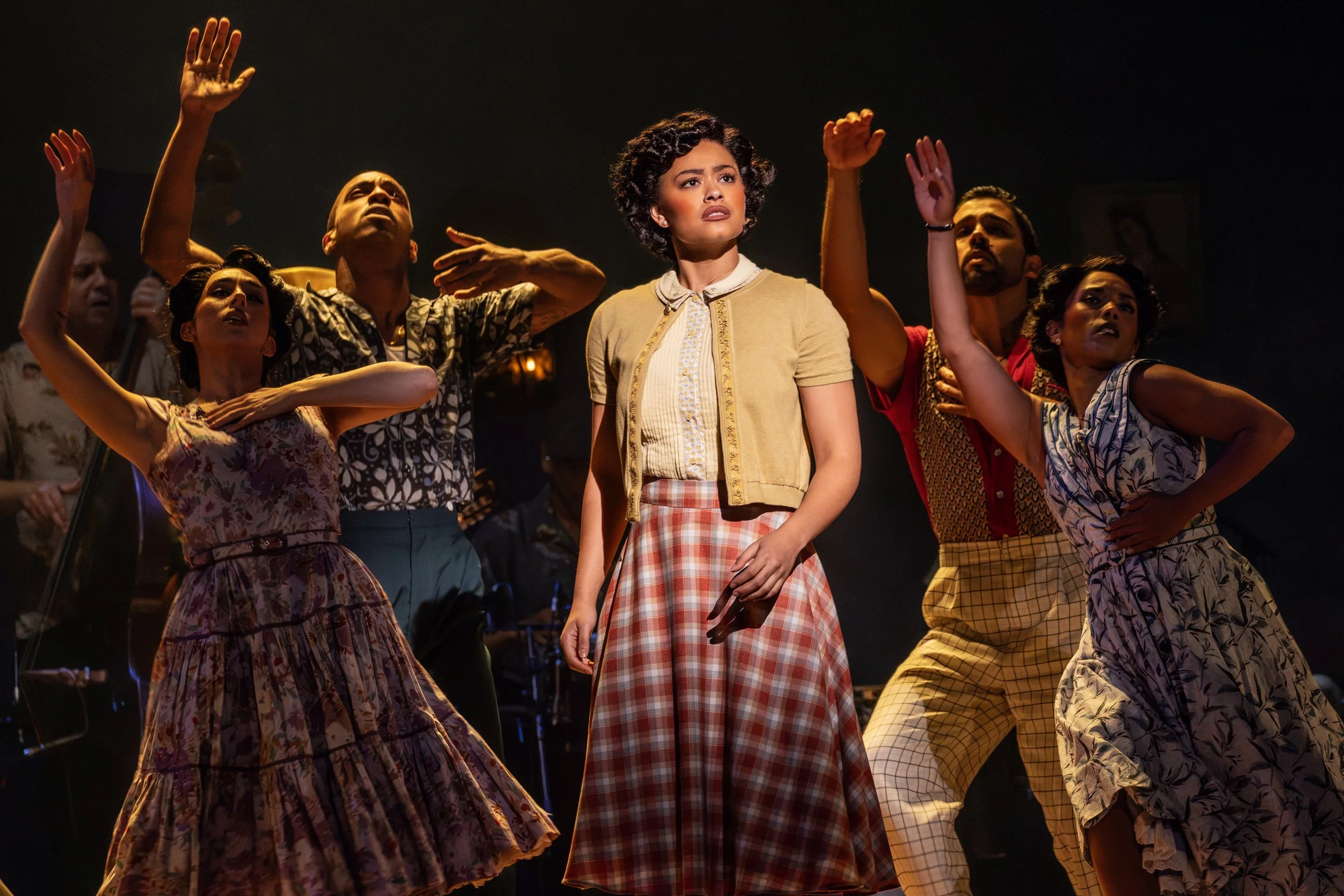
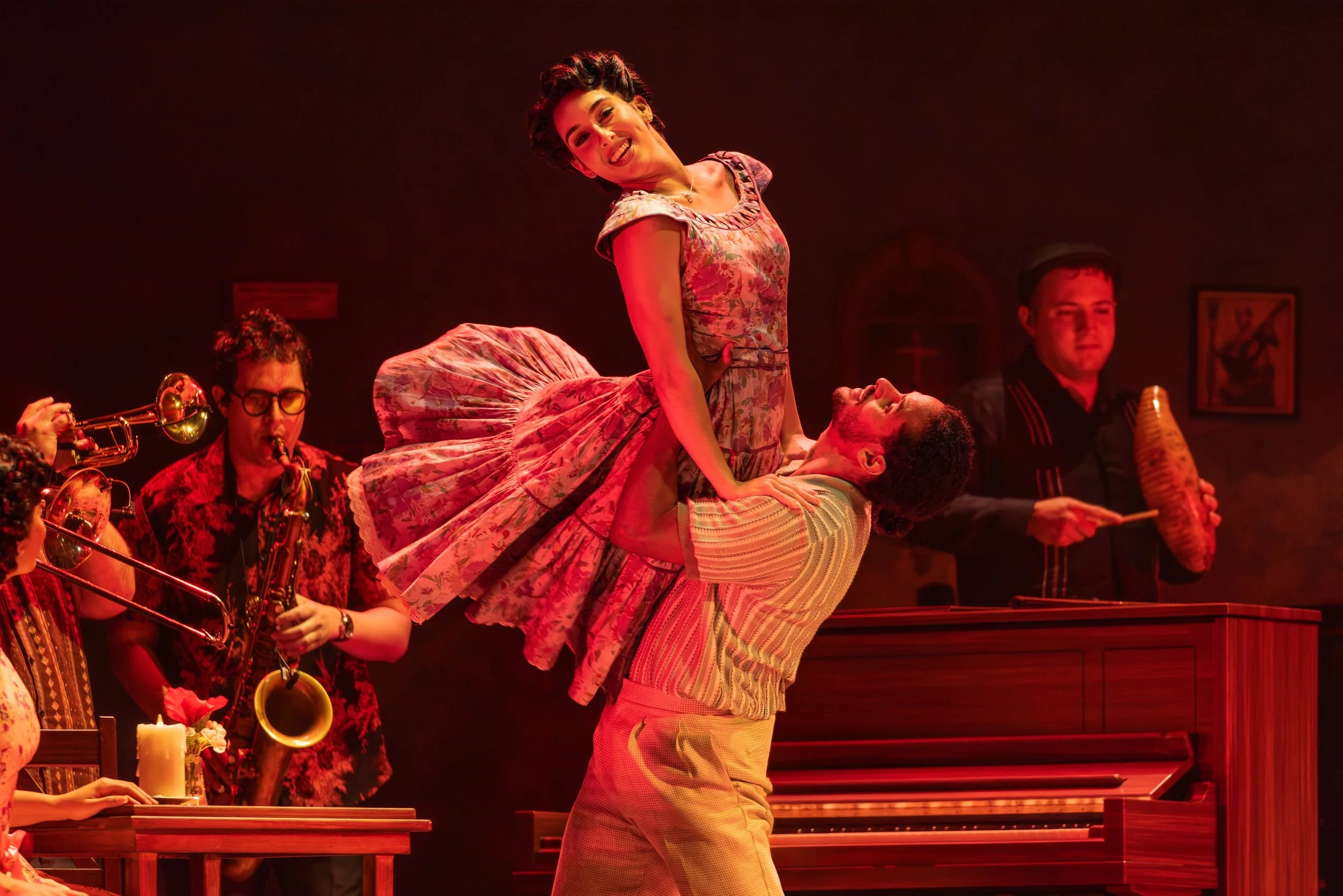
And… the dancers! Oh my gosh. They were fabulous!
Ensemble and dancers include Armando Brydson, Jazlyn Carreras, Jhon Destrade, Destinee Jimenez (assistant dance captain), Alex Llorca, Gabby Rembert, Ralphie Rivera de Jesús (dance captain). The Choreography for the production is co-created by Patricia Delgado and Justin Peck, bringing mid-century Cuban social dance styles (such as son, mambo, and danzón) to the stage. What a delight!
WHEN: November 3-15, 2026 (children under 6 not permitted)
WHERE: Music Hall at Fair Park, 909 1st Avenue, Dallas
WEB: broadwaydallas.org
Teresa Marrero, Ph.D. writes about dance and theatre. She has been covering the DFW Latina-o theater scene since 2013, both for TheatreJones.com and now for OnstageNTX.com As a free service to the public, readers and researchers can find her archived reviews on the History of Texas Portal at the University of North Texas at: https://texashistory.unt.edu/ or search the Private Collection of Dr. Teresa Marrero dr.teresa.marrero@gmail.com.