‘Com0 Agua para Chocolate’ @ Teatro Dallas (in Spanish w/ English supertitles)

Photos courtesy of Teatro Dallas
—Teresa Marrero
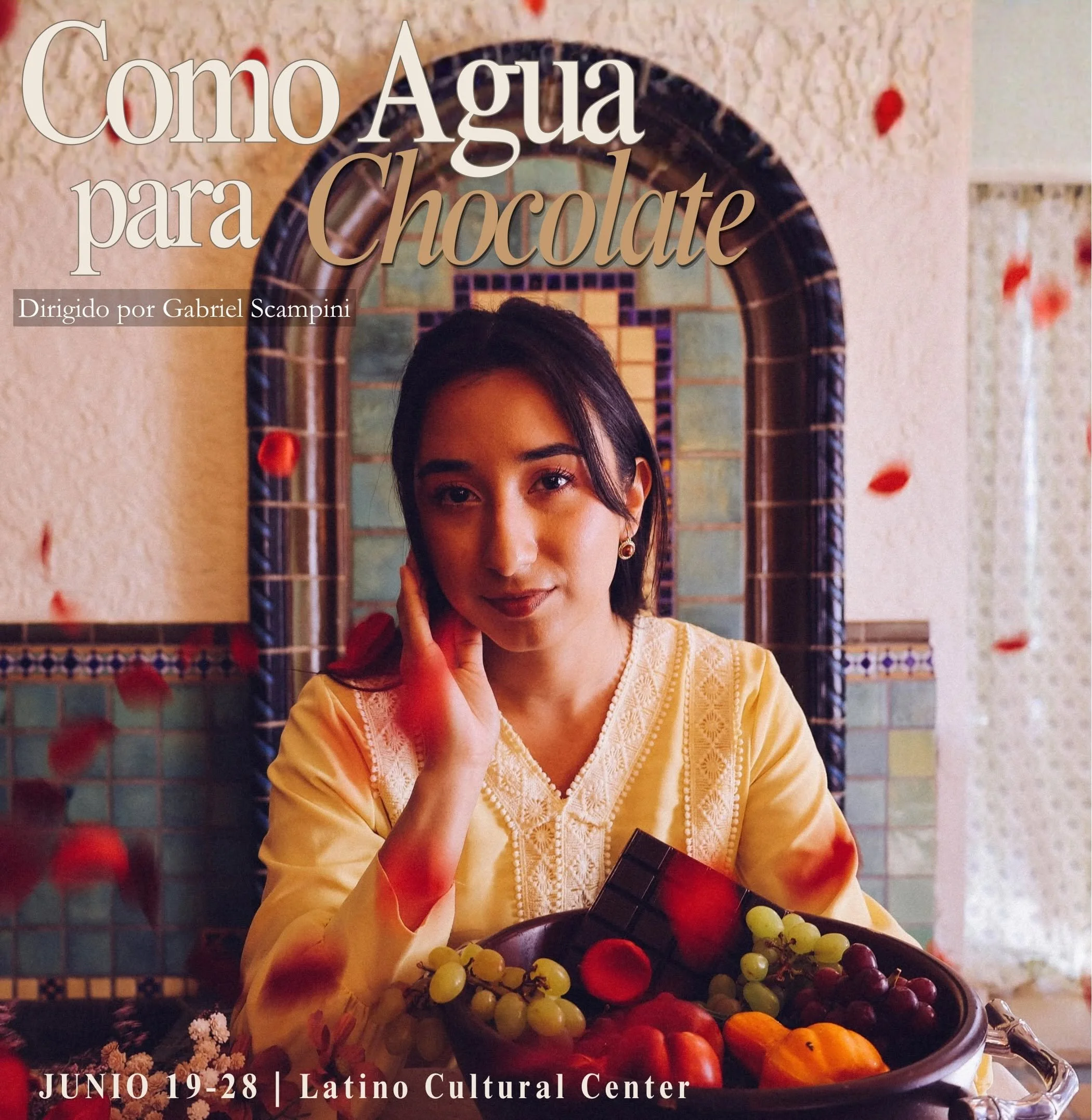
Based on Como Agua para Chocolate (Like Water for Chocolate), Laura Esquivel's beloved 1989 novel, and familiar to many through the celebrated 1992 film adaptation directed by Alfonso Arau, Teatro Dallas's stage production invited sold-out audiences to rediscover this classic story through the immediacy of live performance during its June 2026 season.
Directed by Gabriel Scampini and with a cast of both upcoming and established Latino actors, this 90-minute piece rings true to both the novel and the film. Staged elegantly and economically in the intimate Black Box at the Dallas Latino Cultural Center, this version gathered the best from all the creatives involved. Up front, I must say that the casting could not have been more appropriate. Each actor embodied physically and emotionally the landscape of Esquivel´s novel. More on this later.
Set in northern Mexico during the early decades of the twentieth century, against the backdrop of the Mexican Revolution, Like Water for Chocolate unfolds during a period of profound political and social upheaval. While the fighting remains largely offstage, the revolution's disruptions spill into domestic life, challenging traditional hierarchies, gender roles, and family authority. It is a geopolitical space with no defined borders; as one example, making a move to San Antonio, Texas feels totally fluid.
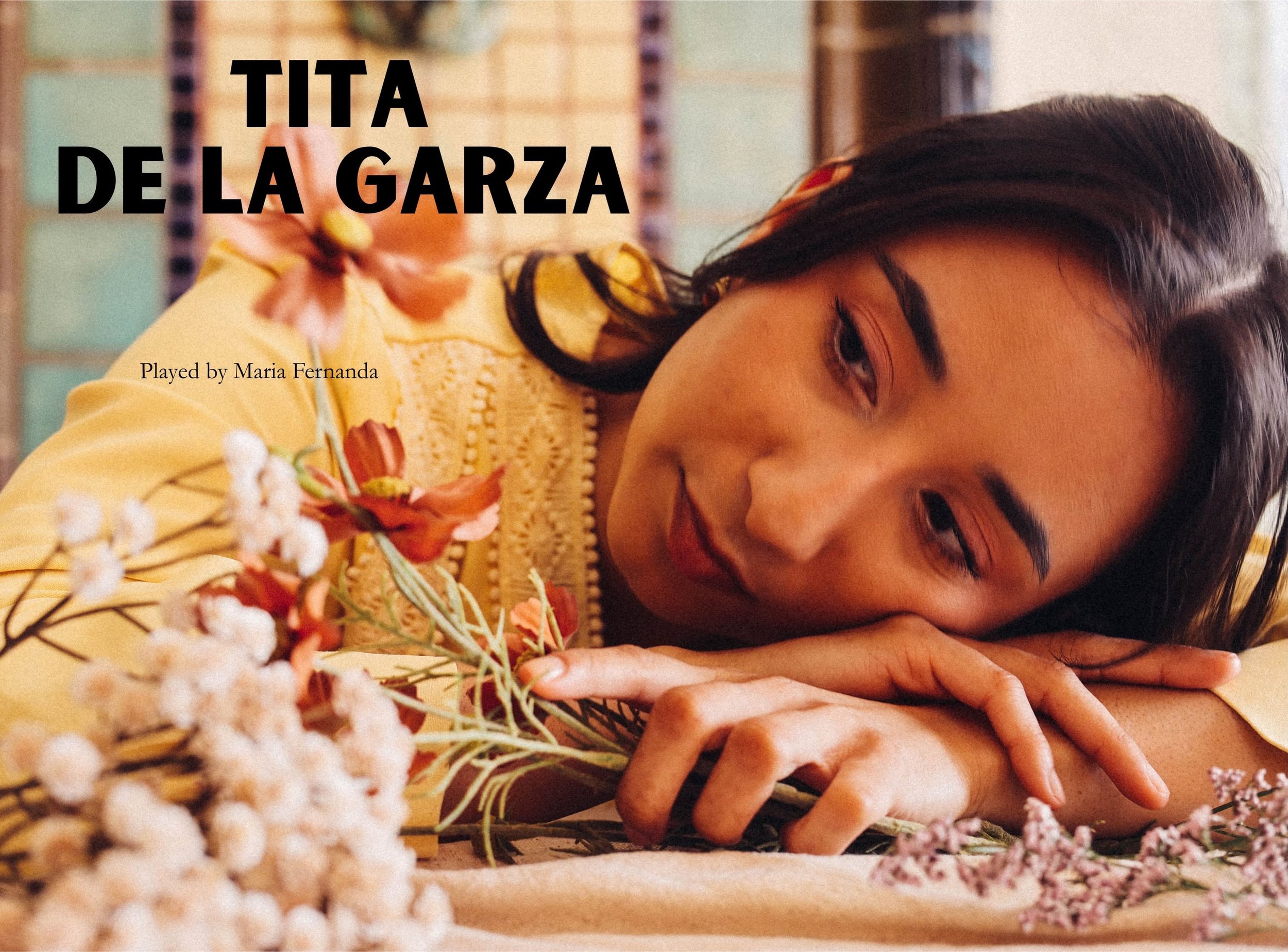
In a nutshell, this is the story of a family of three sisters (Maria Fernanda as Tita, Julia Landey as Rosaura, and Marta Torres as Gertrudis) and their domineering mother, Mamá Elena (Elizabeth Maldonado). The hardened mother is set on continuing the generations-old family tradition that the youngest daughter does not marry in order to care for the aging mother.
There are parallelisms with Federico García Lorca´s famous play, The House of Bernarda Alba, written in 1936 just weeks before he was assassinated at the outbreak of the Spanish Civil War. Because of censorship under the Francisco Franco regime, the play was not performed until 1945 in Buenos Aires, Argentina, and was not staged publicly in Spain until 1964. Both dramas are built around a tyrannical matriarch who enforces tradition at the expense of her daughters' emotional lives. Mamá Elena, like Bernarda Alba, polices female desire, equating obedience with family honor and self-sacrifice with virtue.
Yet where Lorca's world remains starkly realist and inexorably tragic, Laura Esquivel infuses domestic oppression with magical realism, allowing food, memory, and the supernatural to become vehicles of resistance. In Esquivel's hands, the kitchen becomes not merely a site of confinement but also a space of creativity, emotional expression, and ultimately liberation.
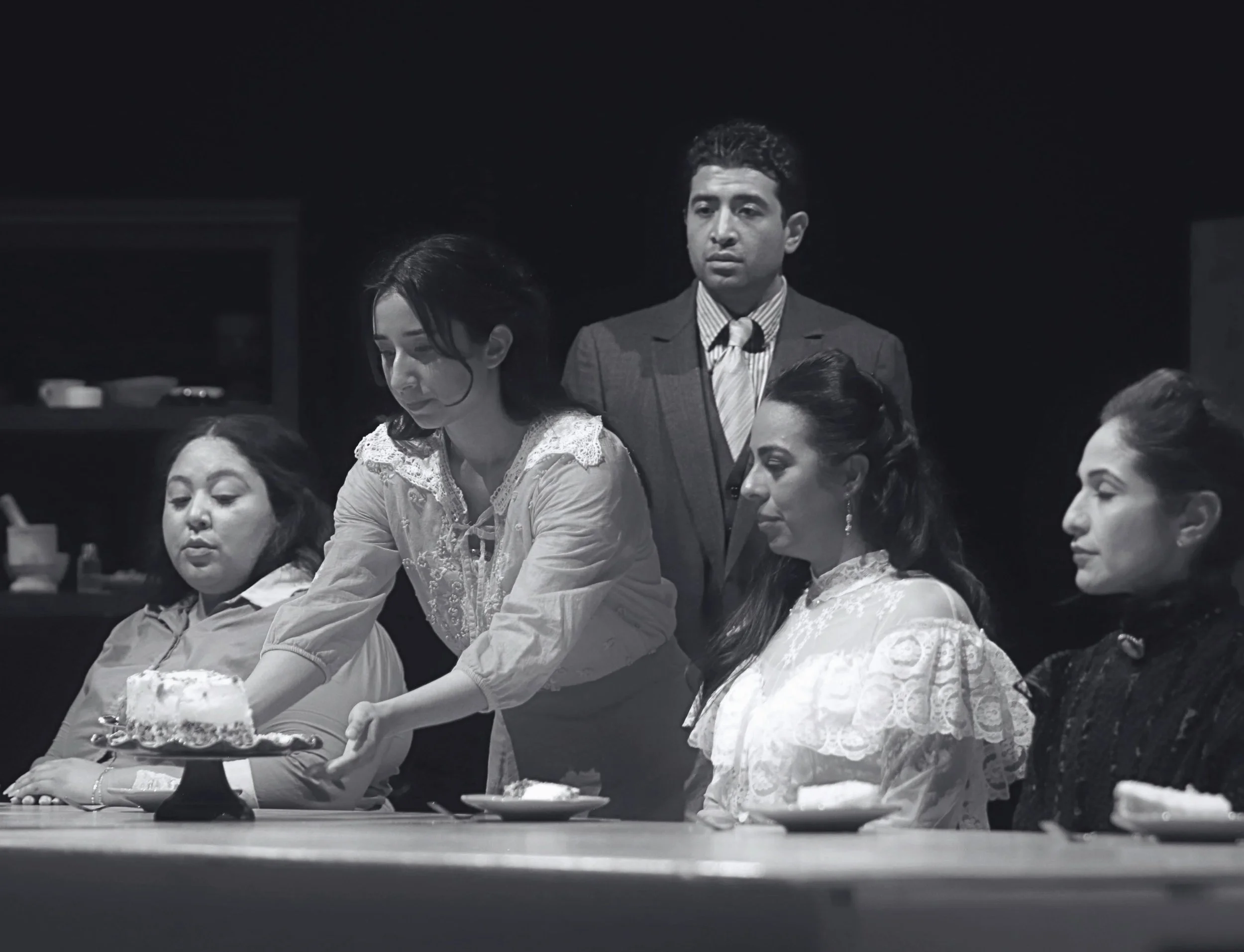
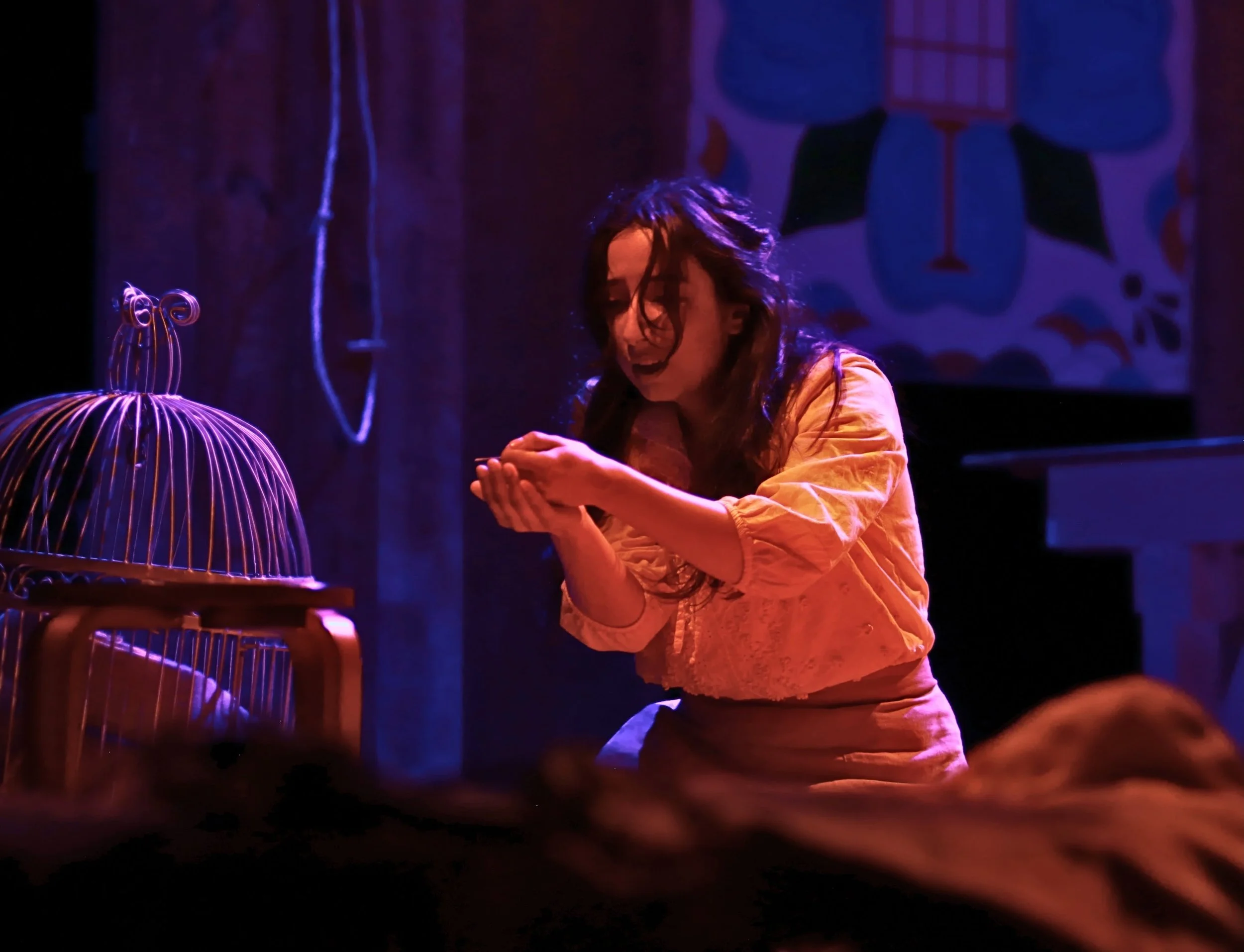
What struck me as singularly moving is how Scampini´s vision and Gabriela Tamez´s scenic design translate food and desire into theatrical experience, in a piece that centers the kitchen as the play’s emotional locus. Yes, two large wooden tables on casters gave the actors mobility within the space. Yes, they finely chopped real white onions while articulating the ingredients of a particular recipe. Yes, three bird cages (each one representing a sister) suspended above descended at the appropriate time (props by Emiliano Pielgo). Yes, the costumes (Nick LaFleur) demonstrate an earthen, muted palate and restraint from stereotypical representations of Mexican identity. I discerned slight adjustments to the women´s dress as the plot progressed. The light design was subtle (Gerardo Guerrero) with the collaboration of Nick Gameros (light operator). But I am saving some the best for last.
The sound design by Charles Seals, in my opinion, generated a subtle (again that word, it´s intentional) synergy with the emotional landscape of the piece. In my notes I noticed the use of single instruments (the violin, the piano) during singularly emotionally lyrical moments, along with traditional songs such as ¨Cielito Lindo¨ (the “ay ay ay ay / canta y no llores” song… sing it and don’t cry). This resonated with the leitmotiv stated by daughter Tita from the beginning, that for her, “reir es una manera de llorar” (laughing is a way of crying).
Other than the low-key insertion of occasional underscoring, there was (very present throughout) the voice of a female singer that felt at times like a salve for Tita’s open wounds, and at others like a deep lament. Truly, I wanted to know more about the music that went into this production, since the program did not provide specifics. ¡Vamos, TD, print more information in your programs!
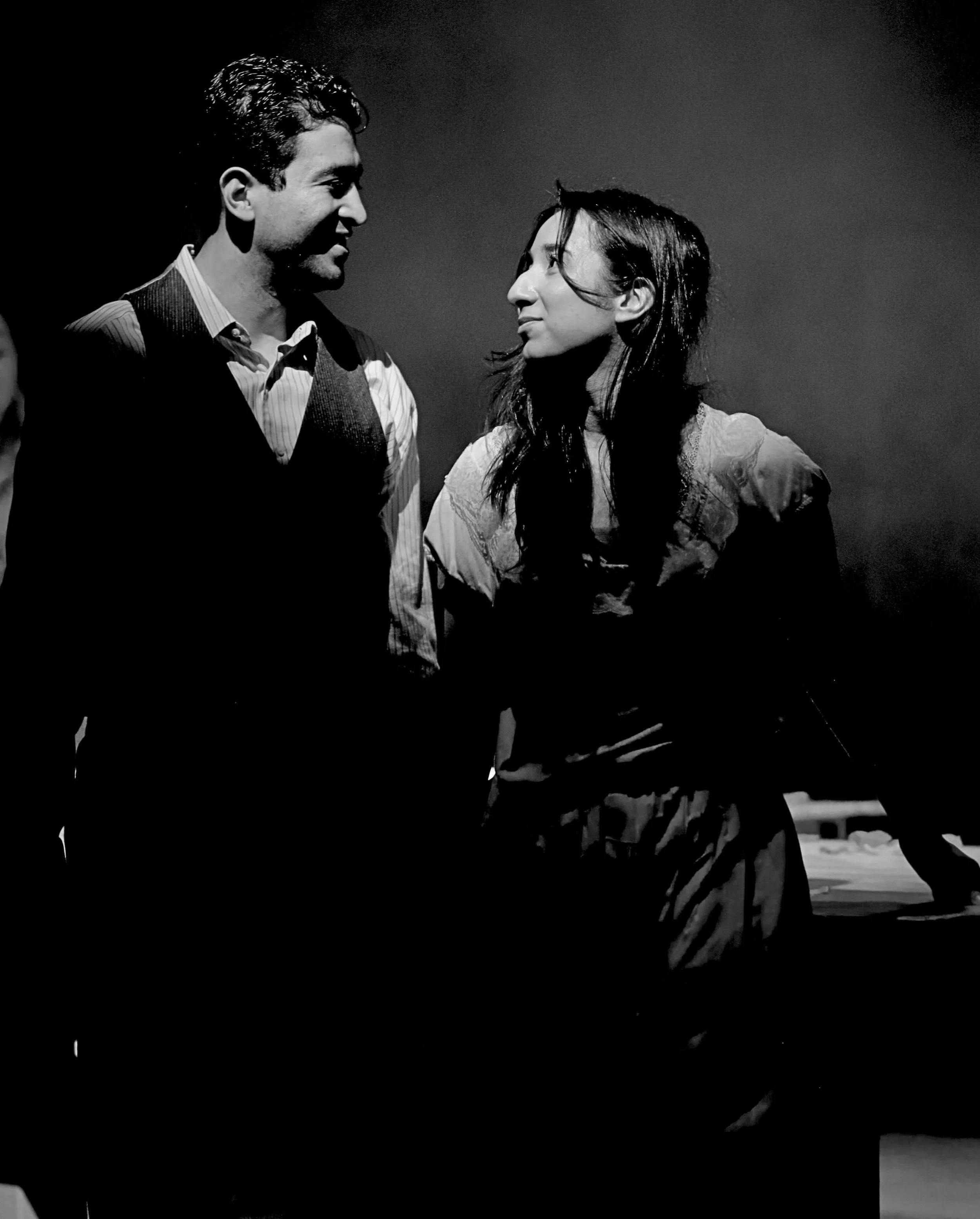
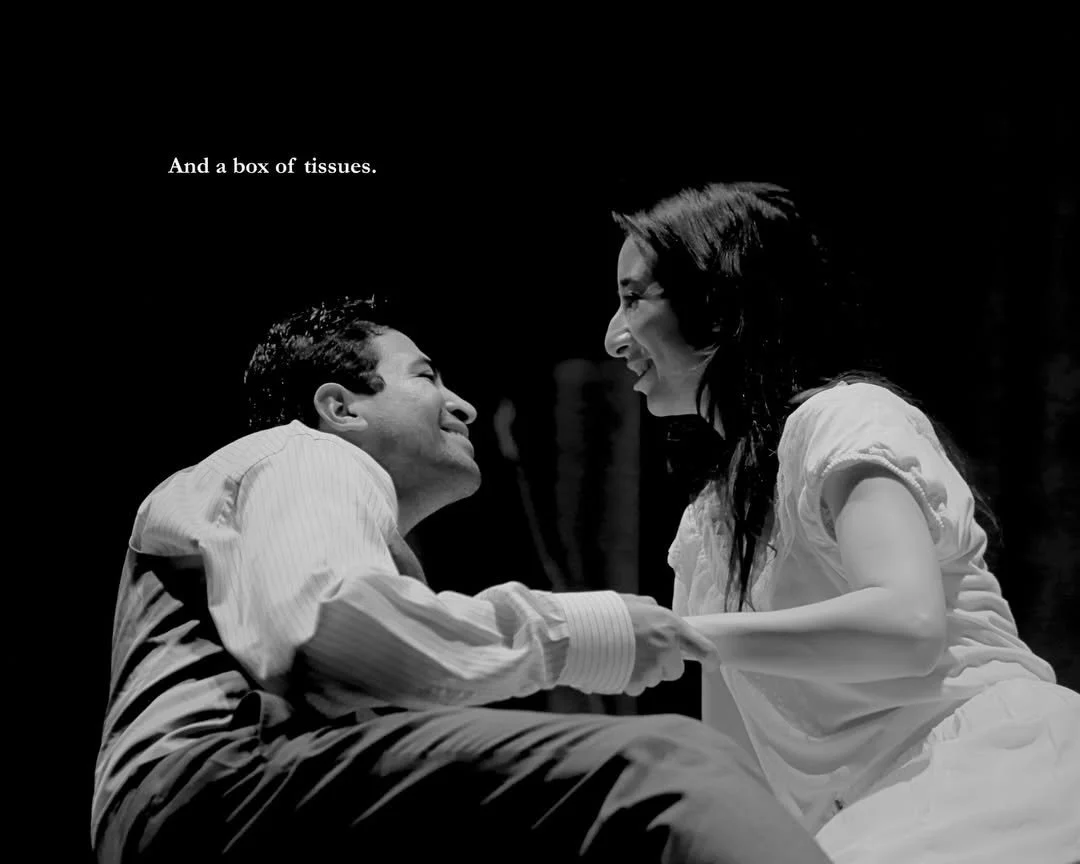
This production also presents an opportunity to explore a central idea: the kitchen as a performative archive. In Like Water for Chocolate, cooking is not simply a domestic activity but a medium through which emotion is transmitted. And this is where the casting and the actors´ work comes in. As Tita, Fernand, who is a recent graduate of the University of North Texas, is the heart of this production. Her innocence and youth come across every time she addresses the audience, a narrative trope that breaks the fourth wall every now and then. The longing looks between her and Pedro (Bismark Quintanilla Jr.) are evident in the close environment of the Black Box. Quintanilla comes across as a proper heartthrob for the young and innocent Tita.
There were two scenes that stood out in my mind, and I jotted them down as ¨the choreography of forbidden desire.¨ One scene showed Pedro’s attempts to kiss Tita after his engagement to Rosaura; the other is towards the end, serving as the prelude to the seduction that takes place. The choreography of these scenes effectively gets across the inner conflict between Tita´s ethical compass and her love/desire for Pedro, and Pedro´s relentless insistence.
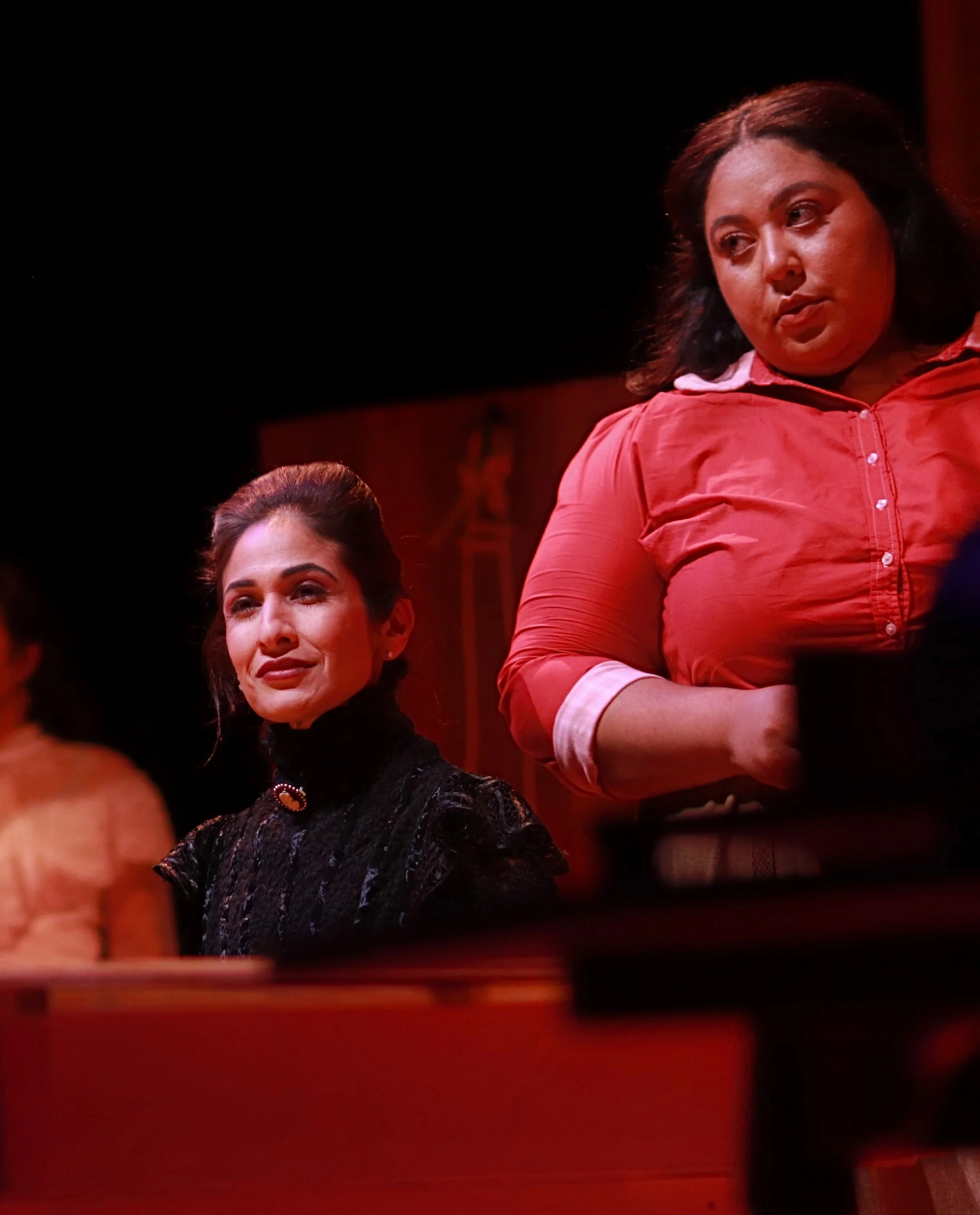
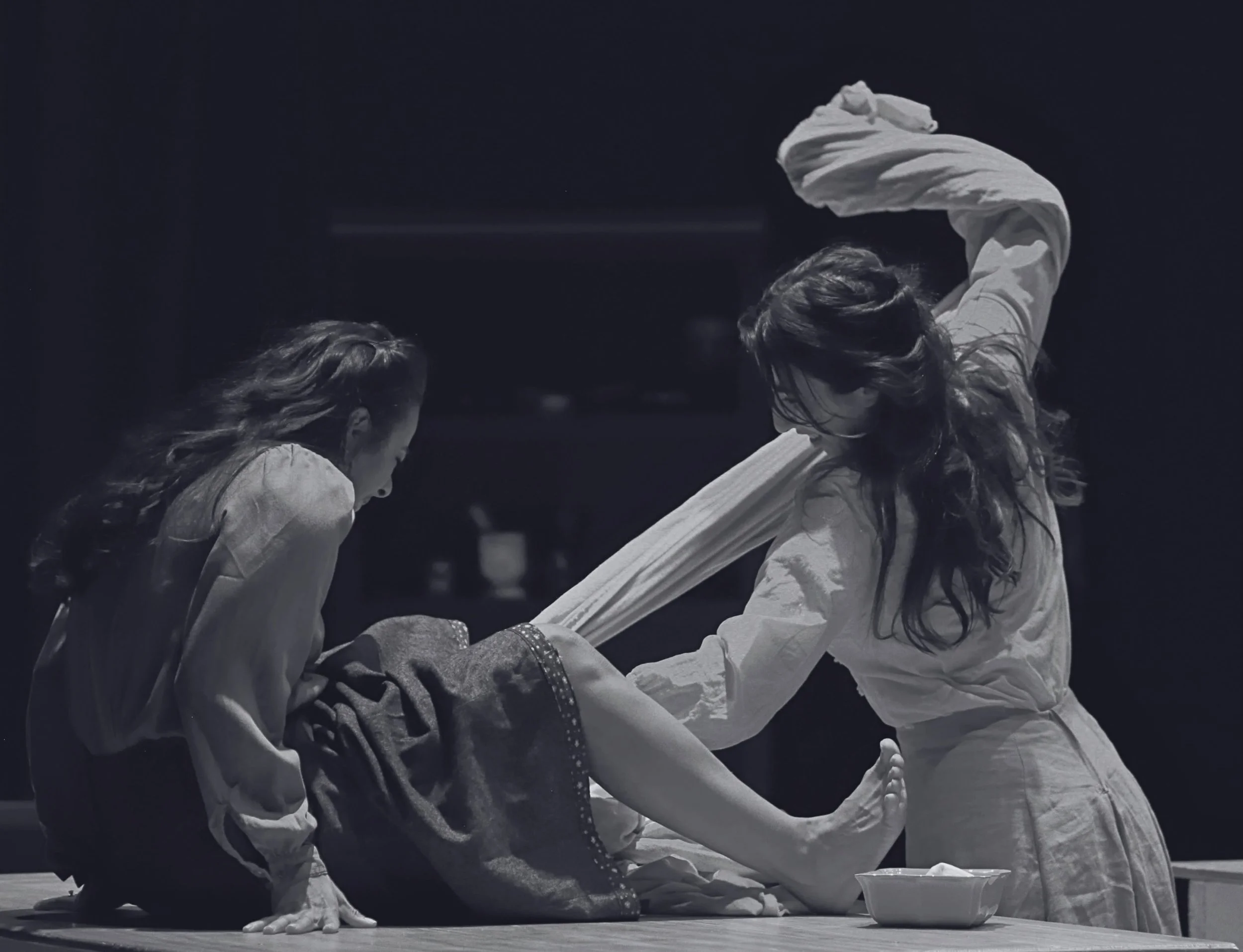
Julia Landey as older sister (Rosaura), who marries Tita´s love, delivers an excellent rendition of a woman who insists that tradition is her right and love can be subsumed within it. At times, she was quite chilling, particularly in the scene in which she slaps Tita. Equally chilling was Elizabeth Maldonado´s rendition of the rigid and repressed Mamá Elena. Her thin frame, imposing figure and angular features fit the character perfectly. Her demise is a welcome relief in the lives of at least two of her daughters, Tita and Gertrudis. The latter, played by Dr. Marta M. Torres, seduces the audience with her charisma, both within the character of the exuberant Gertrudis, but as a performer. There is something in the way she relates to the audience that is quite captivating.
Jonathan ¨Joty¨ Collet plays Dr. Brown, the Anglo doctor who attempts to save and bring stability to Tita´s life. I find Collet an agile actor, who in this relatively small role, still manages to make us understand Brown´s ill-fated love for Tita.
In short, the casting proved to be a stroke of genius, and the production was sophisticated. I only noted at the time that some of the actors, at one point or another, missed their lines. They managed to bounce back, but still…. In a production this intimate, the errors shout. I saw this show during its second week, so by then, their lines should have been beyond reproach. All in all, this was a beautiful production, and an admirable demonstration that performances in SPANISH, do sell tickets.
The show ran June 19-28, 2026.
Dr. Teresa Marrero publishes her work in various sites nationally and internationally in English and in Spanish. Her 2013 to 2019 reviews are digitized within the Portal of Texas History at the University of North Texas. https://texashistory.unt.edu/search/?q=Dr.+Teresa+Marrero&t=fulltext&sort= Connect with her at dr.teresa.marrero@gmail.com