—Carol M. Rice
For an early horror novel written in 1897, Bram Stoker’s Dracula is still surprisingly popular. It’s been made into multiple movies and plays, with more than 700 appearances by the titular vampire across all forms of media. In fact, the Guinness Book of World Records recently named “Dracula” the world’s most portrayed literary character.
It shouldn’t be surprising that Dracula (the novel) is extremely theatrical, easily lending itself to stage and screen, since Stoker began his career as a theatre critic and later served as managing director for the Lyceum Theatre in London’s West End, working closely with famed actor Henry Irving.
The first authorized theatrical adaptation of Dracula was written by the Irish actor and playwright Hamilton Deane in 1924, and then revised by the American writer John L. Balderston in 1927. This version is still frequently produced today.
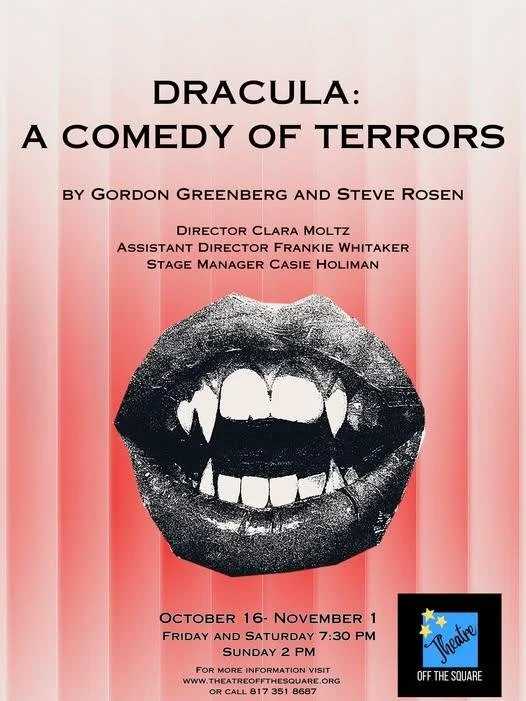
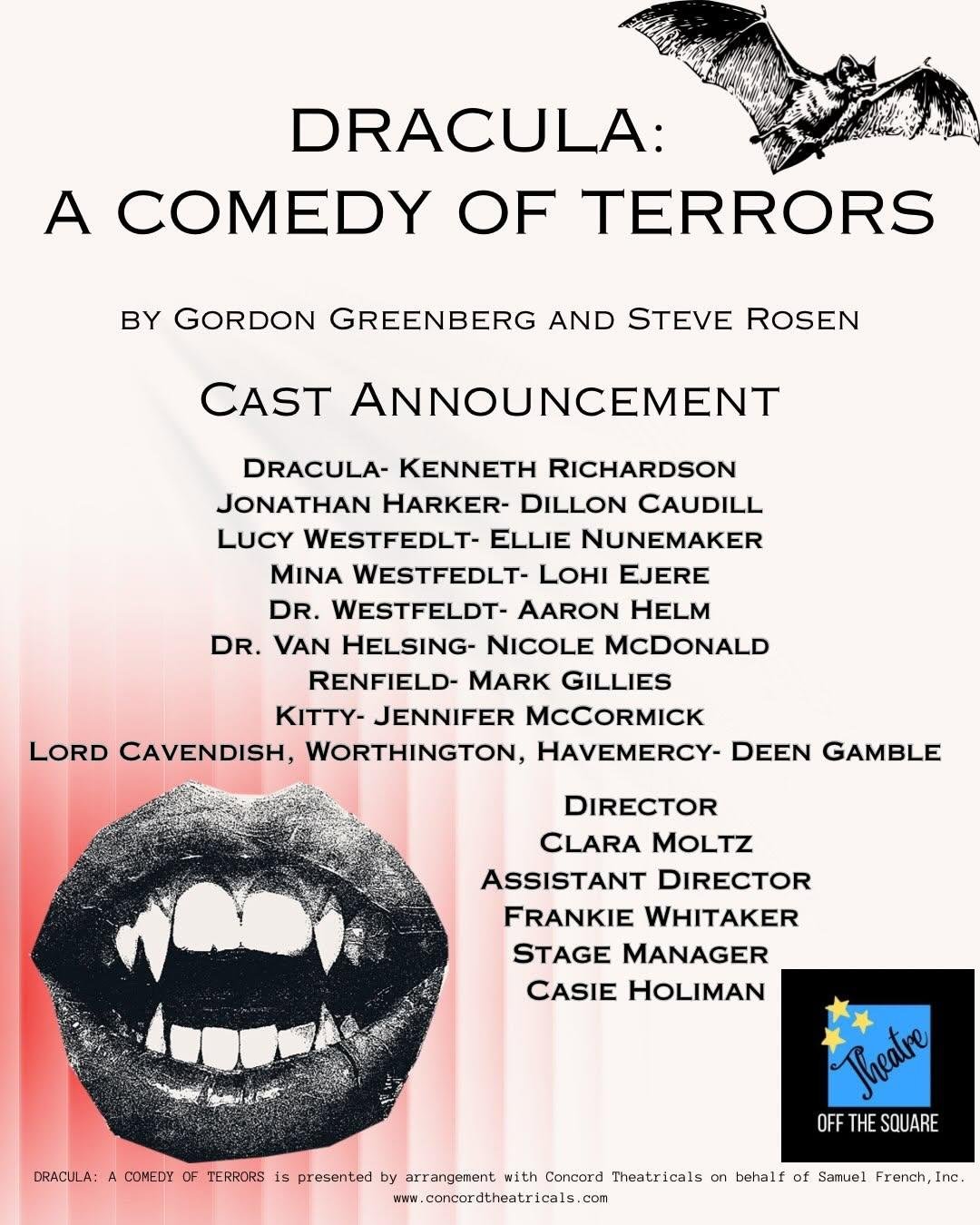
It is not, however, the version currently running in Weatherford at Theatre Off the Square. Dracula: A Comedy of Terrors covers the same basic plot as the original novel and play, but authors Gordon Greenberg and Steve Rosen take it in a completely different direction.
Originally written to allow just five actors to cover all the roles, Comedy of Terrors is a fast-paced romp with lots of laughs—and in this adaptation, a cast of nine. By adding these extra actors, director Clara Moltz has taken some of the frantic, quick-change quality out of the mix to concentrate more on the story. Unfortunately, much of the silly campiness required of the script is lost because of these additions, though the audience still seemed to thoroughly enjoy themselves.
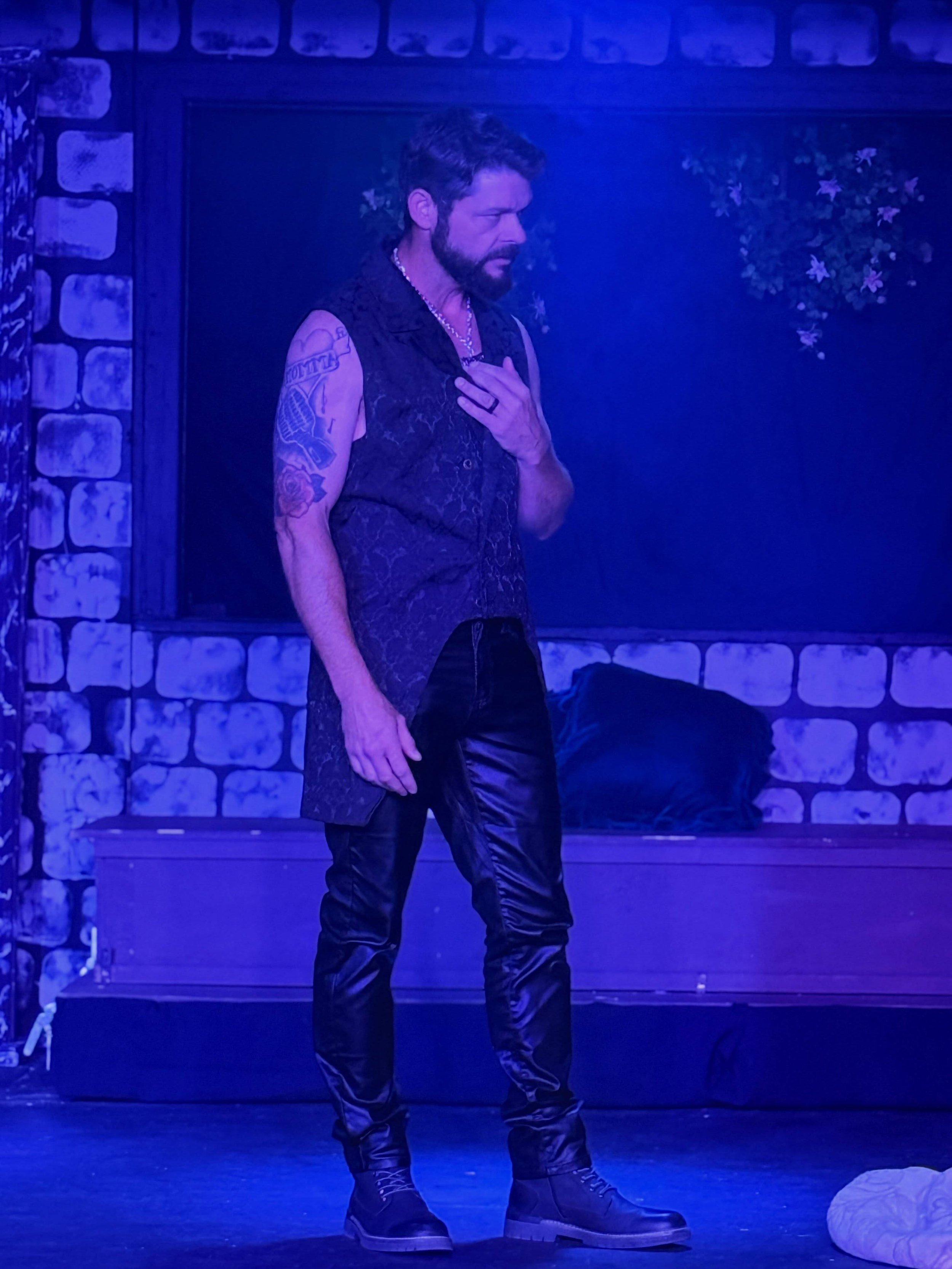
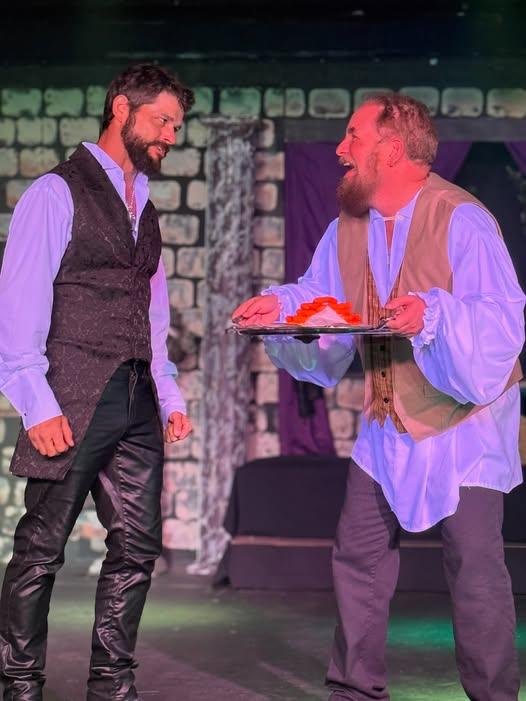
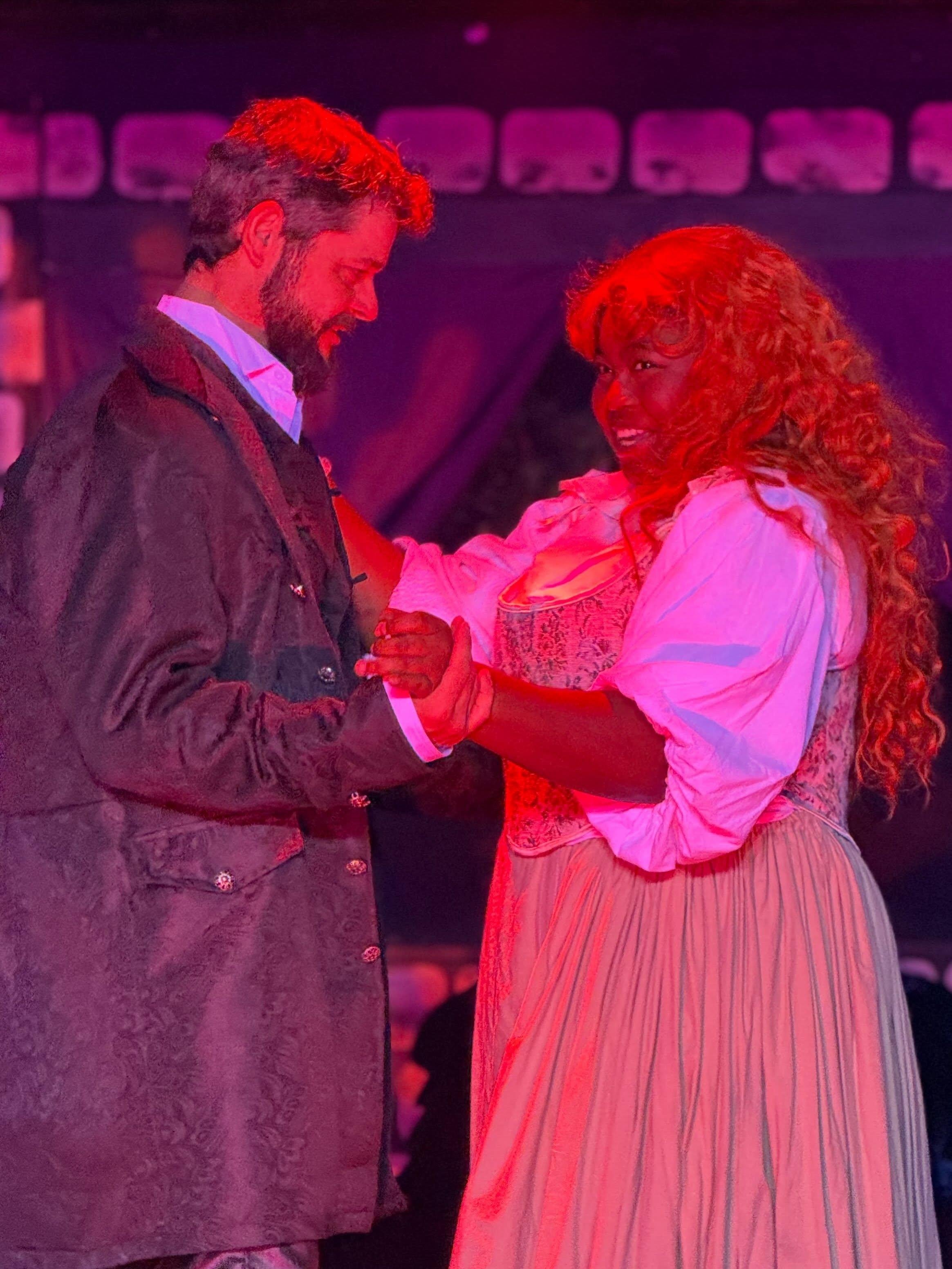
As the title character, Kenneth Richardson is physically perfect for the role. Decked out in tight leather pants and a sleeveless vest for much of the show (and even shirtless for one scene), it’s easy to see why the women in the story are attracted to the handsome yet dangerous vampire, fangs and all. Fortunately, Richardson doesn’t let them get in the way of his diction, and he has excellent physicality throughout.
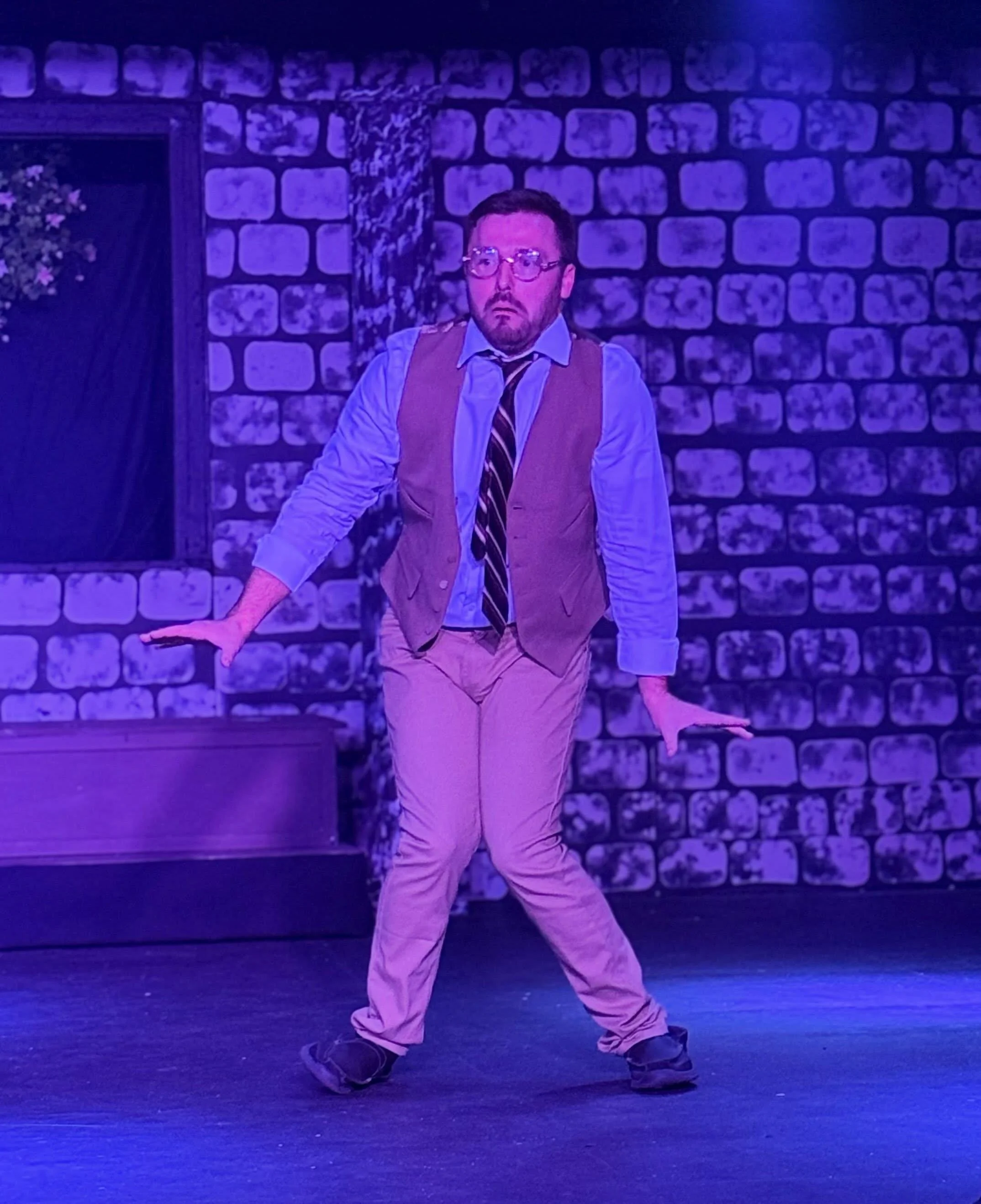
Dillon Caudill plays the meek and geeky Jonathan Harker perfectly—and once he’s bitten by Count Dracula, also has a few surprises up his sleeve. I should rephrase that, since he then adopts the same sleeveless vest and leather pants look as the Count (and the same sexy devil-may-care attitude). Caudill’s performance is a lot of fun to watch.
As Lucy Westfeldt, Ellie Nunemaker looks lovely, making it easy to see why Dracula would want her for his bride, but it’s occasionally hard to hear her and she seems somewhat ill at ease and uncomfortable through much of the show. It’s as if she can’t quite let go and embrace the ridiculousness and humor of the situation—perhaps since Lucy is generally portrayed as a more grounded character in the lineup, and this version doesn’t support that.
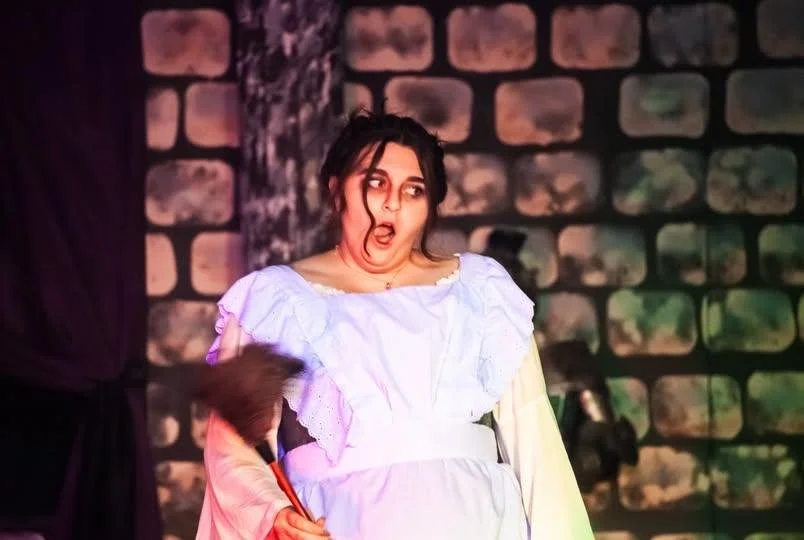
Lohi Ejere, on the other hand, plays the “less attractive” daughter Mina to the hilt and obviously has a fabulous time flouncing all over the stage. Her facial expressions are huge and hilarious, and she isn’t afraid to be campy.
As Dr. Westfeldt, Aaron Helm is a bit understated, but he is extremely believable as the misogynistic father of Lucy and Mina. The fact that his Dr. Westfeldt finally admits he’s wrong about women’s brains and abilities was met with cheers and applause.
Nicole McDonald, though seeming a bit young for the role, does a nice job as Dr. Van Helsing. In this show, the part is written to be played by a woman, adding to the sexual conflict between Dr. Van Helsing and Dr. Westfeldt. McDonald’s good German accent was one of the few that was consistent through the show, as most of them were all over the place. For example, as Kitty (another of Dr. Westfeldt’s mental patients) Jennifer McCormick’s Cockney accent is so thick it’s hard to understand her—but she has a great look.
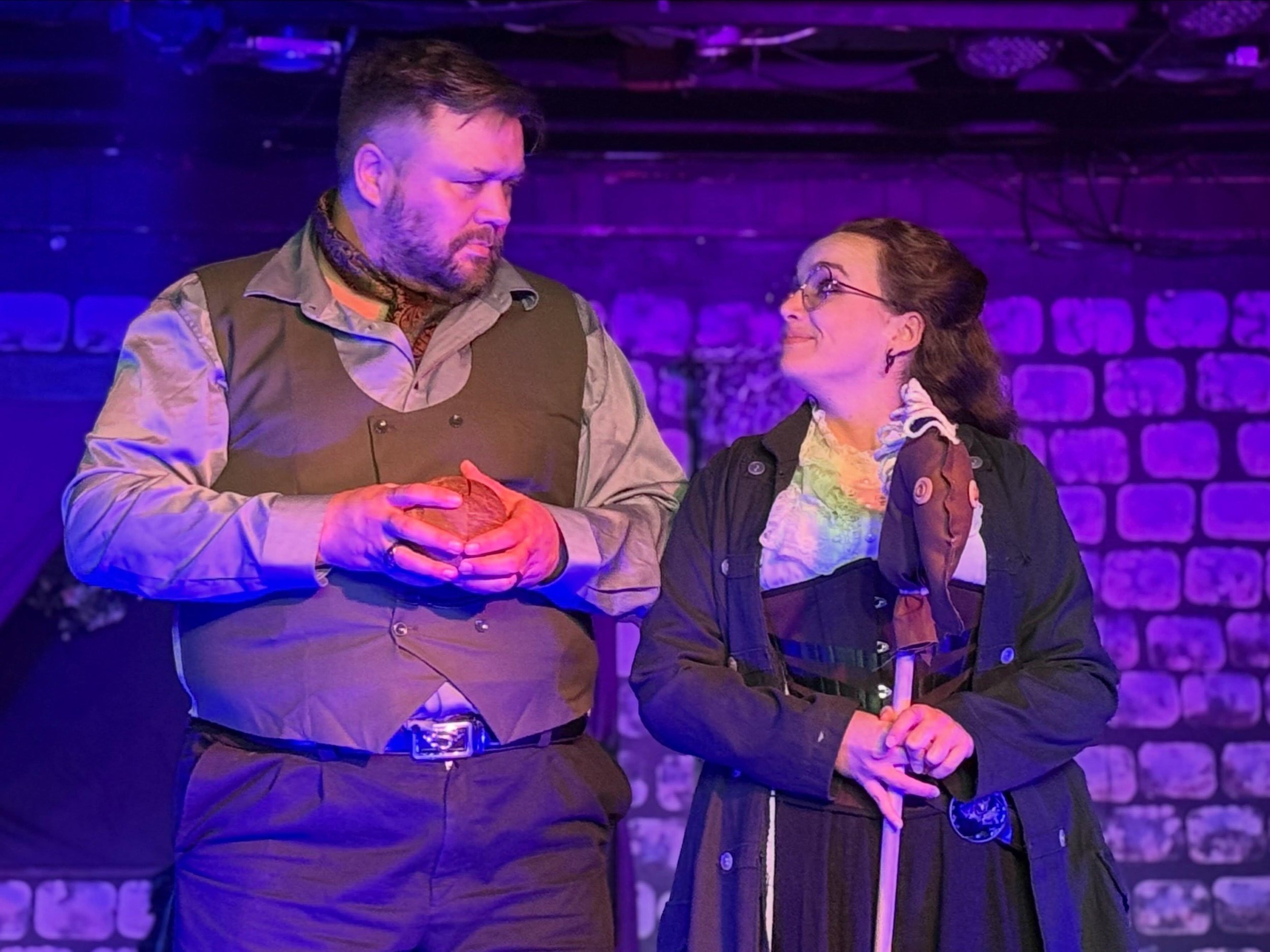
Mark Gillies plays Renfield, Westfeldt’s weak-minded, bug-eating patient who is controlled by Dracula. He plays a few other roles (a Ship Captain, et al.), and while his Renfield tends to be rather one-note, he differentiates each of his characters well.
Deen Gamble is tasked with several roles as well, including a Bosun, a Gravedigger, and Lords...two of whom are puppets, resulting in his playing three very funny parts in a single scene and giving them unique voices. His Gravedigger is also a gem.
Moltz, in addition to directing, is the set co-designer with Frankie Whitaker. The simple castle walls work well for the action, well-lit by Jaclyn Justice’s lighting design, but I was most impressed with the large number of flickering (fake) candles in the rafters over the audience. These provide the perfect, spooky feel for the show.
Props and costumes are by Nunemaker, Moltz, Whitaker, and Ashley Palmatier, and everything blends together nicely to create the world of the show. I especially liked the standing, rolling coffin. Sam White’s sound design, though overall quite good, is often a little too quiet.
I’ve loved Dracula: A Comedy of Tenors since I read it several years ago and have been privileged to see it live a couple of times now. Since the source material and most of the resulting films and plays are so dark, it’s a deceptively difficult play, because bringing humor and laughs to this story doesn’t come instinctually. This cast and production team hit some of the right notes but could have taken things even further on the campy comedy scale. This didn’t stop the audience from loving it, though. Dracula: A Comedy of Terrors has one more weekend in Weatherford.
WHEN: October 16-November 7 2026
WHERE: 114 North Denton St., Weatherford TX
WEB: theatreoffthesquare.org