Photos by TAYSTAN Photography
—Jan Farrington
A leather-bound journal, a handmade flute, a dried flower, a rolled-up drawing. For any of us who are easily caught by the magic of objects from other times, other lives, other places, playwright Erin Malone Turner’s for the rest of our lives is a story that slips easily into our hearts.
What’s more, the two souls connected to those objects (and of course, the actors onstage playing them) have heart and humor to space, and a deep chemistry…though that’s a cold word for the steady, quietly electric warmth that grows in the theatre as we get to know them.
As with many of Turner’s works, the play is a mind-tickling blend of familiar and extraordinary events. Her works often color outside the lines, escape the everyday, set friendships and love stories and life “situations” in and out of this world. Sci-fi, outer space and post-apocalyptic scenarios aren’t uncommon elements (see Hello, Earthlings!, SPACED OUT, Ingrained, etc.), but without skewing too “alien” to us.
for the rest of our lives finds a wormhole Picard would be proud of—a way to track a particular love story through eras, not years, never losing track of the humanity involved. Directed with a fine hand by vickie washington, the story never loses momentum nor emotional force.
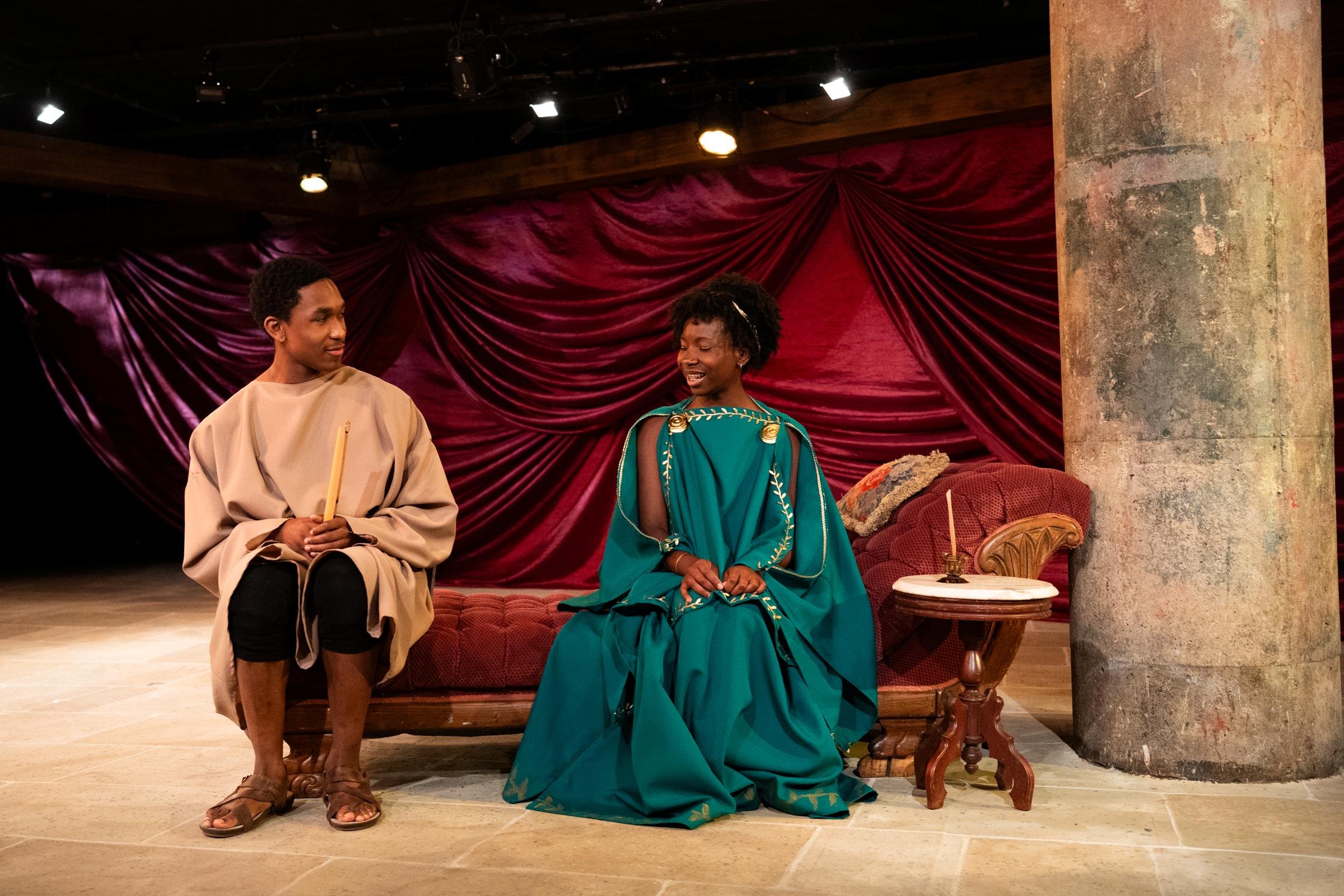
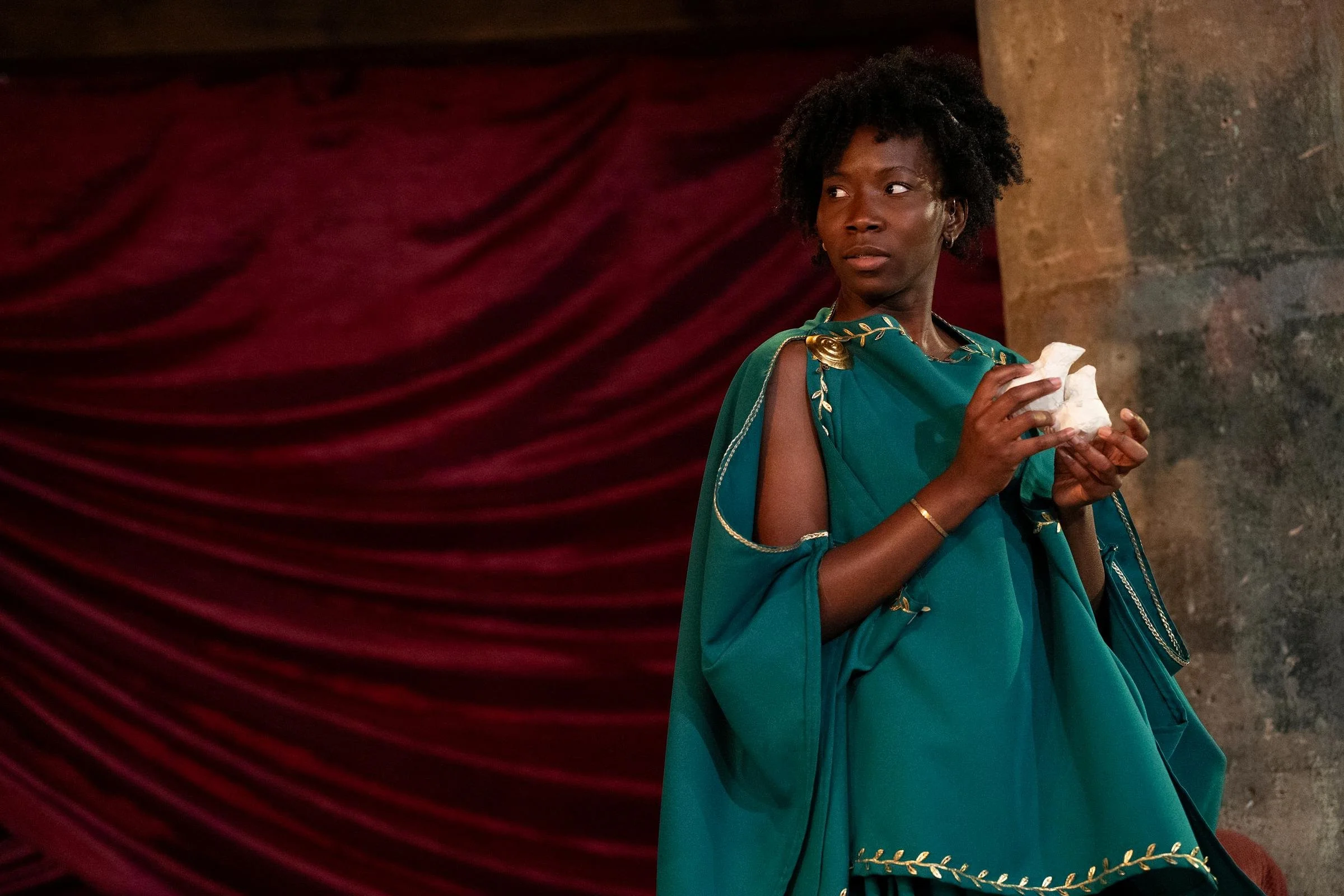
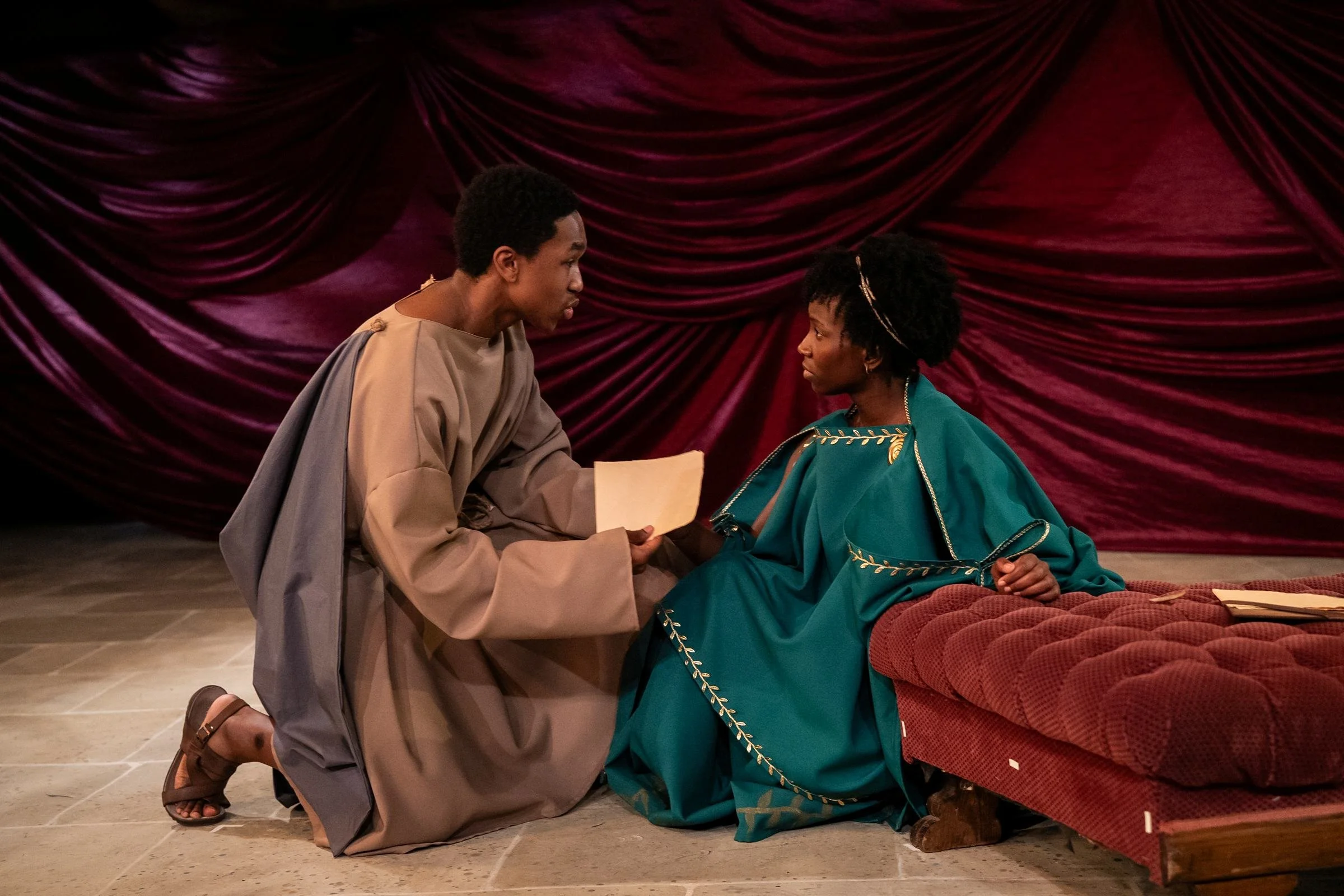
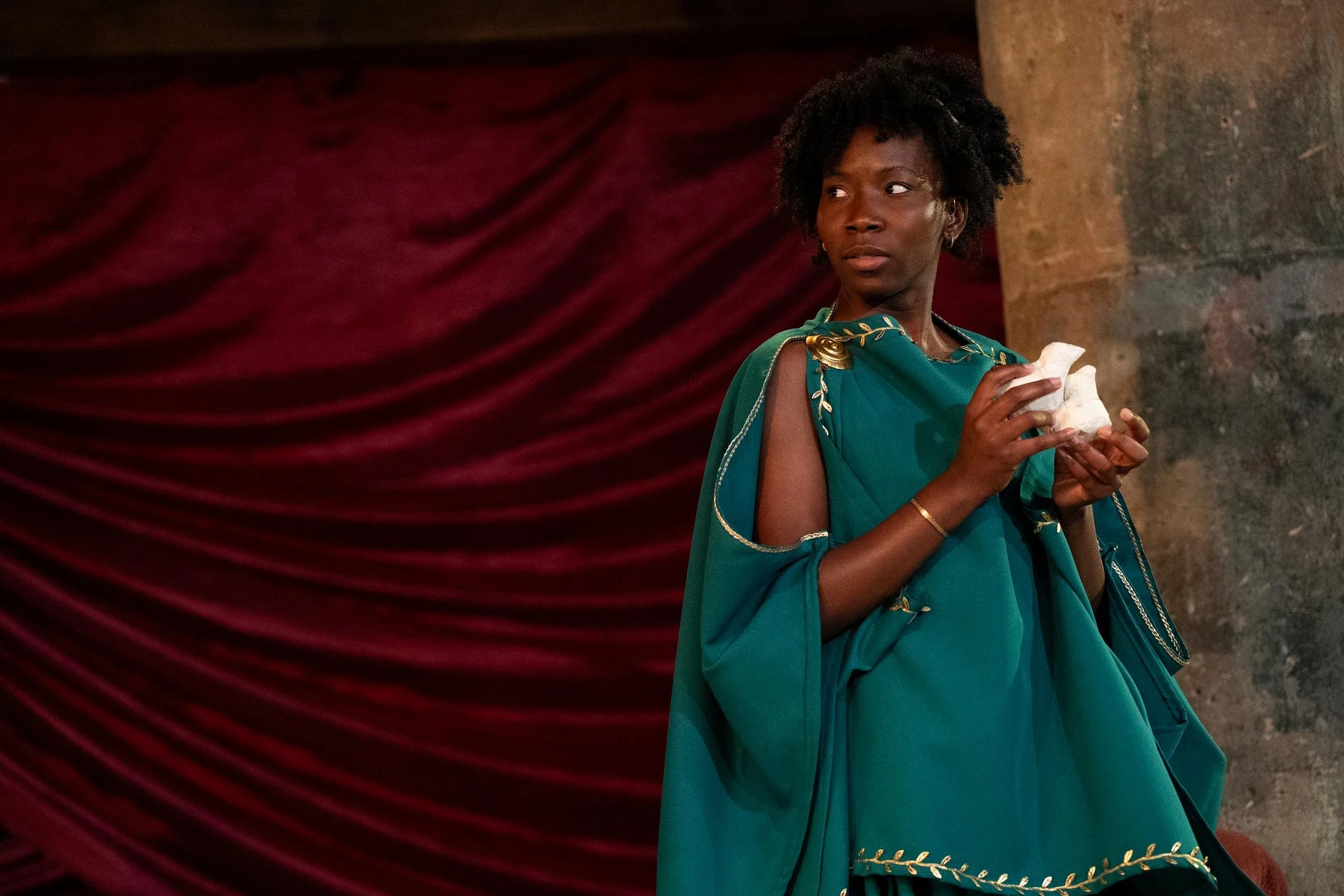
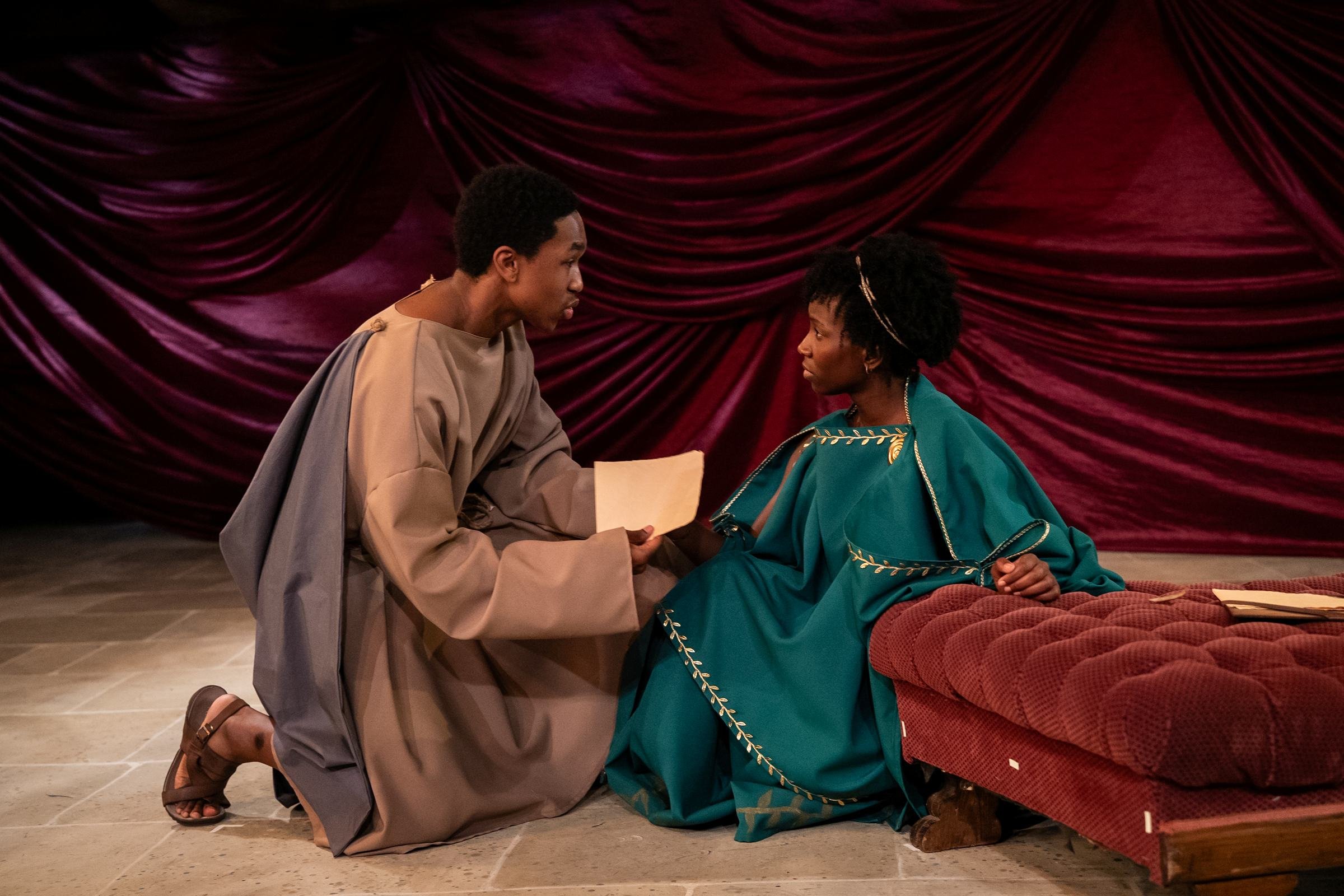
Zariyah Perry plays four women characters, matched by Nathaniel Wooley II as four men. The first pair we meet are a princess, Petra, and a musician, Orion: young, innocent, ardent and hopeful inside the ancient court of her father. Petra, shunned by her royal family, clings to her dream of never being forgotten. Orion, who loves her almost instantly, will spend forever trying to make that happen. Can love last longer than a lifetime? asks Undermain’s program note.
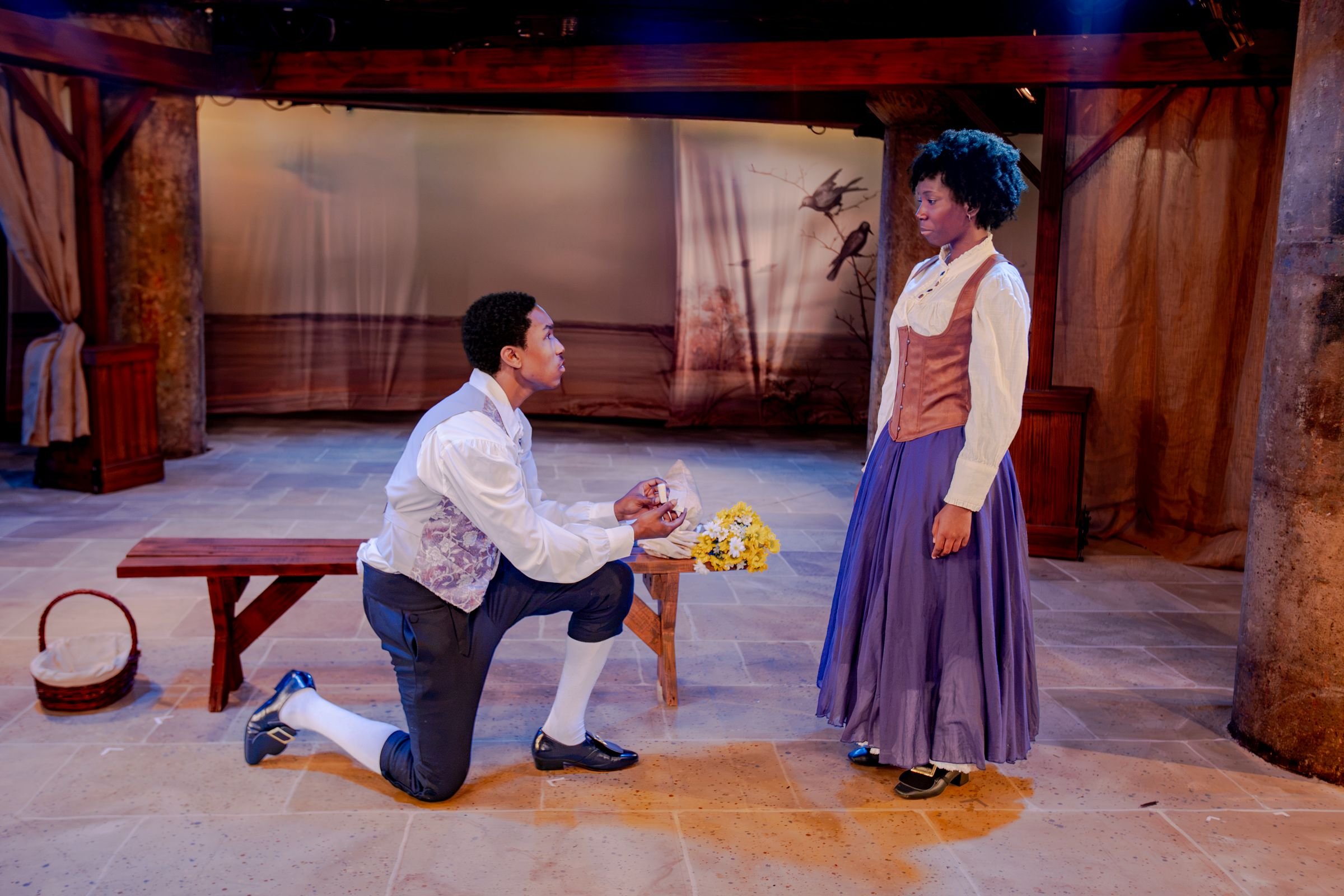
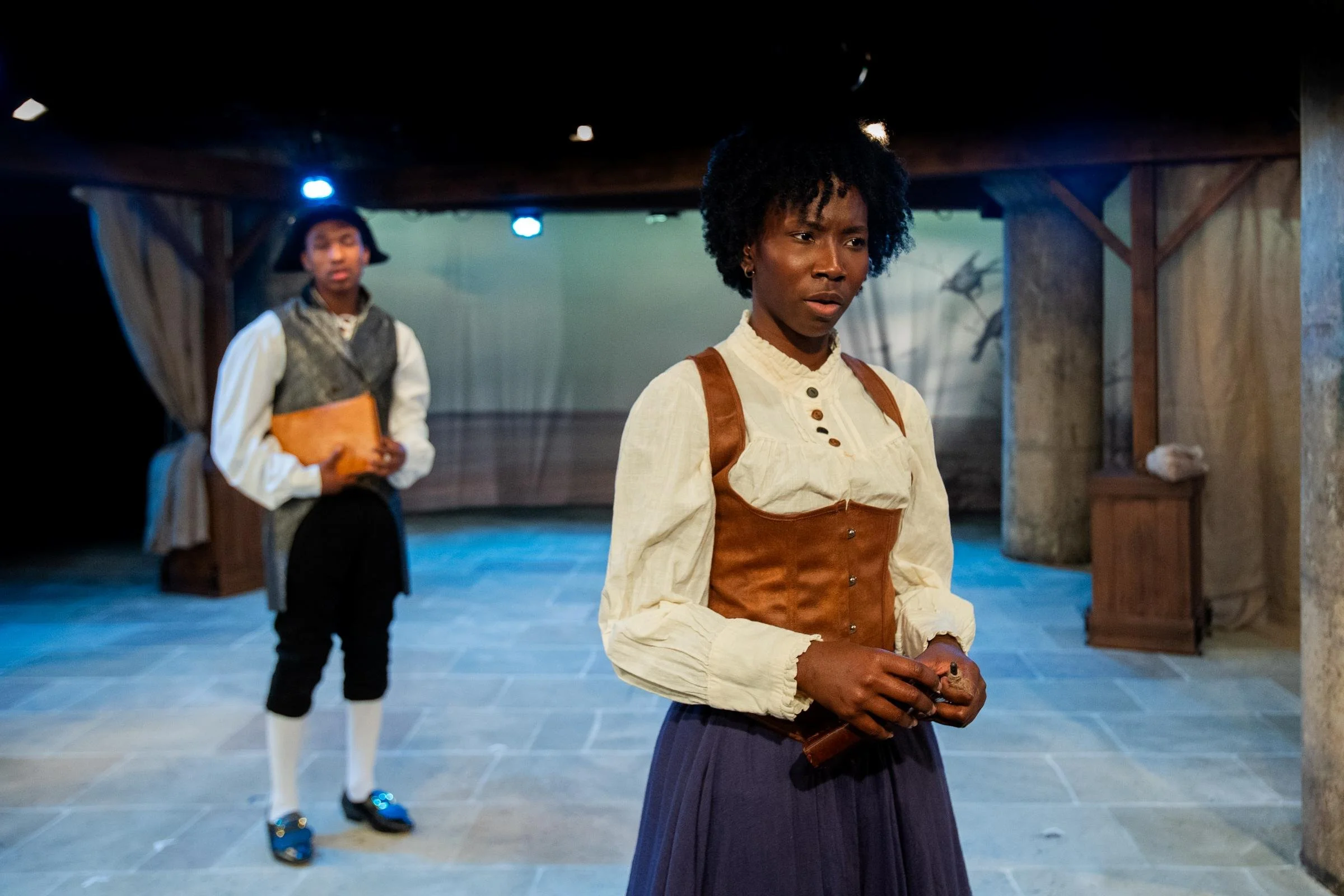
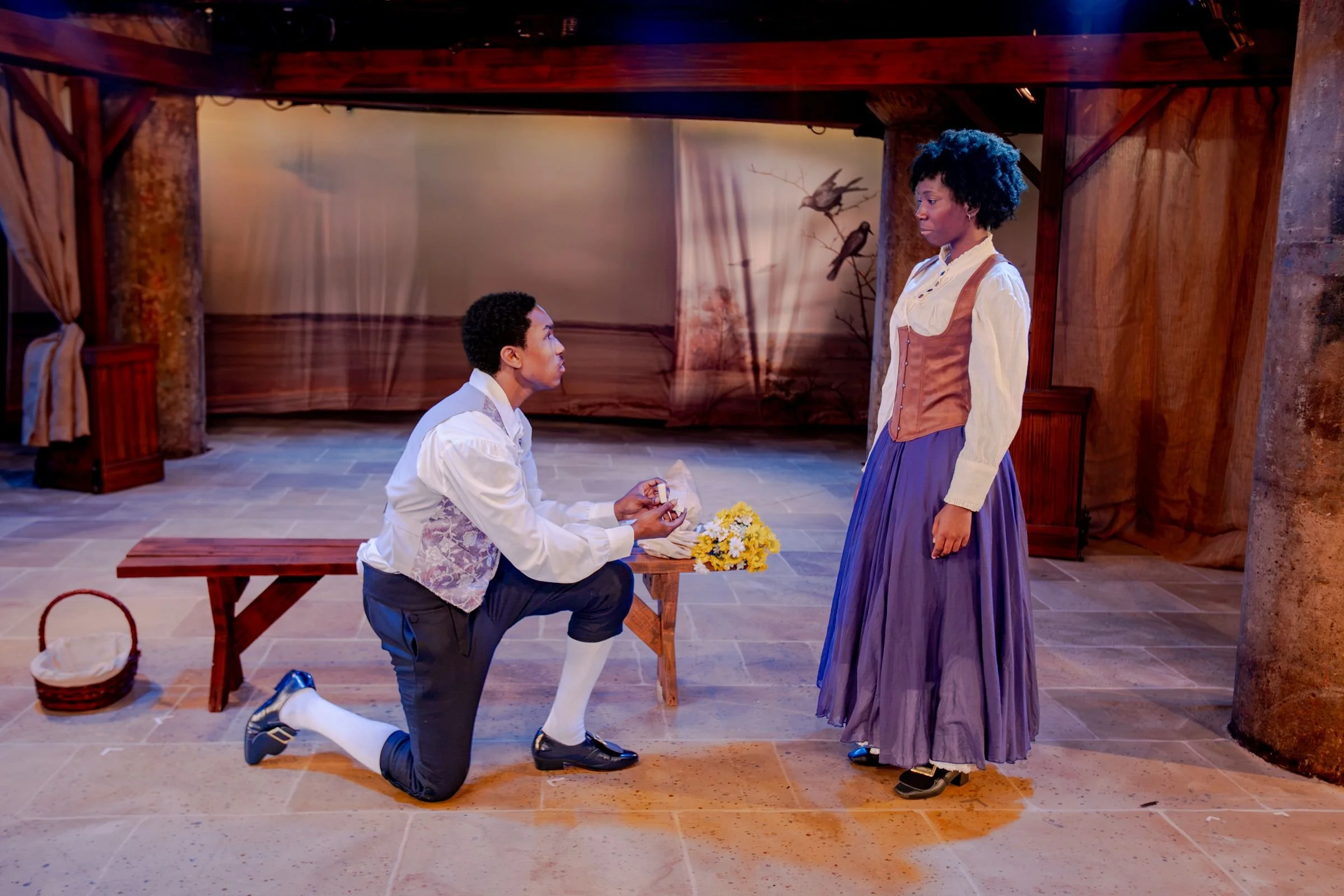
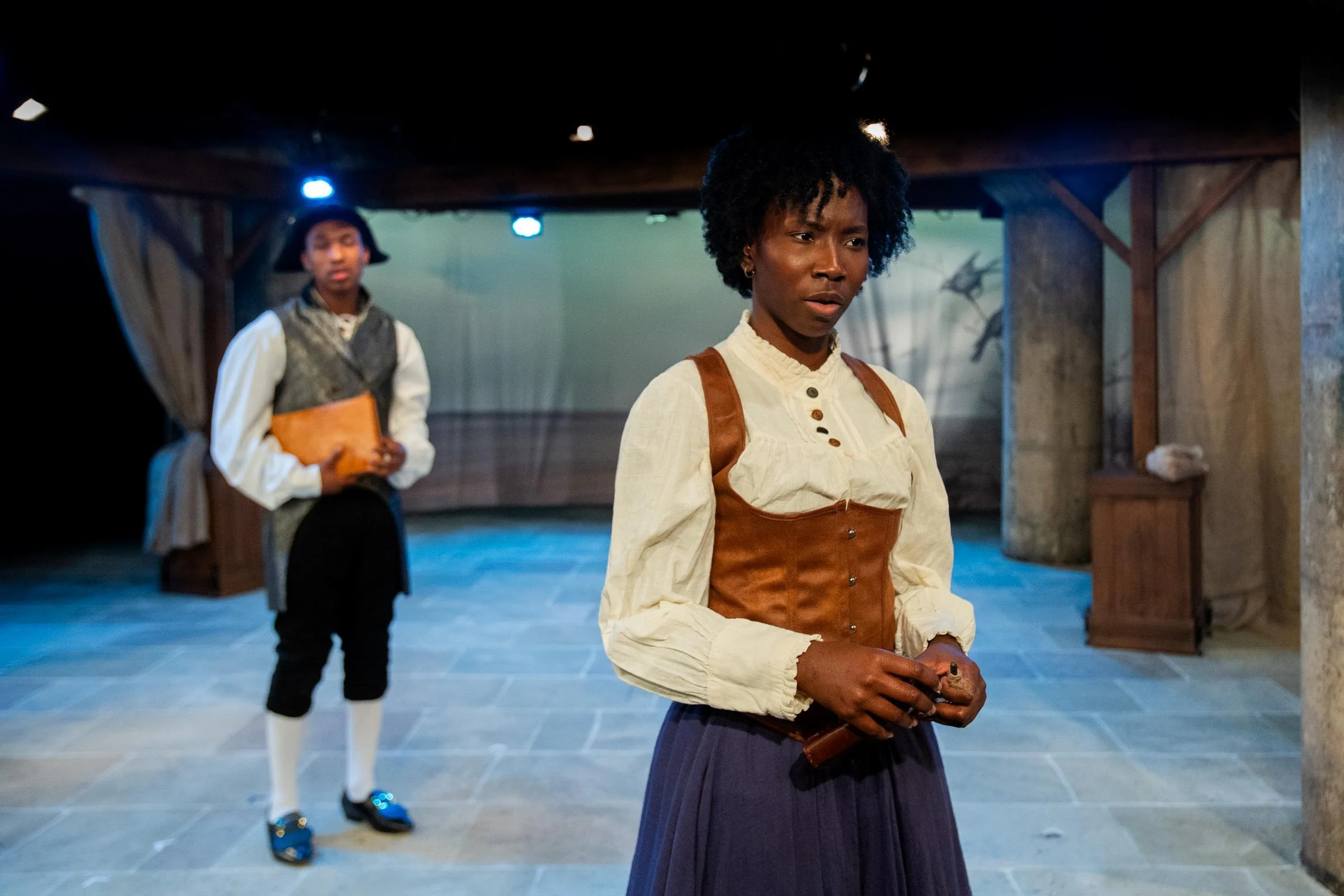
Thwarted and hemmed in is the character’s vibe, and it repeats centuries later (though in different terms) with the second couple, 18th-century colonists for whom family obligations are the main barrier. The third pair (in our own time or a near-future) are work colleagues, looking for discoveries, book-worthy finds, exciting museum exhibit to create. Their relationship is professional, yet…there’s an immediate sense of connections far beyond their modern “lab” workplace. And the fourth pair? Your own imagination will be put to work here—in a good way.
Perry as Petra is sprightly but sad, childlike yet thoughtful. “These are the stars that have been arranged for me,” she says—but she is determined she won’t be forgotten, giving him writings, paintings, and begging Orion to keep her name alive into the future. He is, literally, her way out. Wooley is caring and sensitive, quick to see much in Petra to value.
As early American neighbors, the actors grow up in front of us with shifts of voice timbre, body language, and expressions. Lily and Jude are self-willed adults, yet bound by the rules of their society. She cares for family, and can’t seem to break free. He fills a journal for her; she gives him a key to add to his collection of mysterious “openers.” As Amira and Kismet, researchers and archivists exploring the history of objects, they are developing something unique—the first-in-history collective works of a single artist. Her name’s been deciphered as “Petra”—and collectors around the world know her well. But how does a handmade flute connect—and how will the universe shift if and when “The Petra Show” makes its appearance?
Undermain’s columned space works perfectly for the royal court (set design by Luke Atkison, period costuming by Ava Roberts-Kamaria); quick-change props and backgrounds (elaborate drapery, murals of birds and woodland, angular blinds and metal shelving) mark the change of centuries—and in the end, are we still in or of a world we know? We can’t know precisely how much intimacy coordinator Monalisa Amidar contributed, but between her and the actors, they give us a series of “relationships” I, for one, will remember.
This run at Undermain marks the professional premiere for Turner’s play—and it’s a part of her experience as the recipient of this year’s Katherine Owens/Undermain Fund for New Work award. She is the first local playwright to be so honored, and the first Black playwright as well. Having watched her progress for some years, I have come to value her unexpected vision of the possibilities—not just of human life, but of stage stories as well.
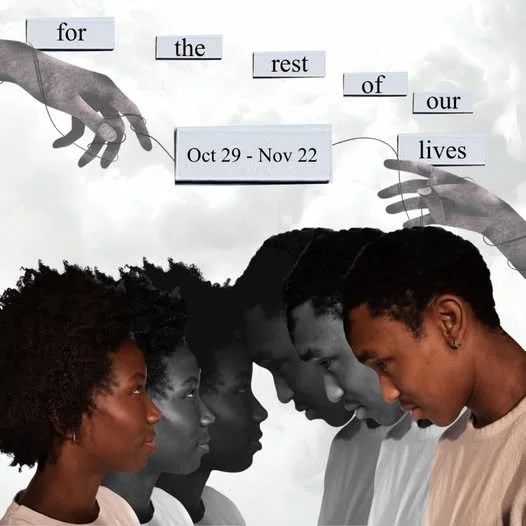
WHEN: October 29-November 22, 2026
WHERE: 3200 Main Street (Deep Ellum), Dallas
WEB: https://www.undermain.org/