Jean Genet’s ‘The Maids’ @ The Classics Theatre Project

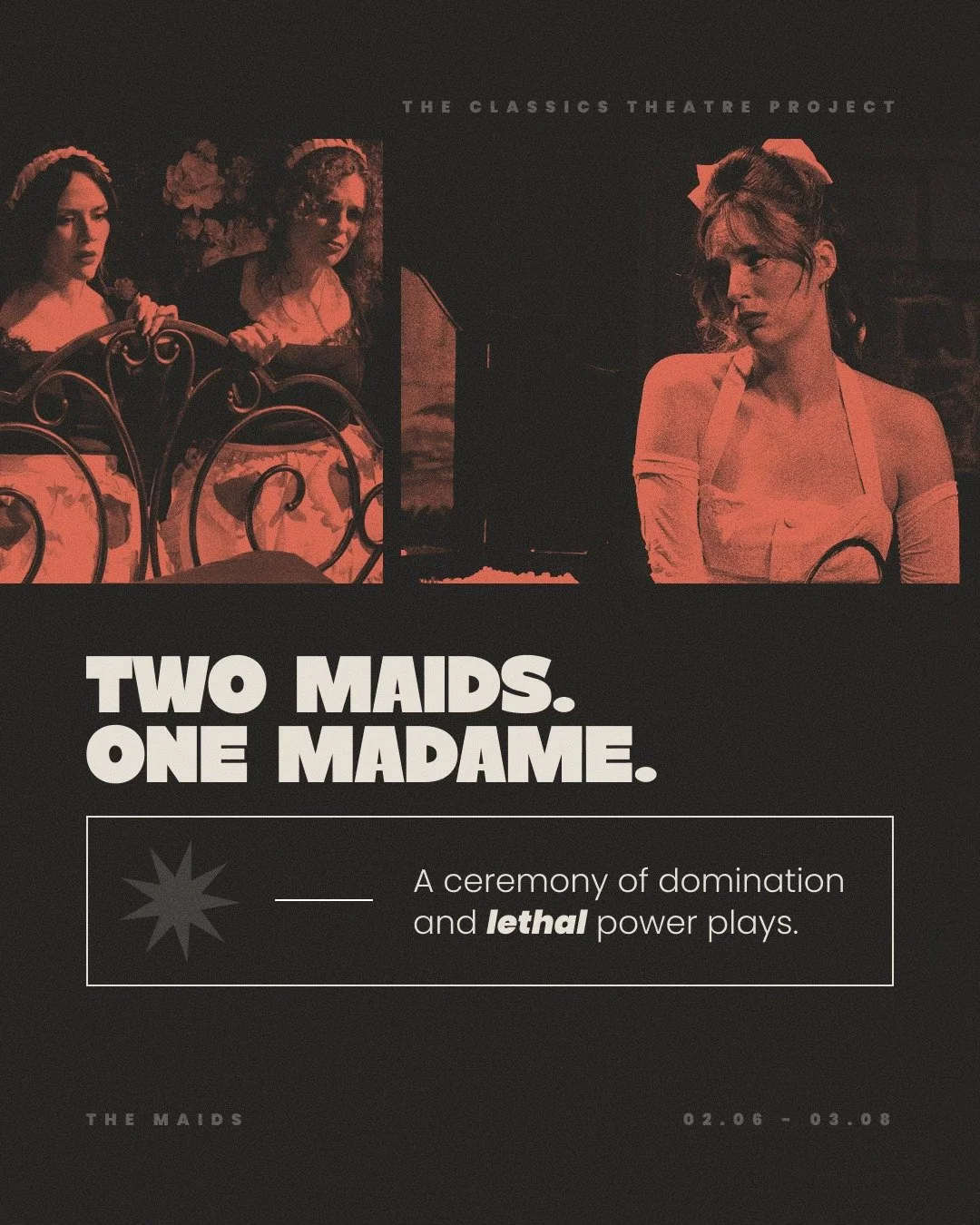
Production photos Ariana Cinello; Promo photos Kate Voskova; graphic design Devon Rose
—Rickey Wax
The Classics Theater Project kicks off its season with Jean Genet’s The Maids (1947), and Joey Folsom’s production understands immediately that this is not a play built for distance. It needs proximity. It demands that the audience lean forward, listen closely, and accept the discomfort of being pulled into something private. Directed by Joey Folsom with an assist from Janae Hatchett, the result is a taut 95-minute descent into obsession, class resentment, and the fragile, ferocious bond of sisterhood.
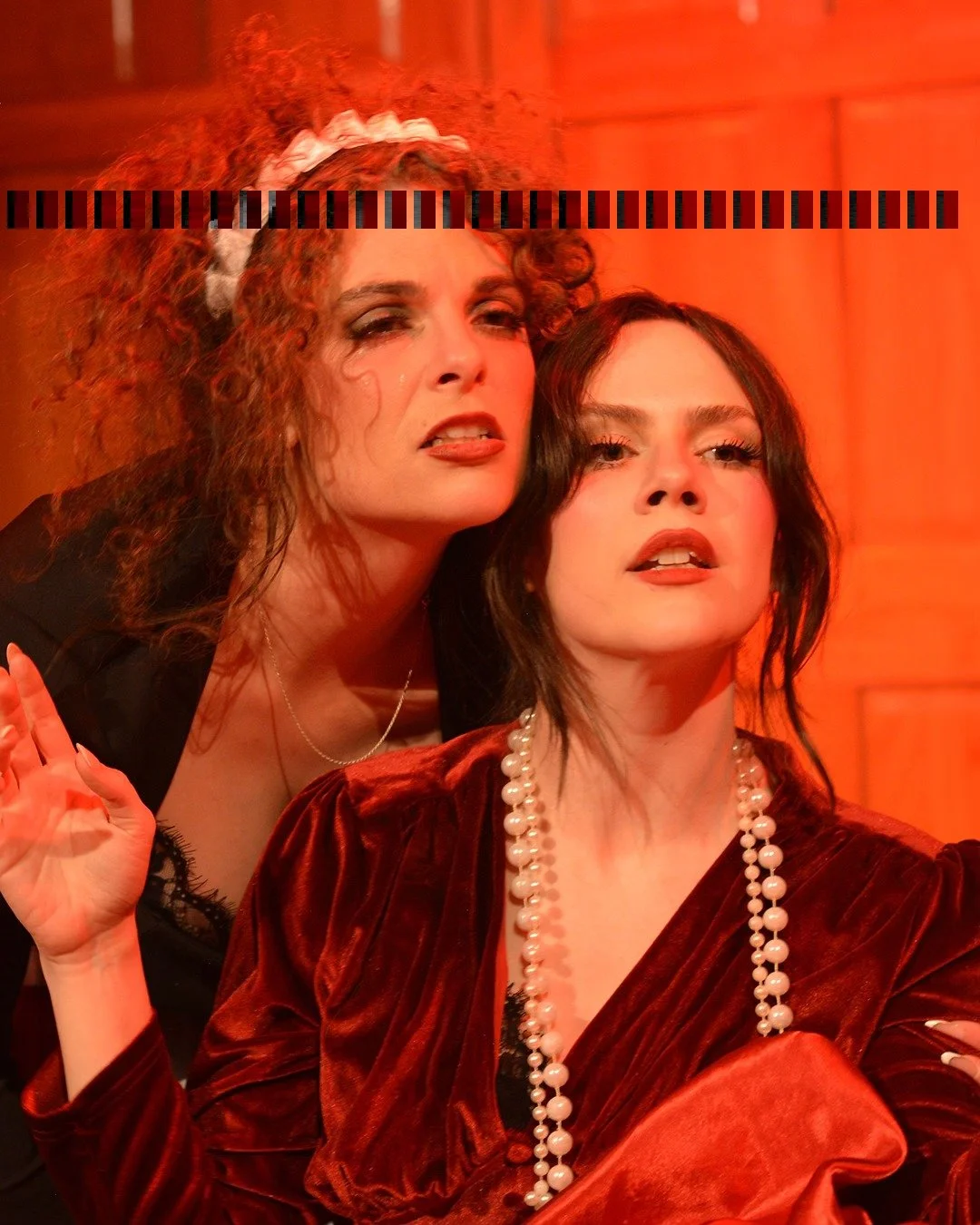
We enter Madame’s bedroom, bathed in red light. A bed with red satin sheets sits like an altar, untouched, waiting. Nearby, a vanity holds scattered pearls, strewn about as if wealth has been handled too often and too carelessly. A red velvet dress rests on a torso mannequin, upright but lifeless. Flowers crowd the room. Too many flowers. Their beauty begins to feel less like decoration and more like pressure. Red, white, and black dominate the space. Seductive, almost romantic. Valentine’s Day colors—though not the Hallmark version, but the older one rooted in martyrdom.
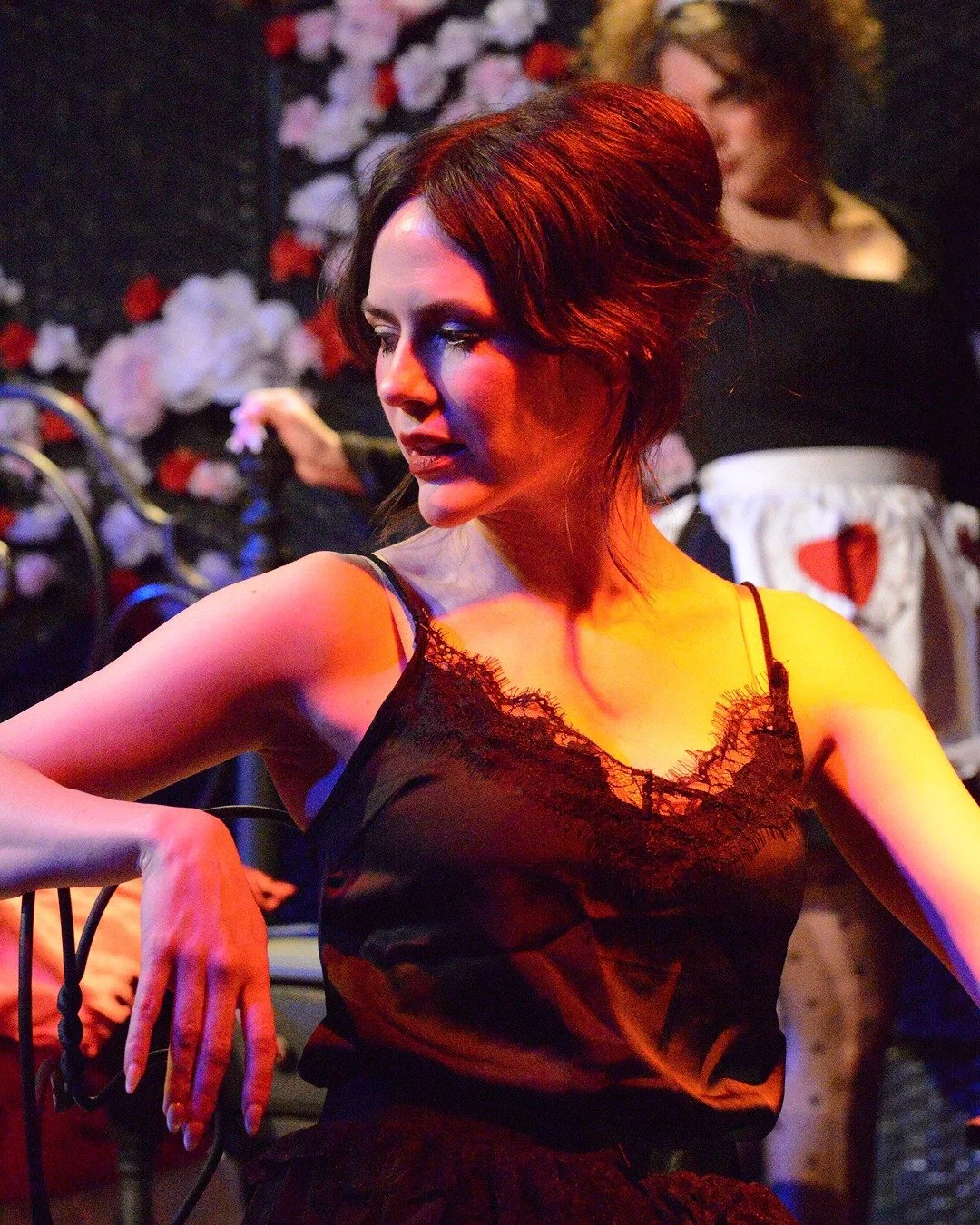
The play begins in a heightened key. Claire, played by Cara Johnston, wearing only a slip, sits at the dressing table. Her gestures are exaggerated, tragic, performed. Immediately, Genet makes it clear that what we are watching is an elegant rehearsal of cruelty. Claire, playing Madame, spits out the opening line with venom: “Those gloves! Those eternal gloves! I’ve told you time and again to leave them in the kitchen… Everything, yes, everything that comes out of the kitchen is spit!” Solange, played by Ariana Stephens, stands nearby, handling rubber gloves, spreading her fingers wide, folding them into a bouquet. Even the props seem to understand their role in the illusion.
Genet builds the play as ritual. Claire commands. Solange obeys, or appears to. “Get my dress ready. Quick! Time passes,” Claire demands. She calls for jewels. “The white spangled dress. The fan. The emeralds.” The words carry weight beyond wardrobe. It becomes more so about proximity to power. Their role-play becomes something deeper, almost like a longing.
The decision to cast women in roles Genet originally imagined performed by men in drag shifts the emotional center of gravity. Genet wanted distance. Artifice. A reminder that identity itself was performance. Here, that distance disappears. The violence feels internal. When these women perform Madame, it no longer reads as parody but rather as survival. Learned manners. Learned submission. Learned violence. The performance begins to feel like something they cannot afford to stop.
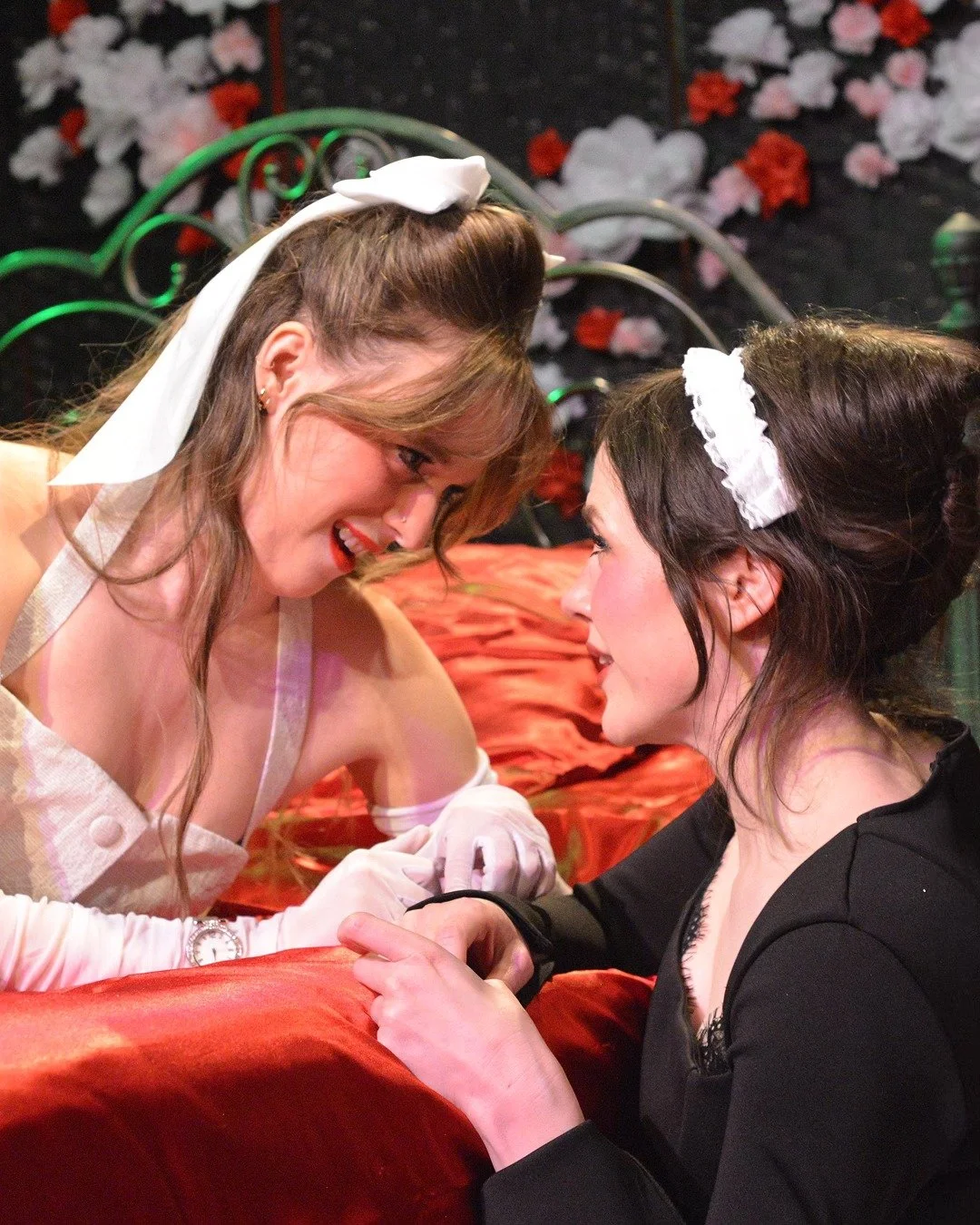
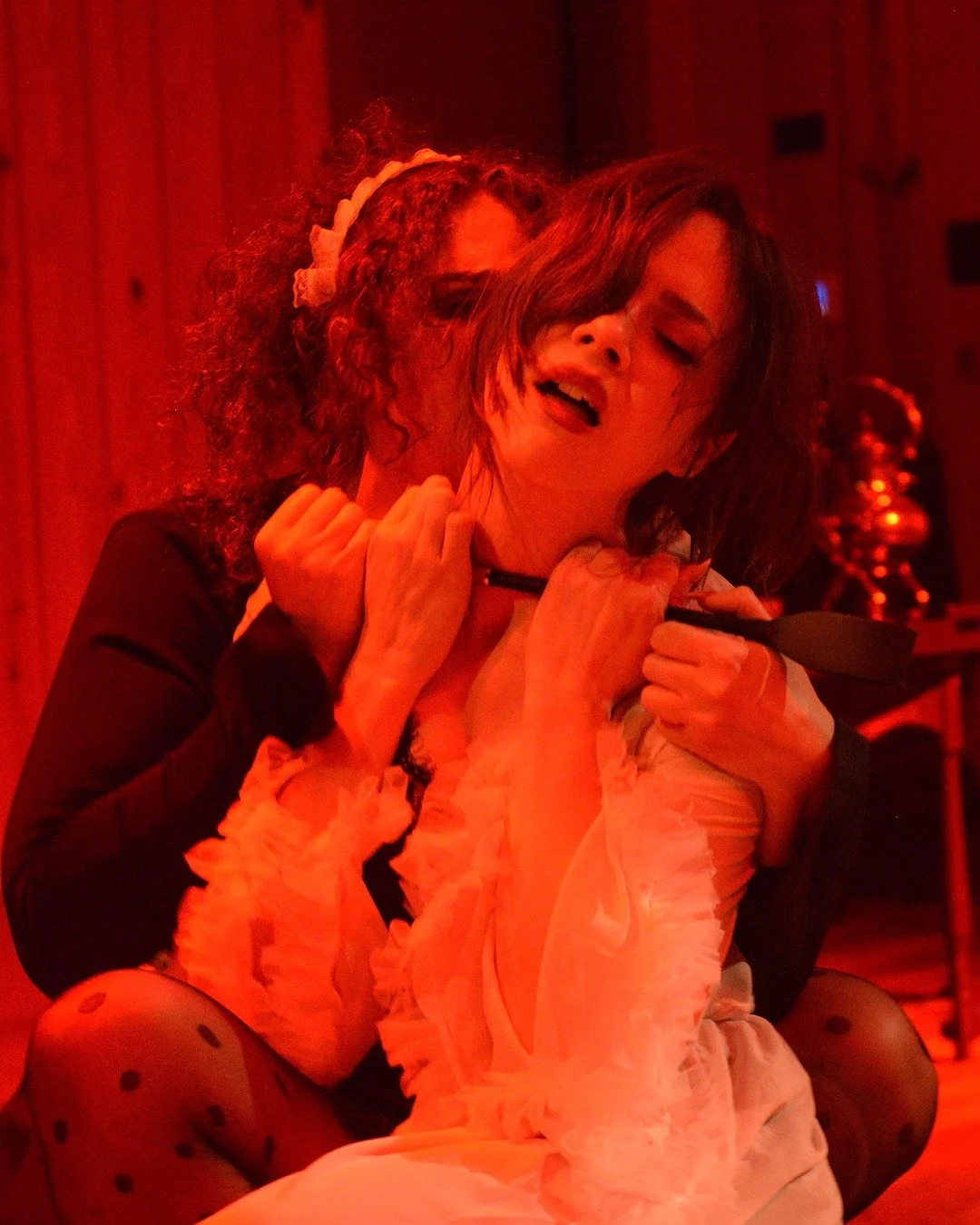
Folsom’s staging transforms the bedroom into something closer to a pressure chamber than a sanctuary. Lighting designer John Cameron Potts uses color as emotional architecture. Red dominates, saturating the room in desire and danger. When Solange is alone, the light cools into blue, isolating her inside her own thoughts. Claire often remains in red, caught in obsession. Madame appears under a faint green tint, her wealth taking on a slightly sickened glow.
Johnston’s Claire is precise, almost fragile in her movement. Her hands float. Her posture shifts constantly, as if she is trying on different versions of herself and deciding which one fits best. Her voice can turn from soft to cutting in an instant. She moves seamlessly between maid and mistress, each transformation unsettling in its ease.
Stephens’ Solange carries something heavier. Her stillness speaks. Her tension lives in her spine. She moves between masculine rigidity and feminine vulnerability without announcement. When she finally spits, “I hate you… I hate your scented bosom,” it feels inevitable.
Then Madame arrives.
Devon Rose enters with the quiet confidence of someone who has never had to question her place in the world. Her voice is gentle. Almost affectionate. She gives away her gorgeous dresses and furs (Rose is the play’s costume designer as well) with a casual generosity that feels both sincere and devastating. “With my old gowns alone you both could have dressed like princesses,” she says. The line lands softly. That softness is what makes it cruel.
The shift arrives with the telephone.
The sisters freeze.
Claire answers.
“Monsieur?… Monsieur is free.”
The air changes.
Until this moment, everything has lived safely inside rehearsal. Fantasy. Now consequence enters the room. The letters. The betrayal. The possibility of being discovered. The bedroom, once theatrical, now feels dangerous.
From here, the production tightens its grip. Solange runs to fetch a taxi. Madame prepares to leave. The poisoned tea waits. Intended for Madame. Or perhaps someone else? When Madame notices the alarm clock and pauses, the tension becomes unbearable. She calls the maids’ housekeeping “an extraordinary combination of luxury and filth.” The system that depends on them also despises them.
One of the production’s most striking moments comes when the sisters begin mirroring each other’s movements. It unfolds slowly, deliberately. Two bodies becoming reflections. The effect is hypnotic. And disturbing. Identity dissolves.
The ending offers no comfort.
Claire, now fully inhabiting Madame’s role, moves toward her fate. Solange narrates what follows. “We are beautiful, joyous, drunk, and free,” she says.
It sounds like liberation but feels like something else.
Genet’s life echoes through every moment of this play. Abandoned at birth. Raised in institutions, even imprisoned. He understood what it meant to live outside power and to imagine its destruction. He wrote The Maids to expose the audience in their complacency in the system that so many fall victim to.
As a season opener, The Classics Theater Project’s production is both bold and deeply assured. It is carefully designed, fiercely acted, and unafraid of its own darkness. By the end, the bedroom feels like a fever dream. And you are not entirely sure you were supposed to see it.
WHEN: February 6-March 8, 2026
WHERE: 15650 Addison Rd, Addison, TX
WEB: theclassicstheatreproject.com