‘Our Town’ @ Allen Contemporary Theatre



—Hannah Kneen
When we first walk into Allen Contemporary’s theatre space, the center of the stage is lit by a ghost light. The mythos of this long-running stage object is that it’s the light by which the theatre’s ghosts put on their own plays while the place is empty. Historically, though, it serves the more practical purpose of saving a lot of people from falling off the lip of a stage in the dark. (Even the person who first flicks the lights on for the day appreciates it.)
And so, they’re leaving the light on for Our Town at Allen Contemporary Theatre this May, and it feels as if there’s honor being paid to a long and moving tradition of American theatre. Written by Thornton Wilder in 1938, this play is a Pulitzer Prize-winning drama in three acts. It focuses on the lives of people in a small American town called Grover’s Corners from 1901 to 1913.
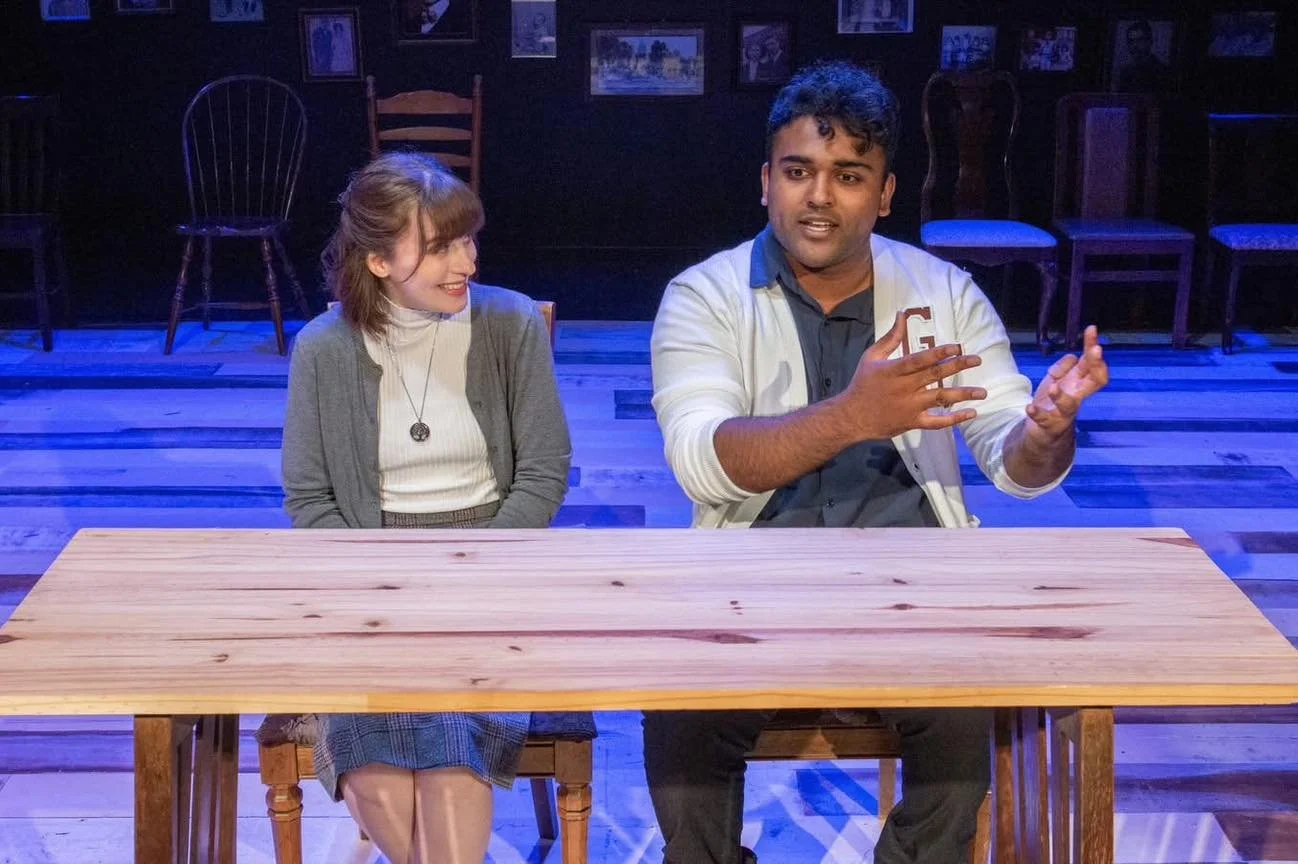
The show’s three acts concentrate first on the daily life of the citizens, then on love and marriage, and finally on death and eternity. The plot threads follow the lives of two main families through these themes. The Gibbs and the Webb families are neighbors in Grover’s Corners, each with a teenage child. George Gibbs (Kevin Koickal) is an aspiring farmer who takes a shine to the girl next door, Emily Webb (Odette Parker). He plays the lovesick puppy to her shy but intelligent character. It’s a classic boy and girl next door romance, from growing up and falling in love, to getting married, and all the way to dying. But Wilder’s play takes things even further, by supposing what might come after, too.
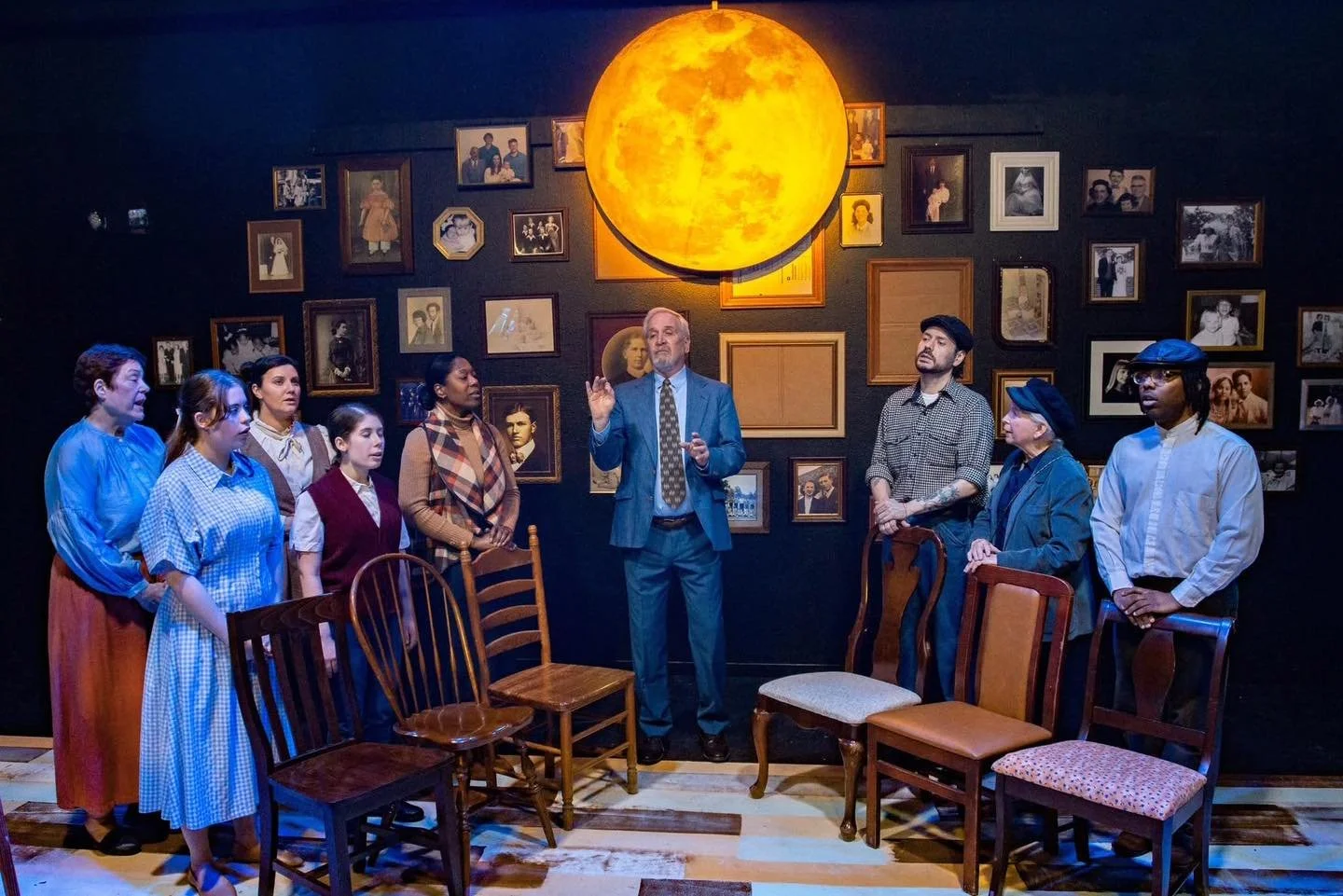
The playwright more than once proclaimed his “scorn for verisimilitude” and was of the belief that naturalism and realism did little to reveal truth. Doing away with the trappings of it all, he believed, could open the minds of the audience to deeper and more meaningful thought. Thus, the play has a lot of examples of what’s called metatheatre, a style that draws attention to the fact that it is a piece of theatre. In Our Town, nearly all of the prop work is pantomimed (imagined by both the actors and the audience), the set is minimal, and we, as the people in the seats, are often directly addressed. It’s all part of the style.
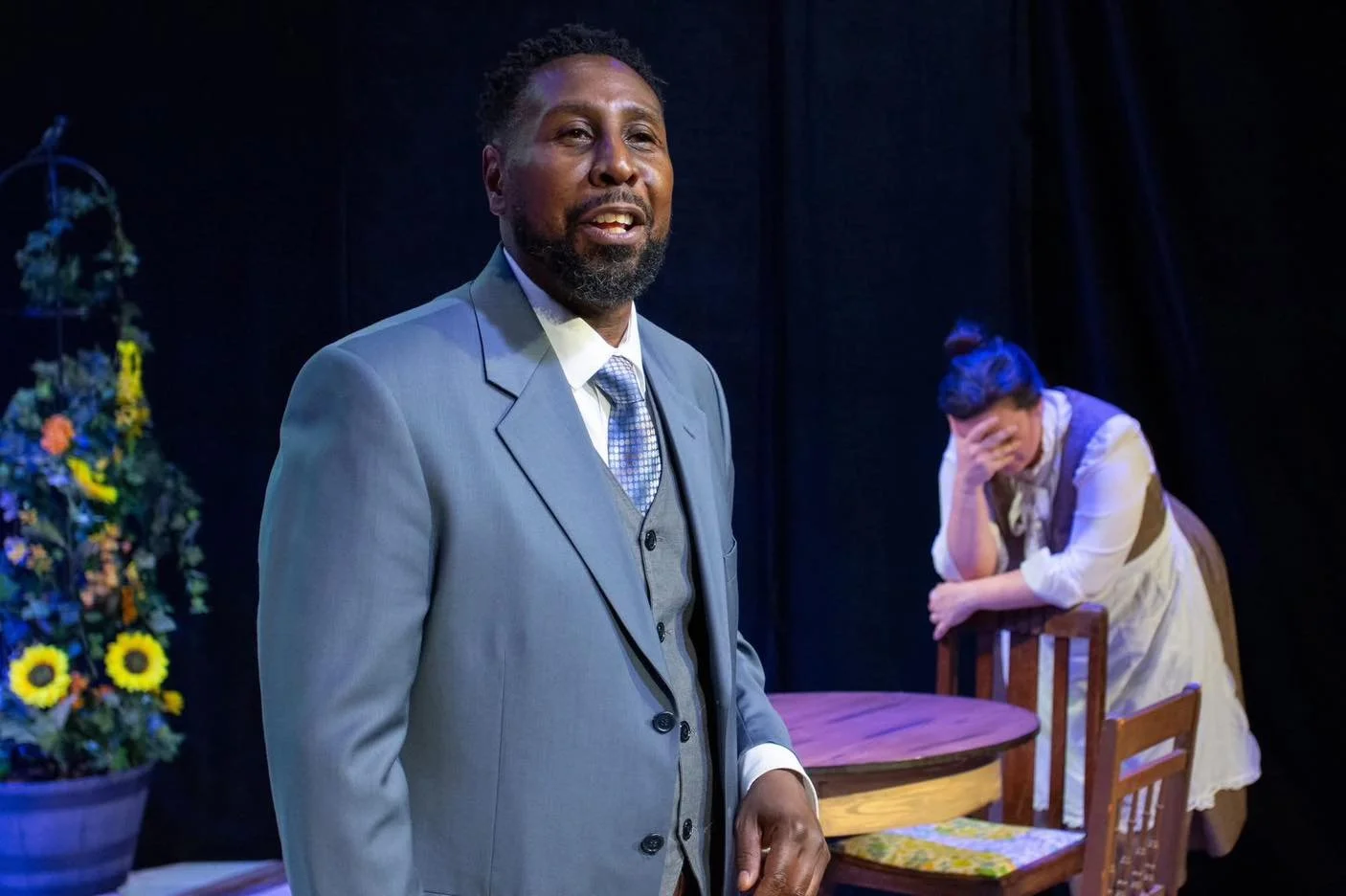
Perhaps the greatest instrument of metadrama in the play is the character of the Stage Manager (Robert San Juan), who serves as our guide through the town and the lives of its inhabitants. San Juan is superb in the role. Everything he does feels heartfelt and full of love for Grover’s Corners and its people.
Some of my favorite townspeople include Mrs. Soames (Veronica Green) who always brought a lovely touch of comedy when things got a bit more serious. Mr. and Mrs. Webb (Jason Davis and Annie R. Such) had a fun dynamic for all their married-couple moments. They built a particularly entertaining scene when they talked to their future son-in-law on the day of George and Emily’s wedding.
The play features some stellar directing by Kathleen and Kevin Vaught. Everything moves seamlessly and feels surprisingly intimate and gentle. This production is rather like a time capsule: it shows what life was like, what the people were like, in a very graceful way and with a great sense of nostalgia. The only drawback I sensed was a bit of hesitation here and there as actors found their rhythm.
The tech in the production is flawless. As I said, Wilder wasn’t one for realism; what tech he approved of was carefully tuned to enhance but not distract from the point of the play. The lighting (designed by Mike Shisko) has some lovely color washes that set the tone perfectly. The sound (designed by Geoffrey Dail and operated by Kenneth Fulenwider) accompany the pantomimed bits with impeccable timing. The set is understated but looks great, with the floor painted to look like wooden floorboards and the main set pieces/props being simple wooden chairs. There are some plants as set dressing—“for those who think they have to have scenery,” said the Stage Manager. The back wall is covered in an array of old photographs of the people who have lived in the town, always watching over the stage action as it unfolds.
Odette Parker’s Emily brings the play home beautifully. She asks near the end, “Do any human beings ever realize life while they live it—every, every minute?” And the Director’s Note in the program adds: “OUR TOWN asks the question, in the vastness of space and the millennia of recorded time, what is the meaning of a single human life? Wilder answers that the meaning is in the daily living of it.”
WHEN: May 1-17, 2026
WHERE: ACT, 1210 E. Main St #300, Allen TX
WEB:allencontemporarytheatre.net