—Ramona Harper
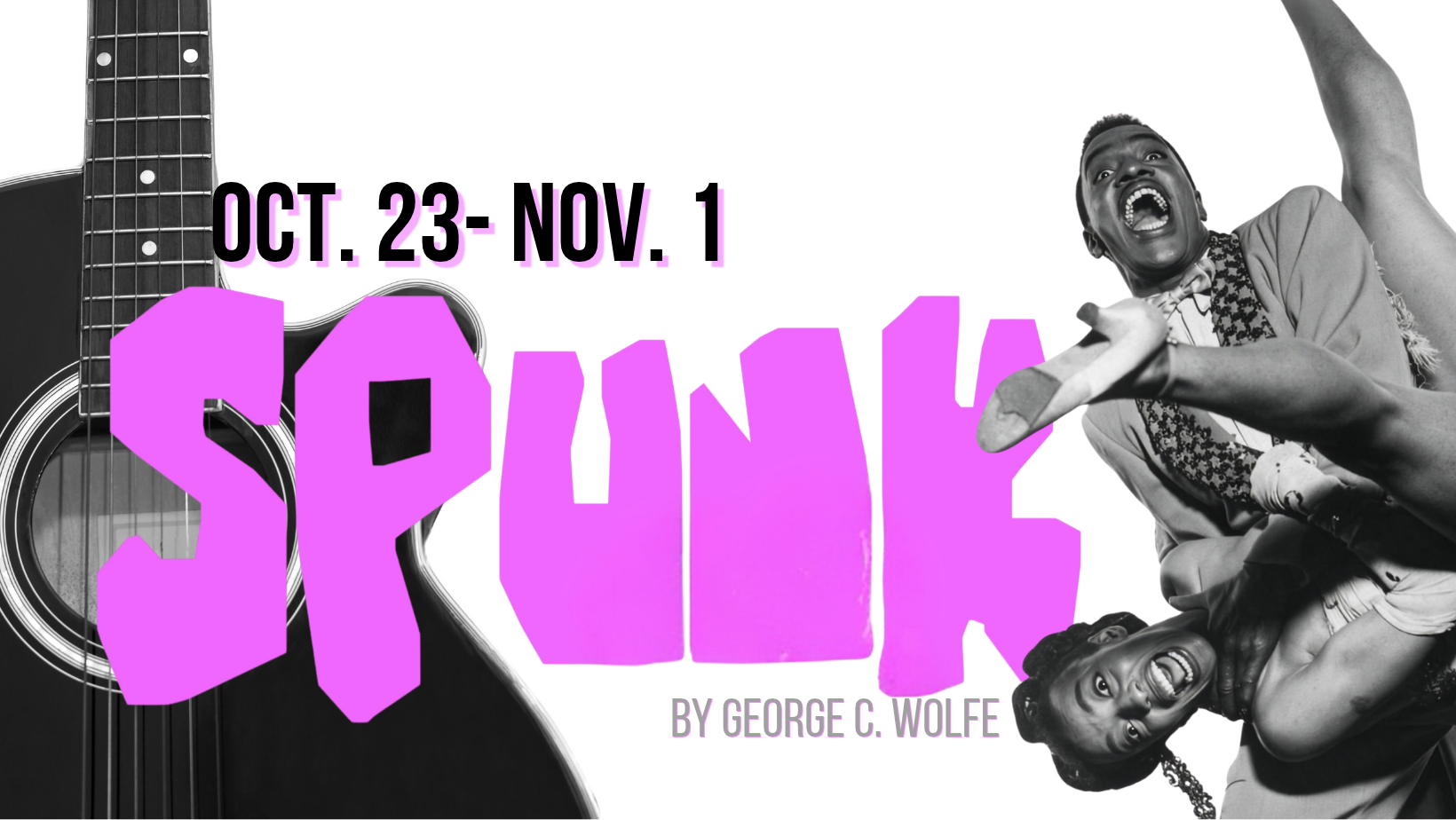
A telling moment, for what‘s about to go down in Soul Rep Theatre Company’s production of George C. Wolfe’s Spunk: This feisty come-uppance, from a jazzily-dressed woman approached lustily by a bunch of Zoot-suited would-be gigolos, hanging out on the streets of Harlem back in the day. She straight-up tells them:
You skillets is trying to promote a meal on me.
But it’ll never happen, brother.
You barking up the wrong tree.
I wouldn’t give you air if you was stopped up in a jug.
I’m not putting out a thing,
I’m just like a cemetery—
I’m not putting out, I’m taking in.
Dig?
You dig? That’s spunk!
George C. Wolfe, renowned Black American director, playwright and producer for stage and screen, (The Colored Museum / Angels in America / Jelly’s Last Jam / Bring in ‘da Noise, Bring in ‘da Funk / Lackawanna Blues) brings his own brand of tradition-bending artistry to Spunk, a creative “capture” of writer Zora Neale Hurston’s outrageous feistiness in an adaption of three of her folksiest short stories.
Spunk is set in the hardscrabble rural South and the hardcore streets of Harlem in “Sweat,” “A Story in Harlem Slang,” and “The Gilded Six Bits.” It premiered off-Broadway in 1989, and Wolfe won a 1989 Obie award for best off-Broadway director.
Zora Neale Hurston, a major figure of the literati of the Harlem Renaissance and a famed “genius of the South,” fearlessly wrote about life for Black Americans at a time when courage was on the line as a live-or-die necessity for advancing oneself in the world—just as it is today.
Soul Rep Theatre Company’s 2026-2027 season-opener is a courageous production about survival, resilience and self-empowerment in the cultural context of the Black American experience. Directed by Anyika McMillan-Herod and Dee Smith, Spunk comes to Dallas Theatre Center’s Bryant Hall in a delightfully entertaining, soulfully joyful production of this Zora Neale Hurston classic. Simple stories carry deep meaning and messages about everyday challenges in the lives of Black Americans living in two connected—yet strikingly different—parts of the country.
A superb ensemble of four men and three woman perform multiple roles across three short plays, with characters who are similar in the cultural context of time and place but not in their motivations and characterizations.
Delia, a hardworking washerwoman, takes in white folks’ laundry to make a living. She goes to church as respite from an abusive, philandering husband who eventually meets his deserving fate in the fangs of (spoiler alert!) a rattlesnake.
A trio of Zoot-suited but empty-pocketed young men pridefully believe they can exist off their masculine allure and self-assessed charm in “The Story of Harlem Slang.” Their shucking and jiving, street-smart banter is a comedic experience to hear and behold.
Lena and Joe, a newlywed couple still madly in love—but materialistically tempted by the allure of trading silver for pieces of gold—risk forfeiting the security of a loving marriage. But when Lena’s infidelity and the birth of a son shock their minds and hearts, Joe and Lena find themselves spinning toward a different reality in “The Gilded Six Bits.” For these two, what’s worth living for?
Each tale ends in an outcome that elevates moral courage and the inestimable value of human relationships over human ambition or conflict. Making it all work wonderfully well is a phenomenally talented ensemble of performers: Douglas Carter, Tonya Holloway, Autumn Robinson, Kadrick Session, Gerald Taylor, Jacobie Thornton, and Yolanda Williams.
What also makes Spunk work so well is that despite the heaviness of the problems in the lives of its lively characters, their economic broke-ness and emotional broken-ness, Spunk flips the script and deals with them through howl-worthy humor, a true ensemble’s great comedic timing, the electricity of call-and-response audience participation, and downright fun and joy.
Take the scene at the ice cream parlor, when Joe takes wife Lena for a trip to the new hangout in town: Couples boogie-down in duos (choreography by Hunter Smith), dancing in carefree abandon in the ice cream shop-turned-juke joint—as their world outside is filled with conflict and confusion.
Or listen to a group of gossipy townsfolk, sitting on the side of the road to “signify” about the shadiness of Delia’s husband Sykes, as he openly parades his “side-piece,” a woman of ill-repute, around town. The jive-talk in “Sweat” and the salacious repartee of the neighborhood gigolos in “A Story in Harlem Slang” are beyond hilarious.
Spunk is Black folks at their funniest at a time when it’s the most serious, and most needed. Humor can save us all, especially with an audience that laughs in all the right places.
The creative production team turns a small, static set by designer Nicholas Thornburg into a thriving environment with only several wooden boxes and an unvarnished wooden backdrop to anchor the ensemble’s movements in a simple, natural space. There is essentially no stage business, which further emphasizes the authenticity of the characters and their unpretentious interactions. Natural lighting by Troy Carrico, and perfect acoustics by sound designer Nash Farmer, complete the mix.
Costume design by Passion Hampton is period for the era with dazzling, sharp-cut Zoot suits; flashy red-and-purple hats for the men in the Harlem story; domesticated, everyday dresses for the women in the South; but shiny, jazzy garb for the pretty ladies as they strut their stuff in Harlem.
Percussionist Len Barnett sits side-stage using his sensitively-tuned drums to mimic each emotional beat in the stories.
The language of Spunk, regional southern dialect that Hurston used in all of her writing, lends authenticity to the Black dialogue that the high-brow Black literati of the Harlem Renaissance criticized her for. But Hurston stuck to her own artistic choices about the best ways to develop the characters in her stories—by keeping it real and writing in the natural spoken language of the South, an “Ebonics” of its day—and in the highly stylized street slang of Uptown Harlem. Kudos to the ensemble for their mastery of both.
The ensemble unfolds each story through third-person narration that works exceedingly well. Another particularly exceptionally creative moment in the play is the human chain used to mimic the deadly snake in “Sweat.” And also of particular note is the fine fight choreography between Joe and Slemons, a slick Chicagoan who returns to the South as the “gilded” owner of an ice cream shop and lover to Joe’s money-obsessed wife, Lena.
Fred Sanders’ musical arrangements are an essential part of Spunk, as music is interspersed throughout this play. The ensemble sings a cappella, with strong vocals that hit all the right chords at the right emotional moments. Upon entering the theater, one hears in the background a strain of music by Chic Street Man that pipes the words of bluesy singers through the hall. The songs sound like Big Mama Thornton at times, or the singers of spirituals who invoked the divine during times of duress.
[I do have a pair of suggestions for the show: the program should include the titles of the three short stories that make up Spunk, and adding a brief blackout between each of the stories would say clearly that one play has ended and another has begun. The fast-paced production flows rapidly from one story to another, and a quick visual “reset” might be helpful.]
Enjoyably folksy, sassy, brassy, flirtatious, and boldacious are apt descriptives for the high energy of this wonderfully staged production of Spunk. Soul Rep, with astute direction by McMillan-Herod and Smith and a terrifically talented ensemble, has done exceptionally fine work here. In mounting the show in a black box space and losing none of its energy, joy, passion, and authenticity—nor the sheer “spunk” of George C. Wolfe’s award-winning creation—well, its no small feat.
Soul Rep Theatre Company has more than exceeded the mark in artistic excellence and entertainment value. If you’re able, be sure to see Spunk during its short run in Dallas.
WHEN: October 23-November 1, 2026
WHERE: Bryant Hall (beside Kalita Humphrey), 3400 Blackburn Street, Dallas
WEB: soulrep.org