‘The Book of Will’ @ Allen Contemporary Theatre
—Charlotte Taylor
Here is a very sobering thought: without two aging actors, a printer with a very questionable past, and a great deal of stubbornness, about half of Shakespeare’s plays would not exist.
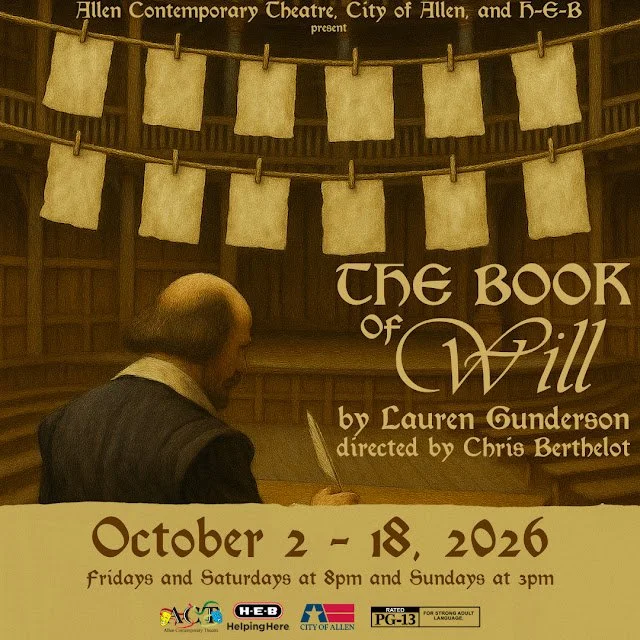
No Macbeth. No Tempest. No Twelfth Night. No As You Like It, no Julius Caesar. Lauren Gunderson’s The Book of Will tells the story of how those plays were rescued, and Allen Contemporary Theatre’s production takes up that story and delivers it with heart.
A little history first (because this play is built on it). When Shakespeare died in April 1616, his will left money to three members of the King’s Men (Richard Burbage, John Heminges, and Henry Condell) to buy memorial “mourning” rings. Seven years later, Heminges and Condell returned the favor with something a bit more important than a ring: the First Folio of 1623 (originally titled Mr. William Shakespeare’s Comedies, Histories, & Tragedies).
Thirty-six plays in one volume, eighteen of them printed for the very first time. Before that, the only Shakespeare you could buy came in cheap quartos, and some of them were pirated. These “bad quartos” were pieced together mostly from memories, by actors or audience members with so-so recall and empty purses they hoped to fill. If you think I am exaggerating, the 1603 quarto of Hamlet renders the most famous line in the English language as “To be, or not to be, ay there’s the point.” I’ll wait while you recover.
Gunderson’s gift as a playwright is finding the people tucked into the corners of history and letting them talk. History books give us Heminges and Condell. Gunderson gives us their wives, their daughters, Shakespeare’s widow (and mistress), and a scrivener with ink on his fingers. She also gives us a play that is, underneath the tavern jokes, about grief, and about the terrifying fact that theatre disappears the moment the lights go down.
These men are not just saving their friend Will’s plays. They are trying to save stories they believed — or at least hoped — would matter hundreds of years later.
I would like to start by getting my one disappointment about the production out of the way: the set felt too bare and sparse for a story this full of taverns, print shops, and crowded homes. There were nice touches that pulled me straight into the era (especially the hand-painted floor created by scenic painter Reagen Wren). But the production had two turntables to work with, and when I saw them I sat up a little in anticipation. Two turntables! Surely something was going to arrive, transform, or reveal itself. It never quite did. They turned, the scenes shifted, and I kept waiting for the oomph that never came. It is a small disappointment in a production that otherwise gave me so much, but it lingered.
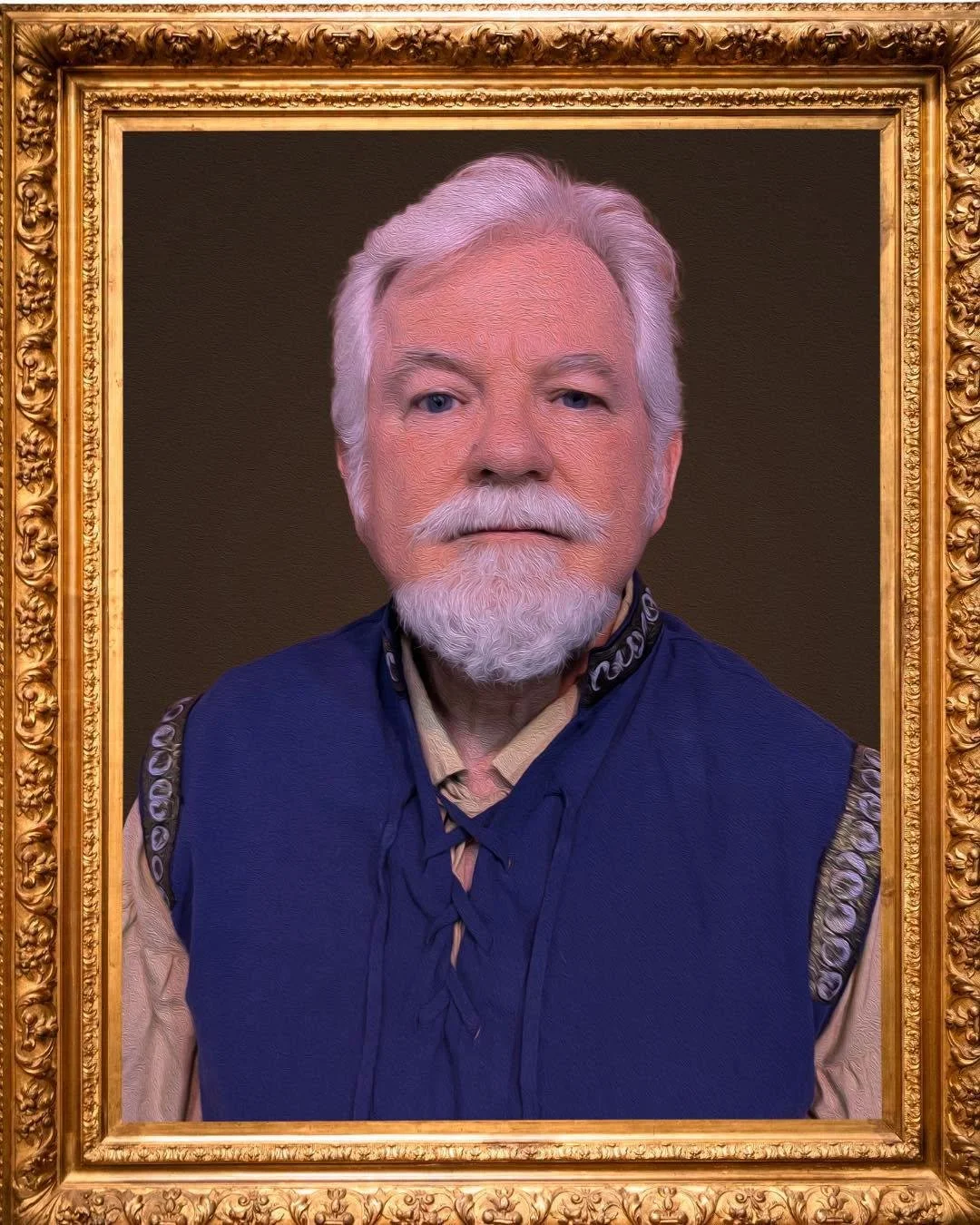
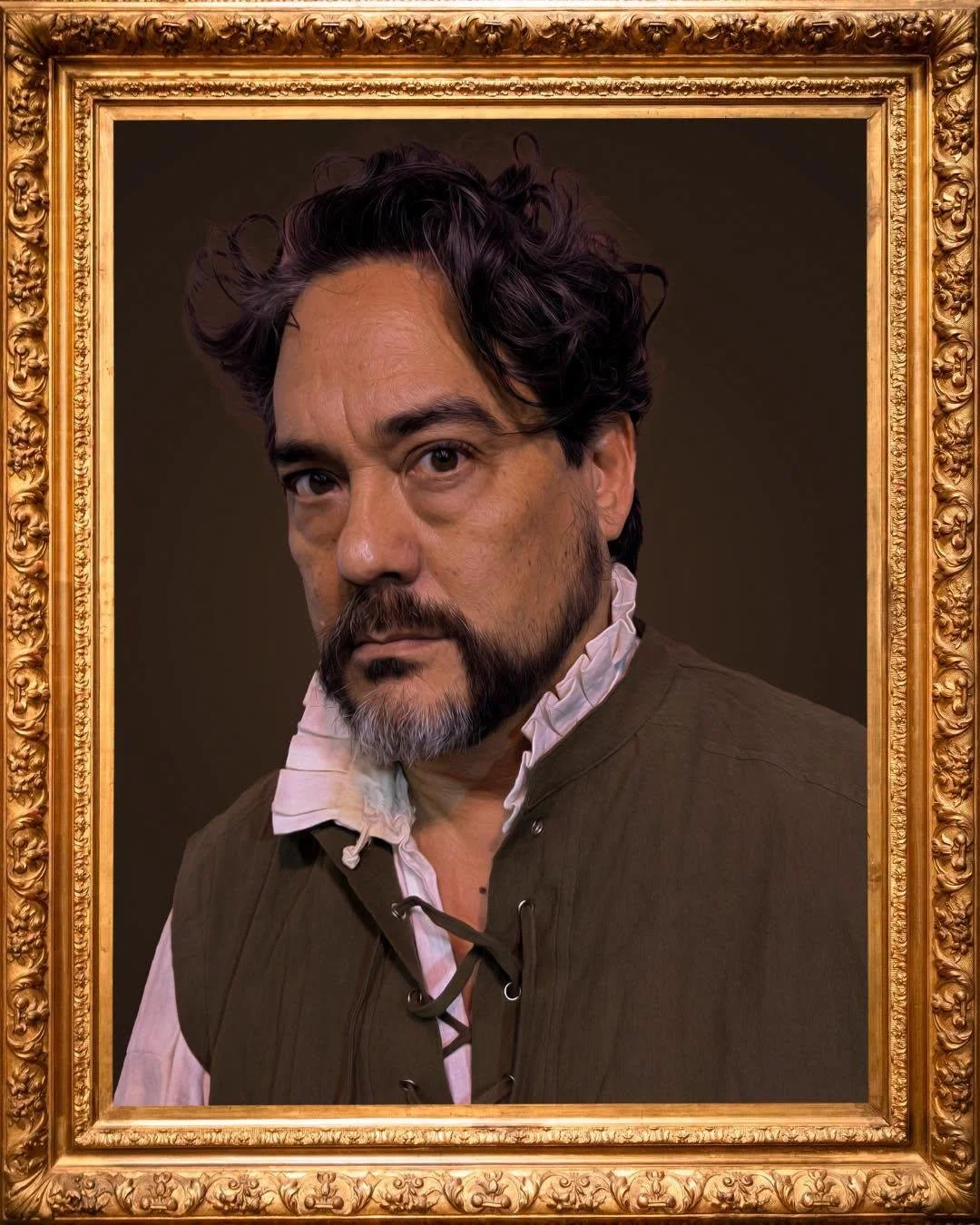
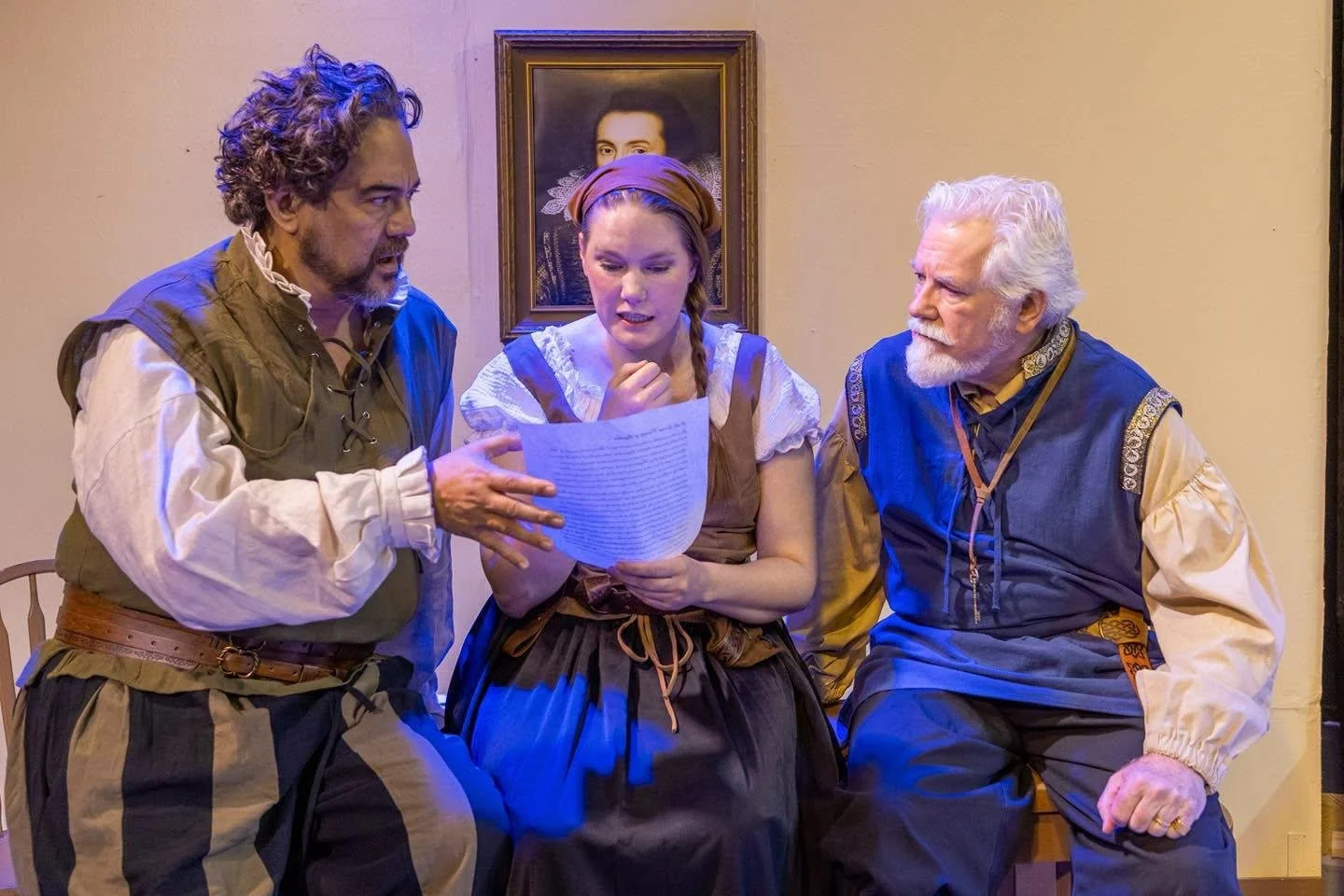
What it did give us was Robert San Juan as Henry Condell and Anthony Magee as John Heminges. I have seen both of these actors in many productions. (Full disclosure: I have had the pleasure of directing Magee.) Each is a remarkable talent on his own. Together, they are something else entirely. They play off of and with each other so beautifully that by the end of the first act, the friendship between these two men felt as worn-in and real as an old pair of boots. Every argument, every joke, every exhausted look across the table was built brick by brick.
That foundation pays off in a scene I am still thinking about. After Heminges loses his wife, the two men share a moment that was one of the most emotional and tender things I have seen onstage in a very, very long time. I won’t describe it further, because you should walk into it the way I did. I will only say that the whole first act turned out to be a setup for those few minutes, and San Juan and Magee earned every tear in the house, mine included.
Eric Levy’s turn as Richard Burbage is short — but oh my goodness, he makes it count. The real Burbage was the original Hamlet, Lear, Othello, and Richard III, the leading man Shakespeare wrote for, and Levy carries that stature perfectly. Burbage’s speech before his last exit was a wonder to behold, and it left me genuinely mournful when the stage direction arrived. Shakespeare gave us “Exit, pursued by a bear.” Gunderson gives us “Exit, Burbage.” Alas, the plot needed him gone, but I didn’t have to like it.
Jed Davis is an actor I have seen in several other productions, but never in a role like this one. As Ralph Crane, he was near perfect in both delivery and physicality. Crane was a real professional scrivener whose clean, careful copies likely sit behind several of the Folio’s texts, The Tempest among them. Davis made me believe this man could spend a week thinking about one comma, and consider it time well spent.
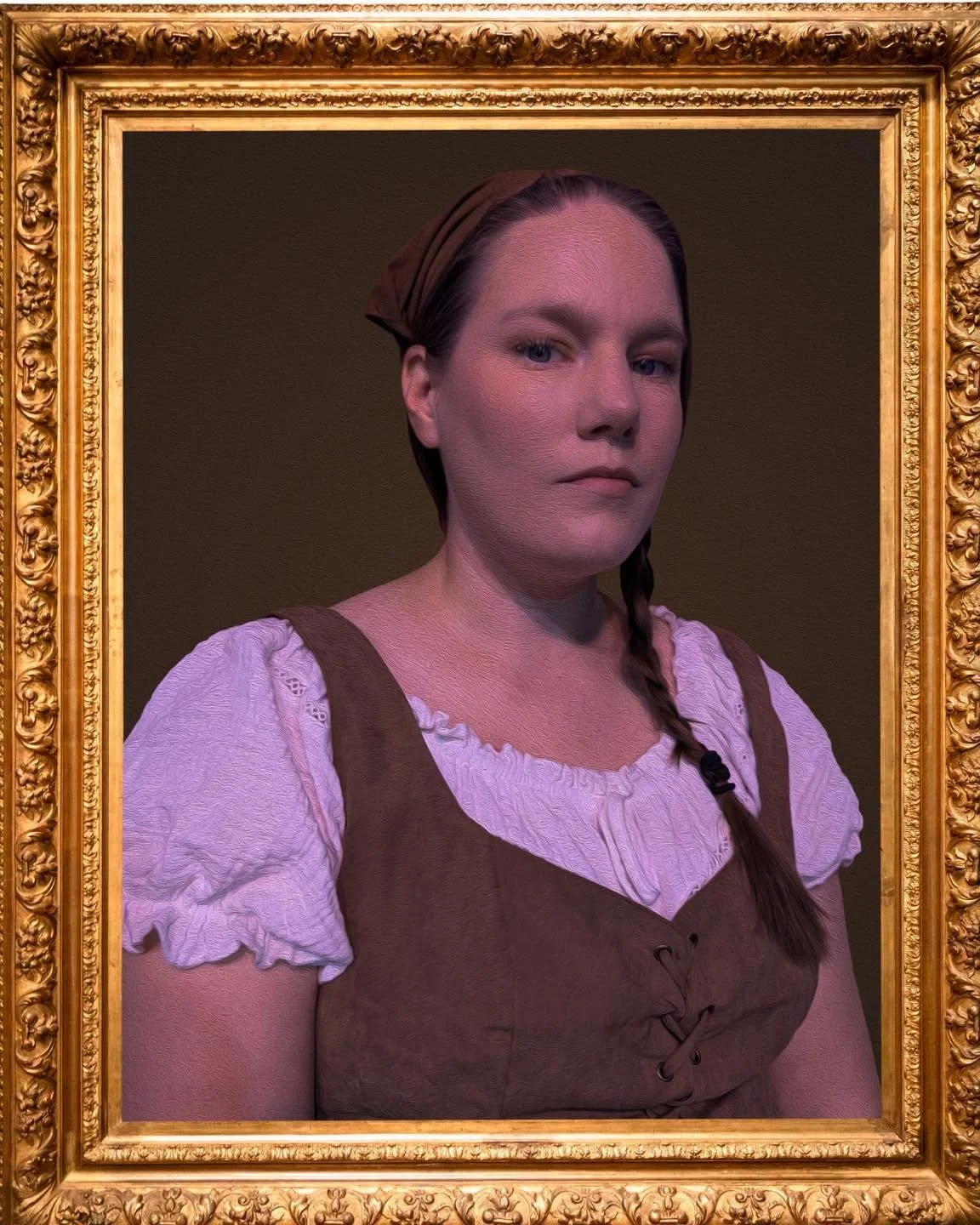
Two performers were new to Allen Contemporary Theatre and new to me, and I hope we see much more of both. Janae Hatchett plays Alice Heminges with a spirit and a fierceness that are captivating to watch. One minute she is flirting with the printer’s son, and the next she is ready to go to war over a reputation and a remembrance. Hatchett found every one of those facets. Ivy Opdyke, as Rebecca Heminges, is the gentle, calming force that holds the family together, and plays the part with such grace and poise that at times she seemed to float across the stage. It is exactly why her absence later lands like a dropped stone.
Erik Knapp was perfectly cast as William Jaggard. History is useful here: the real Jaggard had a habit of printing Shakespeare without asking permission first, which makes him a deliciously awkward partner for a project meant to stamp out bad copies. Knapp managed the balance of this character very well, and I never fully decided whether to trust him (which I suspect is the point).
Robert Dullnig shone as Ben Jonson, Shakespeare’s rival, friend, and frenemy, whose punchy retorts and reactions drew constant chuckles from the audience. In 1616, Jonson had published his own Collected Works in folio form, and was teased for daring to call mere plays “works.” So there’s an irony in watching him help build Shakespeare’s literary monument page by page. Jonson also wrote the poem that opens the Folio, the one that tells us Shakespeare “was not of an age, but for all time.” Dullnig plays Jonson with enough bluster that the eventual tenderness sneaks up on you.
So many others carry this story forward. Robin Liesenfelt brings Emilia Bassano Lanier to life, a real poet and one of the first Englishwomen to publish poetry as a profession. Sara Jones gives us Anne Hathaway Shakespeare, a woman history has mostly reduced to a punchline about a second-best bed, and Gena Graham is a welcome presence as Elizabeth Condell. This is very much an ensemble piece, adding much to the depth of Gunderson’s story.
Karen Askew’s costumes were a delight. Where the set held back, the costumes stepped in and did a great deal of the storytelling, placing us firmly in Jacobean London and telling us who each person was before they said a word. The lighting design by Mike Shisko was wonderful throughout, and it was especially striking at Burbage’s funeral, where the choices created something genuinely special and turned a scene of mourning into a kind of stage picture I won’t forget.
Chris Berthelot’s direction keeps the tempo and pacing moving beautifully. This is a play that swings between bawdy tavern comedy and real elegy, sometimes within the same scene, and Berthelot never lets it tip too far either way. The laughs land, and then the grief lands harder because of them.
About 235 copies of the First Folio survive today. Performances, of course, don’t survive at all. They live for a few hours and only in the memories of the people who were in the room, which is exactly the fear that drives Heminges and Condell through the entire play. I enjoyed ACT’s production, and that scene between San Juan and Magee is one I intend to keep, no folio required.
WHEN: October 2-18, 2026
WHERE: ACT, 1210 E. Main St., Suite 300, Allen TX
WEB: https://allencontemporarytheatre.net/