‘The Great Impresario Boris Lermontov Would Like to Invite You to Dinner’ @ Sundown Collaborative Theatre (Denton)

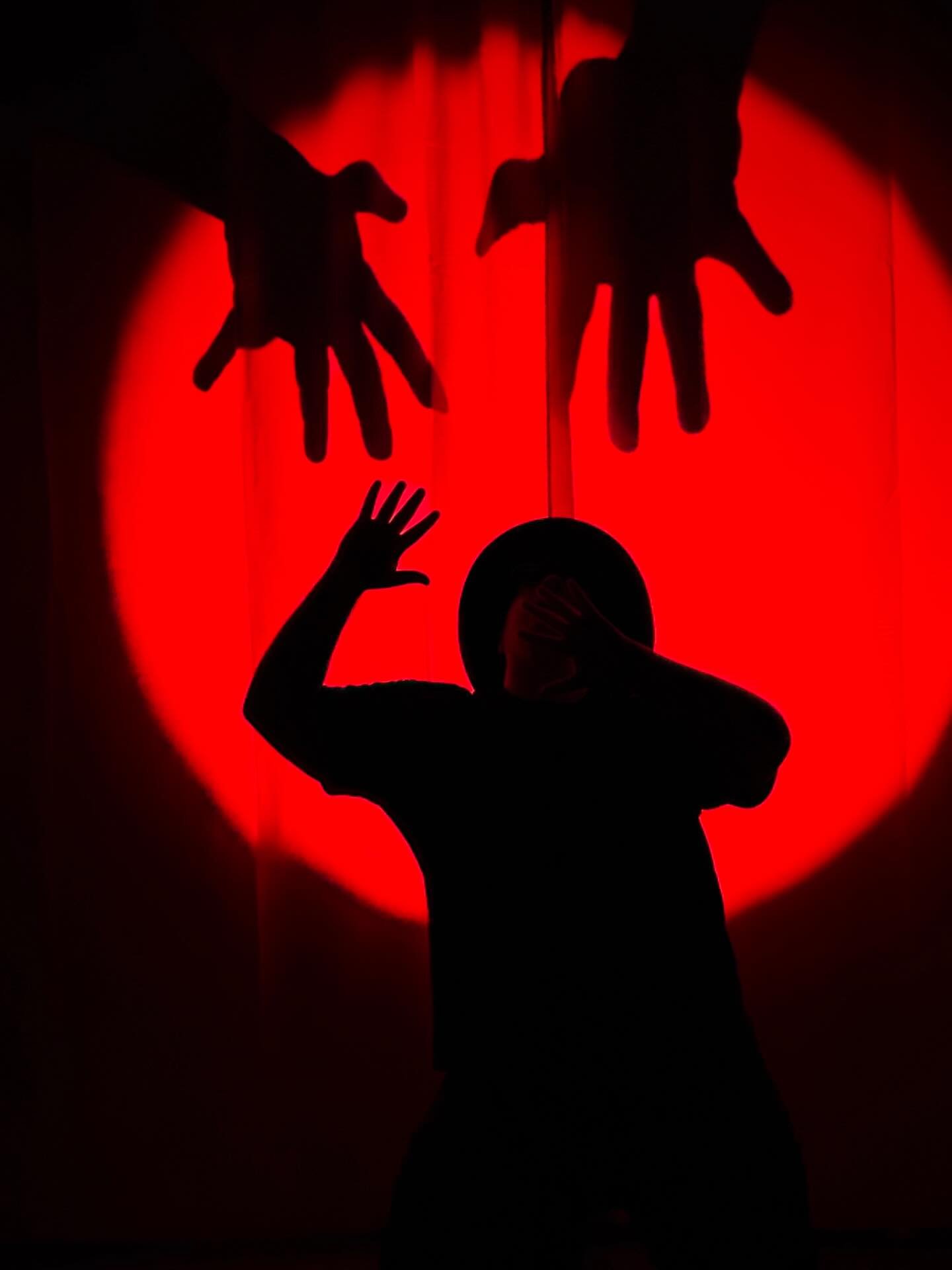



Photos by Tyler Lucas
—Ryan Maffei
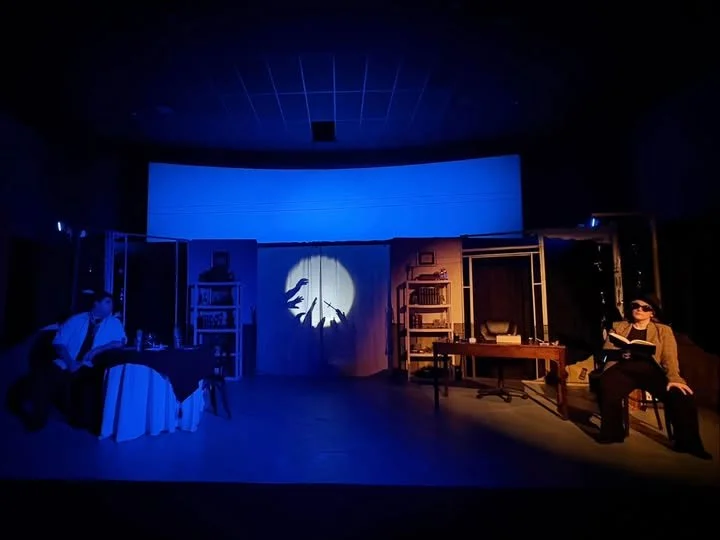
Leading up to Saturday’s performance, I’d been contemplating the gimmick to which Sundown Collaborative Theatre’s The Great Impresario Boris Lermontov Would Like to Invite You to Dinner is keyed. Each night, its two actors flip a coin onstage; each will assume the role the outcome determines. One gets to inhabit the titular impresario: larger than life, and brimming with a kind of ruthless self-belief, his sense of optimism encased in a lavishly jaded carapace. The other takes on the obviously long-suffering assistant Noa, whose vulnerability is more profound than anything in the scope of the great impresario’s vision, and who is all too accustomed to figures like Lermontov keeping art’s gates.
I realized I had mixed feelings about this device, which the company played with last year during their annual Short Works Fest. That time, it was for a spooky lark of a two-hander, and the switcheroo added to the cheeky, potpourri feel of the rest of the lineup. Yet for a two-act play with serious and ambitious intentions, a marginal inutility creeps into the concept. Put aside not wishing the memorization job on anyone. Not only can no audience member (or critic) ensure a viewing of the complete project, at least not conveniently, but the level of interest is significantly higher if you’re already familiar with the performers. Overall, the gimmick feels a little…well, gimmicky.
But that’s OK – you go with it, and land somewhere between delighted and indifferent. And in any case, I was familiar with the performers, and as such, knew which show I wanted to catch. I’ve seen Courtney Dobelbower, a multihyphenate with SM on her résumé, stand her ground as a steely older woman, and gently unravel as a neurotic younger one. I wanted to see her really reach for something I hadn’t watched her try before. Likewise, I knew Immanuel A. Garcia was a brilliant writer and monologist, but also a fabulous team player in a tricky unscripted situation. I wanted to see him instinctively fill in cracks, rather than burn something down at center stage.
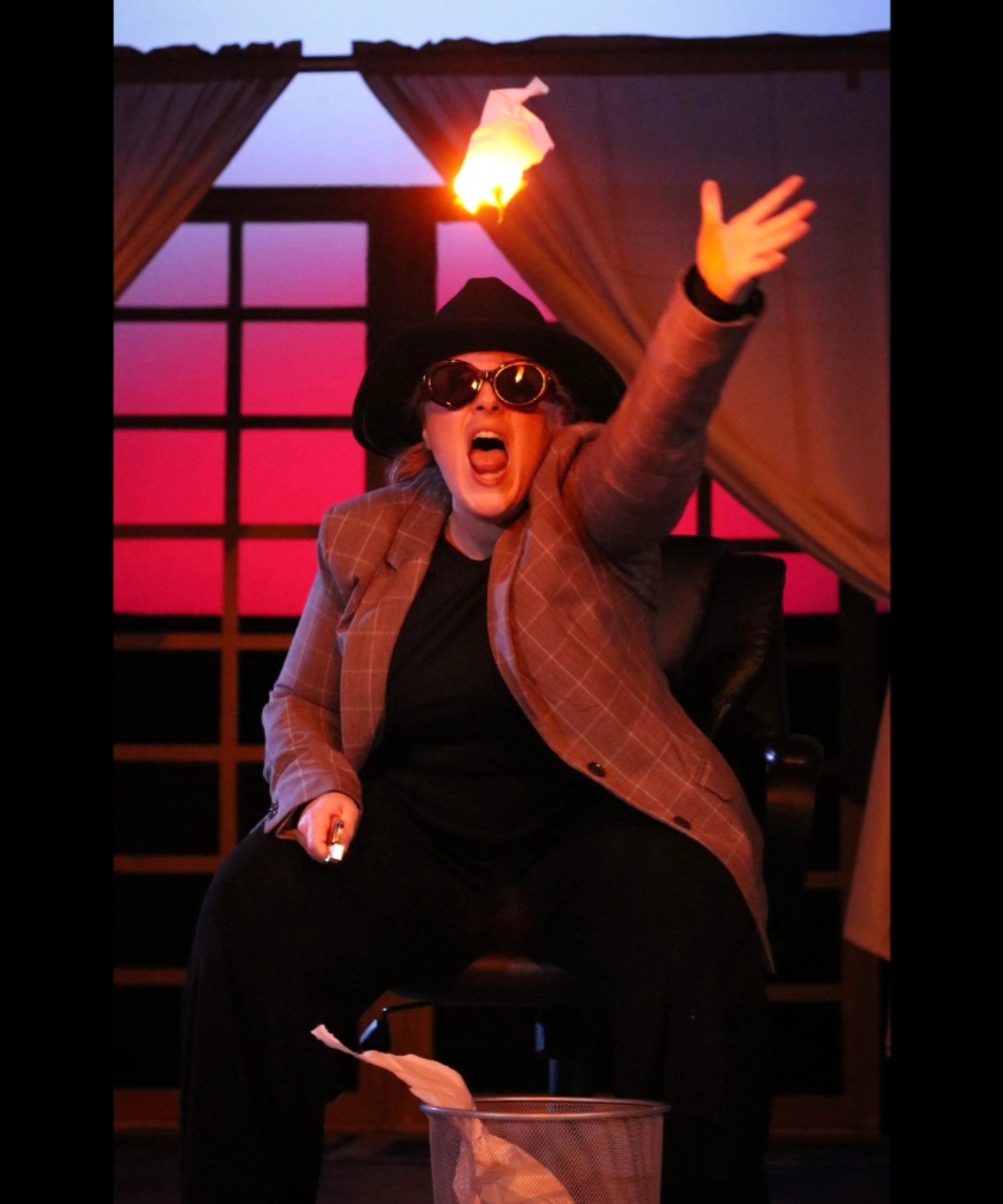
I must’ve done something right this week, because I got my wish. Dobelbower played the great impresario, with delicate precision, but also with bared teeth first. One of the great performances I’ll see all year, I expect, Dobelbower relaxed into a perfectly insidious dominance, impishly smearing the corners of her pseudo-British accent with just enough absurdity to let every line double as a joke. Her Boris is charming and terrifying, ingenious and repulsive; her razor-sharp yet light-touch efforts prove the breadth of her range immeasurable. It’s something to note about Sundown, er, impresario Julia Bodiford – her talent for locating great actors rivals her talent for locating unique material.
Whether Garcia’s talents extend to the culinary, the actor knows exactly what flavor any context requires, and didn’t disappoint here. Consistently projecting a humility that pairs nicely with his effortless sense of presence, his Noa emanates all the richly subtle pathos Dobelbower’s Boris aims to steamroll over, in a show that largely takes the form of a direct address from the great impresario. Insofar as it’s coherent, the play is a rallying cry against artifice and pretense in art, fatalistically insisting that you can lose as well as find your humanity in its practice. You can feel Garcia’s heart like a lit hearth through a frosty window, in a luminous defense of beautiful truth.
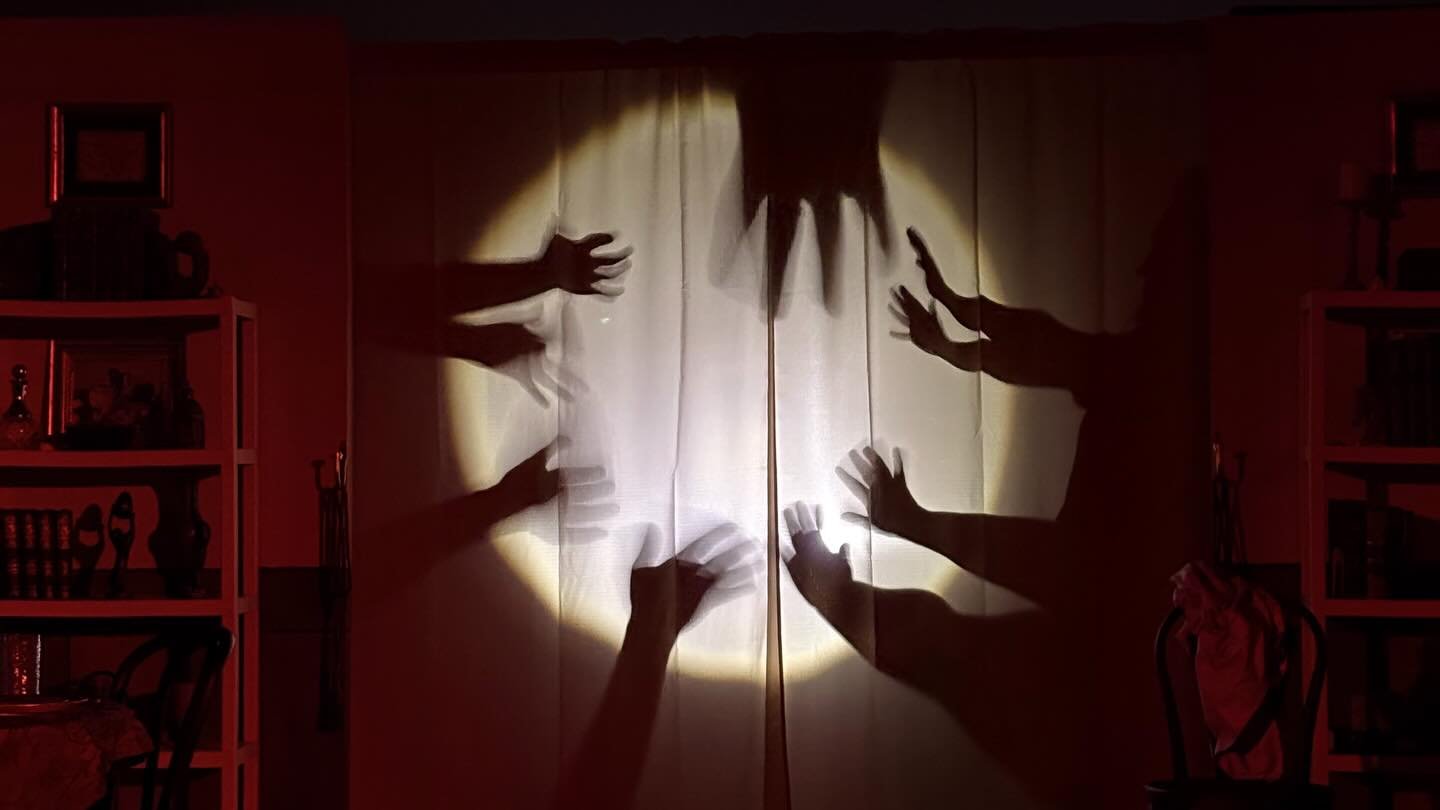
I’ve always appreciated that Bodiford has such an understated directorial hand, when her shows frequently spill over with big ideas. Often, said ideas make winning use of impractical spaces, and the tech trick here (a series of fishing lines across which disembodied disguises and haunted cutlery travel), is a magic one. Many directors are so proud of these devices, they’ll make spectacles of them. Not Bodiford – her interview-question weakness is how she can get so caught up in a play’s words, she’ll invite us to live in them with her, and every so often forget we need a little extra persuasion if she wants us to be as rapt as she is. Luckily, she has terrific taste.
I agree with her that not only are these two actors are people you can trust with an arbitrary big challenge, but this show, by relative unknown Tristan B. Willis, was worth showcasing. The discussion it has about art is as esoteric as it is multifaceted, but with such a subject both are inevitable. The actors bring a potent personal touch to their Beckett-speckled lines, even when they’re entirely separated from themselves. To Willis’ credit, both parties land good points, about the necessary and unnecessary sacrifices art’s success demands, and the avoidable and unavoidable flaws in our system for disseminating it. It never resolves – just correctly concludes that art is life and death.
Still, there are places where the play itself begins to feel like one of the barriers it’s consistently urging us to break. The discussion only grows denser and more involuted, even as a character is allowed to slip seamlessly into personal testimony – I wish I could guarantee you’ll see Garcia’s performance, on shruti box and makeshift theremin, of (among other things) “Trampoline” by You Won’t. The show thunders on about the dangerous toll art takes on health, but in a theatre in bloom with imaginative, assertively original art, it all started to sound, you know… dramatic. In tandem with the text, Garcia’s wincing sincerity began to overwhelm his partner’s fleet feet.
It’s not Garcia’s fault he knows exactly what to program when things get heavy. The show needs to lighten up – the better to liberate game, intuitive players like these two. We’re built to dig the great impresario, especially the way Dobelbower (and undoubtedly, Garcia) animates him. Yet in a series of world-breaking vignettes, the two actors reveal themselves to be, yes, actors, and the proceedings to be some… ritual, in which performing as Lermontov is a perilous vessel toward some… um. Some something. I found these bits affected, confusing and humorless. Unlike the gimmick they’re there to set up, they’re not exactly neutral, but thread a somewhat bitter after-taste through beautiful work.
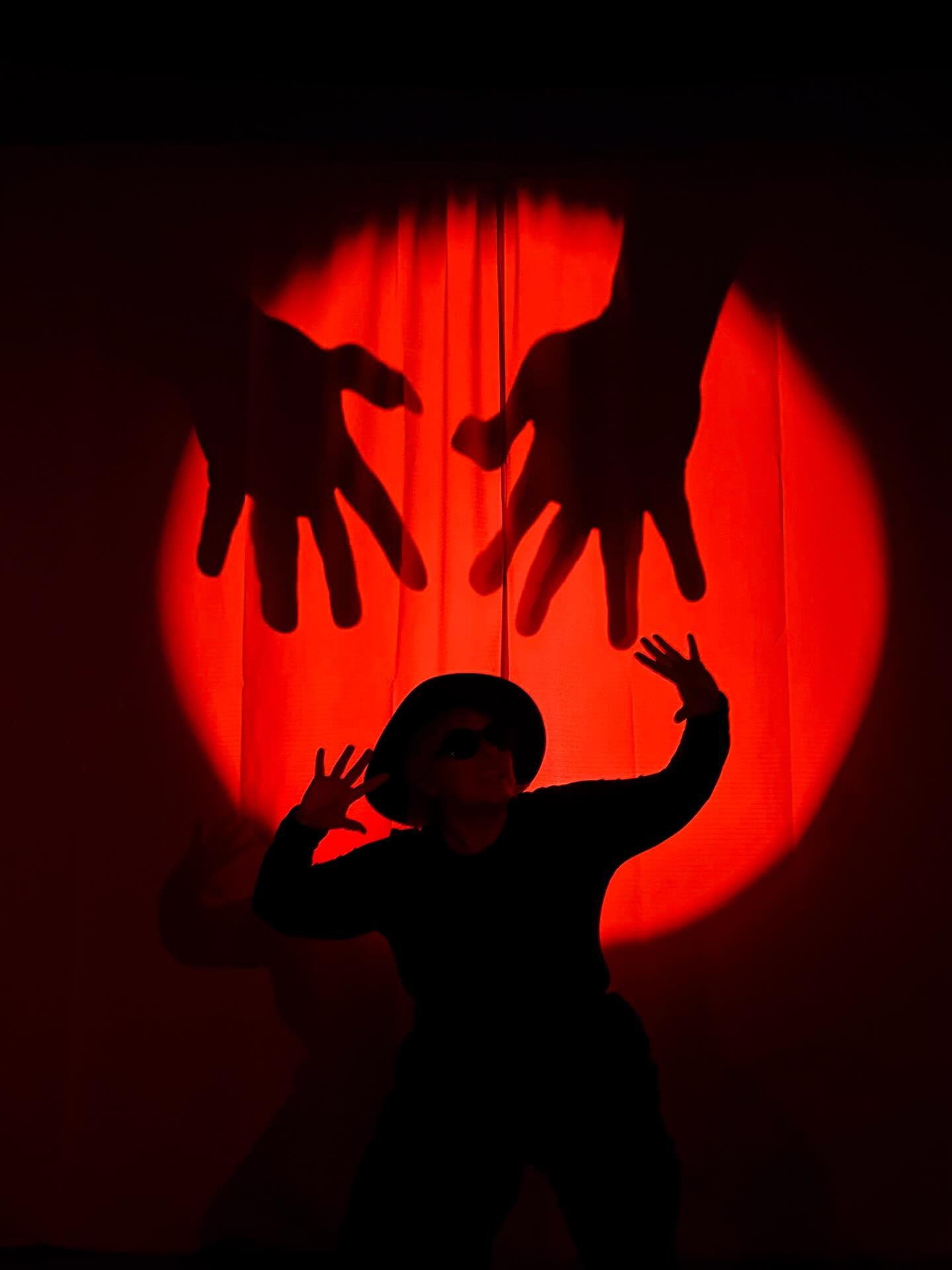
As usual for Sundown, multiple multitalented hands have crafted an audiovisual feast. Ames B.’s lighting skillfully shifts between atmospheres; Bodiford and playwright Carissa Davis accompany this with shrewd, spare sound design. Missy Embrey and Jordan Desmarais have put together an attractive set, with just enough reality to ground it all when it’s supposed to be. Nathan Probst and Nicole Probst are credited with engineering special effects and choreography, respectively. And a team of literal unidentified hands contribute crucial acting to several key moments, and deserve a hand of their own: the little guys Noa so heavy-handedly valorizes, pulling the strings.
WHEN: April 24-25 (2026) and May 1-2 @7:30pm, April 26 & May 3 @2:30pm
WHERE: Theatre Denton Annex (Golden Triangle Mall), 2201 S Interstate 35E, Denton
WEB: sundowntheatre.org