‘The Monsters’ @ Dallas Theater Center
—Rickey Wax
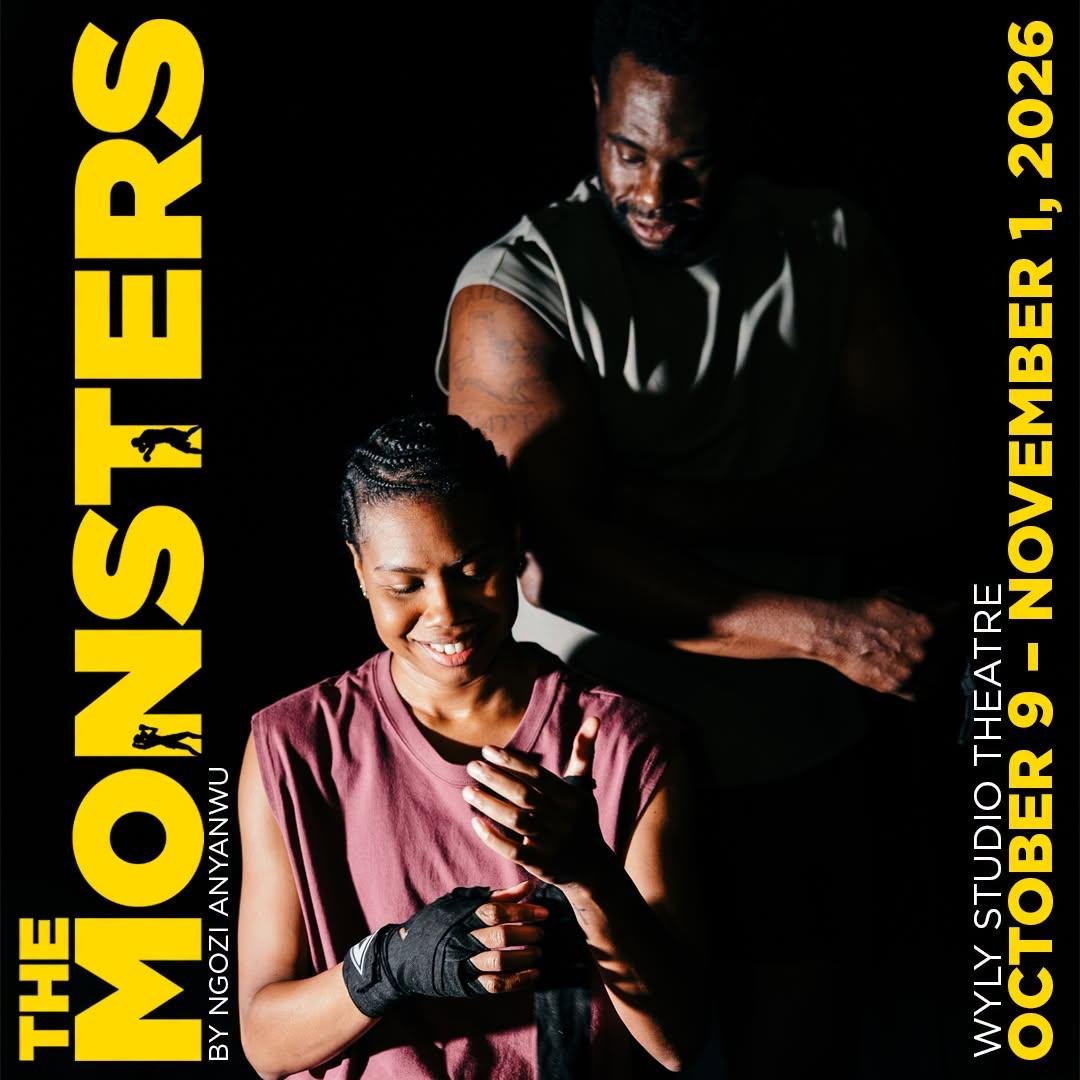
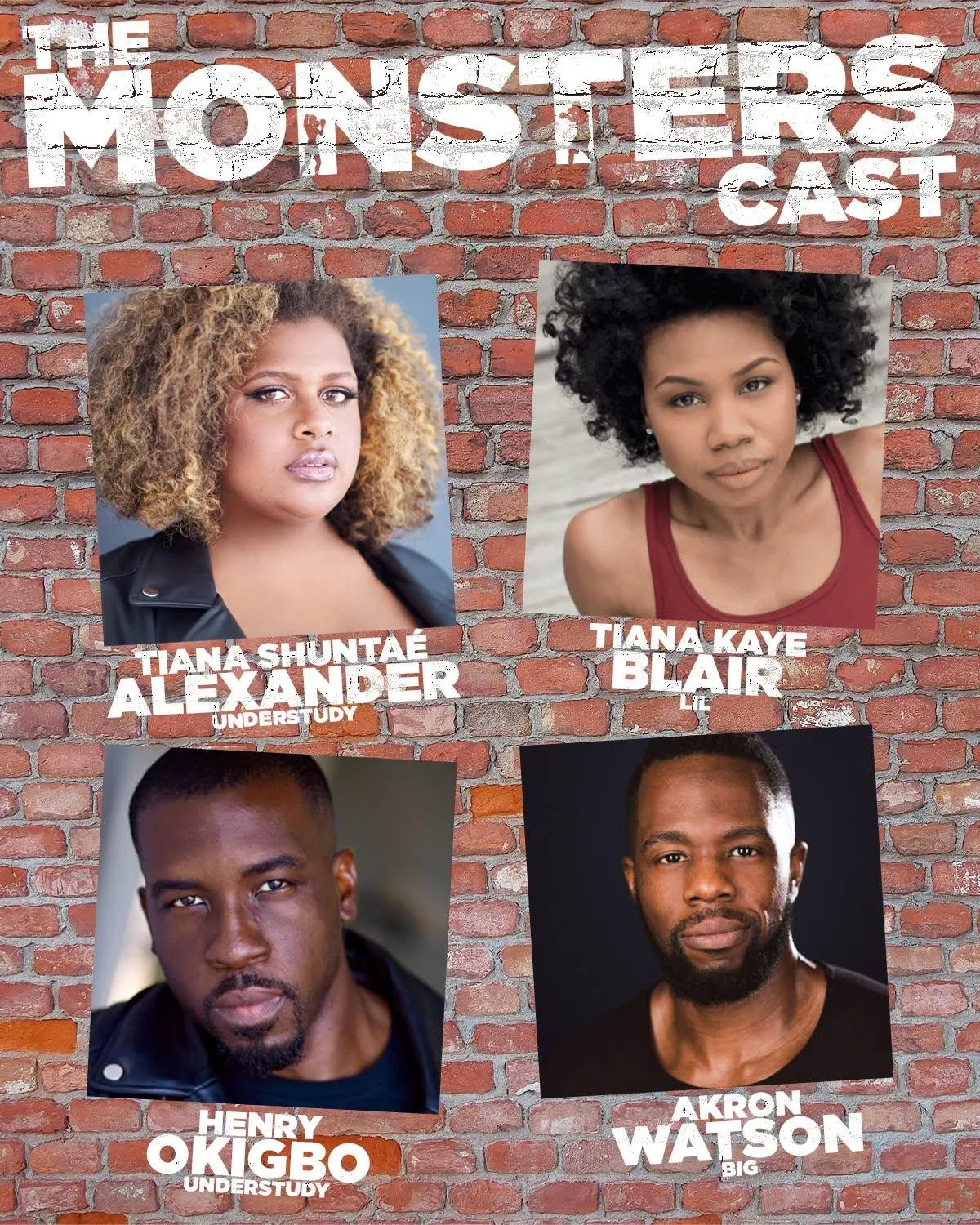
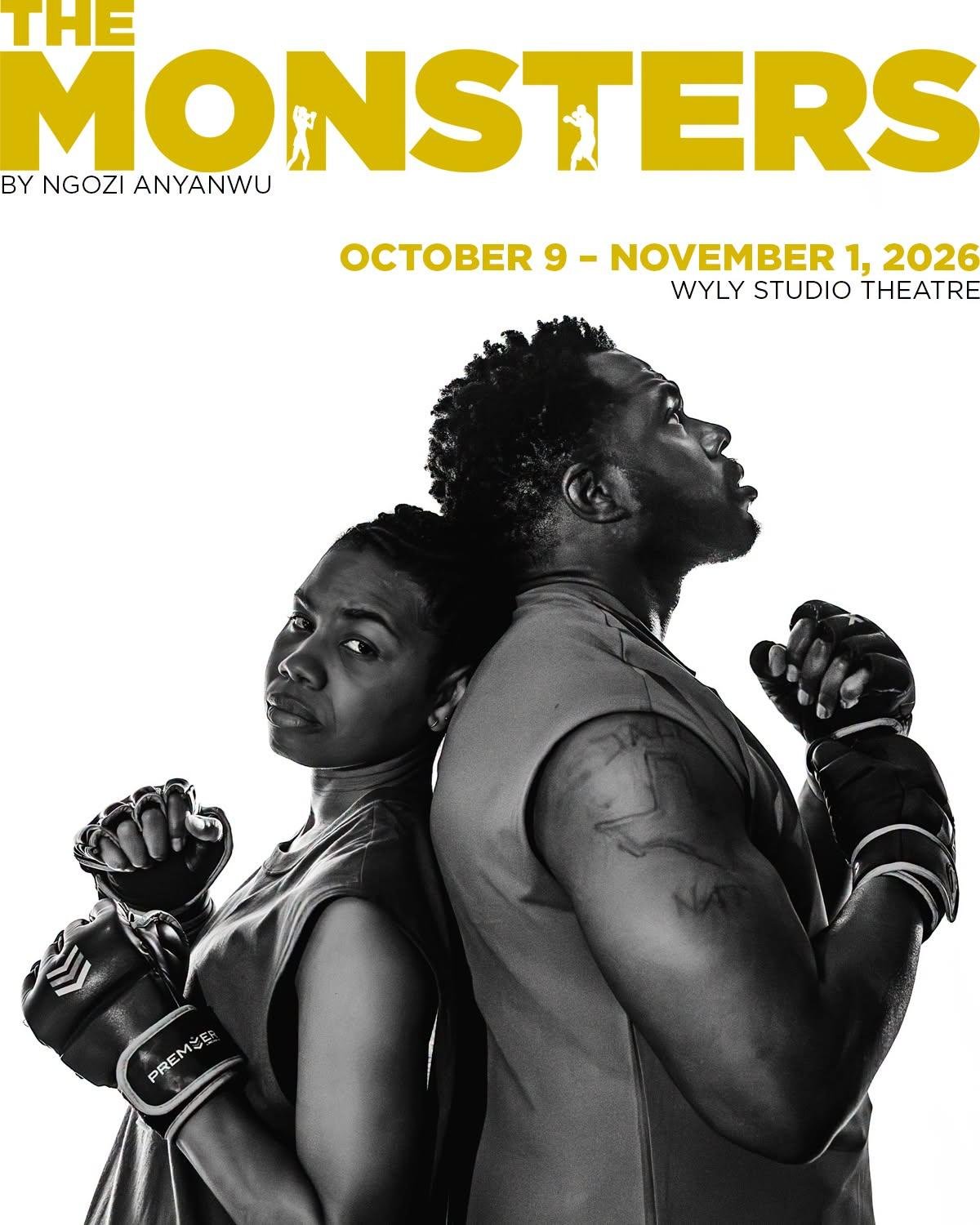
Dallas Theater Center delivers a knockout with its regional premiere of Ngozi Anyanwu's The Monsters, a sibling drama that hits harder than anything in the ring. It follows two people who learned to survive long before anyone showed them how to live. Akron Watson, fresh off his directorial debut at Genesis Children's Theatre, stars as Big, a mixed martial arts fighter whose intimidating presence hides a childhood marked by abuse. Under Delicia Turner Sonnenberg's direction, the Wyly Studio Theatre becomes a place where the violence of the ring starts to resemble the violence of home. The monster here is a creature people help create and then condemn for becoming.
Big and his younger sister Lil, played by Tiana Kaye Blair, are the products of an abusive father. In flashbacks, the siblings tense at the sound of a car in the driveway, and Big murmurs "You know the drill," a routine they built to protect each other. In one tender scene, a teenage Big draws a portrait of his sister for her sixth birthday, a gift that sits uneasily beside the fear in the room. When Big leaves home, Lil stays behind, and the play makes clear what that cost her. Abusive men passed through her mother's life, and she learned to protect herself for years without her brother's help.
She turns up at Big’s door after sixteen years apart, having followed his career from a distance. Her return disturbs the identity he has built around being feared. The play is billed as a sibling love story, and the label fits. In the fight world "monster" is a compliment, and Ms. Anyanwu lets the word cut both ways. It is Big's ring name—but also what other people made him.
Lil's given name is Josephine, and she remembers a boy at school telling her she was ugly. "Do you think I'm ugly?" she asks, and the line carries years of a girl measuring herself against someone else's verdict. Big absorbed verdicts of his own. He is a Black man whose body is the thing people pay to watch, and the play keeps asking whether anyone ever offered him another way to be valued. If the crowd loves him only for what his fists can do, who is he on the day the fights stop? Big is nearing the end of his career with no obvious next chapter.
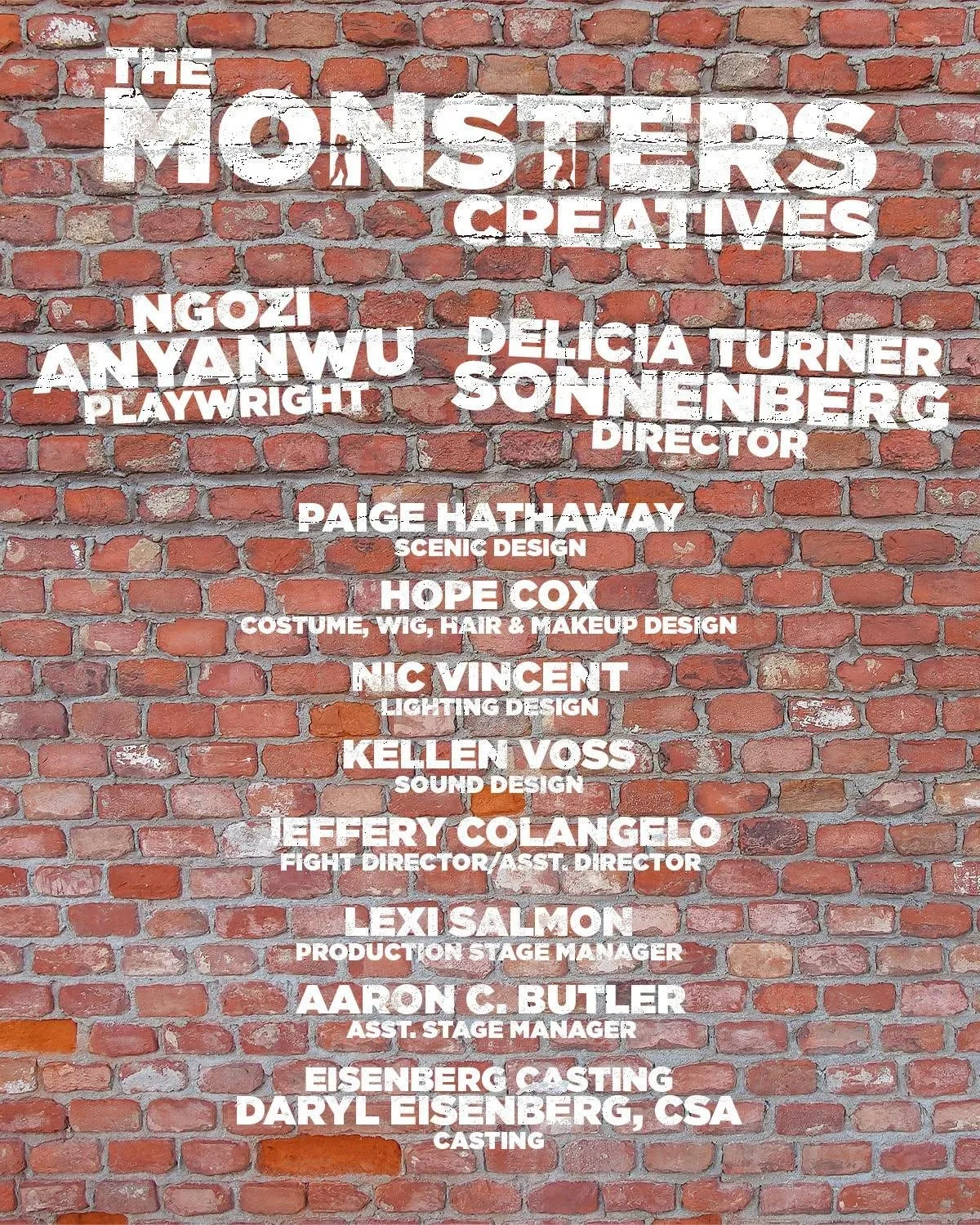
The black box on the sixth floor has been refashioned into a UFC-style octagon, its boundaries drawn by LED strips in the floor and reinforced by Nic Vincent's overhead lighting. The scenic designer, Paige Hathaway, uses the cage as a metaphor for how narrow the siblings' emotional lives have been. Red benches serve as ottomans and gym equipment, and each rearrangement carries the action to a new place.
When Big enters under pulsing red lights, the audience is invited to cheer him on. The moment has the electricity of a pro sporting event, and it makes the theater briefly complicit in the spectacle of a man whose violence has become his most marketable trait. We soon realize that we are applauding someone for the armor that keeps him from facing his wounds.
Kellen Voss's sound design makes the fights especially potent. In the slow-motion passages the sound withdraws from the room as if the air had been pulled out of it, and Vincent's lighting dims in step, leaving us suspended at the moment of impact. A kick or a strike turns strangely intimate once it loses its speed.
Watson and Blair give performances of real emotional weight. Both shift between adulthood and childhood through small changes in vocal pitch, posture and mannerism, and their younger selves arrive through play. The siblings imagine themselves as pro wrestling superstars and re-create signature moves like “The People's Elbow” before dissolving into piggyback rides. The scenes have a genuine comic warmth, which makes their darker implications hurt more. As children they treated fighting as a game. As adults they use it as a way of survival.
Blair also charts a quiet change in Lil. She arrives open-hearted and eager, and as her ambitions harden, some of that warmth drains away. Whether she can recover it while chasing her own version of the monster is one of the evening's most poignant questions, and it sends the siblings down divergent paths even as each tries to find the other.
The soundtrack is lit! Songs from DMX, Lil Wayne, Ye (formerly known as Kanye West) and GloRilla create a cultural atmosphere in which aggression becomes spectacle. Hope Cox's costumes sharpen the contrast between the siblings. Lil's flashy pink jumpsuit stands apart from Big's dark grays and army greens, his Adidas track pants and casual slides. His wardrobe follows his own rule of, "Be smart, not flashy."
Jeffrey Colangelo, who serves as fight director and assistant director, deserves particular credit. He has noted that fight choreography can ordinarily take four to six weeks of training; much of this production's material came together in about two. The fighting looks genuine, which is no small feat in a space this intimate, and the physical demands are considerable, especially in the siblings' climactic confrontation. The fight becomes an emotional release, giving years of resentment a physical vocabulary.
Sexuality surfaces as another source of tension, showing how expectations around masculinity can shape a man's relationship to his own body. Big has been tested all his life, and each challenge has locked him further into the role others expect of him. Eventually the monster is the only identity left to him. Lil's return exposes how fragile that construction is, and her sixteen-year absence has shaped her own defenses. Ms. Anyanwu writes spare dialogue, and some viewers may want more words from these two. She trusts their bodies to speak, which suits people who have spent their lives holding everything in.
The deepest tragedy in The Monsters is inherited trauma. What is a child to do when there are no role models in the home? Children learn what the adults around them teach—even when the lessons come through cruelty—and they grow into people who may repeat the patterns that wounded them. Ms. Anyanwu asks what it would take to end that cycle. Dallas Theater Center lands its final blow on the possibility that love might let the siblings see each other beyond the roles forced on them.
WHEN: October 9-November 1, 2026
WHERE: 2400 Flora Street, Dallas
WEB: dallastheatercenter.org