‘The Spirit World Speaks: Los Niños Santos de María Sabina’ @ Teatro Dallas
—Teresa Marrero
At the intimate Black Box space of the Latino Cultural Center, Teatro Dallas’s production of Los Niños Santos de María Sabina (through May 24), written and directed by TD’s longtime artistic head Cora Cardona, unfolds less as a conventional biographical drama than as a ceremonial act of remembrance. Rooted in the life and spiritual legacy of the legendary Mexican (Oaxacan) Mazatec curandera María Sabina, who brought to the western world sacred medicine knowledge of hallucinogenic mushrooms. She lovingly refers to them as los niños santos, the holy little ones. The production resists the reductive exoticism that has too often framed Sabina’s image in popular culture. Instead, Cardona offers a immaculately researched theatrical meditation on Indigenous knowledge, ancestral memory, healing, colonial intrusion, and the violence of cultural extraction.
Presented by Teatro Dallas as part of its 40th anniversary season, the production situates María Sabina not as a mystical curiosity but as a complex yet humble woman whose ceremonial use of sacred mushrooms became tragically commodified after foreign researchers and countercultural seekers descended upon Huautla de Jiménez in the mid-twentieth century. The historical framework of the play remains remarkably grounded. Cardona’s script honors the curandera’s Mazatec worldview while tracing the painful consequences of ethnographic voyeurism and Western appropriation.
The production’s most remarkable achievement lies in its ensemble work. The actors move seamlessly through multiple characters, embodying villagers, spirits, outsiders, ancestors, animals, and ceremonial presences with extraordinary fluidity. (Cardona’s creative sound design and video selections—sound editing by Charles Seals and projection editing by Taylor Post—serve to enhance the whole.) Rather than emphasizing psychological realism, the performances operate through transformation and energetic shifts. Bodies become vessels. Voices and sounds carry memory. Gesture becomes invocation.
This fluidity of embodiment gives the production its ritual texture. One moment an actor appears grounded in quotidian rural life; the next, they emerge as an animal-spirit being or spectral intermediary. The transitions are executed with such precision that the audience gradually accepts the porous boundary between material and spiritual worlds. In lesser productions, such theatrical metamorphoses can feel decorative or confusing. Here, however, they emerge organically from the cosmology of the piece.
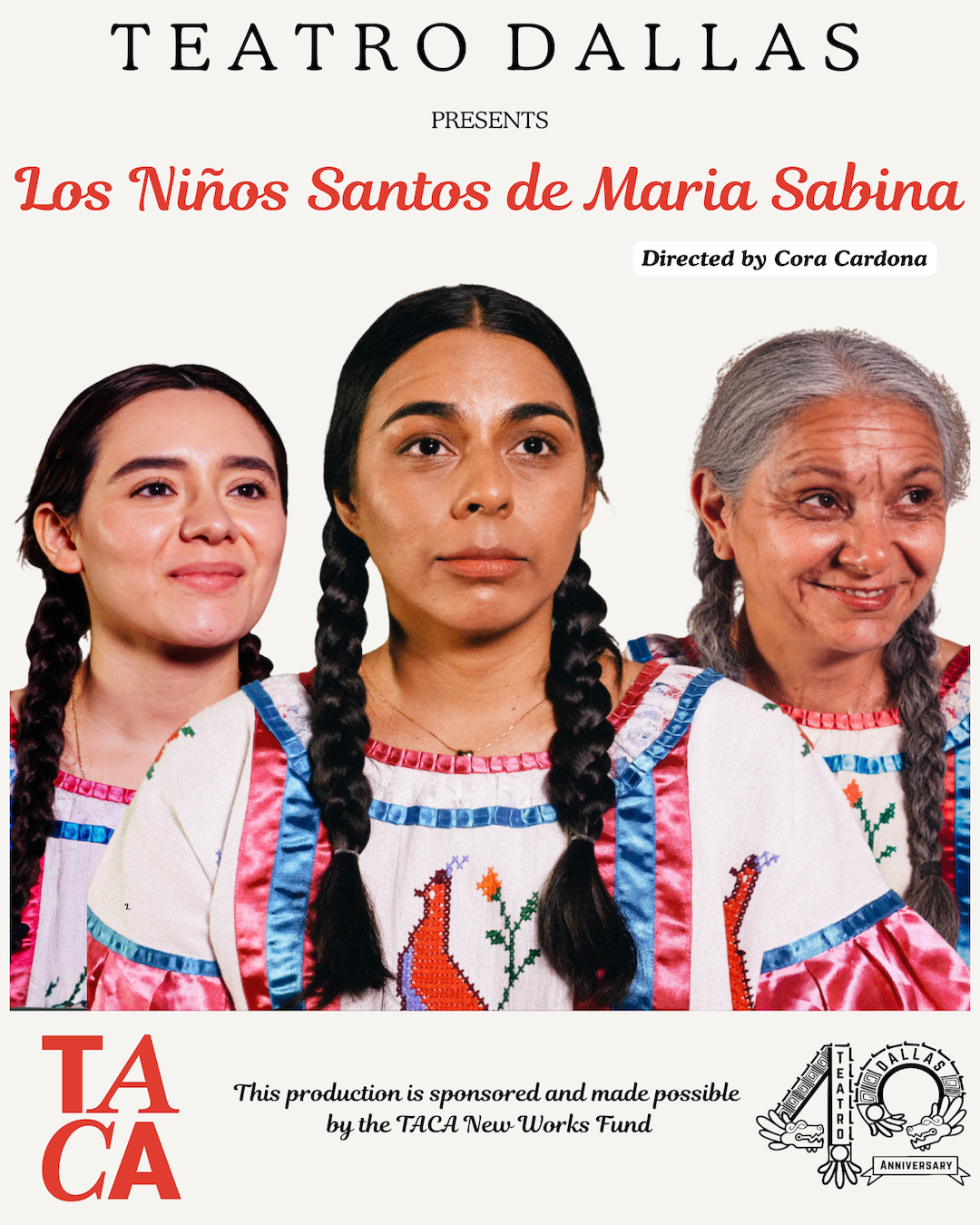
Particularly striking is the way the spirit of María Sabina permeates the production even beyond the multiple actors portraying her at various stages of her life. To give an idea, Julia Landey plays María Sabian, and María Ana (her friend) Bailarina. Lucila Rojas embodies María Sabina, María Ana, Valentina Pavlovna. Frida Espinoza also plays María Sabian, Sofía and Concepción (Sabina´s mother). Sabina’s presence is diffused throughout the ensemble, as though her consciousness survives in collective memory rather than singular embodiment. This directorial choice becomes one of Cardona’s most powerful interventions. The legendary curandera does not merely appear in scenes; she permeates the theatrical space through various iterations. All the women actors´ commitment to each role makes this performance engaging and most of all, clear.
The men are not to be left behind. Armando Monsivais does a stellar job playing Álvaro Estrada, Crescencio, and Benito Juárez (yes, the one). Nicolás Castañeda brings to life Ángel, Catarino, and Serapio Martínez. Gordon Wasson, Marical, Dr. Guerra and Crisanto are played by Jayson Díaz. El nieto, and El joven Catarino are played by the young talent of Martín Castañeda. It’s clear to see how these multiple roles can only be achieved through a combination of the actors´ talent plus the expert directorial hand of Cardona.
Language also becomes an essential dramaturgical force. The authentic incorporation of Mazatec linguistic textures grounds the production in a living cultural specificity too often erased in U.S. Latine theater. Spanish is the lingua franca of this work: the entire play is in Spanish with a smattering of English. There were super titles. Cardona wisely refuses to flatten Indigenous cosmologies into explanatory theater. Instead, the production trusts audiences to experience rhythm, chant, repetition, and sound as embodied knowledge.
Charles Seal´s sound design deserves special recognition for constructing the production’s spiritual architecture. Rather than overwhelming the audience with cinematic effects, the sonic environment operates through subtle layering: whispers, ceremonial percussion, breath, echoes, animal calls, rattles and reverberations that seem to emerge from the earth itself. Sound frequently precedes physical action, creating the sensation that unseen presences occupy the room before bodies enter the stage space.
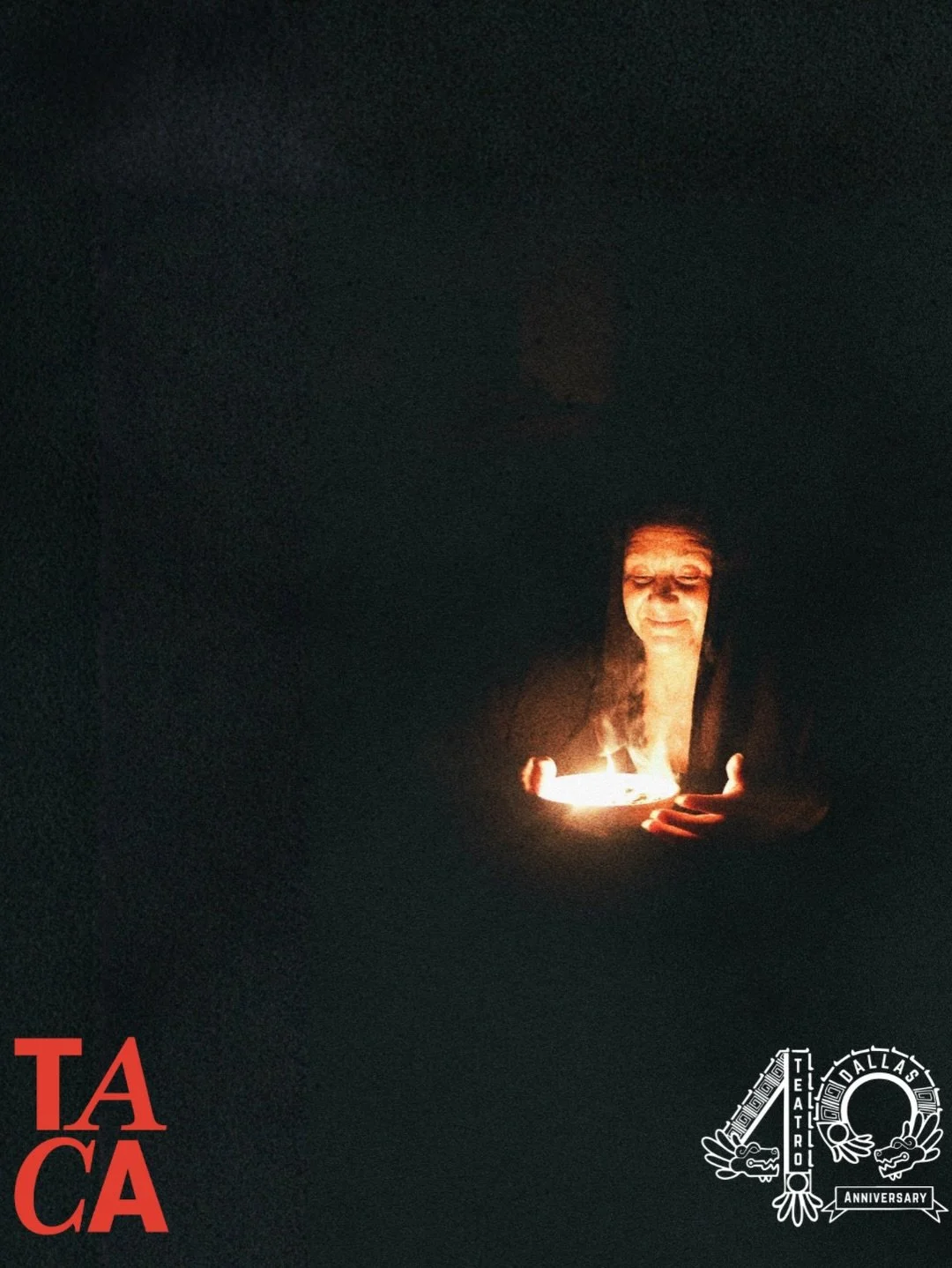
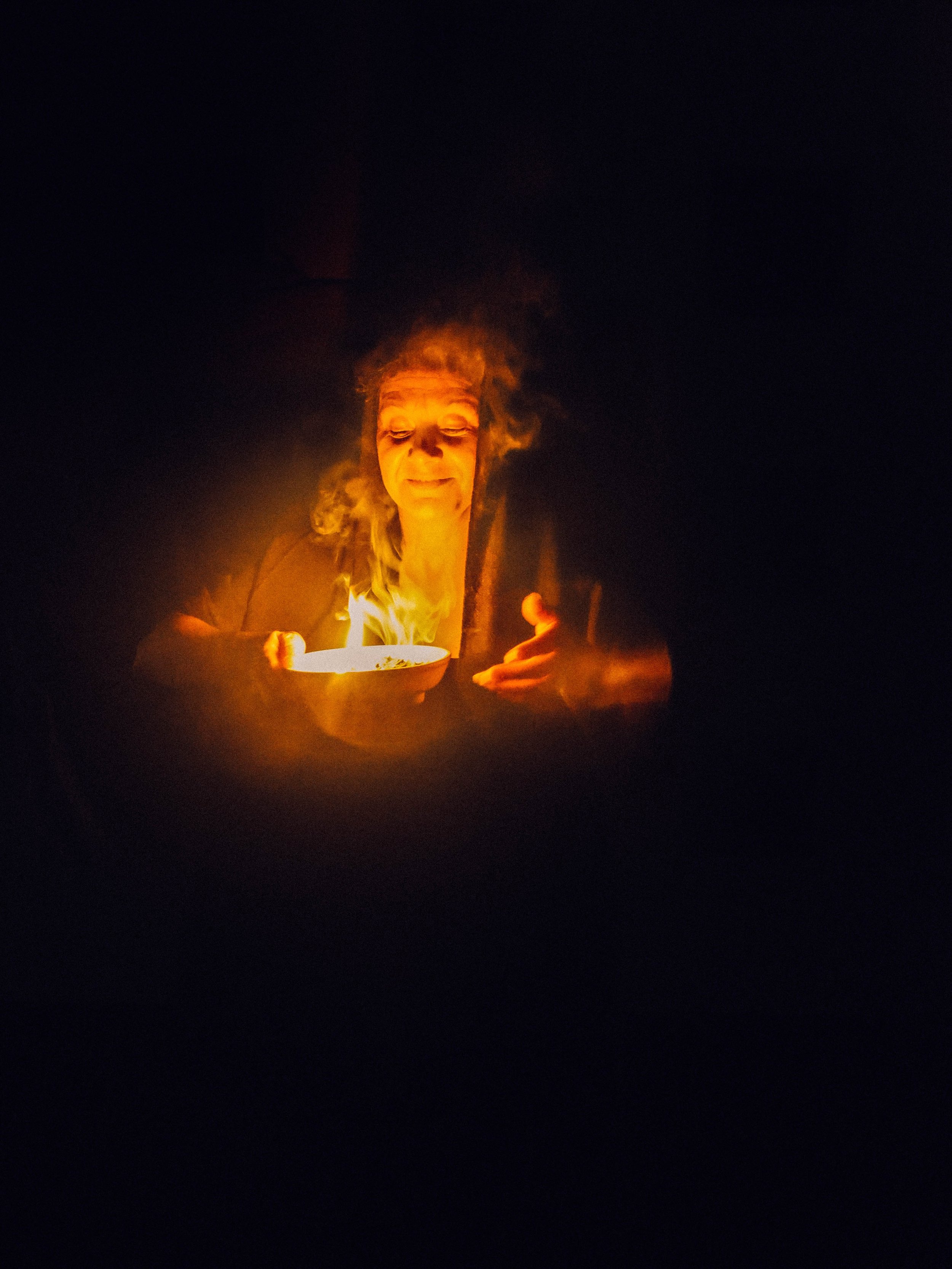
Equally compelling is Christopher Treviño´s lighting design, which transforms the Black Box Theatre into an unstable spiritual terrain. Light moves like consciousness throughout the production—at times isolating performers in ritual intensity, at others dissolving bodies into shadow and silhouette. The transitions between earthly and metaphysical realms are achieved with remarkable economy and sophistication. Instead of relying on spectacle, the design team embraces ambiguity, and atmospheric suggestion.
Nick Brethauer´s staging of animal spirit beings becomes one of the production’s most memorable visual strategies. These figures do not function merely as folkloric decoration but as manifestations of an Indigenous epistemology in which humans, animals, ancestors, and the natural world remain interconnected. The performers embody these beings with physical commitment and Willow Dubose´s choreographic restraint avoids caricature while sustaining an aura of sacred mystery. A figure that recurred was that of the deer, which, according to sources the word “Mazatec” is translated as “people of the deer.”
What ultimately distinguishes Los Niños Santos de María Sabina is its refusal to package spirituality for mere consumption. Cardona understands the danger of aestheticizing Indigenous ritual while simultaneously recognizing theater’s capacity to create communal acts of witnessing. The production walks this difficult line with admirable care. It neither sentimentalizes María Sabina nor reduces her to a historical victim. Instead, it frames her as a figure of resilience whose spiritual knowledge survives despite exploitation, displacement, and misunderstanding.
In a cultural moment increasingly attentive to questions of decolonization and cultural memory, Los Niños Santos de María Sabina arrives as both theatrical event and ethical intervention. Teatro Dallas has created a work that honors ancestral knowledge without domesticating its complexity. Cardona’s production reminds audiences of theater´s original function as ceremony: a space where memory breathes, spirits linger, and histories speak back.
Teresa Marrero is Professor of Spanish and Latine Performance at the University of
North Texas.Teresa.Marrero@unt.edu
WHEN: May 15-24, 2026
WHERE: Latino Cultural Center, 2600 Live Oak, Dallas
WEB: teatrodallas.org