‘Where We Stand’ @ Dallas Theater Center
—Rickey Wax
What happens when a legendary director and a legendary actress unite for a one-woman show?
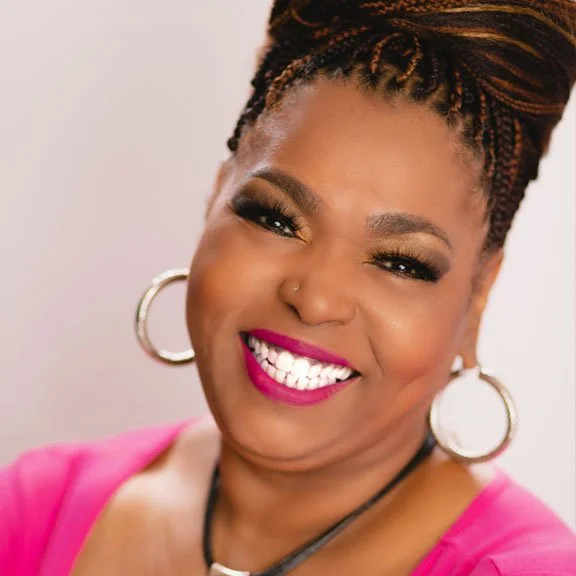
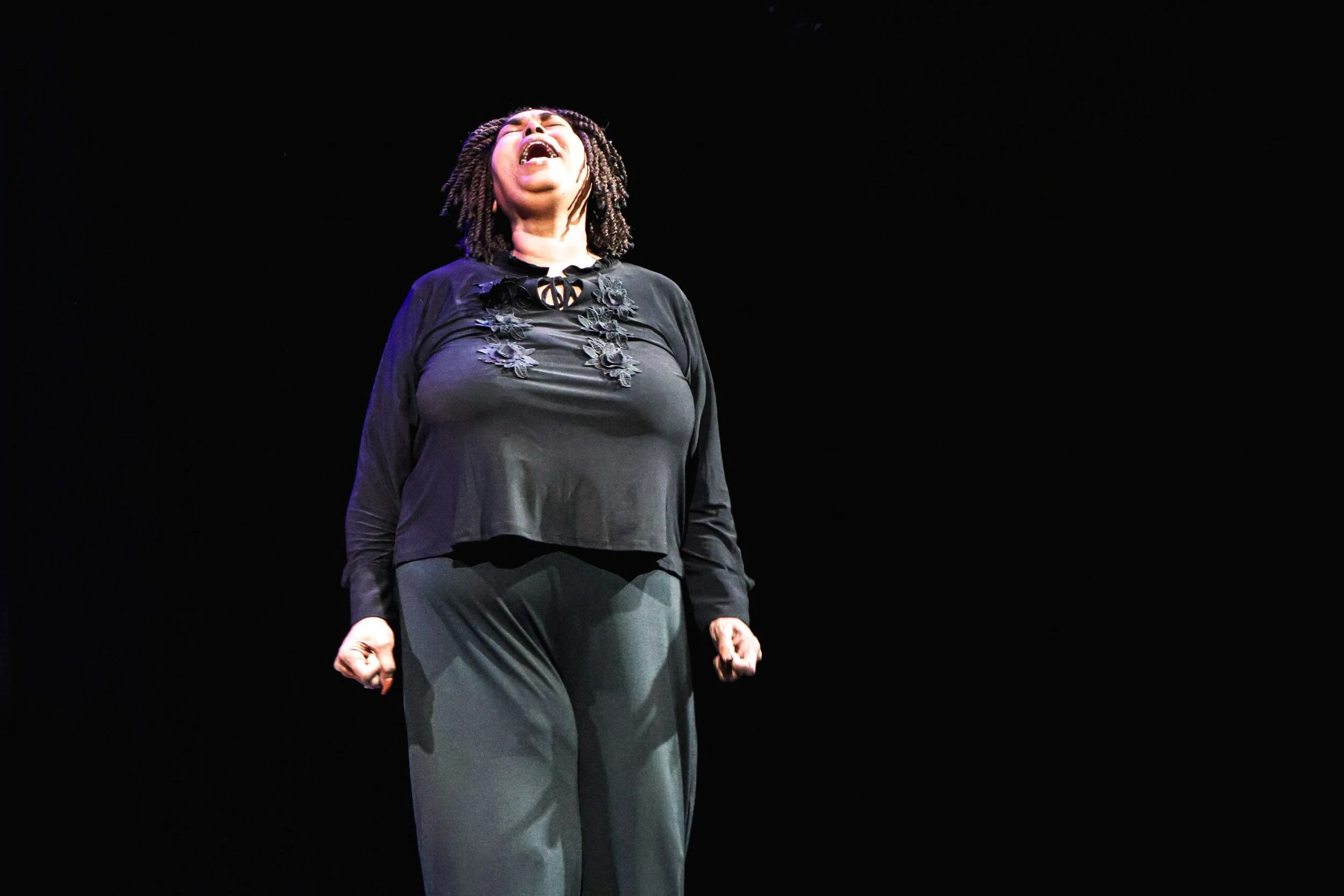
We get something close to magic. I had the pleasure of attending opening night of Where We Stand at the Dallas Theater Center, and it is always a treat when one is able to bear witness to the acting force that is Liz Mikel. Over the years, I’ve had the privilege of watching her command stages large and small, in Steel Magnolias, The Who’s Tommy, and even the world premiere of Give It Up. But nothing quite compares to the Herculean task she undertakes here in partnership with director Akin Babatunde. In a breathless 70 minutes, with no intermission and no margin for rest, Mikel embodies nine distinct roles, shifting among them seamlessly.
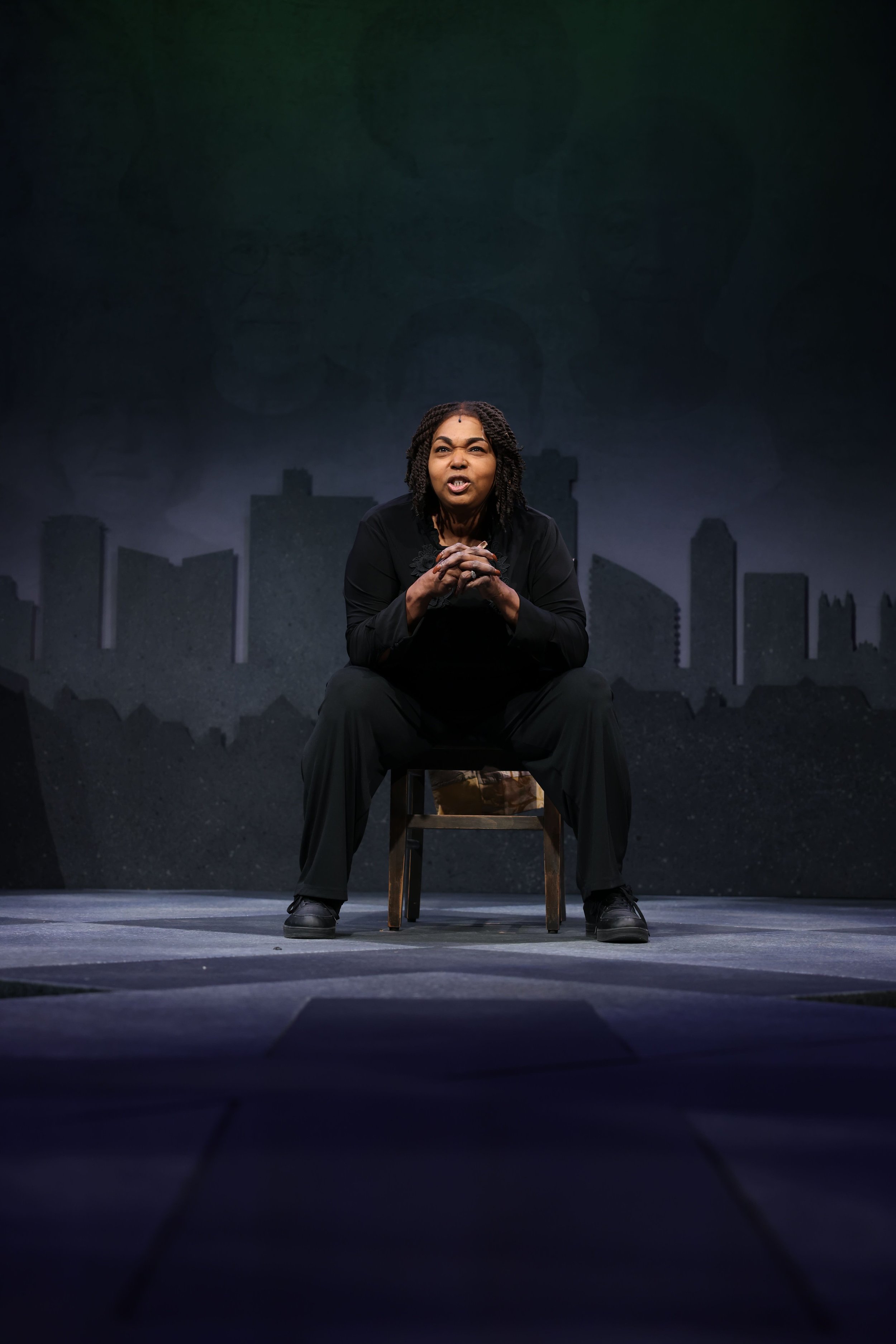
Mikel sits among us. A single light finds her, then follows her as she rises and makes her way to the stage, as if she has been chosen. Behind her, Bob Lavallee’s backdrop reveals Dallas’ infamous skyline, its familiar shapes rendered unfamiliar by the ghostly faces hovering in shadow. “This is the story of a man who wanted to shape a town,” she says. And with that, she shapes an entire world.
Playwright Donnetta Lavinia Grays structures the piece like a parable told in fragments. Scene by scene, we watch a once-thriving town fall into disrepair. Jobs vanish. People leave. Hope becomes something spoken of in the past tense. Then comes the Stranger.
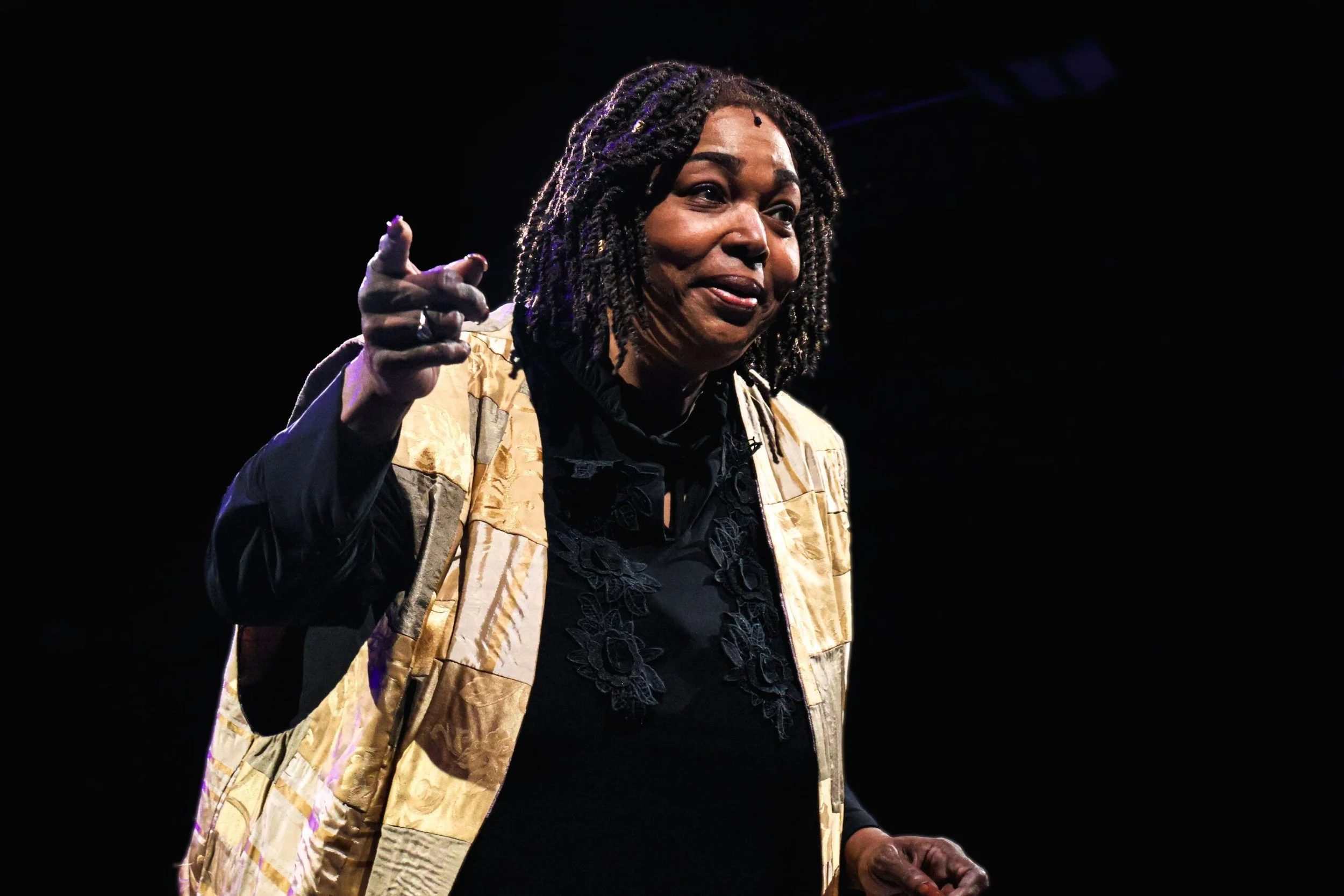
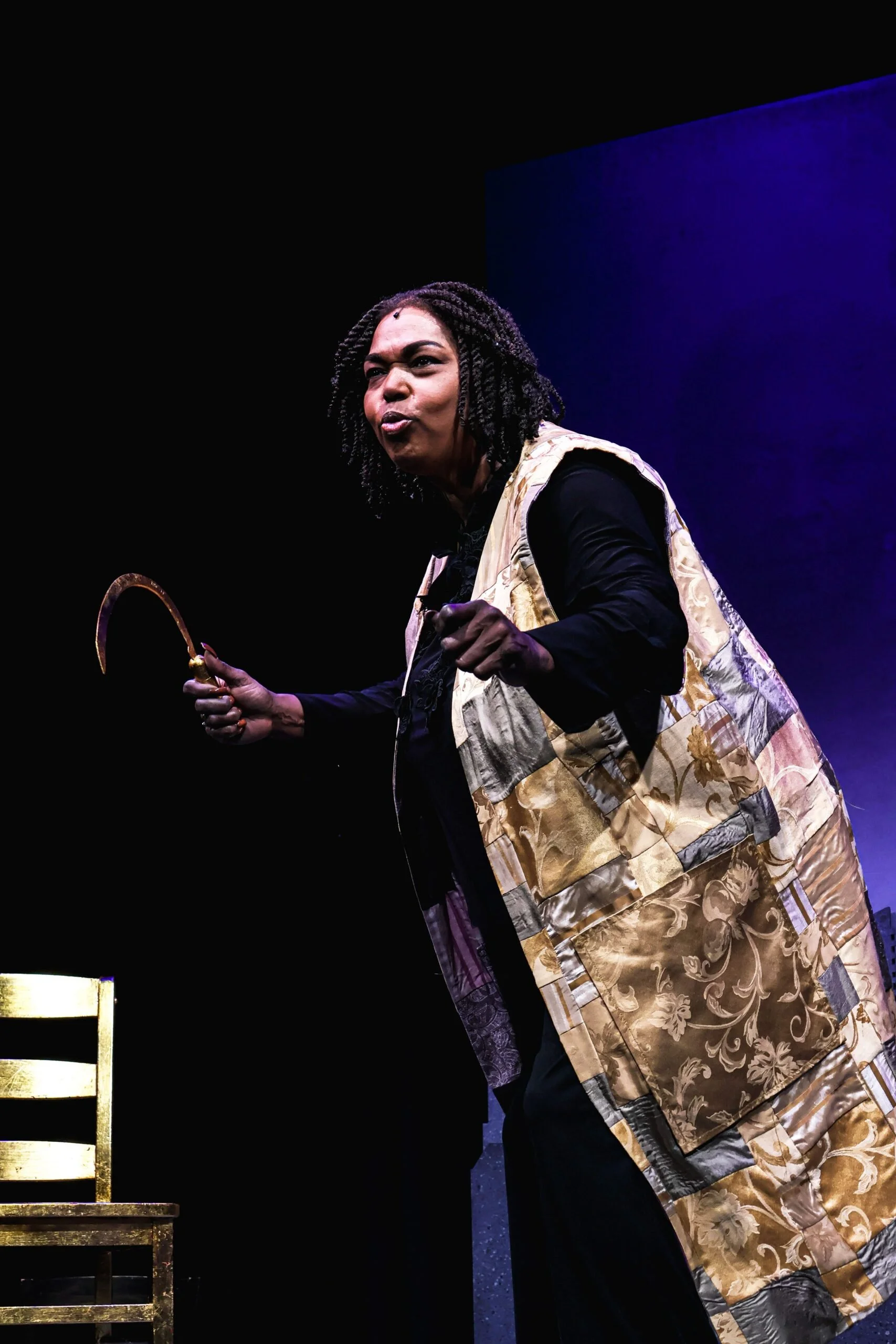
Dressed in gold, smooth in voice and manner, he arrives bearing gifts: a seed, a scythe, a spade. Tools of creation. He offers the Man a bargain. With these, the town can be reborn. Prosperity can return. But everything must be done in his name.
What follows is transformation. The Man uses the gifts. The town blooms. People sing again. Audience members are invited to clap along, to join in songs like “Do You Wanna Be Free?” At the top of the show, we were each given a small black bag containing stones. We did not yet know why. But we held them.
As the town flourishes, something else grows alongside it. Pride. Ownership. Gratitude shifts. The townspeople begin to praise the Man instead of the Stranger. And this is where the parable tightens into something far more dangerous.
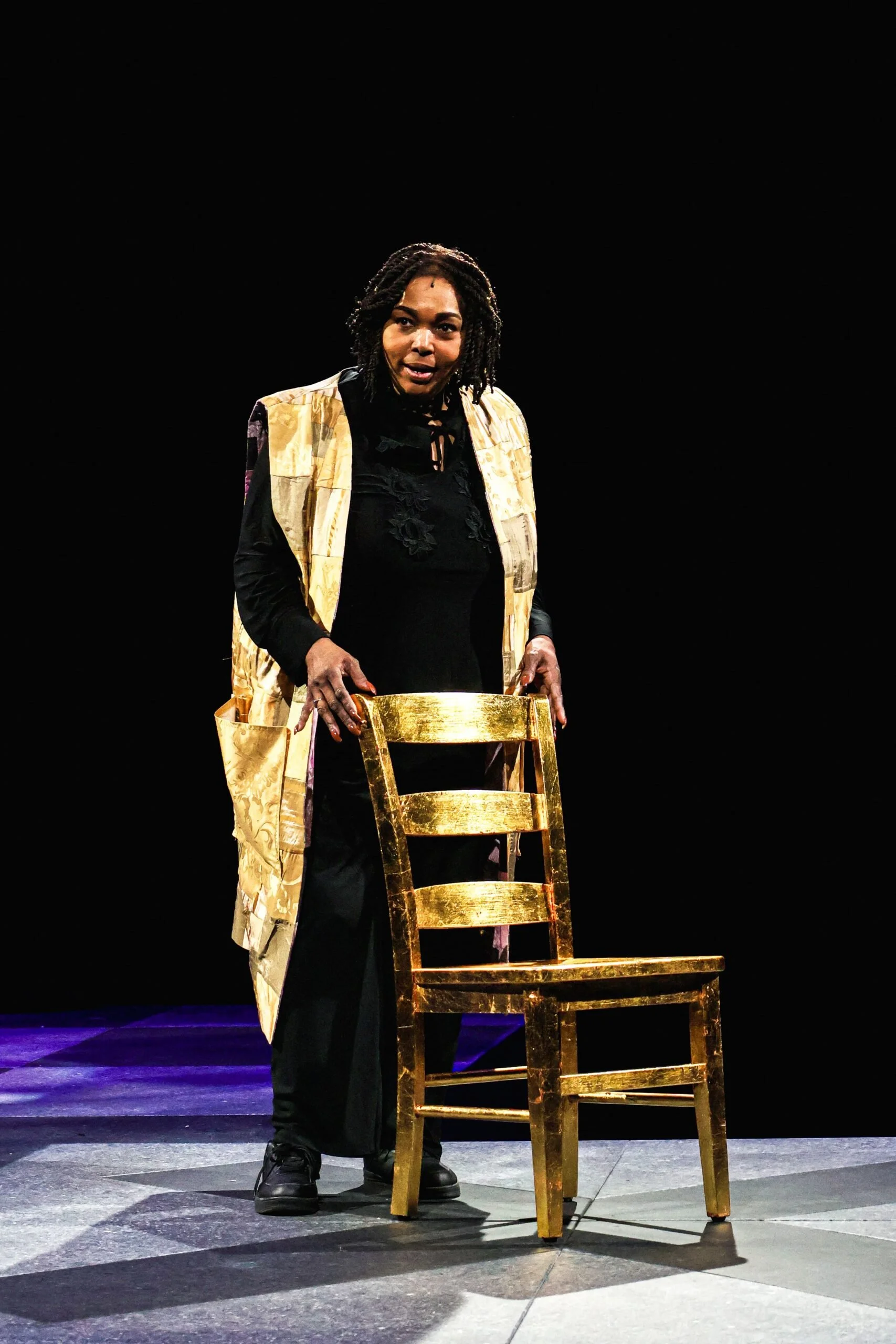
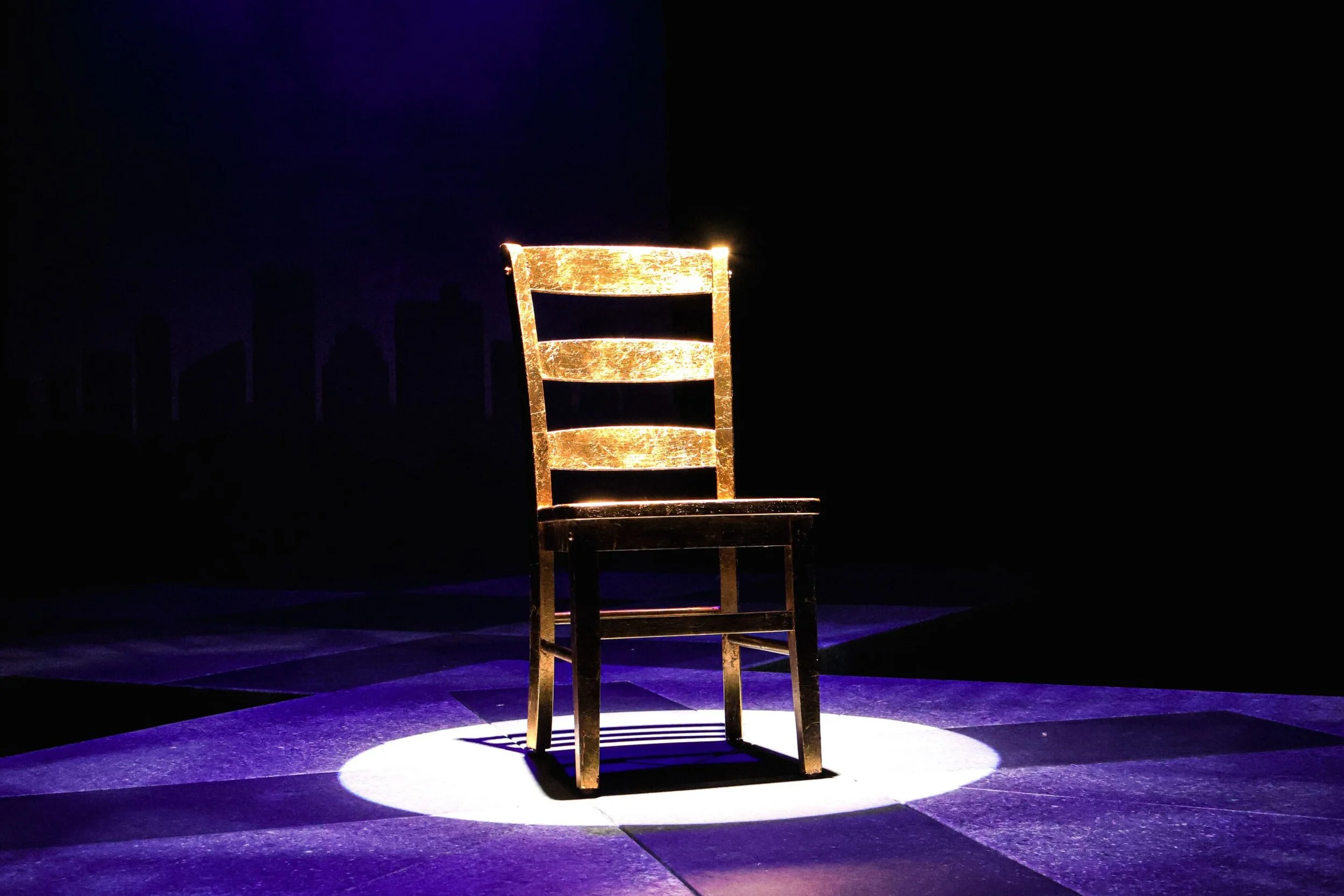
The play’s central sequence becomes a trial. Two golden chairs sit at center stage like thrones or witness stands, depending on how you see them. The audience becomes the jury. We are asked to decide the Man’s fate. And in doing so, we are asked to confront ourselves.
Who is the man in gold?
Some see the devil. Others see temptation. Others still see corporations that invest in neighborhoods only long enough to extract their value before abandoning them. Either way, he is a benefactor, a colonizer, bringing salvation or even ruin. Nevertheless, he is whatever we need him to be.
Babatunde’s direction emphasizes presence and participation, funneling the audience’s energy into the narrative so that the room itself becomes a character in the story. Bryan Stevenson’s lighting isolates and exposes, sometimes haloing Mikel in warmth, sometimes trapping her in interrogation. Hope Cox’s costumes make transformation literal. The Stranger wears a double- sided coat, flipping it depending on who he needs to be. On one side, he is an outsider, dressed in something worn and dust-covered, with patches, a man on the outskirts. But with a simple turn, the coat becomes something richer, more structured, more golden .And assistant director Ptosha Storey helps maintain the delicate balance between intimacy and myth.
The themes resonate deeply. Community. Poverty. Belonging. The seductive pull of easy solutions. The play forces us to consider the cost of progress, the question of ownership, who builds and who benefits, and ultimately, who pays the price.
By the end, the play closes the same way it began. Whistling. “We all come back around to the edge of this street.”
What once sounded joyful now feels haunted.
Exposed.
The stone in your hand has weight now.
You understand what it is for.
I won’t tell you too much more. This is something you must bear witness to yourself. What I will say is this: Where We Stand understands that the most dangerous bargains are not the ones forced upon us, but the ones we accept willingly. The ones we justify. The ones we convince ourselves are necessary.
The program states simply: “We are where we are. We are who we are. The time is now.”
And when the lights fade, when the whistling stops, when you finally release the breath you didn’t know you were holding, there remains only one question left to ask:
Where do you stand?
WHEN: February 25-March 22. 2026
WHERE: Bryant Hall (beside Kalita Humphreys), 3636 Turtle Creek Blvd., Dallas
WEB: dallastheatercenter.org