‘Madama Butterfly’ @ Fort Worth Opera
—Wayne Lee Gay
In 1904, Puccini set out to create, in the opera Madama Butterfly, a solid, gut-wrenching tragedy; whether or not Puccini and collaborators intended more, this weekend's production by Fort Worth Opera definitely invites the viewer to explore the psychological—and possibly geopolitical—implications of the tale as well.
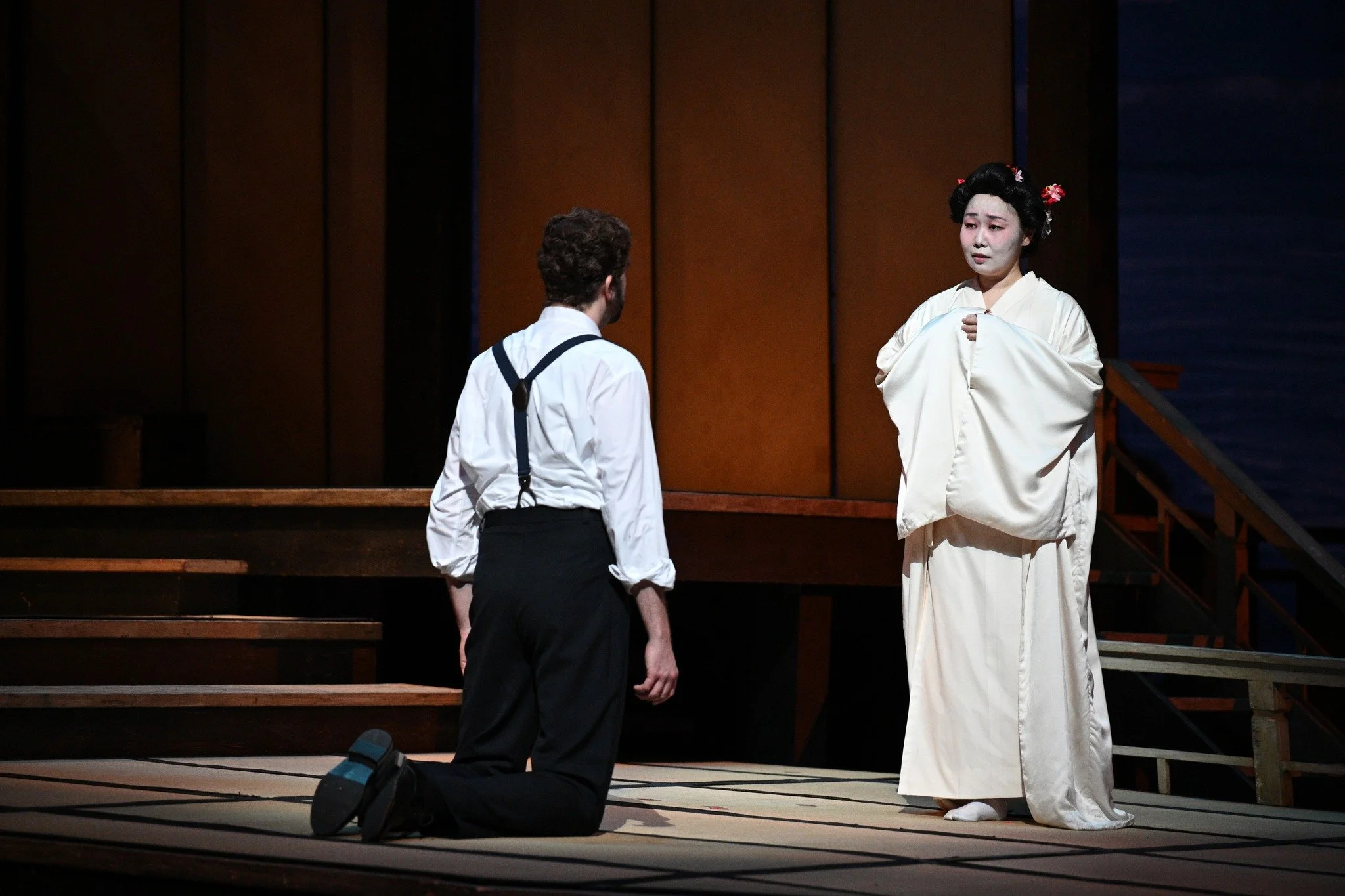
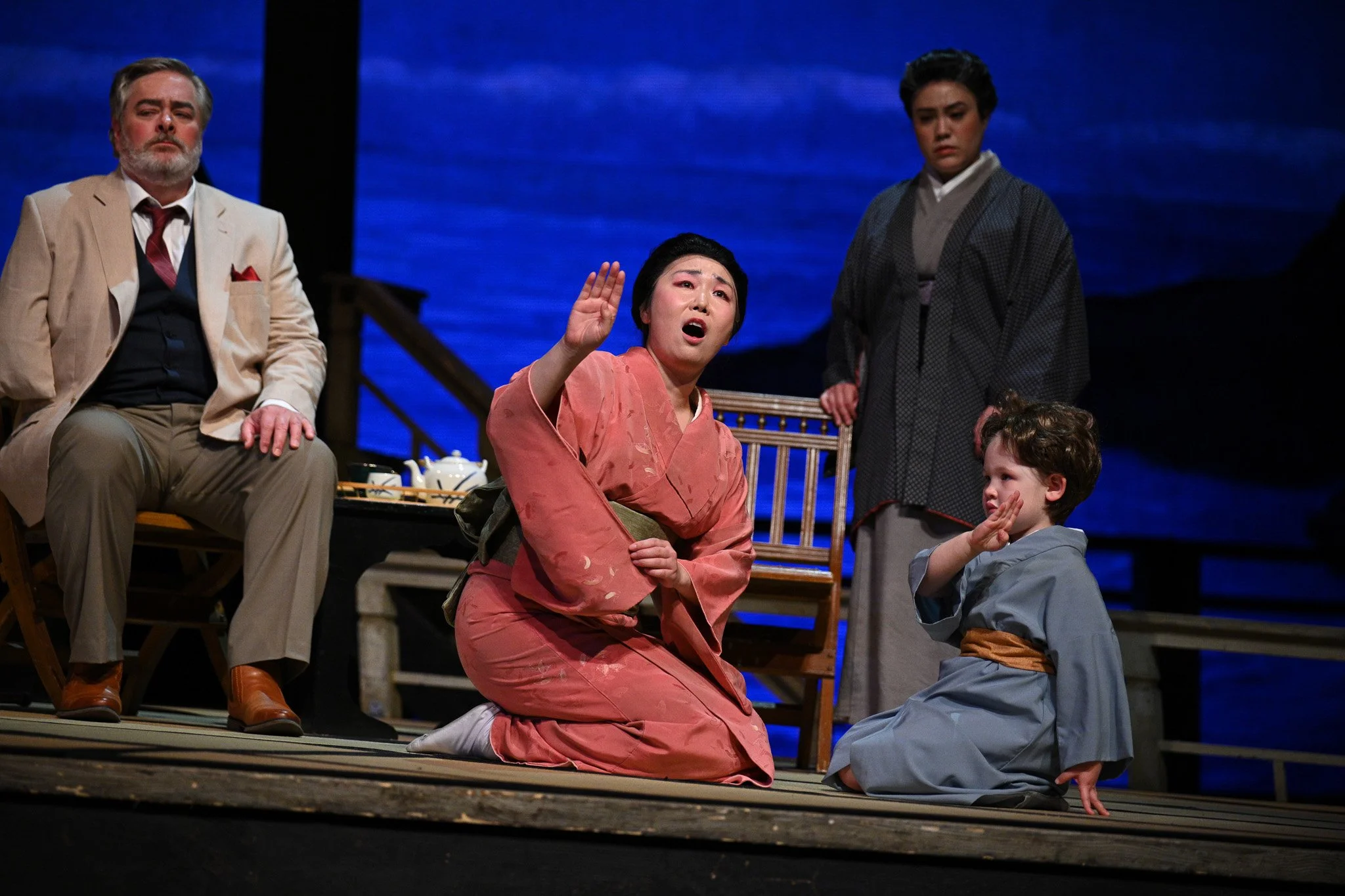
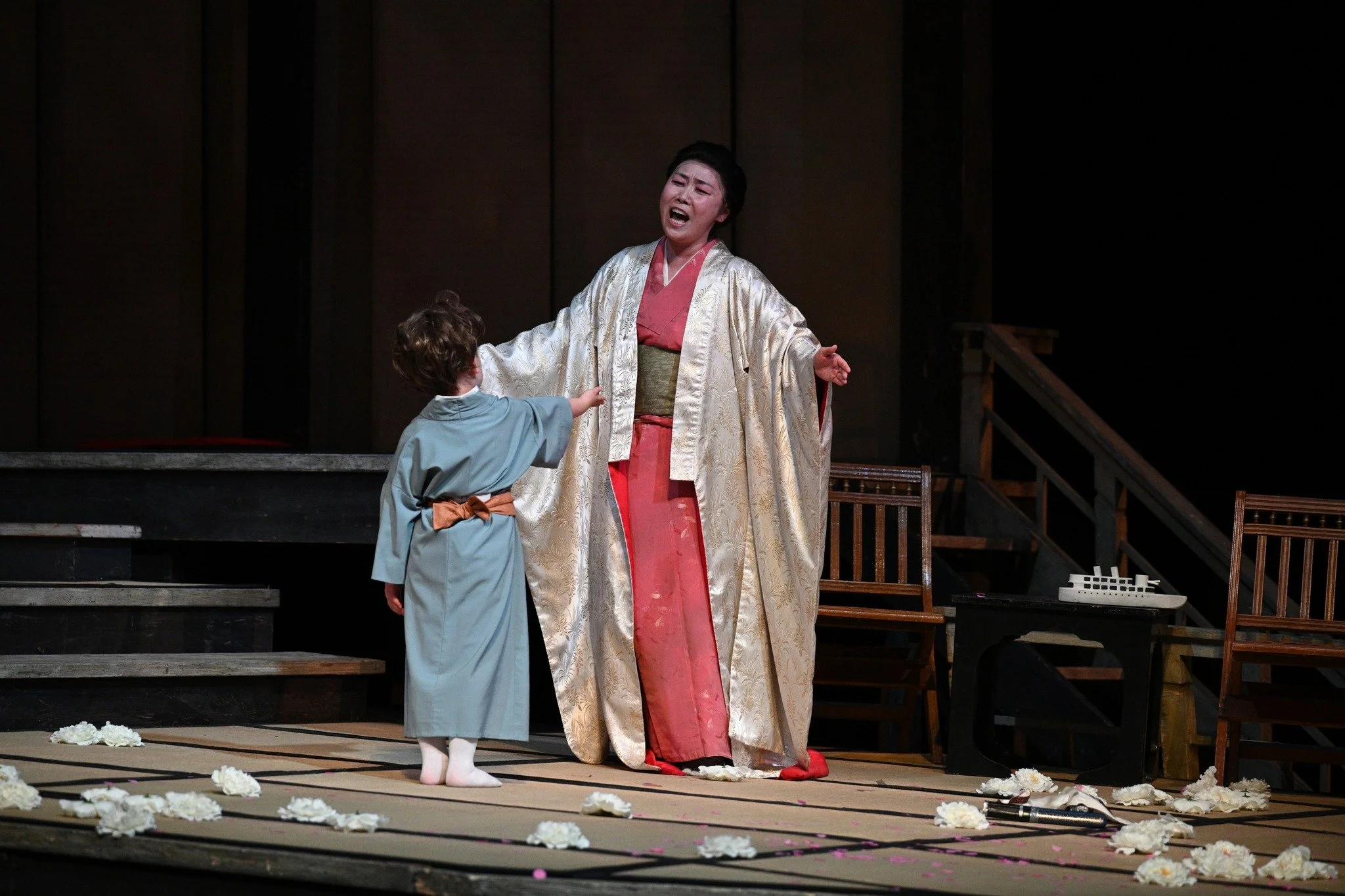
Singing and acting are the most important aspect of any operatic production, of course. And Fort Worth Opera here has assembled a vocally brilliant cast, revolving around soprano Miho Sakoda (a rare case of this role being filled by a native Japanese singer). Sakoda brings a powerfully full voice for the intense moments (of which there are many, both romantic and tragic), while knowing exactly how to turn down the heat for the gentle segments. Visually, she is smallish and delicate—in other words, just right to portray a vulnerable fifteen-year-old girl.
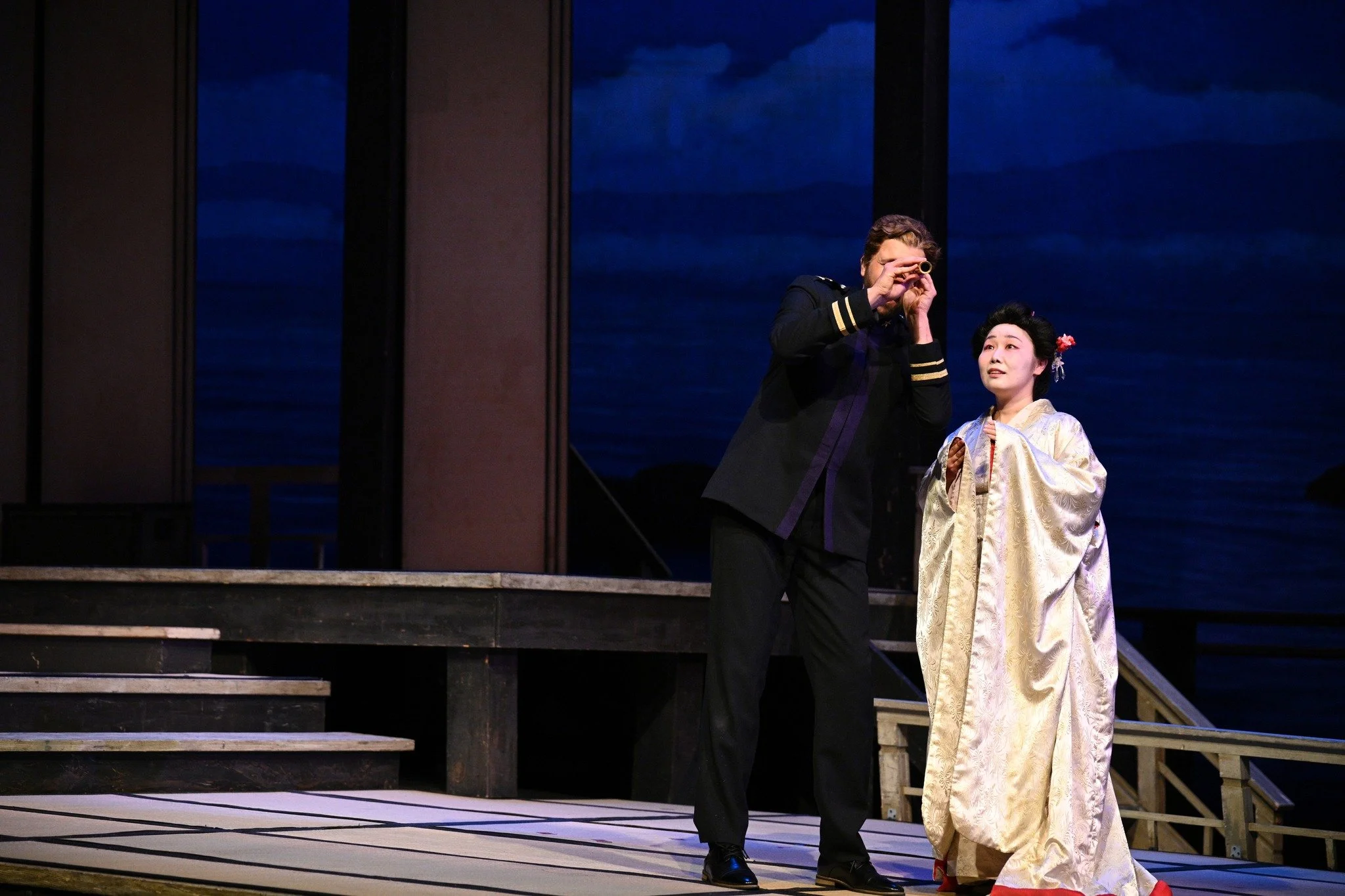
Tenor Zach Borichevsky likewise matches the role of Pinkerton visually and musically; he's the rare tenor who can reach easily into his upper register while maintaining subtlety of expression. And he definitely looks the part: tall, lean, and handsome, he towers over Sakoda convincingly, epitomizing careless male exploitation (and thoughtless American imperialism).
The rest of the cast is equally perfect: mezzo-soprano Kayla Nanto, a Dallas-based UNT graduate, brings an unusually gorgeous vocal power to the role of Suzuki. Tenor Corey Trahan, a member of the faculty at TCU, is deliciously slimy as Goro, performing the role with a deliberately ugly, insect-like vocal quality. Bass Kevin Thompson achieves a frighteningly resonant aura as the Bonze, and Korean-born baritone Joseph Park convincingly portrays Prince Yamadori, Butterfly's westernized (and lust-struck) Japanese suitor. Baritone Weston Hurt, a Houston native, provides an unusually captivating and nuanced presence in the role of Sharpless.
Christian Capocaccia conducts with relentless energy and momentum; his native Italian insight into Puccini's music is a major part of what keeps the audience on the edge of their seats throughout. The Fort Worth Symphony is in fine form as a pit orchestra, with wonderful precision in the string section.
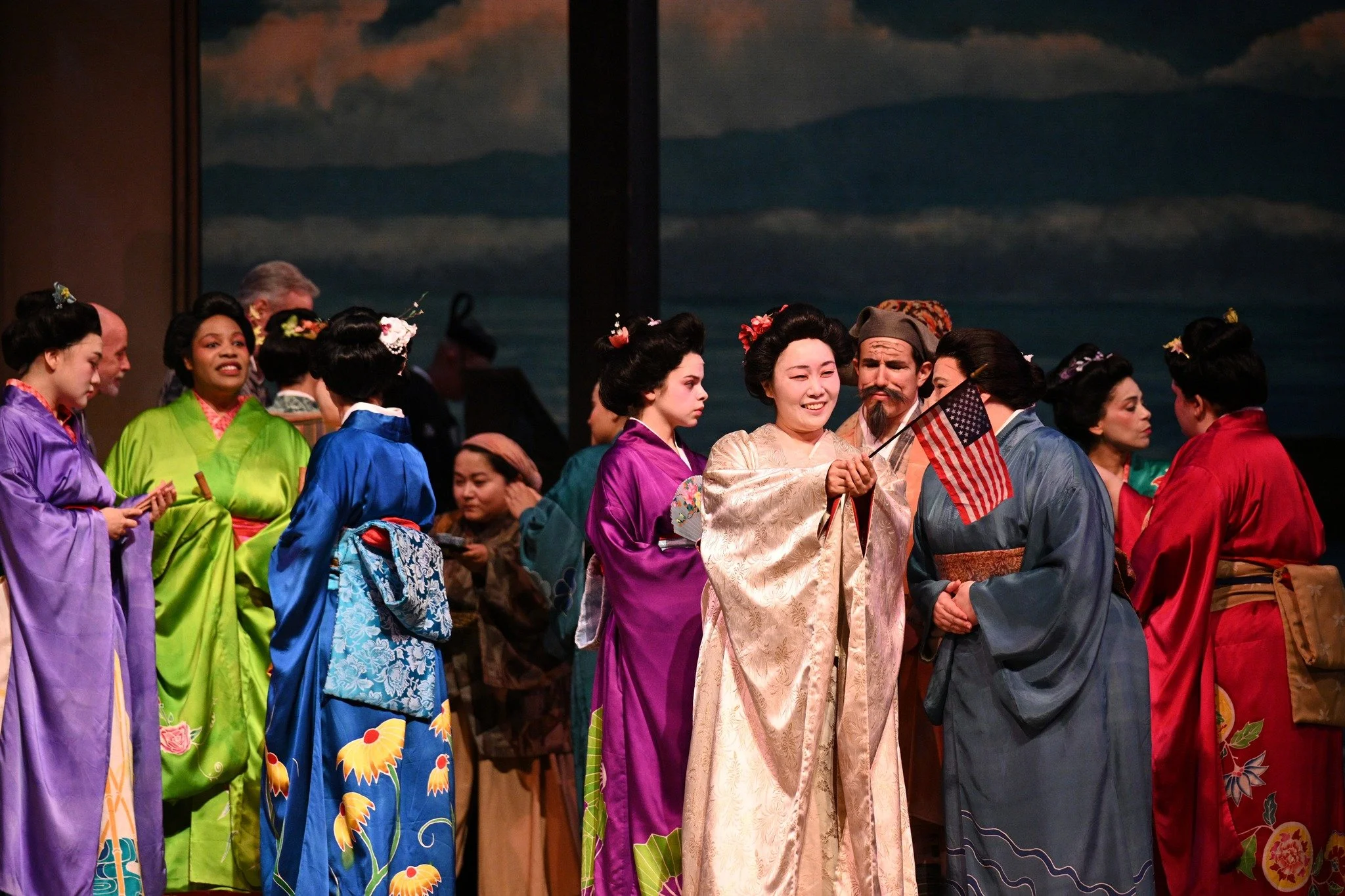
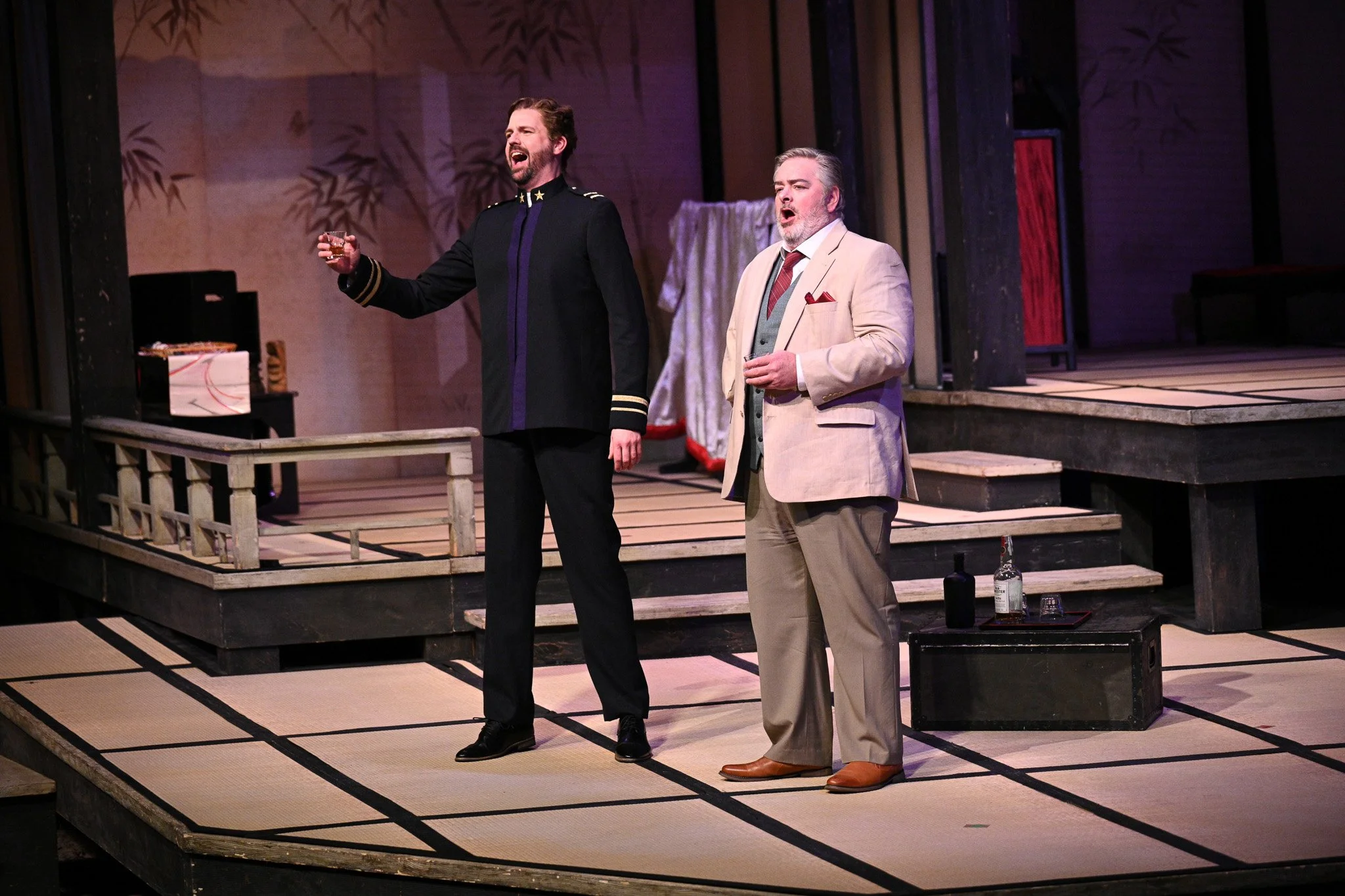
The visual aspects of the production support and enhance the nearly flawless musical interpretation on several levels. The sets, designed by John Gunter for Los Angeles Opera and currently owned by Utah Symphony/Utah Opera, feature three raked platforms with a walkway for entrance from the back. Along with the flat stage floor, this provides five levels for various interactions and subplots onstage. A seascape behind all presents a sunny day with clouds and whirlpools anticipating the emotional storms about to break forth. Alice Bristow's costumes, originally designed for Utah Symphony/Utah Opera, likewise play a large role in the story-telling, most strikingly in the blood-red lining of Butterfly's otherwise pure white wedding gown, portending her violent demise.
Director Frances Rabalais adds considerably to Puccini's foundation in her staging of the physical interaction onstage, taking advantage of the multi-level sets. For instance, as Pinkerton boasts early on about the sexual aspects of American naval power, a uniformed companion (seated on a different level) leeringly peruses a catalogue of Japanese bride candidates. Goro sneaks and hides among the nooks and crannies of the sets, always ready to set his traps. A dark dream segment—another directorial addition—allows Butterfly one final moment of passion with Pinkerton. And Butterfly's child steals the show during the flower duet, enthusiastically flinging blossoms, providing gentle comic relief against this weepily romantic moment.
In another impressive directorial gesture, Rabalais foregoes the usual practice of having the child onstage, blindfolded and holding an American flag, at the end; instead (spoiler alert), Butterfly is totally alone. And there's an intriguingly subtle hint throughout the final act that definitely Suzuki and possibly Butterfly already know the horrible truth long before it is sung out loud.
It's really all too easy to see and hear Madama Butterflyas a sleazy drama with an exotic setting and beautiful music. But this production can inspire the observant audience member to realize that while the current domestic sexual scandals and the horrendous mishaps of U.S. foreign policy were far in the future when Puccini imagined his Buttefly, he very accurately portrayed the attitudes and beliefs that have put us in our current mess.
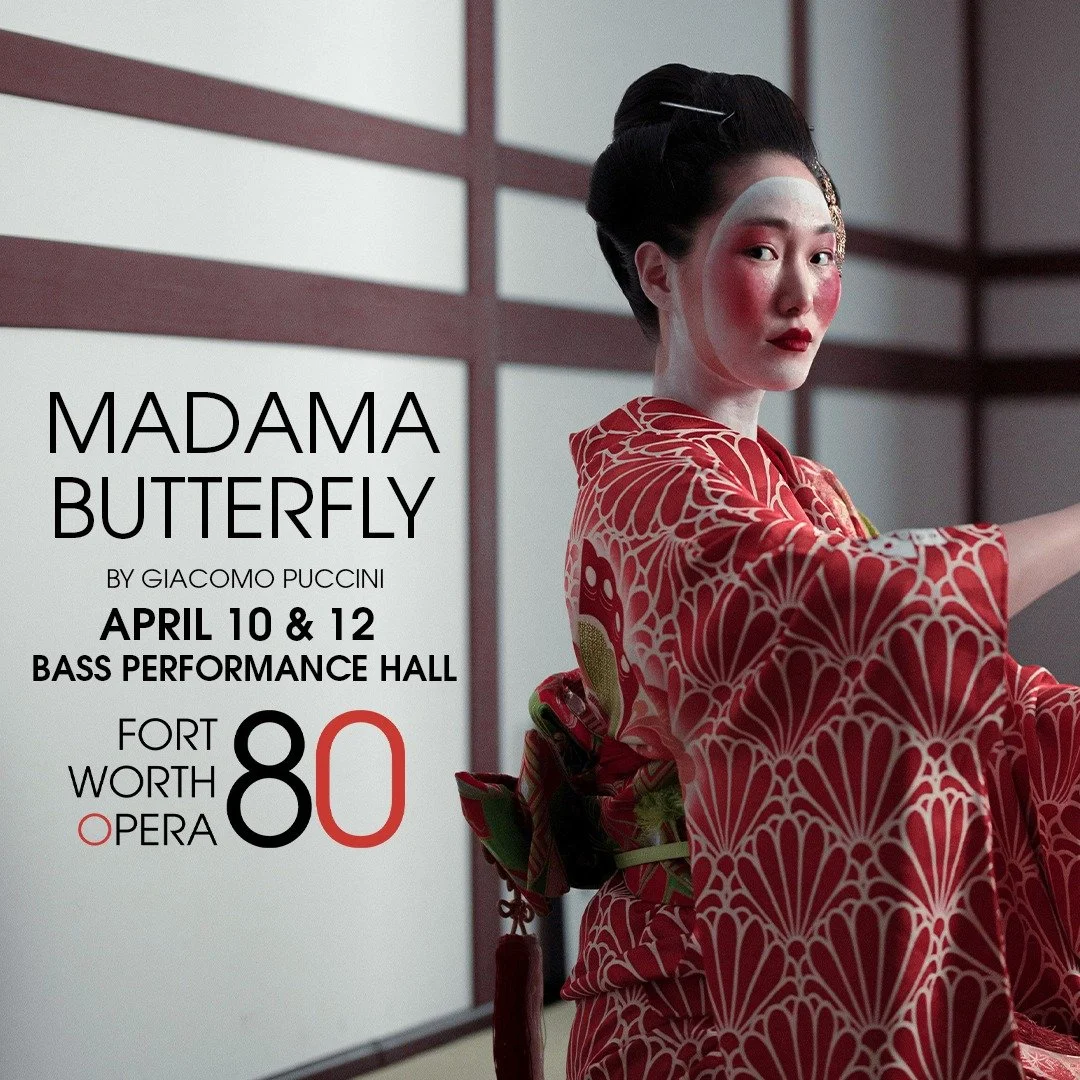
WHEN: April 10 and 12, 2026 (Sunday at 2:00)
WHERE: Bass Performance Hall, Fort Worth
WEB: fwopera.org