‘Alexi Kenney Plays Barber’ @ Dallas Symphony Orchestra
—Wayne Lee Gay
Two superb guest artists and two masterpieces of twentieth-century romanticism make for a constantly engaging program from the Dallas Symphony Orchestra this weekend.
But first, a short side trip: this spring, DSO music director Fabio Luisi has instituted the practice of opening concerts with brief, little-known works presented without title or the identity of the composer. The result has been, for this listener, always intriguing—a musical appetizer for the ears before moving on to the major works on the agenda.
This weekend's selection, under the baton of Italian guest conductor Daniele Rustioni, is clearly from the romantic era, but with the unusual opening gambit of a lyrical trumpet solo over accompanying strings. [Note: The title and composer are announced after intermission, with that information embargoed from publication until after the final performance Sunday. Onstage NTX will fill in the information as it is made known.]
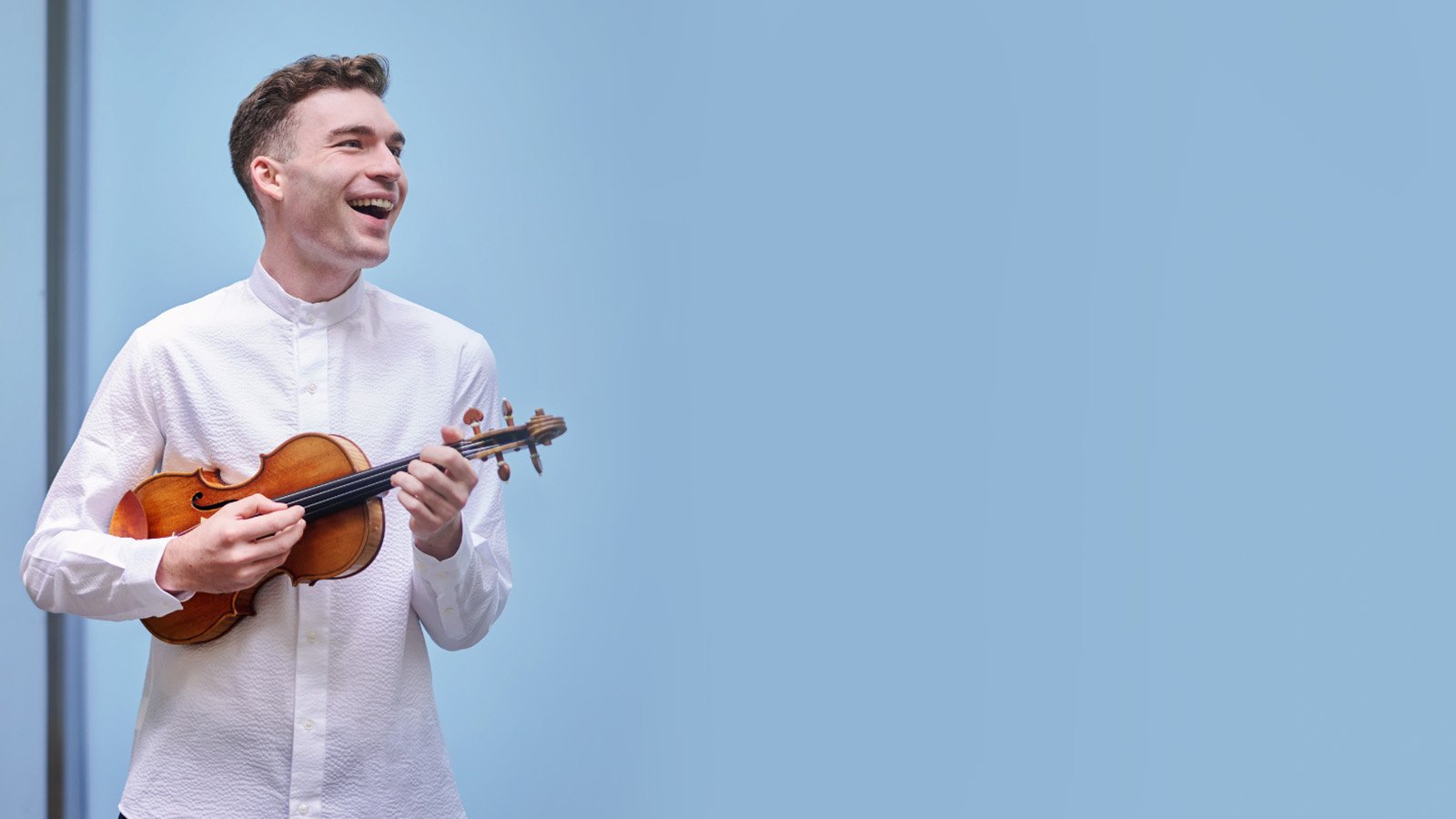
After this engaging introduction, the thrills continue and intensify when California-born violinist Alexi Kenney joins conductor Rustioni and the orchestra for one of the monuments of the American repertoire, Samuel Barber's Violin Concerto of 1941. Kenney is absolutely on target in his rendition, at times beautifully blending his own timbre into the lush resonance of the Dallas string session, then breaking into gorgeously rhapsodic solo work.
Barber was labeled "neo-romantic" in his day; with the passage of decades, this and other of his works are more clearly viewed as a logical continuation of the romantic era, rather than as a latter-day aberration. The concerto itself is neatly structured, with the passions of the first movement deepening and darkening in the middle movement before launching into the playfully virtuosic passagework of the Finale—all of which Kenney manages convincingly and with seeming ease. Kenney turns 32 this year and is currently making the rounds of debuts with major orchestras; he's definitely on the rise as a force to be reckoned with in the world of classical music.
After intermission, Rustioni returns to the podium to introduce Dallasites to the once-forgotten Symphony No. 2 of Italian Alfredo Casella. Composed in 1910, the work remained unpublished (and, except for a few early performances, unperformed) for eighty years.
With its monumental breadth and emotional extravagance, this symphony sounds very much like the works of Mahler or Richard Strauss. The first movement neatly marries late romantic idioms to classical structure, decorated with funereal chimes; the ensuing scherzo opens with demonic fury that bursts into a brilliant brass fanfare before slipping into a gently cheerful folk-like passage. An expansive, reflective Adagio gives way to a stormy, militaristic final movement, which, in a magnificent structural innovation on the part of Casella, melts into an extended, gloriously radiant epilogue. In comments from the stage, Fustioni points out that Casella hinted at inspiration from Dante's Divina Commedia; like Beethoven's Fifth, Casella's Second makes a long pilgrimage from C minor to a triumphal C major.
Conductor Rustioni holds all together brilliantly with high-energy, athletic stage presence (often indulging in visually signaling the audience to fine points in the orchestration). Except for the jovial middle section of the second movement, the work sounds much more German than Italian; still, Rustioni is obviously delighted to introduce this wonderful but long-neglected work of an Italian composer to an American audience.
WHEN: March 20-22, 2026 (final performance Sunday 3/22 at 2:00)
WHERE: Meyerson Symphony Center, Dallas Arts District
WEB: dallassymphony.org