Verdi’s ‘Don Carlo’ @ The Dallas Opera
Photos by Kyle Flubacker
—Wayne Lee Gay
To think of Verdi is to think, first of all, of his "big three": La traviata, Il trovatore, Aïda. But a secondary rank of masterpieces by the nineteenth-century Italian genius also turns up in opera venues—if somewhat less frequently. One of those, Don Carlo, is currently onstage at Winspear Opera House, in a superb production from The Dallas Opera that reveals a work of astounding musical and dramatic impact.
Powerful singers, visually striking and effective visual elements, and an insightful, momentous reading of the score by the company's music director and principal conductor Emmanuel Villlaume prove the point. The curtain went up at 7:30 on opening night and came down on the last notes at 11:20; that's a long haul for twenty-first-century audiences, but the room responded enthusiastically throughout—perhaps even more so than is usual for the Dallas opera audience.
This nearly-four-hour-long expanse of musical drama includes enough plot twists for a Netflix historical series (with a similarly loose approach to historical accuracy). Like today's creators of multi-episode period sagas, nineteenth-century opera composers were more interested in spinning a good tale than in giving a history lesson. Verdi and his librettists, drawing on a play by Friedrich Schiller, created viable and psychologically convincing characters inspired by the real-life King Philip II of Spain; his son, Crown Prince Carlos (Carlo in Italian); Philip's wife Elizabeth of Valois (Elisabetta in the opera); Princess Ana of Eboli; and Don Carlo’s friend, the fictional Rodrigo, Marquis of Posa. (The actual historical Philip II is remembered today as the short-term husband of England's Queen "Bloody" Mary, and as the instigator of the ill-fated expedition of the Spanish Armada, none of which plays into the plot of Verdi's opera.)
Verdi was not easy on his singers: here he demands a rare combination of muscular tone quality and flexibility. This cast uniformly and impressively meets those requirements. And Verdi's innovative use of orchestral effects and vocal colors is evident from the start.
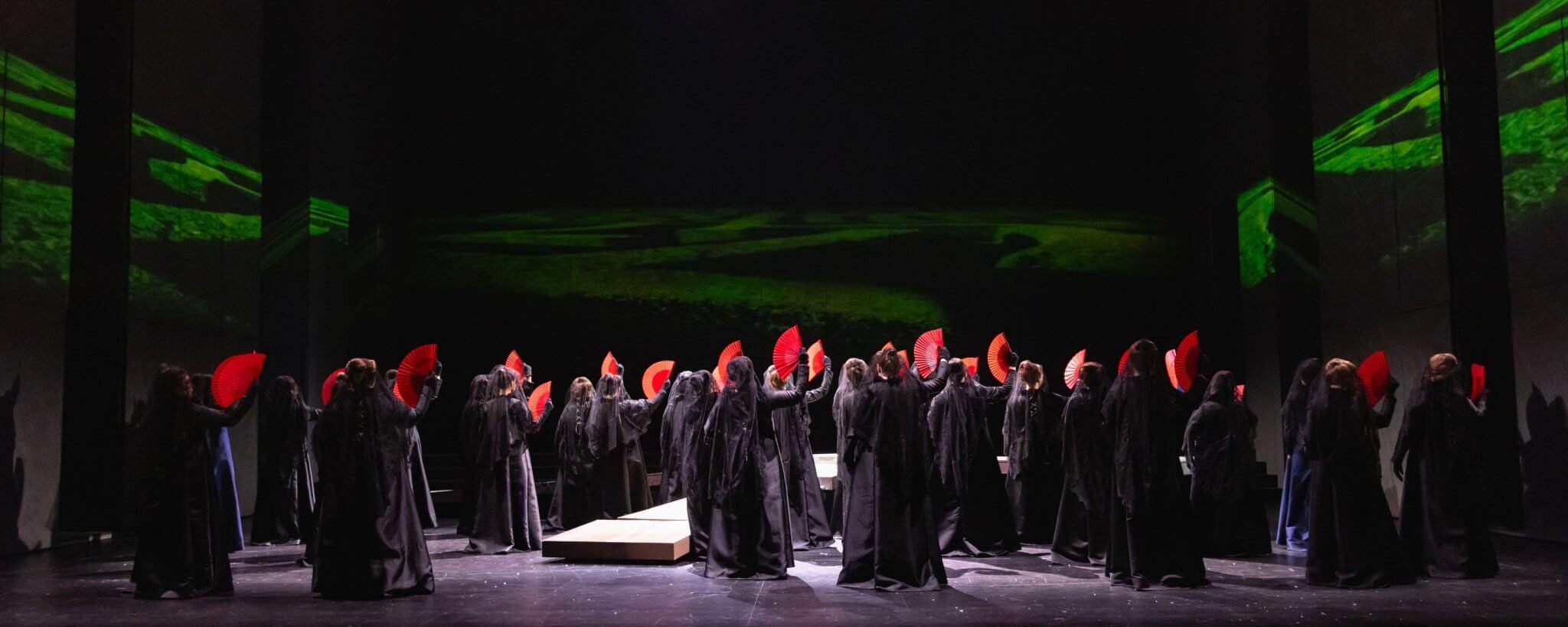
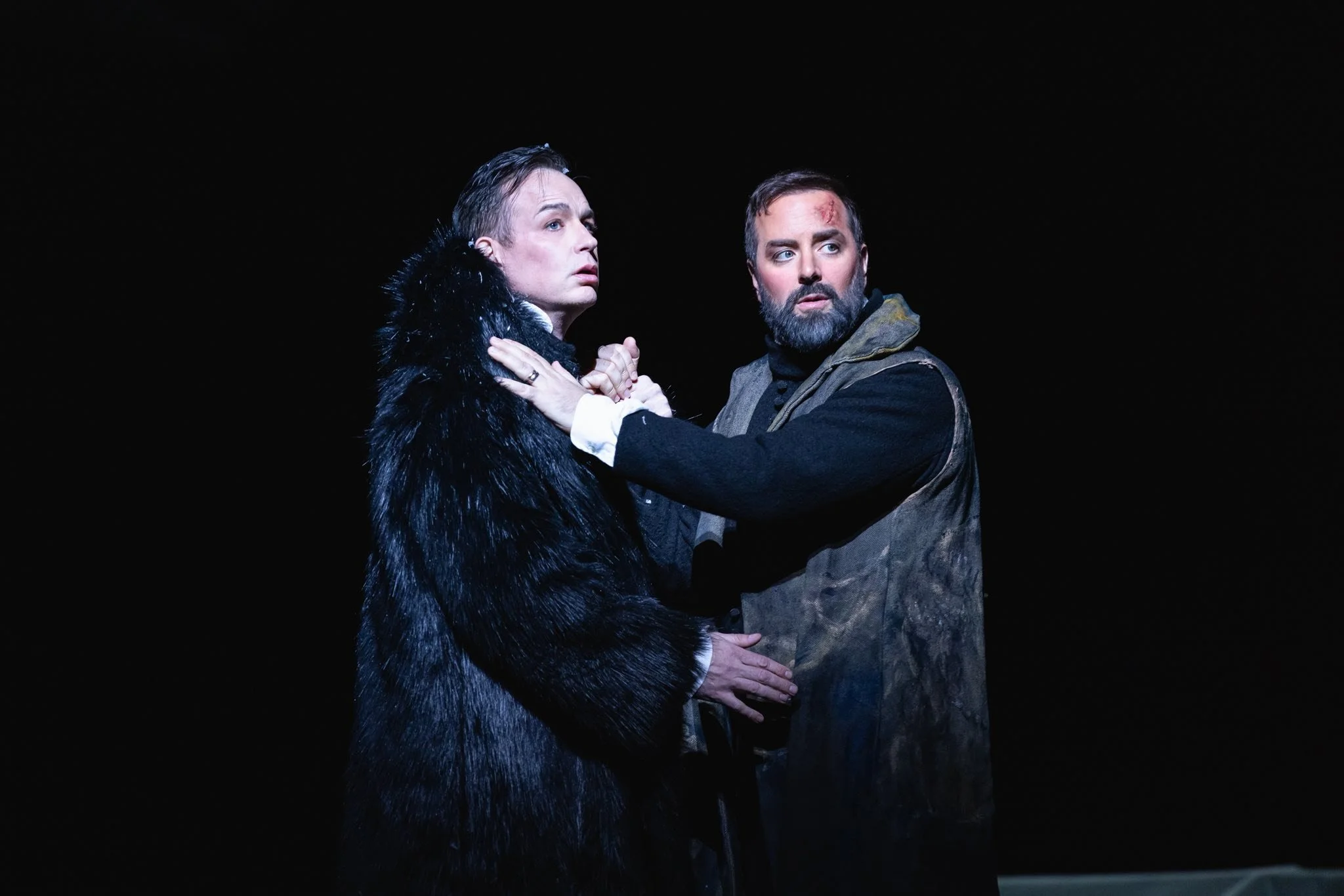
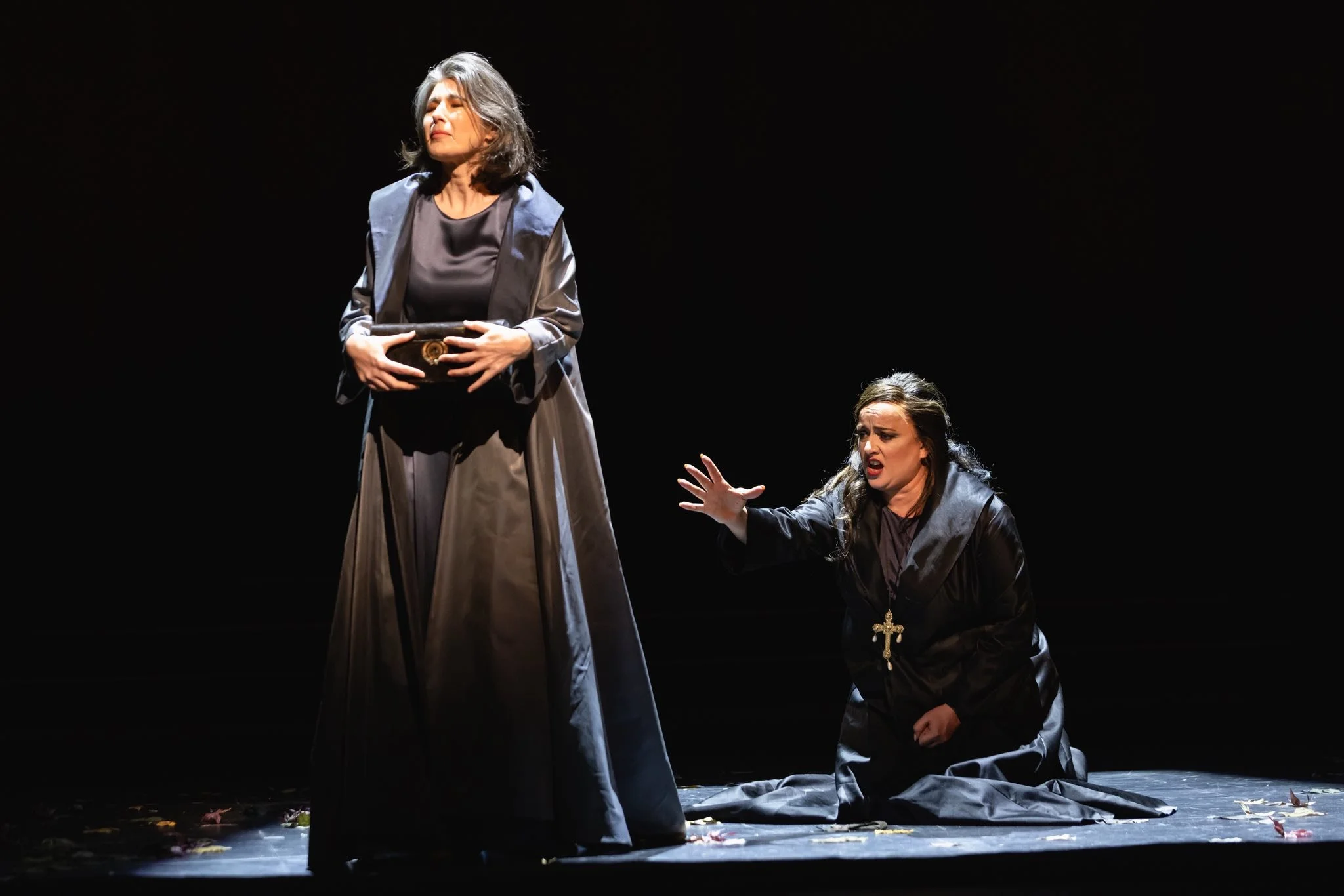
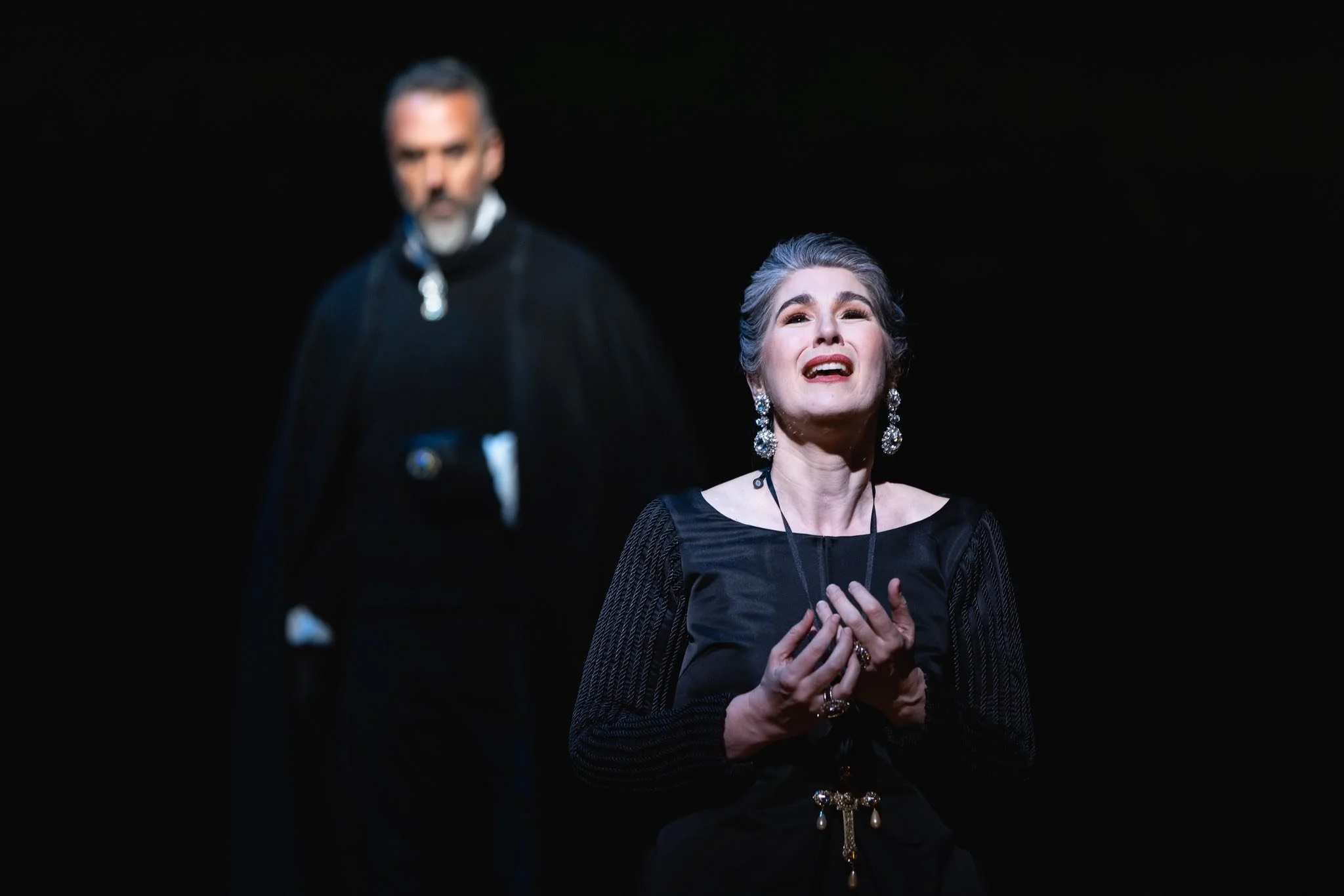
Act I features our first encounter with tenor Stephen Costello in the title role, with baritone Etienne Dupuis as his companion in a dramatic, all-male scene with chorus. There follows an intriguing contrast of gender in the next scene, with soprano Nicole Car as Elisabetta and mezzo-soprano Clémentine Margaine as Princess Eboli in an all-female scene, also with chorus. Here, Margaine shows off brilliant bel canto flourishes in the first of several applause-winning moments in the evening; for her part, Car takes the spotlight three hours later in the penultimate scene with the quiet valedictory aria "Tu che la vanita," delivered with a hushed pianississimo in the final notes.
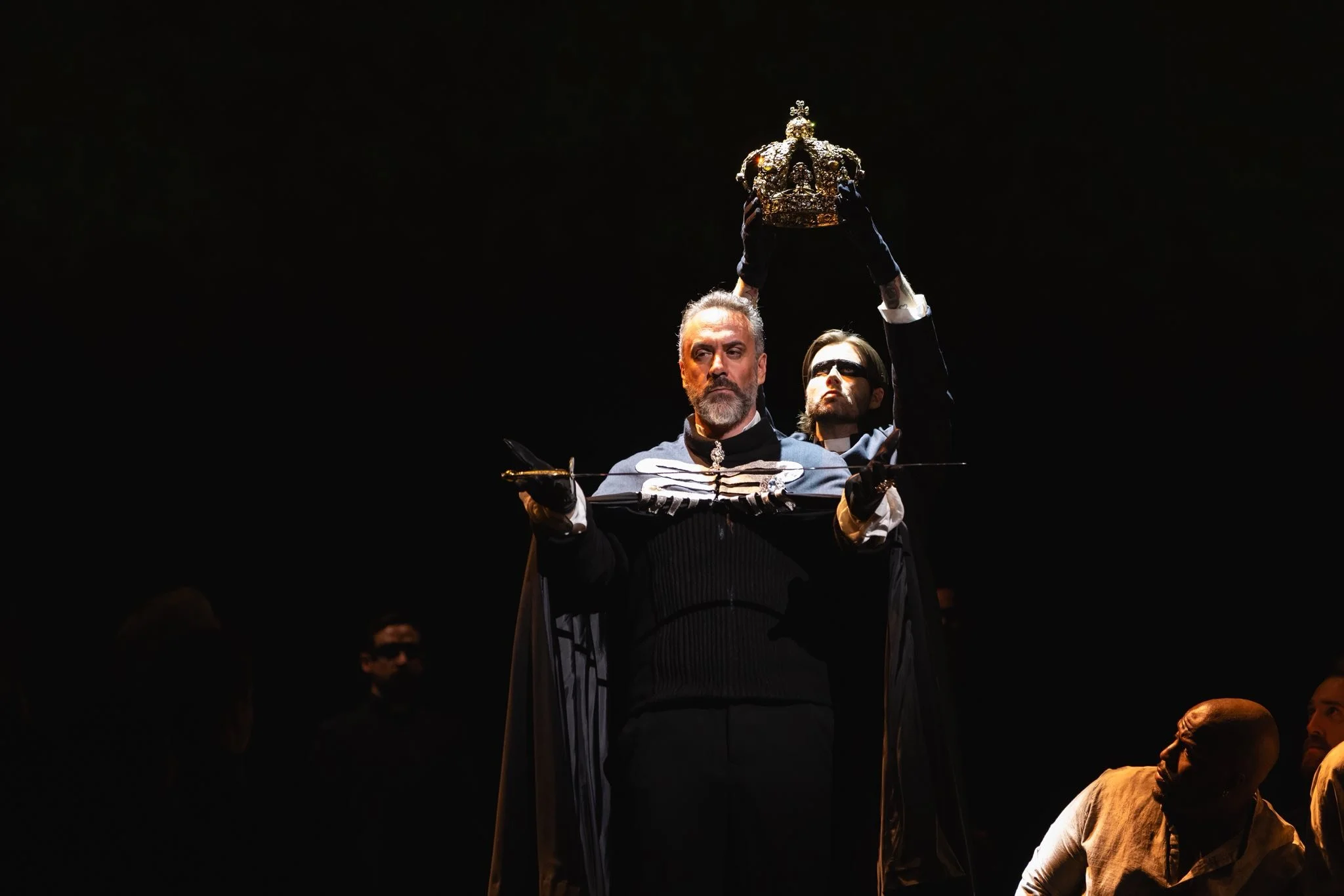
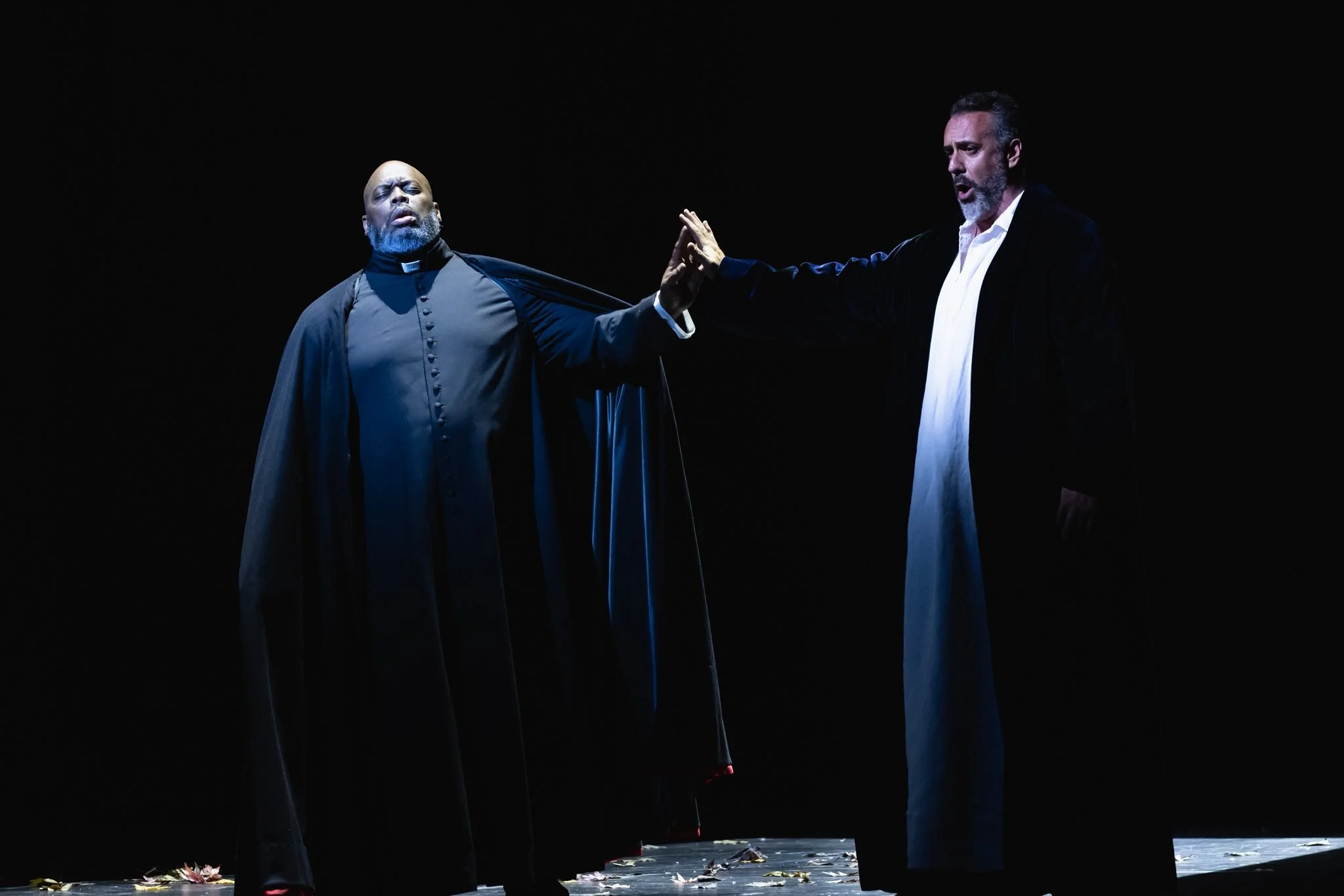
Bass-baritone Christian Van Horn melds his vocal expertise with a dramatically textured portrayal of a monarch torn in several directions; bass Morris Robinson creates a visually terrifying presence as the Grand Inquisitor. From offstage, soprano Meghan Kasanders (as A Celestial Voice) radiates serenity and faith to the victims of a Reformation-era massacre; we don't see her until the curtain calls—but we will see and hear her again as a soloist in Mahler's Eighth Symphony with the Dallas Symphony Orchestra later this spring. The superb chorus, trained by Paolo Bressan, is a dramatically and vocally solid presence in various manifestations throughout.
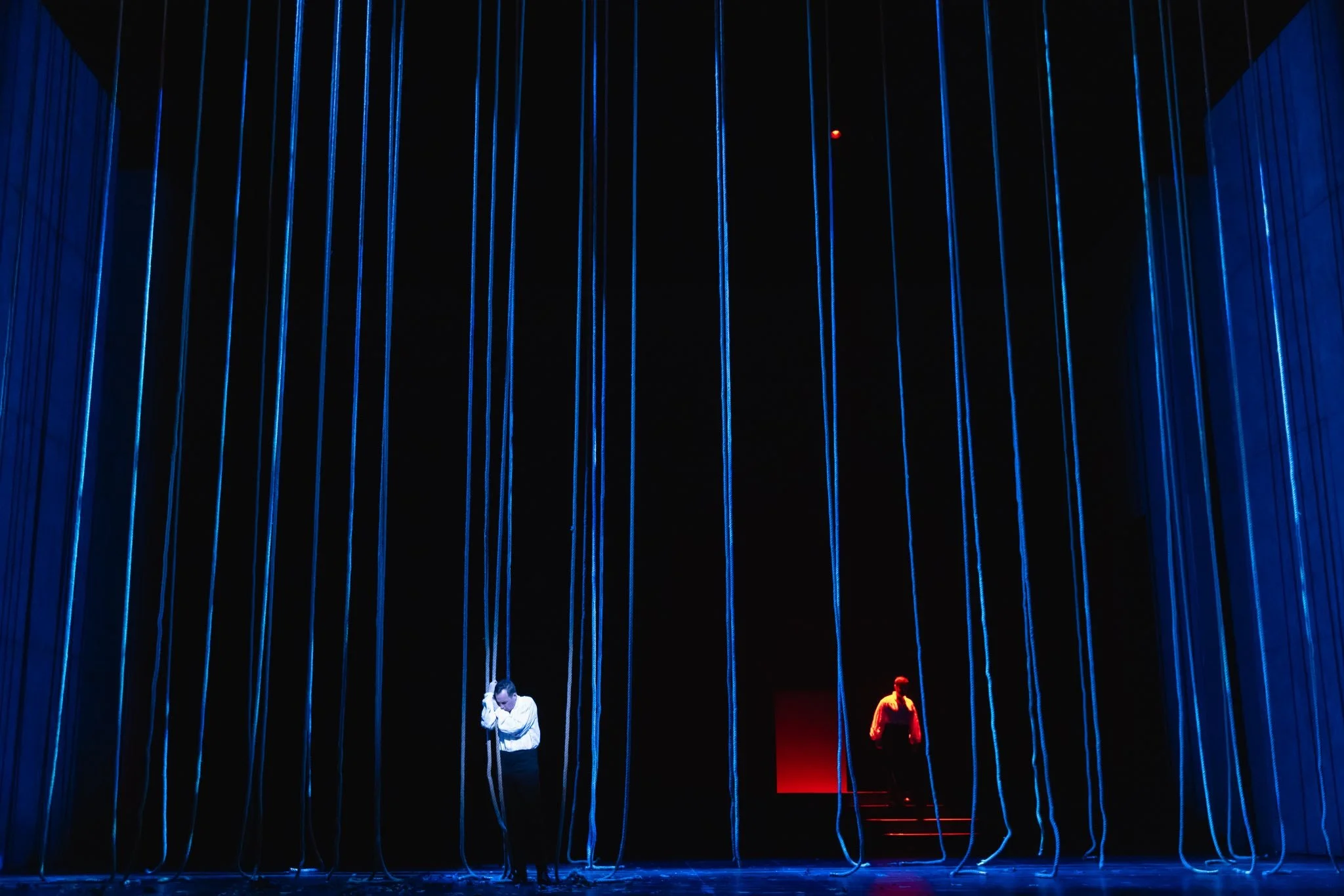
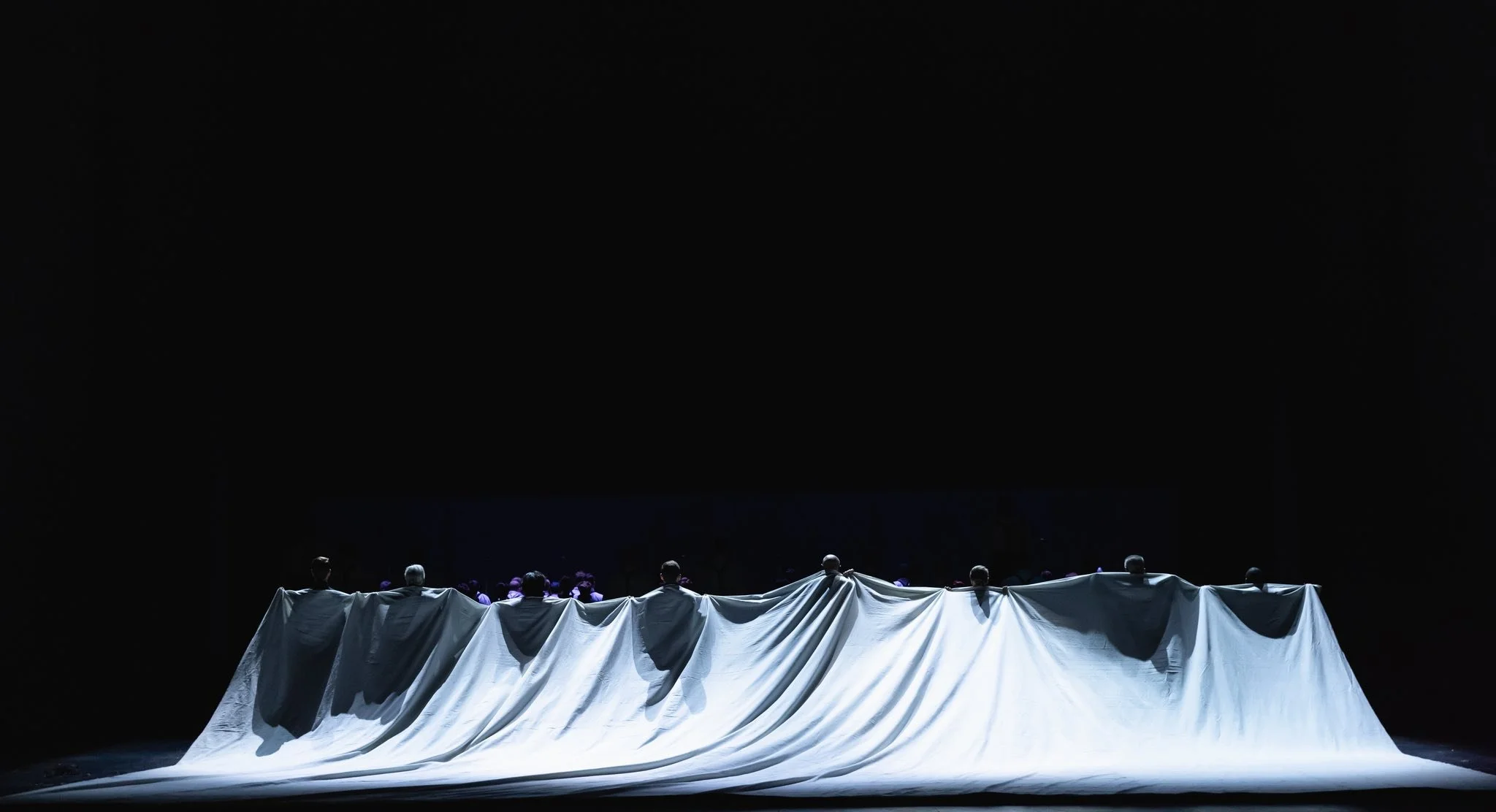
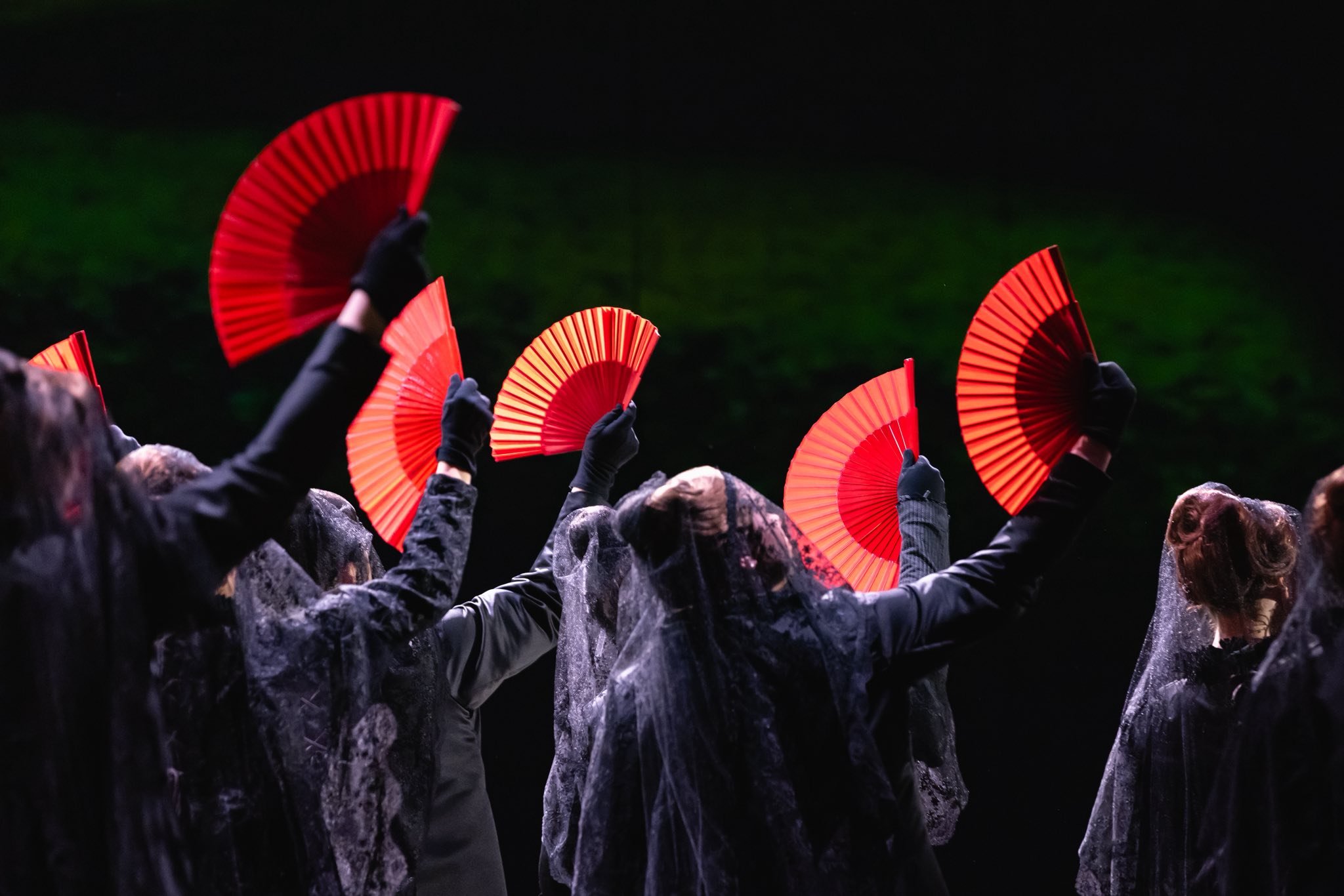
Designer Diego Méndez-Casariego and director Louis Désiré have created an almost horrific visual presentation here. (To be specific, the image of a huge naked corpse looms over several scenes.) Black predominates overwhelmingly in the largely abstract sets, with occasional flashes of red; costumes, while cut in a historically accurate fashion for the sixteenth century, are entirely black and white, and unchanged throughout. Yet all this expertly executed bleakness, combined with Verdi's amazing score and the cast's wonderful performance, is never dull or boring.
Don Carlo ambitiously and successfully encapsulates the human passions of religious warfare, sexual drama, intra-family conflict, and international political power play. In other word, as director Désiré aptly writes in his program book commentary, this is "not a distant tale, but a mirror of our own uncertain times."
WHEN: February 27, March 1, 4, 7, 2026
WHERE: Winspear Opera House, Dallas
WEB: dallasopera.org