‘Mahler’s Symphony No. 8’ @ Dallas Symphony Orchestra
—Wayne Lee Gay
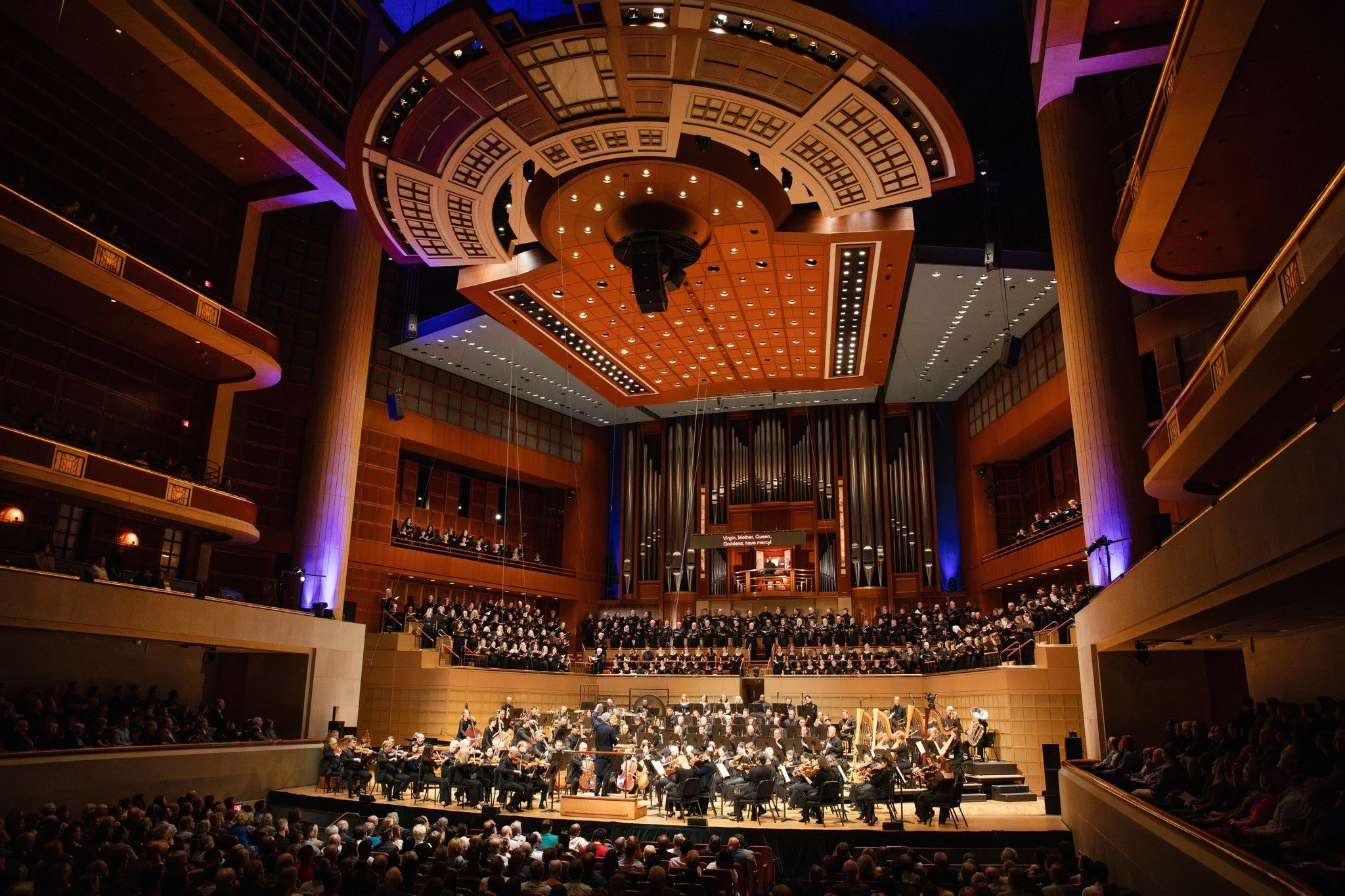
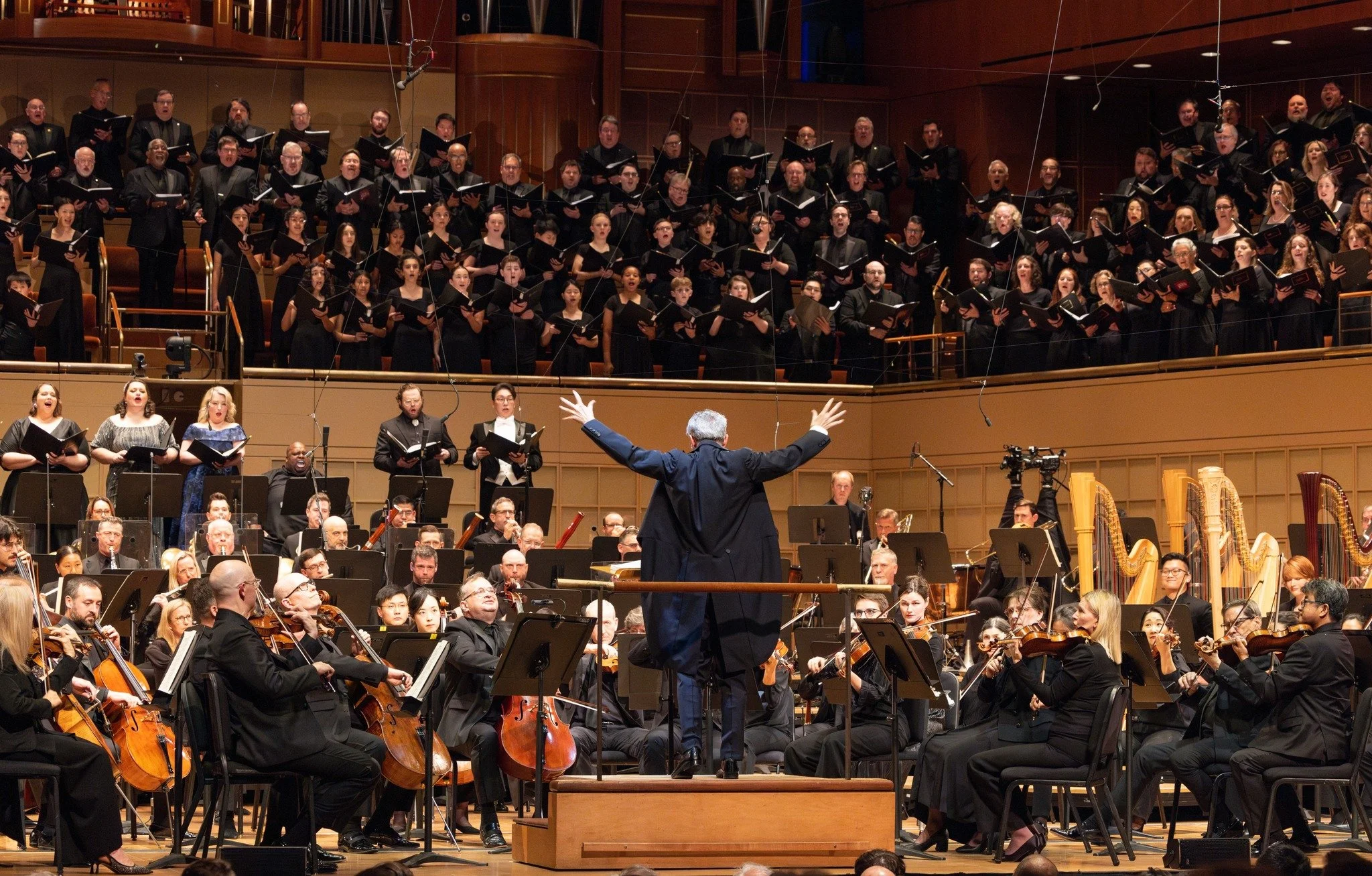
A thrilling but flawed production of Mahler's massive Symphony No. 8 takes the stage at Meyerson Symphony Center this weekend, with somewhere around 400 singers and instrumentalists onstage (and stationed at key spots in the hall) under the baton of music director Fabio Luisi.
The work itself, first performed in 1910, is a monument to the twilight years of romanticism. In Mahler's previous seven symphonies, world-weariness and general pessimism abound; here, he finds not only the possibility but the certainty of joyful transcendence.
Part One of the two-part, eighty-minute work sets the medieval Latin hymn "Veni, creator spiritus" ("Come to us, Creator Spirit"), exploding with faith and hope, in a musical language imbued with Wagner and Bruckner (and, not so obviously, Beethoven and Bach).
Part Two, initially calm and reflective, sets the entirety of the final scene of Goethe's drama Faust. In our English-speaking secular society, this is a verbal quilt of mystic Christian and late medieval mythical elements; however, the musical element has a clarifying effect, as Goethe, speaking through Mahler, admonishes us to "Look Aloft," while reminding us that "All that is visible, is but an illusion," and that we should allow ourselves to be drawn by the "eternal feminine."
The glitch in this performance is in choral logistics. The 160-voice Dallas Symphony Chorus is usually quite adequate—indeed, generally amazing—in terms of maintaining precision while creating luxuriant choral tidal waves. In this case, supplemental singers push those numbers past the point of diminishing returns; the choral tone is generally muddy, consonants are lost, and entrances and cutoffs are vague. (The fact that chorus members occasionally seem uncertain when to sit and when to stand hints at the possibility of inadequate rehearsal time.)
Still, Mahler's sheer power drives the performance forward, and even this jaded audience member was swept, on opening night, into the overwhelming emotional experience (all the while wishing for a more elegant choral presentation). The cast of eight soloists (seven onstage, one stationed in the balcony for a key entrance near the end) is uniformly fine. Mahler set a huge trap for the tenor soloist in the extended solo in Part II, but Limmie Pulliam pulls it off with beauty of tone and expressiveness. (The placement of seven of the vocal soloists behind the orchestra is problematic, however—causing problems in balance, and creating an unwonted visual distance from the audience.)
It's telling that the finest moment of this production is in the extended section for orchestra alone at the start of Part II. Here, the orchestra's clarity and expertise shines through without the weighty, inefficient choral work. And overall, conductor Luisi brings an interestingly Italian, operatic sensibility to this Germanic score. The Meyerson Symphony Center has always, in the past, proven to be a remarkable venue for large-scale choral-orchestral endeavors; the problems in this particular performance will hopefully be avoided in the future.
WHEN: May 15-17, 2026
WHERE: Meyerson Symphony Center, Dallas
WEB: dallassymphony.org