‘Black Out Loud: The Revolutionary History of Black Comedy from Vaudeville to ‘90s Sitcoms’
—Cathy Ritchie
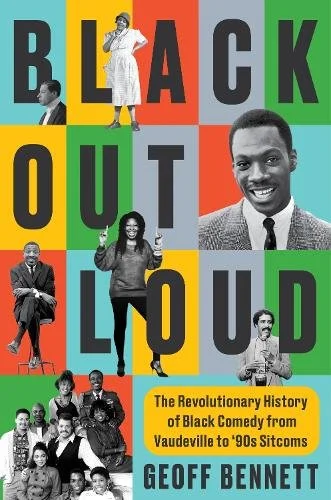
Black Out Loud:
The Revolutionary History of Black Comedy from Vaudeville to ‘90s Sitcoms
by Geoff Bennett (HarperCollins, 2026)
Performing arts history buffs and biography nerds alike should enjoy this book immensely.
As both a buff and a nerd, I happily vouch for its quality. Geoff Bennett's efforts are informative, entertaining and, for me, nostalgic.
When I was a child, my father's favorite television show was Sanford and Son, starring the incomparable Redd Foxx as the funniest junk dealer on the planet. Thanks to Ed Sullivan's legendary variety show, I was treated to practitioners of Black comedy at its finest, from the irreplaceable Moms Mabley to rising stars such as Richard Pryor.
And, of course, William Cosby, Ph.D, reigned supreme in our home, from the groundbreaking I Spy TV series on through his endorsement of Jello Pudding Pops and other treats—leading us eventually to Cliff Huxtable, MD, in arguably the most significant sitcom of its time. Bennett shares all these comedy legends, and then some.
The book's subtitle is well-chosen. In brief but substantive chapters, Bennett offers a chronological tour through Black comedy's not-so-laughable early days, including sections on minstrelsy and blackface. But he focuses his narrative on comedians who managed to rise above the morass with their unique qualities and talents.
The book's early sections highlight Bert Williams, Stepin Fetchit, Hattie McDaniel, Pigmeat Markham, Moms Mabley, and the always- controversial Amos 'n' Andy duo. (The latter discussion was especially interesting to me, as I had managed to watch a few episodes of the act's TV version before its plug was permanently pulled.)
Bennett soon switches from stand-up Black comedy in general to focus on television, as he believes the situation comedies of the '70s through the '90s represented the flowering of Black humor for the masses, with a handful of gifted performers permanently changing the face of entertainment.
These chapters spotlight Dick Gregory, Flip Wilson, Martin Lawrence, Dave Chappelle, and Eddie Murphy, with the longest sections devoted to Redd Foxx, Richard Pryor, and, of course, Bill Cosby. [Editor’s note: In the main, the author praises Cosby’s positive history of broadening images of Black family life for millions of Americans; he spends less time on Cosby’s later scandals.]
The author describes the comedians' childhoods, family circumstances, and early show business experiences, chronicling their often slow rise to individual stardom. I learned a huge amount about each performer, as they journeyed professionally through an evolving America, with racism always a backdrop and a challenge.
Bennett's final focus is on individual television series that he believes were groundbreaking for Black comedians during a transformative time in America. These shows include A Different World, Family Matters, Fresh Prince of Bel-Air, Living Single, and others.
But his longest chapter in this section salutes In Living Color, a seminal variety series that debuted on the Fox network in 1990—a show I enjoyed greatly.
The series was created by the 10-sibling Wayans family, headed by Keenan Ivory and younger brother Damon, and included a young Jim Carrey as the sole Caucasian male cast member. The troupe threw brilliant satiric barbs at both Black and white society and its heavyweights.
Its recurring characters included Homey, the mean-tempered party clown who "don't play that," and the two resident oh-so-gay "Men on Football"—among many others. It was a revolutionary program and an Emmy Award winner. Bennett details the series' creation and multi-season run, giving Color the shout-out it's always deserved.
In his final words, Bennett summarizes: "The tradition of Black comedic storytelling is not only enduring, but ever-expanding. The tradition continues today through a new class of creators and show runners like Issa Rae and Quinta Brunson who are redefining what television can look like ...Because, ultimately, the history of Black comedy isn't just about making people laugh. It's about making people see."
This fine book will open many eyes, as it did mine.