‘Stephen Sondheim: Art Isn’t Easy’ by Daniel Okrent, and ‘Limelight’ by Andrew Keenan-Bolger

—Cathy Ritchie
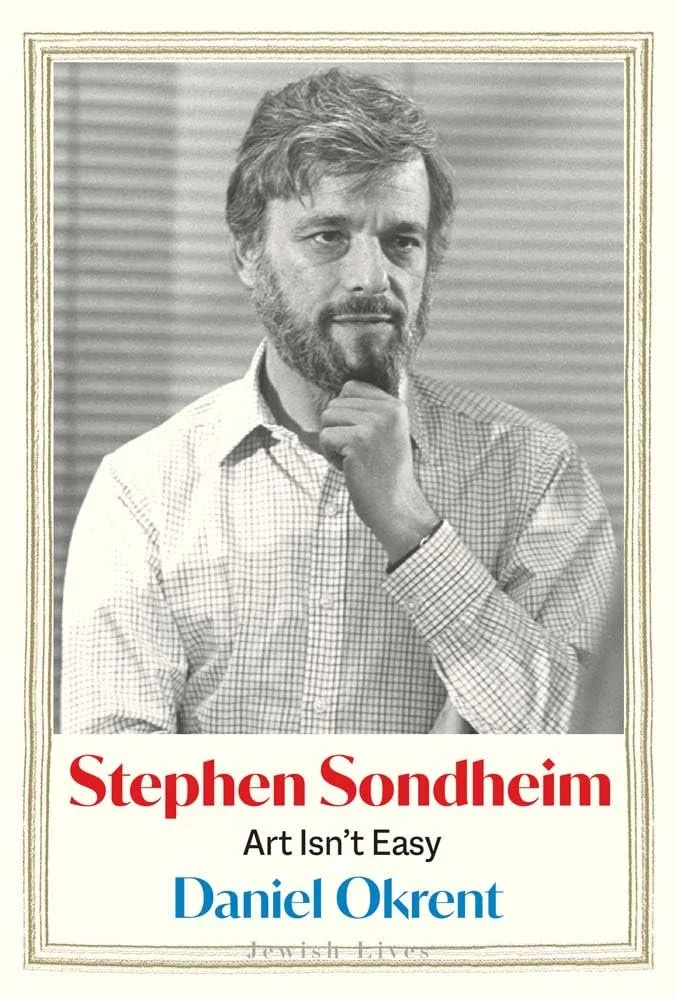
STEPHEN SONDHEIM: ART ISN'T EASY
By Daniel Okrent (Yale University Press, 2026)
I begin with a true story.
My theatre-loving mother enjoyed taking day cruises with special "themes," and one year, she chose one designed for puzzle and game enthusiasts. Afterwards, she mentioned meeting a man who she thought I probably would have liked, since he works in the theatre. “His name was Stephen Sondheim,” she said. “Have you heard of him?"
Once I figuratively peeled myself off the floor, I asked "You met Stephen Sondheim??" "That's right. Are you familiar with him?"
I sputtered. "You could say that, since he's just the leading Broadway composer/lyricist alive today." "Oh, really? He was very nice...." The big world felt suddenly smaller.
Decades later, the Sondheim/Ritchie paths have crossed again, thanks to Daniel Okrent's superb new biography, which manages to recreate an amazing life with such skill that even non-theatre aficionados will likely enjoy it.
Since Sondheim's death in 2021, many scholarly studies and personal reminiscences about him have appeared, all well-meaning but perhaps a bit daunting to a casual reader.
But in fewer than 300 pages, Okrent manages to offer useful background on each of the composer's shows, plus comprehensive facts about his childhood, his experiences with collaborators, the private demons that haunted him, and even his seemingly under-the-radar personal life, all presented both succinctly and engrossingly. This is first-rate biographical writing.
To be sure, Okrent did his research; his strong reliance on primary sources such as Sondheim interviews, the composer's own books and magazine pieces lends firm authenticity to his efforts. I personally enjoyed learning more about Sondheim's collaborative experiences—ultimately satisfying but often fraught along the way—with co-creators named Bernstein, Robbins, Prince, Laurents, and (James) Lapine. Okrent offers fascinating glimpses into the composer's life-long creative process.
Readers will also learn more about his challenges. For example, Sondheim was an extremely high-functioning alcoholic; all his close friends and colleagues were aware of this but never had reason to be troubled about his professional output.
Perhaps most intriguing, Sondheim never came out as gay during his lifetime and actually disliked the notion of being labeled as such; he had no same-sex partner until very late in his life. In the meantime, however, he did experience what appeared to be a serious romance with actress Lee Remick. Many believe their mutual feelings could well have led to marriage.
Okrent also paints a sad and vivid portrait of the composer's troubled childhood, focusing much attention on Sondheim's seemingly uncaring mother, his relationships with the press, and his preference for writing music instead of lyrics. To his small circle of friends, Sondheim would always be a ready source of quick wit, intellectual prowess and seemingly unending brilliance.
Daniel Okrent does a masterful job of integrating all the facets of Stephen Sondheim's life into a flowing narrative that speeds along gracefully as well as enlightens. This book is a fine tribute to a remarkable artist and a standout example of nonfiction authorship.
LIMELIGHT
By Andrew Keenan-Bolger (Penguin Workshop, 2026)
I've long been a fan of so-called "young people's literature," fiction ostensibly earmarked for mid-teenage readers. Such titles often can and do offer amazing writing and serious treatment of life challenges to which adult readers can relate.
The latest example of such literature in my life is the novel Limelight, by the gifted young author Andrew Keenan-Bolger. It's a sure bet for readers appreciating excellent character development and a deeply moving plot.
Danny is a mid-teen Long Islander with a troubled family, theatrical aspirations and a superb singing voice. Through luck and a fluke, he is admitted to NYC's LaGuardia Performing Arts School in 1996. His world upends itself, and readers are happily along for the ride.
During his time at the school, Danny makes unique friends, immerses himself within the theatre world, wins a part in a school play and falls in love with a fellow male student. Keenan-Bolger's character development—and his descriptive powers in particular—are remarkable for such a young writer. His detailed depiction of NYC during the Rent era of the 1990s is phenomenal. Danny ultimately triumphs, and thus, we readers have much to celebrate as well. Highly recommended.