‘Opera Wars: Inside the World of Opera and the Battles For Its Future’
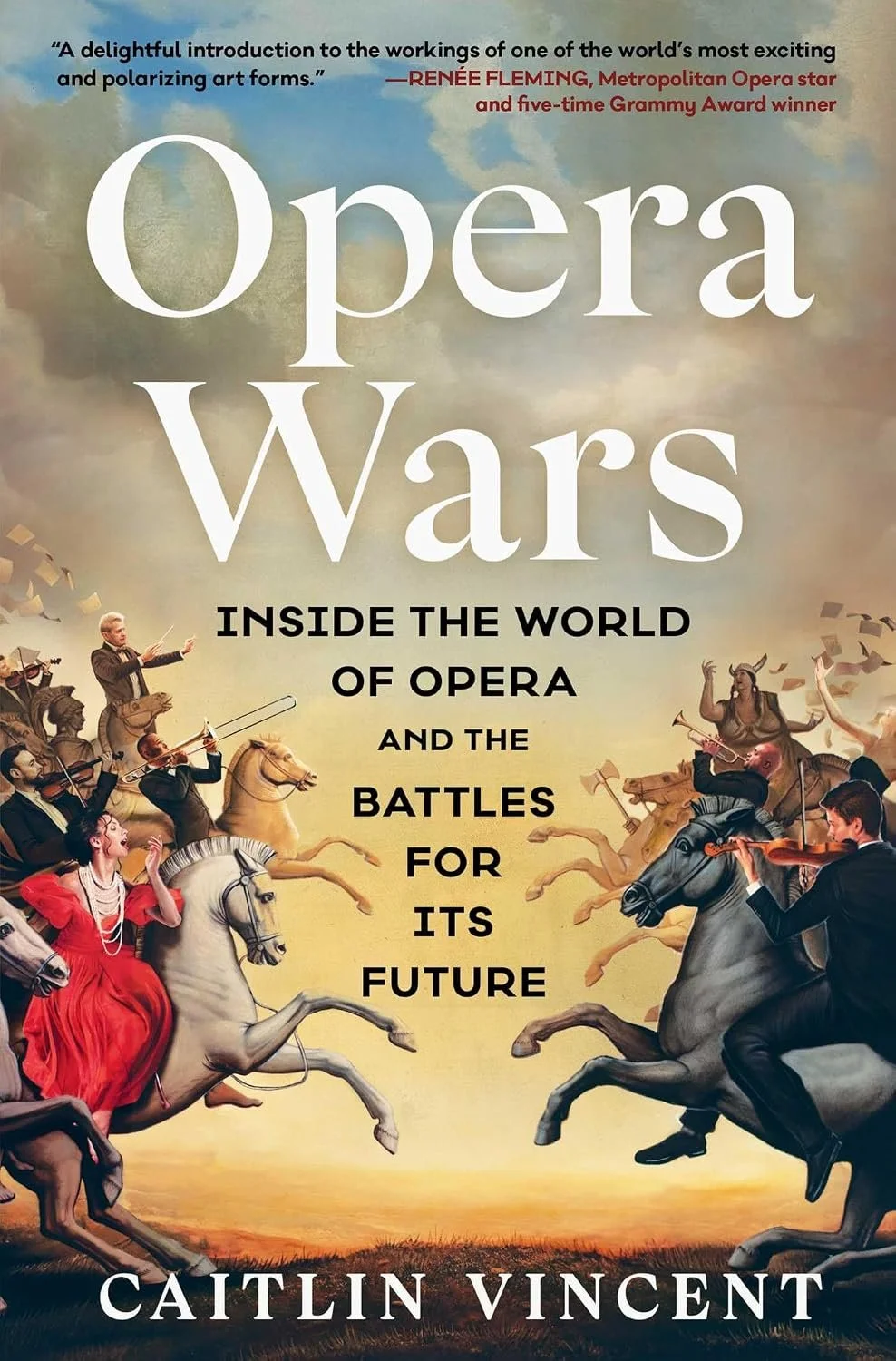

—Cathy Ritchie
Opera Wars: Inside the World of Opera and the Battles for Its Future
by Caitlin Vincent (Scribner, 2026)
“I’m not an opera fanatic.” These are Caitlin Vincent's opening words in her detailed and entertaining Opera Wars, a look into the worlds of Butterfly and Bohème—and I must admit those simple and reassuring words were music to my ears.
No one could say that Vincent takes opera lightly: years as a professional soprano, librettist, and opera company founder/manager lend great credence to her viewpoints. Still, it’s her often tongue-in-cheek writing style that makes this book an informative delight.
Vincent is both precise and thorough as she takes readers through opera's history and its present-day reality; she devotes individual chapters to the building blocks that coalesce to create a given production, along with some of the ongoing issues surrounding that process.
We learn in depth about the significance of the score, the libretto, staging, rehearsing, and the care and handling of singers. Vincent's observations are always gracefully laced with witticisms and amusing commentaries. She also includes an excellent chapter on the financial agony and ecstasy of keeping an average-size opera company afloat. Her tutorial is first-rate.
As for the "wars" of the title, Vincent dissects several ongoing issues that often are woven (or should I say tangled?) into opera productions. As she sees it, whatever enemies this art may face stem not from outside agitators, but from the structures, traditions, and controversies found inside rehearsal rooms, backstage, and facing the footlights: in other words, from within the art and the artists.
Let’s try out some examples. Should a revival of an opera from the so-called "canon" adhere to the classic staging traditions most cherished by all those fanatics? When is it time for a well-known piece to receive a facelift (new time period, setting, costumes, and more), what’s the path between delighting the emerging Gen-Z audience—but perhaps creating horror or disappointment for purist diehards (with bulging wallets for tickets and donations)?
In producing an opera, who's more important, the conductor or the stage director? What about color-blind casting in general, and Black/Asian singer representation in particular? Who’s more important, the conductor or the stage director—or does the leadership role shift from one production to another? Vincent gives us much food for thought.
She also offers an excellent chapter on the artistic and financial steps and stages that aspiring singers should expect to face in their long trek to the pinnacle of an extremely demanding profession.
The final "war" Vincent examines is one that seems to rage around contemporary or modern opera. How can companies tempt audiences to try something new and challenging when they’re fully committed to the classic, canonical works? As readers will learn, change isn’t easy for any of the parties involved. As Vincent comments, however, "It shouldn't matter if some people scoff at new opera while genuflecting at the altars of Wagner and Puccini. It shouldn't matter that some people gnash their teeth at the mention of Carmen—and only buy tickets to operas written within the last five years. We should be able to have both. We deserve to have both."
This fine book should satisfy multiple audiences: those who know opera well but would enjoy learning more, delivered in a palatable, reader-friendly way—and those with little or no hardcore knowledge of the art. Vincent will serve everyone well.