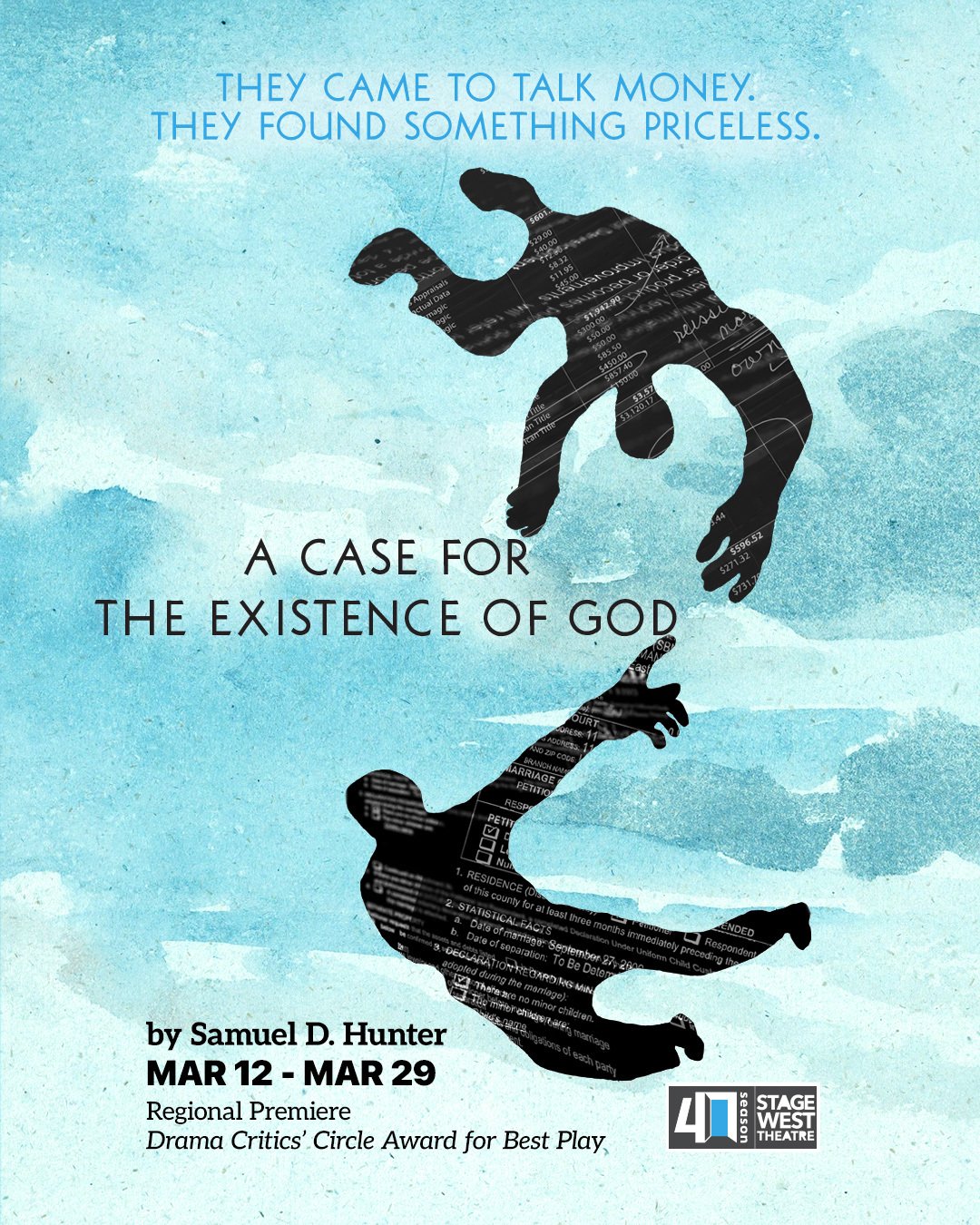
‘A Case for the Existence of God’ @ Stage West
Photos by Evan Michael Woods
—Jan Farrington
“Do you think we’re going to be okay?”
I didn’t immediately warm up to playwright Samuel D. Hunter when I first bumped into his work in an area production of A Bright New Boise more than a decade ago. The play was written well, acted well, I thought—but did I really want to spend an evening with these particular people on stage, a group of co-workers in an Idaho Hobby Lobby?
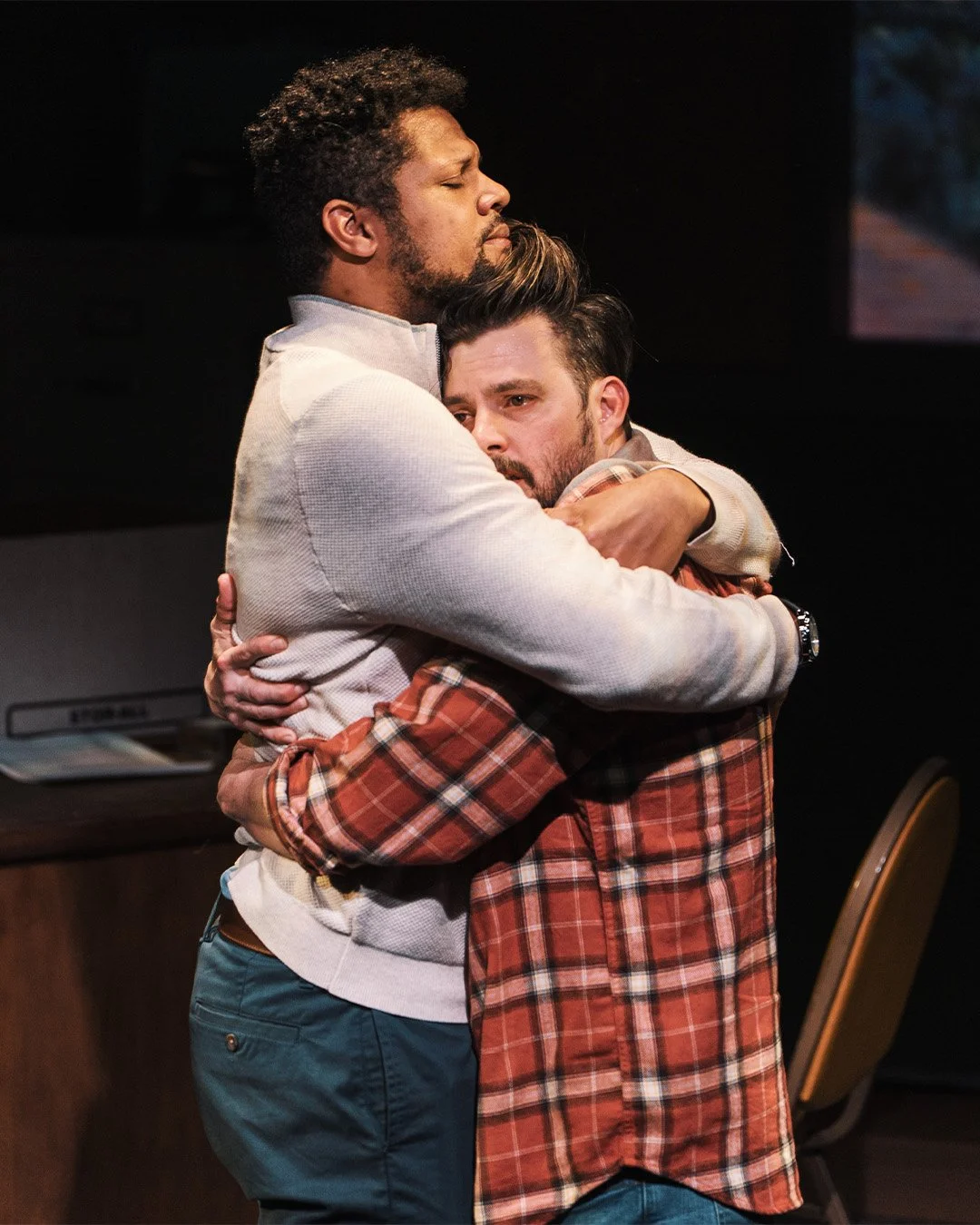
But since then, I must have learned something…because I’ve done a 180 on Hunter, and now rank him as a quiet master of American playwrighting—particularly in stories of what people often call our “flyover country.” That skill is on full display in Stage West’s regional premiere of Hunter’s A Case for the Existence of God, directed with a well-tuned ear by Carson McCain, and brought alive by two very fine actors, Quintin Jones, Jr. and Drew Wall.
Hunter seems to me to be creeping ever closer to the beating heart of modern America—and I’m thinking this might be his best work so far. Plus, it feels of-the-momenet in an extraordinary way. Good pick, Stage West.
Keith (Jones) went through college studying music and literature. He works as a mortgage broker out of a plain, small office in Twin Fallas, Idaho. He’s not a bank, he tells clients, but a guy who tries to help—to find a lender even if your credit is rough and the rate is bad.
Ryan wants to buy a few acres of land outside of town—he and Keith both grew up in Twin Falls. It’s land his great-grandfather once owned, farmed, built a house on. Ryan has, give or take a little, no money to speak of, past troubles with “booze and pills,” a sketchy job history.
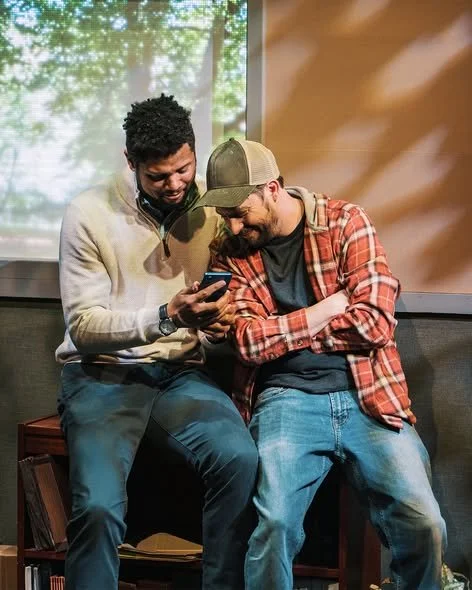
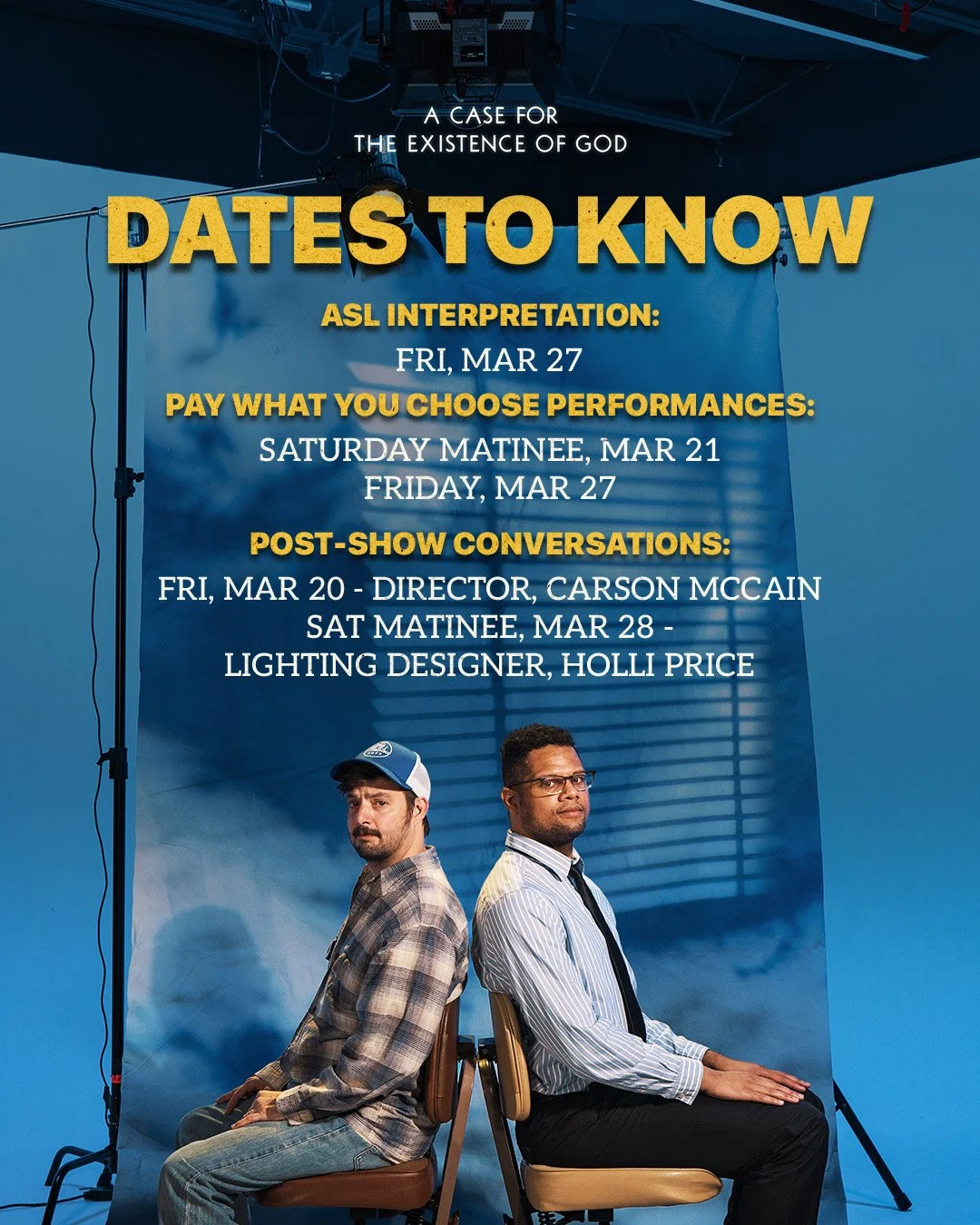
That’s all we know at first—that and what we get from their very different looks—Keith slim and classy in an upscale cream sweater and pants, Ryan worn and hunched in jeans, flannel shirt, and a gimme hat that shades his eyes. (Costumes by Jasmine Woods.)
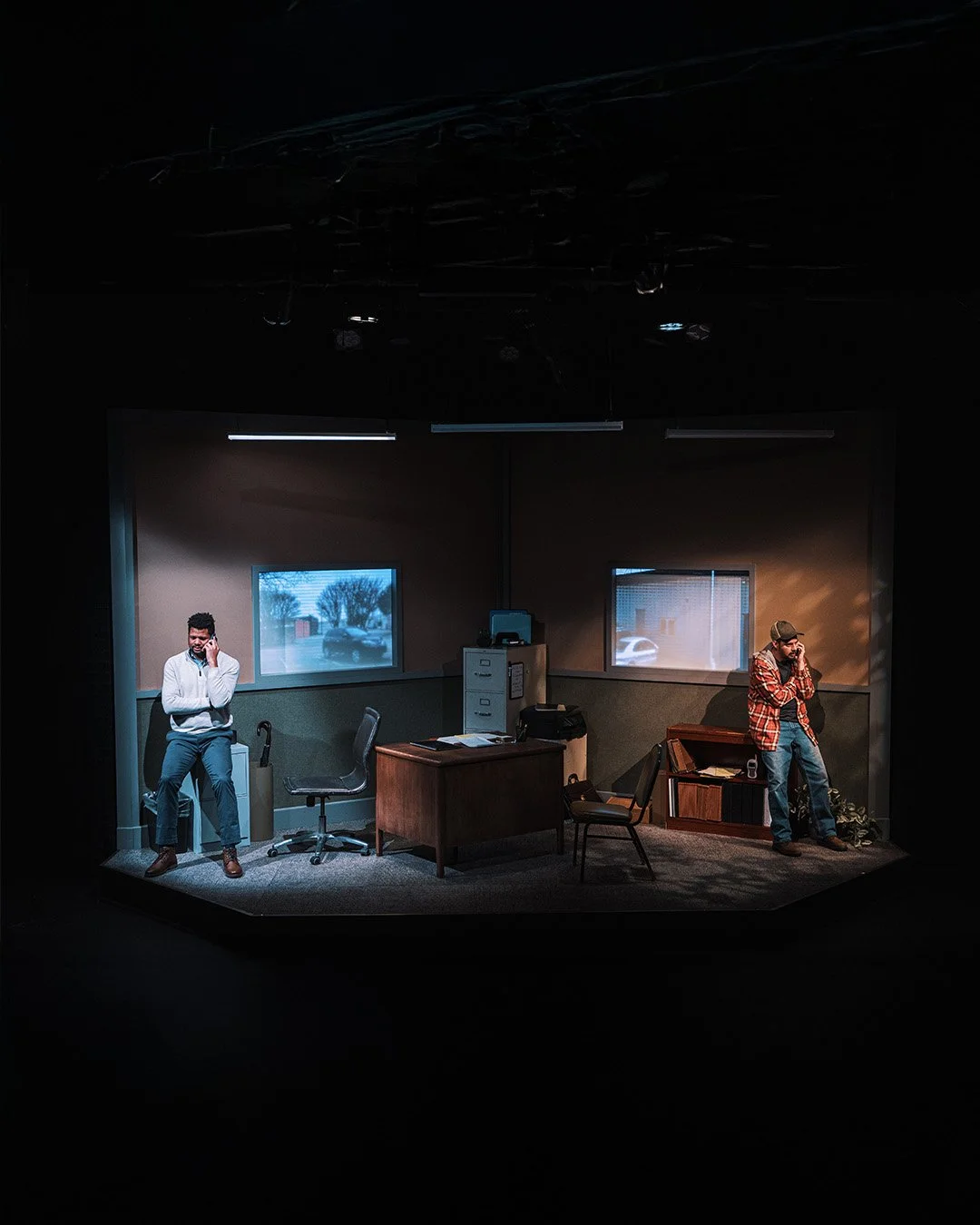
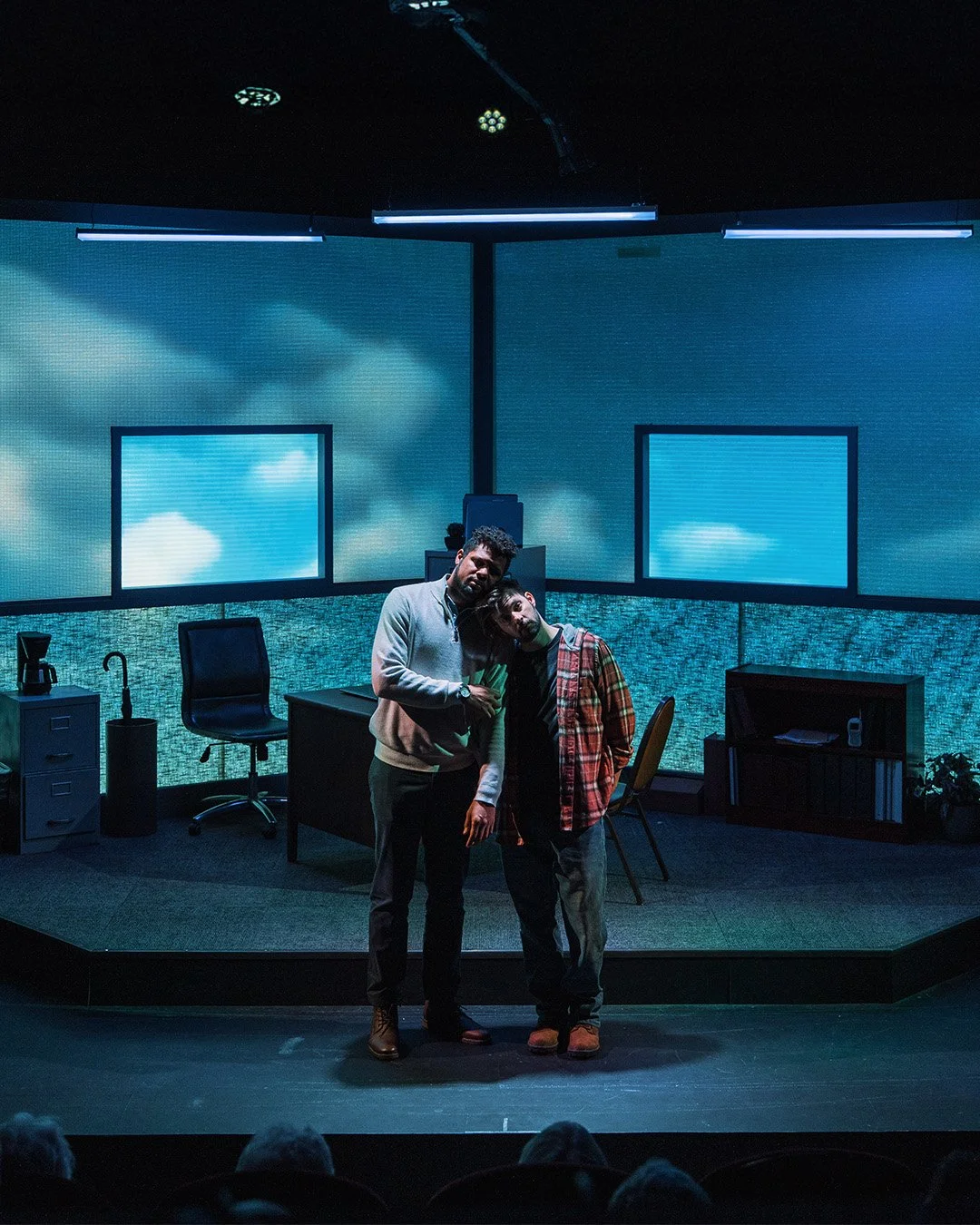
Designer Allen Dean’s simple office has almost no decoration, save for a photo and a baby monitor—and windows that go “live” to let us see cars passing occasionally. (Projections by Bryan Stevenson.) There’s something buzzy and uncertain about the overhead lights, though, that makes us uneasy as they flicker and hum. (Cresent Haynes is the sound designer, with Holli Price on lighting.)
Then Hunter begins to flesh out the picture.
Pieces of their pasts dovetail unexpectedly—memories of school, relationships to parents (who left, who stayed, who judged too much, who helped), “dad” situations that are troubled in different ways—but the same at bottom, in the worry and tensions each man has about them. (I can’t tell too much without getting into spoilers.) Twin Falls is a small city; it makes sense there would be connections between them—and that they’d still be judging each other as “who you were in high school.”
At the start, we see Wall’s Ryan mostly in negatives: “Money makes me nervous….Without it, I don’t have permission to exist,” he says. Hunched over himself, elbows on knees, he know he’s up against some tough odds. “Everyone else has a house, can buy things….” But he’s not entirely a pity party. If only, he tells Keith, the bank lenders could meet him, see what a straight-up good guy he is, hear about his great-grandfather’s time on this land. He doesn’t have a clue how this world works.
Keith does have a clue—but somehow also a kind of hopeful energy—though as he wipes his hands up and down his pressed chinos, we can tell his good cheer doesn’t run deep, nor his hopes for being able to help Ryan. He sometimes stands up and turns away, pretending to look at documents, when he has something tough to tell Ryan. He’s forever glancing over at the baby monitor on a shelf, listening for small sounds.
The two connect over shared bits of the past, kids, domestic mis-adventures, parents who are absent or judgmental, how early dreams are lost. They worry about trouble ahead, but Drew especially doesn’t think he has many aces up his sleeve. “You play by the rules, “ he tells Keith, “[and] pray that everyone else plays by the rules [too].” And in tiny moments, their relationship grows and shifts: Keith is more open, Ryan more of a sympathetic ear…and even an advisort in surprising ways. We find them sitting side by side on Keith’s desk (a level, equal space) trading thoughts—or keeping eagle eyes on an invisible playground as two dads living a life, trying to keep their kids safe…and civilized.
Keith has Ryan listen to a bit of newly discovered “polyphony” from the 9th century (he’s an early-music buff), and tells him it’s two melodies played together than come into harmony. Sounds like a metaphor, yes?
In the end, Hunter’s world expands into generations and afterglow, in a gentle scene that touches the heart…and yes, perhaps does make A Case for the Existence of God. Theatre doesn’t need to be noisy to make an impact.
WHEN: March 12-29, 2026
WHERE: Stage West, 821 West Vickery Blvd., Fort Worth
WEB: stagewest.org