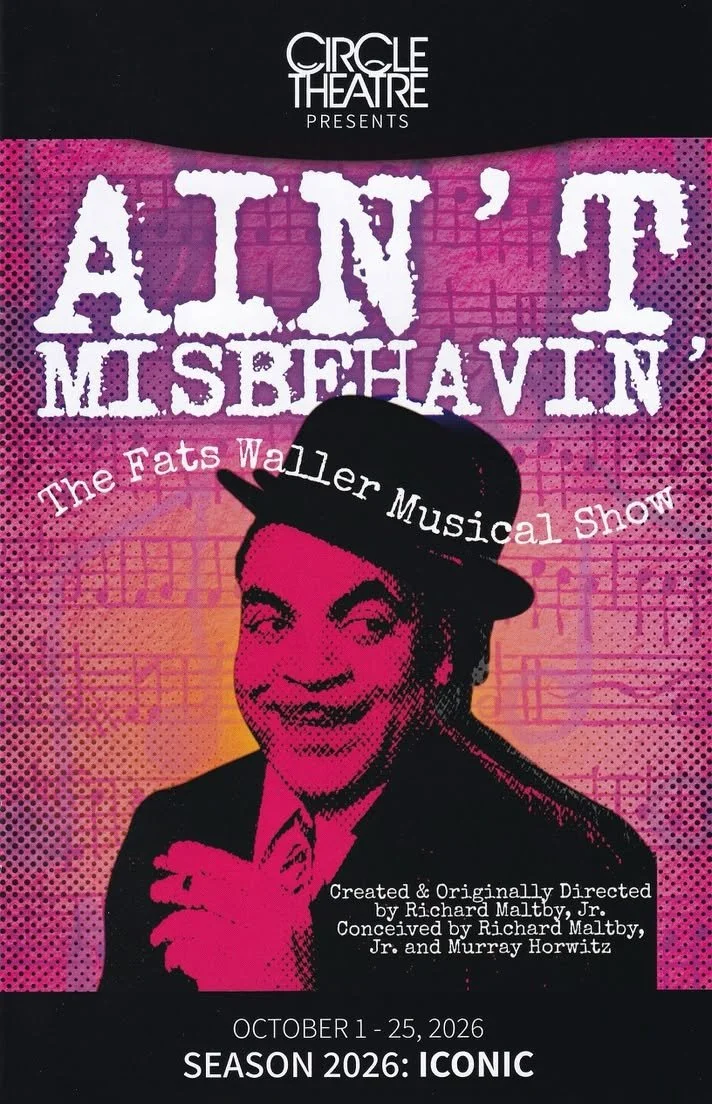
“Ain’t Misbehavin’” @ Circle Theatre.
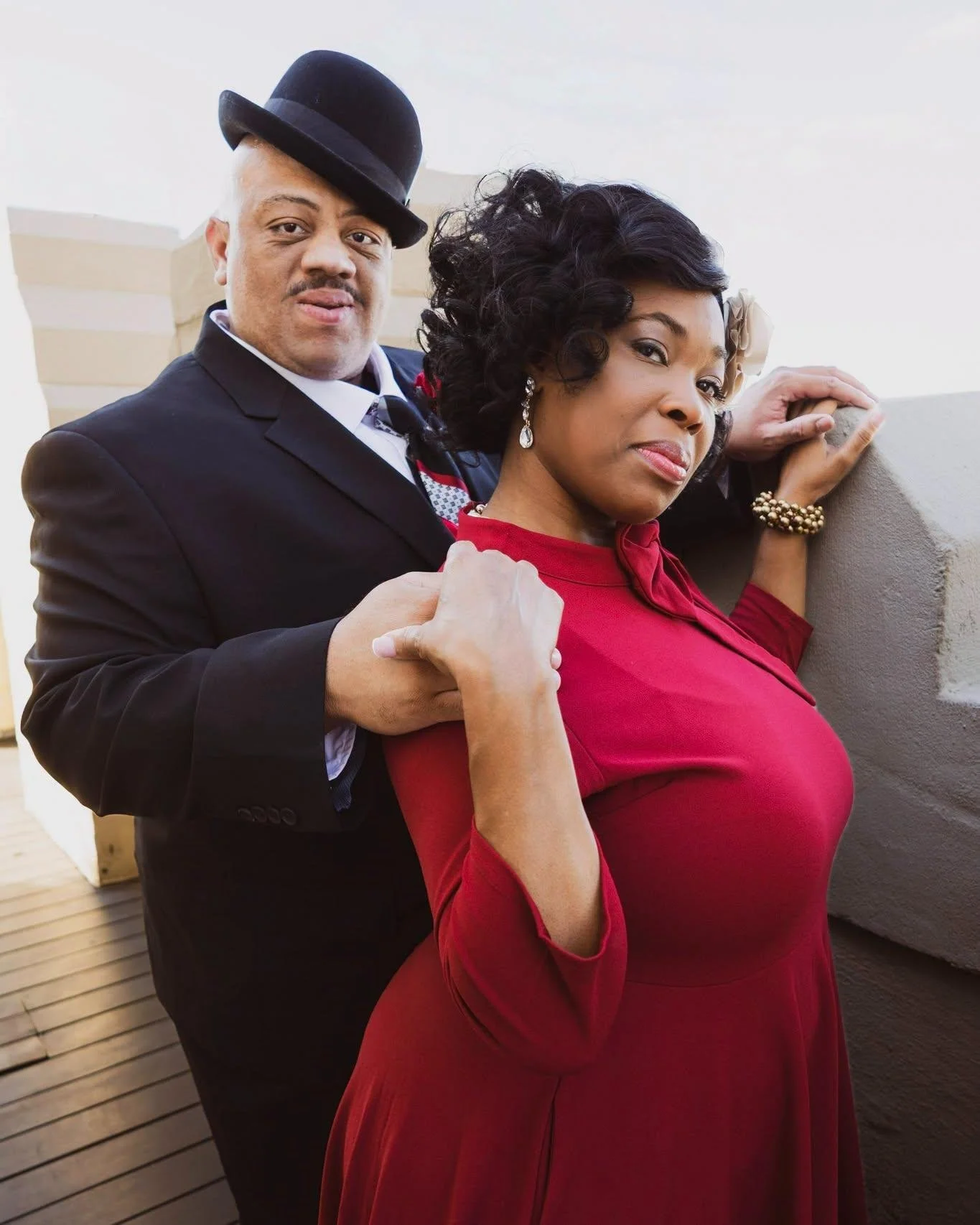
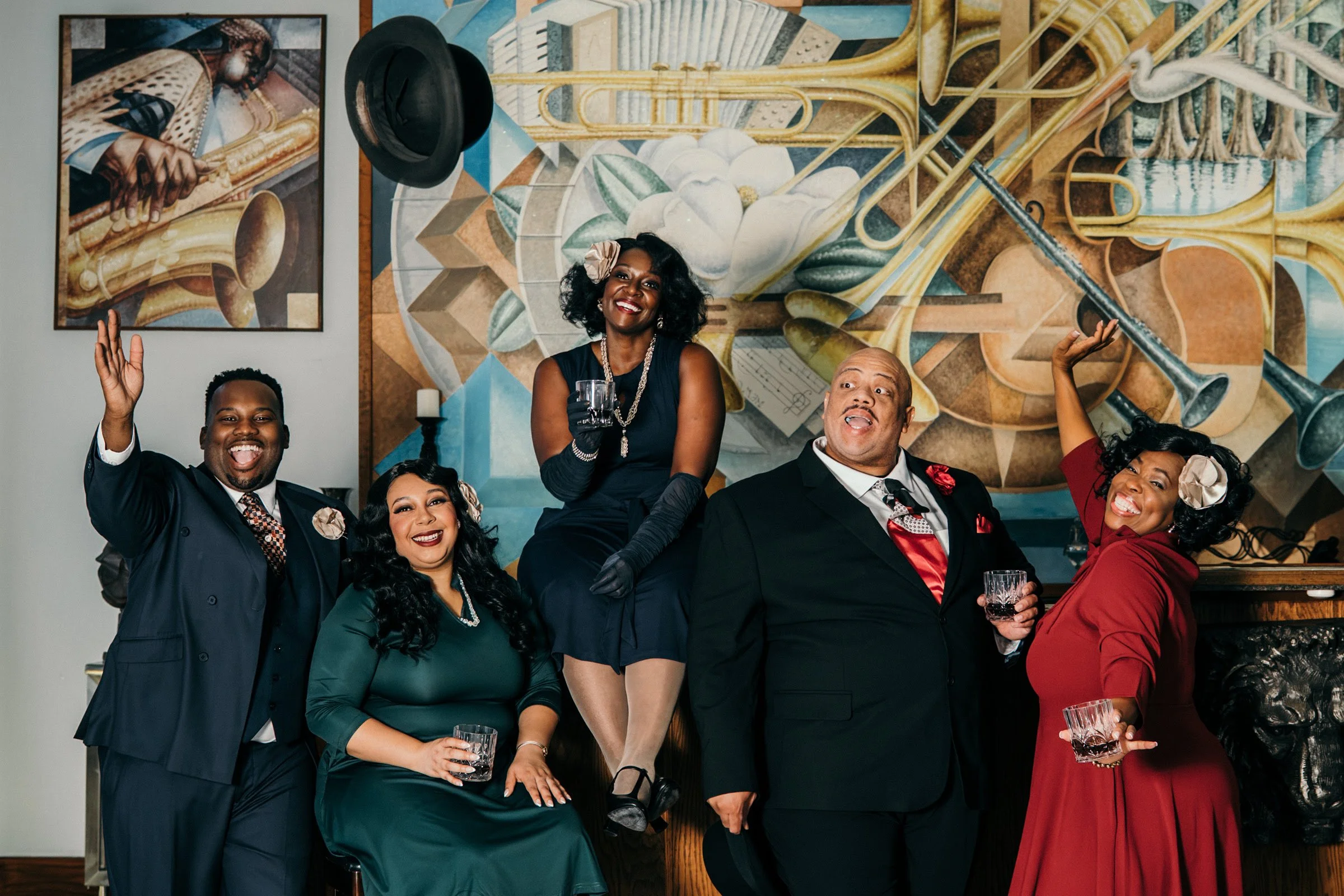
Promo pictures by TanStan Photography
—Charlotte Taylor
Ain't Misbehavin' was one of my favorite musicals in high school. When it came out, I had no idea a show that made it all the way to Broadway could be so immersive (or that it might use the call-and-response style I already knew from sneaking into blues clubs in and around Beale Street). In those rooms, artists like Ma Rainey II, Little Laura Dukes, and Furry Lewis used banter, songs, storytelling, and call-and-response to thoroughly entertain a crowd. Nobody sat back and watched. You talked back, or you got talked to. Ain't Misbehavin' was my window into the early roots of that musical/theatrical exchange — and into the party atmosphere where it thrived.
In Fats Waller's Harlem of the 1920s and '30s, that kind of exchange was everywhere. The rent party was its natural habitat. A tenant short on rent would charge a little at the door, set out food and bootleg liquor, and hire a stride pianist like Waller, James P. Johnson, or Willie "The Lion" Smith to keep a packed apartment jumping until dawn. These were loud, sweaty, interactive affairs, and the pianists were as much hosts as players. Waller learned his craft in those rooms, which is why so much of his music sounds like it is talking back to someone.
I love an immersive production, especially one where you leave feeling like you were part of the show. At Circle Theatre's Ain't Misbehavin', you just might be. Cabaret tables sit both onstage and off, with traditional row seating in the center, so the performers are never more than a few steps from someone they can sing to, flirt with, pull up onstage to dance with, or tease. Waller would have approved.
When this show landed on Broadway in 1978, nobody was talking about jukebox musicals. The word of the moment was “revue.” The late 1970s and early 1980s brought a real boom in them: shows that skipped the continuous plot and instead celebrated a legendary composer's catalog, a musical era, or an old theatrical tradition. Richard Maltby Jr. and Murray Horwitz built Ain't Misbehavin' first as a cabaret at Manhattan Theatre Club, and it became the smash of the bunch, winning the Tony for Best Musical and running more than 1,600 performances. It had good company. Eubie! (1978) showcased the ragtime and jazz of Eubie Blake. Sugar Babies (1979) brought back old-time burlesque with Mickey Rooney and Ann Miller. A Day in Hollywood / A Night in the Ukraine (1980) paired a revue of 1930s movie songs with a Marx Brothers parody, and Sophisticated Ladies (1981) danced its way through Duke Ellington.
Of all of them, Ain't Misbehavin' is the one that rose to the top and keeps coming back, and productions like this one at Circle are the reason why.
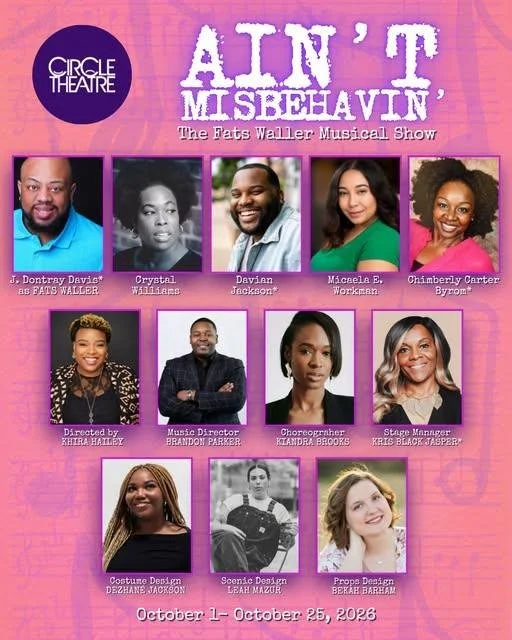
The cast is led by J. Dontray Davis, who plays Fats Waller in every way: the energetic delivery of his delicious musical treats, the physicality Waller exuded, and the signature eye pops that made him a star of early film shorts and radio alike. Waller was a preacher's son who learned organ in church and stride at the elbow of James P. Johnson, and he wrapped serious virtuosity in clowning so easy you almost missed how good he was. Davis gets both halves of that man. I never saw the original Broadway cast in person (only the 1982 NBC broadcast), but this company exceeded every expectation I brought in with me.
The rest of the cast — Davian Jackson, Chimberly Carter Byrom, Crystal Williams, and Micaela Workman — brought their own gifts to this musical gem. Jackson has a unique brightness to his voice (and his personality) that showed up beautifully in "Fat and Greasy" with Davis and "That Ain't Right" with Byrom. He and Workman then tore up the floor with "How Ya Baby," an amazing nod to the duo who originated that number, André De Shields and Charlaine Woodard. Byrom's smoky voice was a perfect conduit for "Squeeze Me" and several other tunes. Williams shone on "Honeysuckle Rose" and "Lounging at the Waldorf" with Davis. Workman has a powerhouse voice made for songs like "Keepin' Out of Mischief Now," but she can spice up anything with a rhythm, including "Handful of Keys."
All five of these singer-dancer-actors worked the stage and the room nonstop, from the first note to the last, which made me wonder when exactly they planned to breathe. Being there felt like stepping back in time, into somebody's crowded Harlem apartment with the rent coming due and nobody in a hurry to leave.
Everything about this production is a loving nod to the original without ever turning into a copy. The onstage band is just three musicians, yet the sound was so big I kept glancing around to see whether more players were stashed somewhere. Music director Joe Rogers deserves a great deal of credit for that, and for keeping the stride feel honest. Leah Mazur's set was perfect for the format, transforming the columns that frame Circle's stage into Deco-era architecture. Throughout the night, I kept marveling at Aaron Johansen's lighting design. It would have been easy to settle for a simple, minimal style here, but the blues, pinks, and purples, and the sheer variety of ways the light was used, were a delight. DeZhané Jackson's costumes were incredible and right for the period. Kiandra Brooks created choreography that fit the era beautifully while making full use of this cast's considerable talents. And director Khira Hailey pulled all of it together, keeping the pacing tight and the show constantly moving.
If you love the music of this era and want to lose yourself in a performance — one that will make you wistful for the days when performers and audiences talked back to each other — do not let this Circle Theater production get past you. The cast found new life in songs I could sing in my sleep, and invited the whole room to sing along. Don't miss it.
WHEN: October 1-25, 2026
WHERE: 230 W. Fourth Street, Fort Worth
WEB: circletheatre.com