‘Dance Nation’ @ Second Thought Theatre (co-pro with UT Arlington)

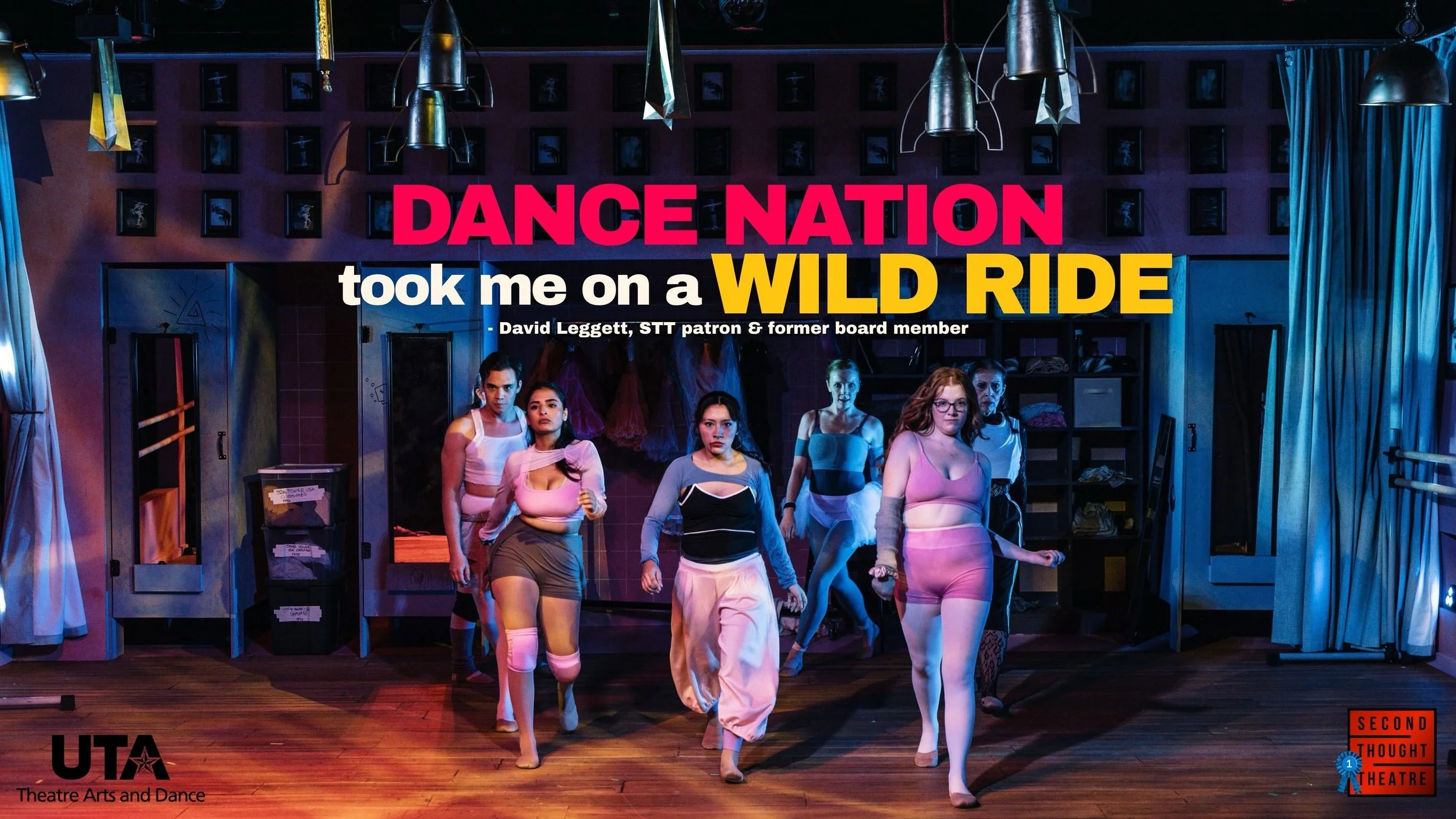

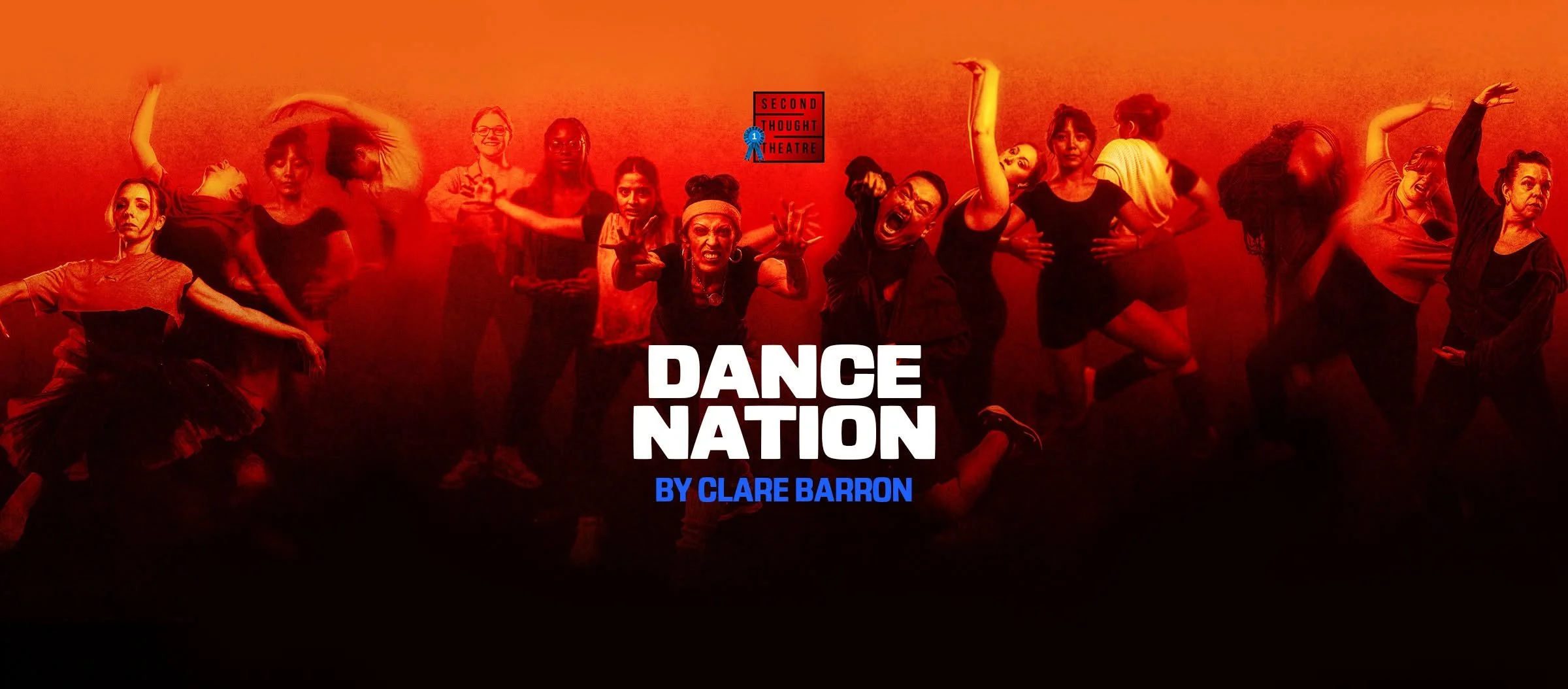
Photography by Evan Michael Woods/Fort Worth Photographer
—Charlotte Taylor
I saw Clare Barron's Dance Nation on opening night (a collaboration between Second Thought Theatre and UT Arlington Theatre Arts and Dance), and I need to say up front: every time I've mentioned this play to someone, the same two wordscame back at me. Dance Moms. And every time, I could feel the spirit and intention of the play get smaller in the room.
Barron has said that she wrote this because she loved Dance Moms—and also because she hated it. She fell for the kids on that show, for how fiercely they wanted to win and how they looked after each other, and then watched the program curdle into something she couldn't keep watching. But Dance Nation isn't a dramatization of a reality show. As director Shyama Nithiananda told me afterward, to her this play is about "where we get our power from." That is the sentence I kept returning to on the drive home.
On paper, Dance Nation reads mostly as comedy. Onstage, it is raw. It is a bowl of fruit that's ready to be eaten, but every piece is in a different state: some not ripe yet, others past their expiration date, all of it sitting in the same bowl whether you like it or not. What I missed entirely on the page, and what this production puts directly in front of you, is how much space adults take up at these dancers’ very fragile age. This is a play about girls, but it is just as much a play about who is allowed to shape them, and how.
Nithiananda's direction pulls together all the play's most visceral elements, the funny and the painful and the raw, into something that nearly sucked the air out of the room at times. This is an ensemble piece through and through, but every actor found a full character inside it, and the accumulated effect had me sweating over middle school flashbacks I did not ask for: the exhausting choreography of trying to please the adults in your life and win. Always win.
Mark Tam Quach, one of only two men in the cast, was a sensational Dance Teacher Pat, someone the team wants to love, hate, and worship all at once. Quach didn't sand down the sharp comedy Barron wrote into the role, but his physicality is what pulled the whole performance together. It's also worth saying: several of the strongest performances in this show come from actors currently in an acting BFA program at UTA. It surprised me at first, until I remembered that this is Felicia Bertch's program, and then it didn't surprise me at all.
I'd read Ashlee's six-page monologue on the page before and wondered how something that raw, that powerful, that relentlessly interior, would actually land inside a hundred-minute play (with no intermission). Christie Vela answered that question for me. This was one of the most beautiful, impactful, raw moments I have witnessed on a Dallas stage. It never once tipped into feeling like “too much,” because I was completely inside it, and so was the rest of the audience, who started shouting affirmations partway through (which felt for a moment like being at a revival). In a way, I suppose it was. The religion of woman.
Lauren LeBlanc's Amina captured the spirit of the whole play: the star, the winner, the one who's always on top, until she isn't. The other girls admire her, but she still is struggling beneath the weight, and LeBlanc never let that struggle disappear just because Amina was winning. Callie Taylor, as Sofia, was such a sharp character actor that I looked her up afterward and realized I'd noted her before, in Bonnets at UTA. Sushma Dhital, making her theatrical debut as Connie (she's a psychology major with a theatre minor at UTA, which makes the assurance of the performance even more striking), found the ache underneath the play's most overlooked character: the one who is loyal and steady while everyone else chases the spotlight, and whose eventual moment in it complicates everything we thought we understood about what winning actually costs.
Itzel Flores plays Zuzu, the character in whom (I think) most people in that audience recognized something of themselves. Her mother, played by Karen Parrish, tries to relive her own dance career through her daughter, pushing and pushing until the joy, the love, the desire simply evaporates. She's the tiger mom we've seen dramatized before, but this production made it feel more real and more raw than I've seen it done elsewhere. Ana Carola Arellano-Cantu brought a grounded specificity to Maeve; and Hayes Walker as Luke, the lone boy adrift in this sea of girls, found real gentleness in a role that could have been played for nothing but comic relief. Audrey Brittain and Jae Brook, as the other moms, and swings Arianna Jeter, Genesis Hill, and Karrine Elisa, all did the unglamorous work of holding this world together, and the production was better for it.
The scenic design, by Leah Mazur, was genius. I'd never been in STT’s Bryant Hall space before, and spent the first few minutes wondering how they were going to pull off everything I knew the script demanded. Through clever use of curtains, lighting, and even pulling the set forward off the stage itself, every transition surprised me, not just with what it looked like but with how simple it managed to feel. The design left room for the choreography, by Emily Bernet, which was flat-out excellent, and nothing onstage ever got in the way of these actors telling their story.
Kristina Ortiz Miller's costume design deserves real credit, because two of this play's most jarring images depend entirely on getting a small, physical detail exactly right—with no room to fudge it or try a second attempt if it doesn't land. Without spoiling either moment, I'll say that in both cases something has to be revealed at exactly the right instant, has to look real enough to make an audience gasp, and then has to keep functioning as a piece of clothing an actor can move in for the rest of the scene. The team's competition costumes read exactly as they should on first glance—glittering and color-coordinated—but look again and they're clearly in conversation with the story underneath them.
This is a play about a middle school competitive dance team, but it is not a play for middle schoolers. Expect frank, sustained discussion of adolescent sexuality, strong language throughout, and moments of self-harm and stylized violence. This one is for adult and older teen audiences only.
WHEN: September 16-October 3, 2026
WHERE: Bryant Hall (on the Kalita Humphreys campus), 3400 Blackburn Street, Dallas
WEB: secondthoughttheatre.com