James Ijames’ ‘Fat Ham’ @ Dallas Theater Center
Photos courtesy of Dallas Theater Center
—Jan Farrington
The other night, I tried to imagine Will Shakespeare in the audience for Fat Ham, puzzled but interested in watching his Danish royal family beamed down into a completely different world. It’s a Southern barbecue “king” who’s been murdered, his only son left confused and angry as his Mamma (the widow) wastes no time marrying “Pap’s” brother. And then, I could almost see the grin spreading across that well-known face as he began to see…that this time, at this family gathering, the trajectory of the tragedy might head in a direction he never could have imagined. Way less royal, way more life-affirming…and way fewer dead bodies to trip over onstage.
The opening-night audience at the Kalita Humphreys Theater roared with laughter as the Dallas Theater Center continued the remarkable “co-pro” that began at Stage West in Fort Worth some months ago—with the same cast, directed by the wonderful vickie washington—and now blooming into an even more rollicking, bawdy, big-laugh show. Stage West’s premiere version last year was terrific, but this one’s even better. Why? Only the cast and creatives can say, probably—but something to do with time, familiarity, and characters whose thoughts and emotions are even more clearly revealed to us. This director and these actors (consciously or unconsciously) have been thinking about this play…and it shows.
Some adaptations of Shakespeare have a “just because” feel to them. But James Ijames has a bigger idea than just moving the time frame and changing the costumes. He’s setting out to explore the nature of multi-generational family violence (both physical and emotional), and refusing to accept it as something that “just is,” inevitable as the sunset. Wielding comedy like a sword, the playwright finds ways to make his Black family’s backyard Hamlet (ghost, butcher knives, ribs and all) come out soul-satisfyingly better.
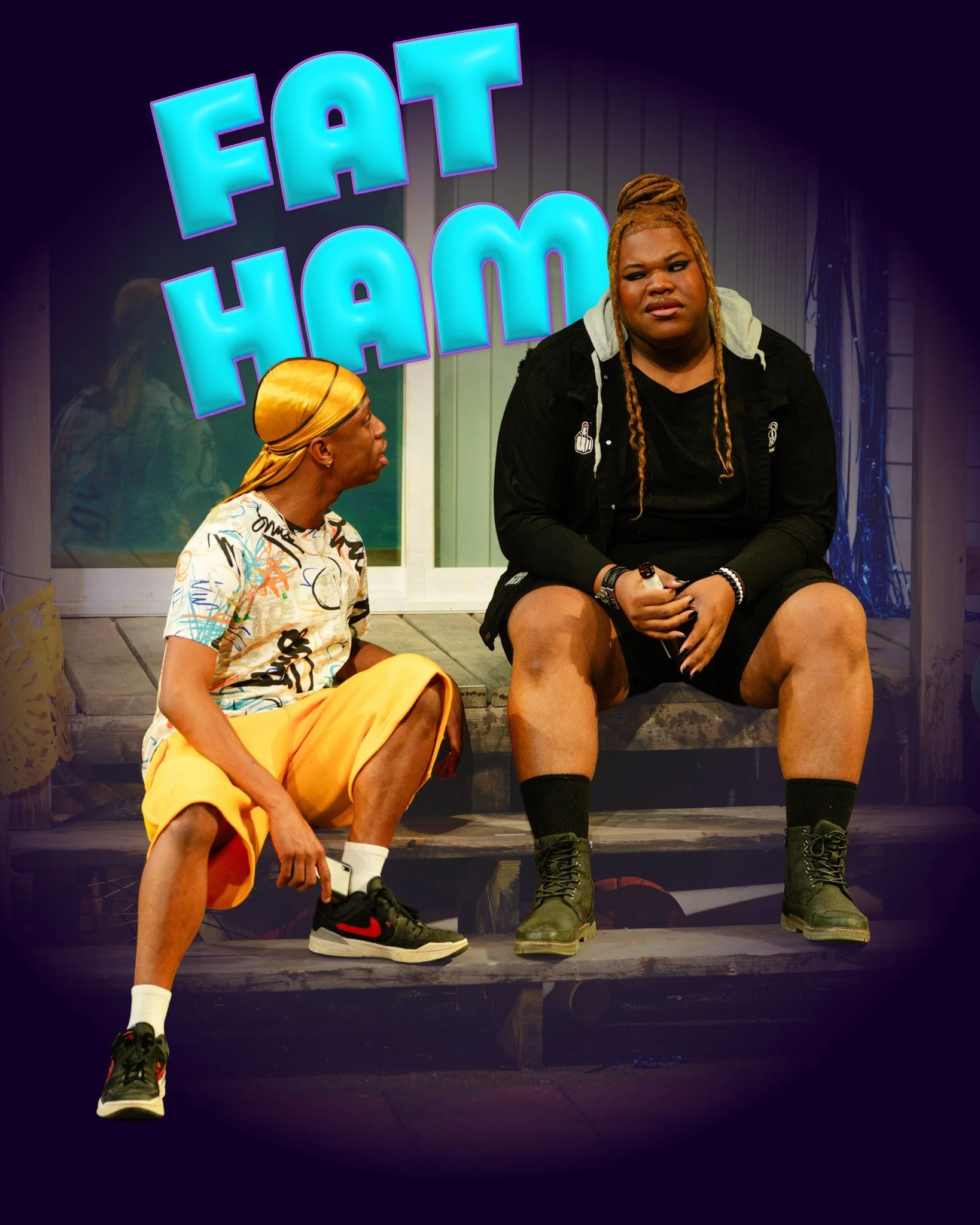
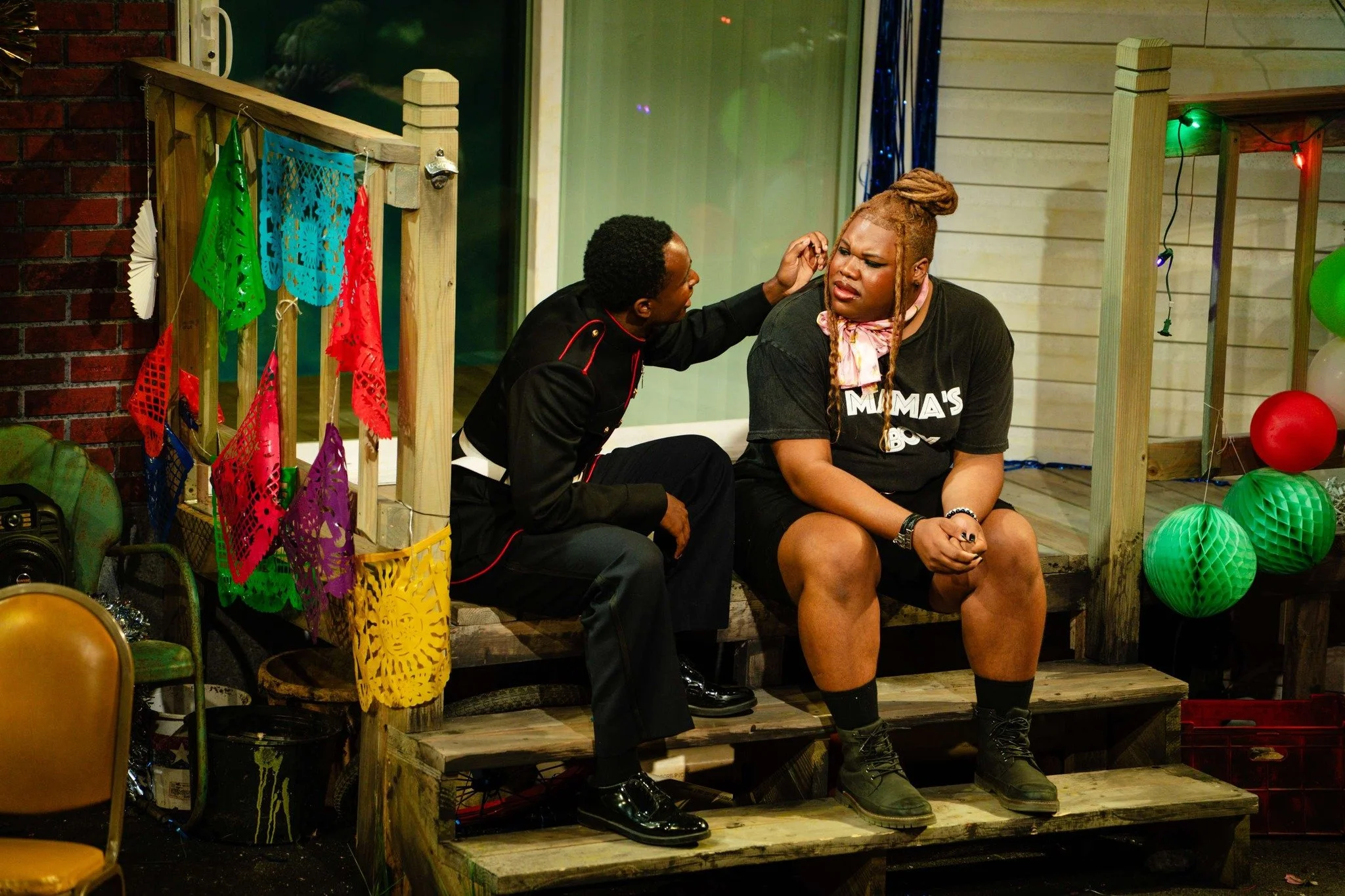
The late BBQ king’s son Juicy (Tyler Ray Lewis) has mixed feelings about Pap’s murder. Growing up, Juicy was hit, dissed, and put down for any dreams that didn’t involve pulling pork. Juicy goes to college (online), and hopes someday to break free of this family of “pig guts and bad choices.”
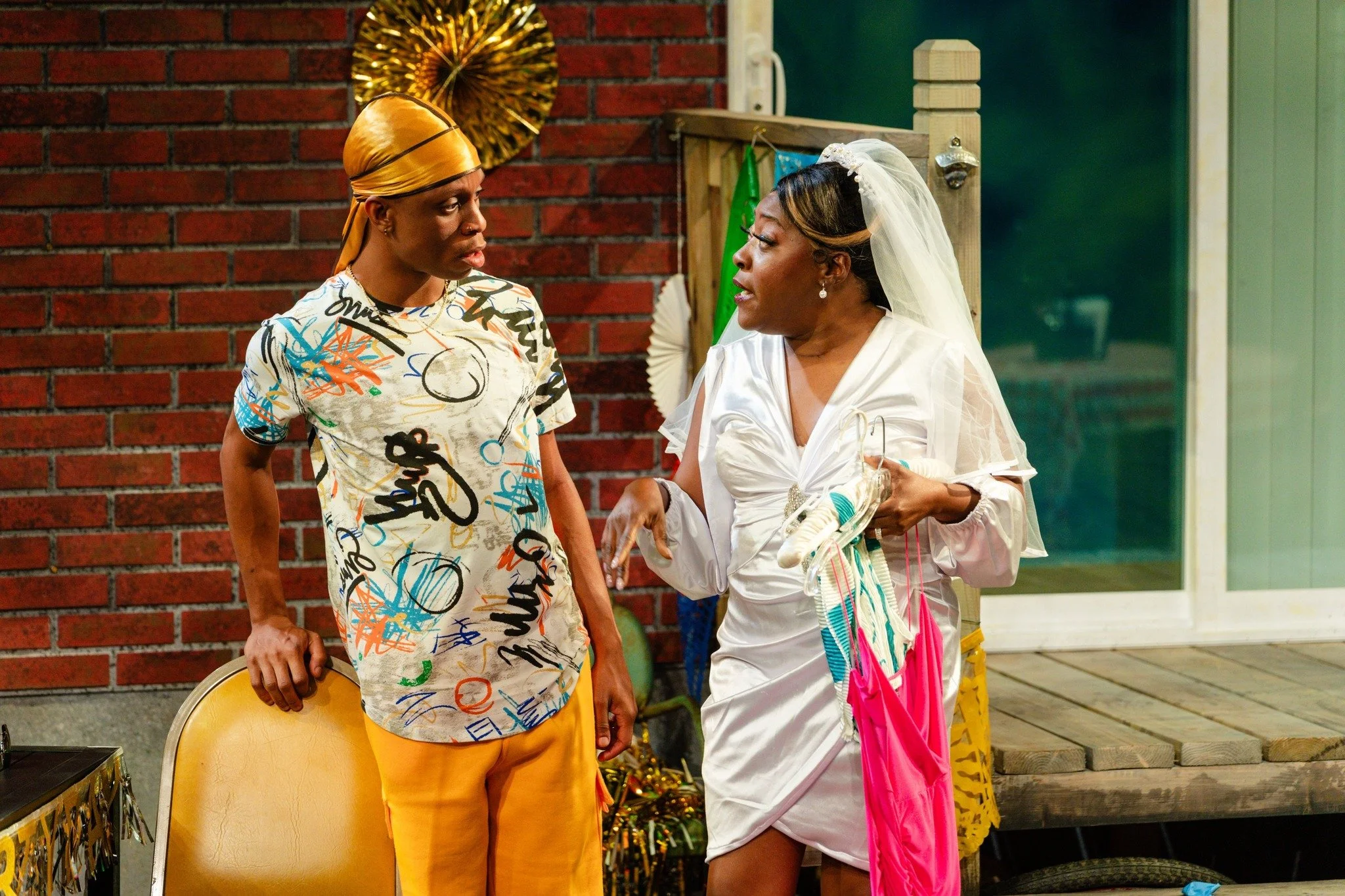
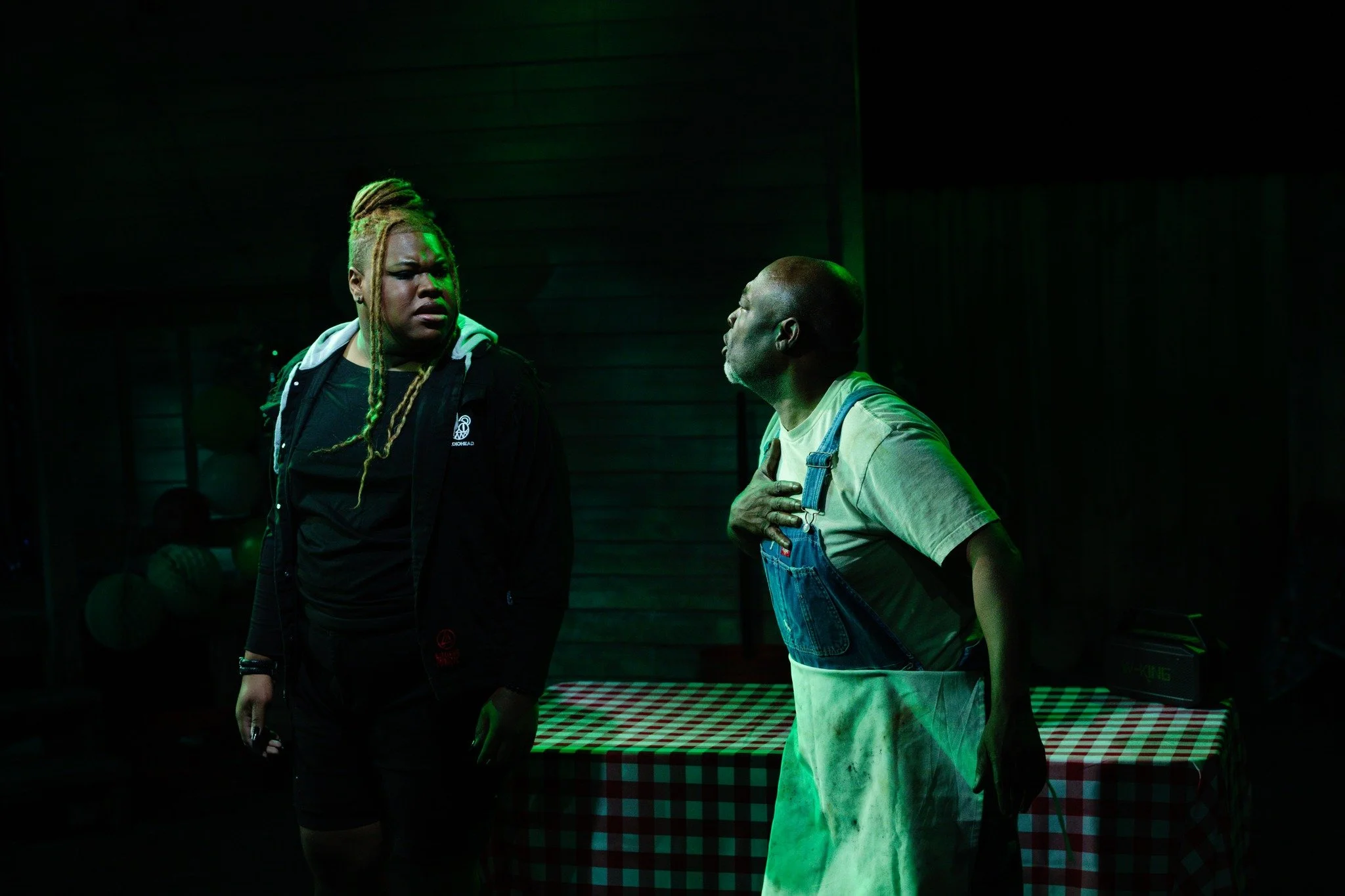
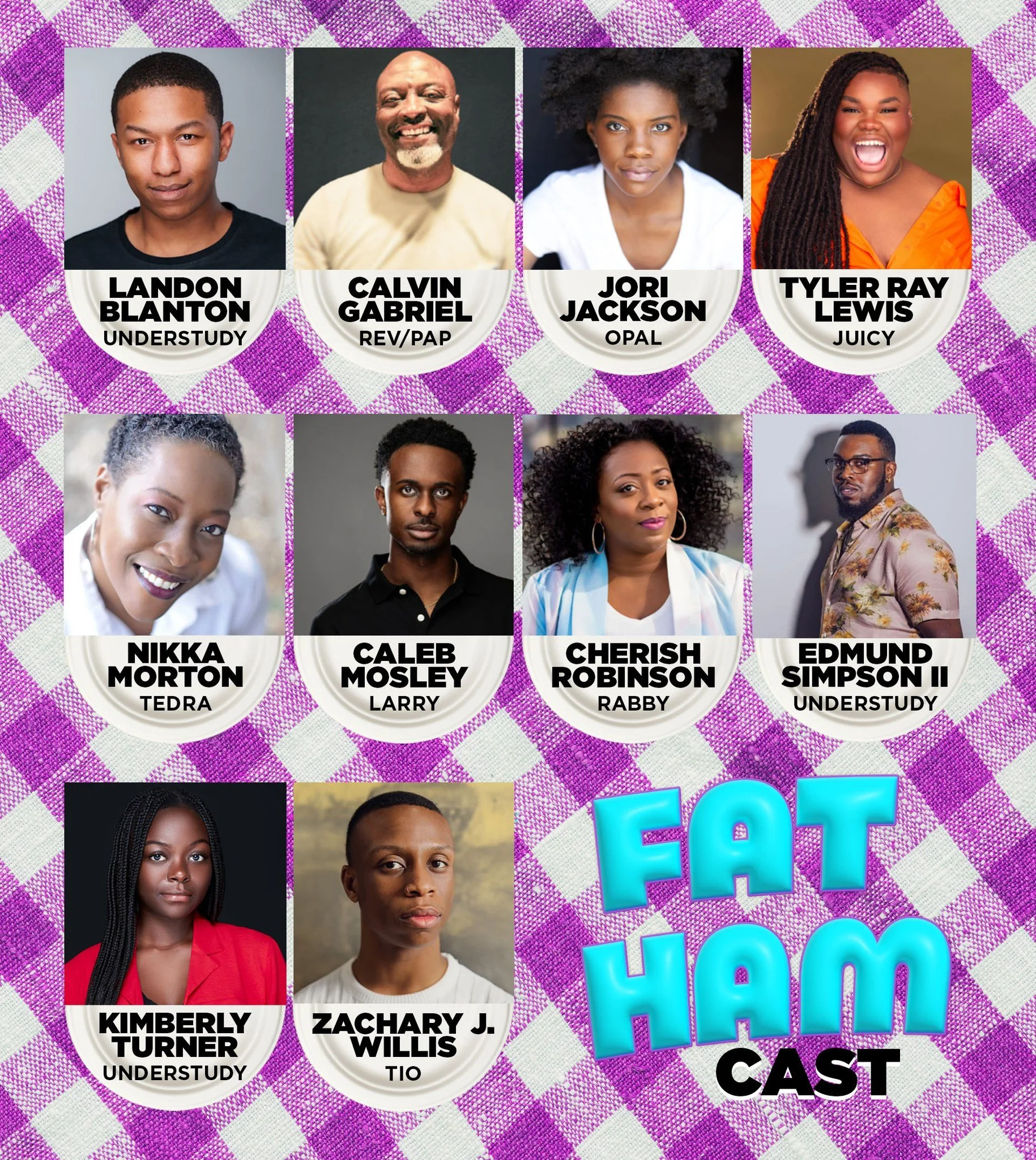
Juicy’s in mourning for lots of things, but Lewis anchors the portrayal in an inner strength we love—it’s a layered performance full of dark humor and sass, and some explosive physicality when it’s needed. There are revealing interactions with Pap (Calvin Gabriel is excellent playing the two “go with your gut” brothers) and uncle, an unsavory mix of threatening (to Juicy) and flirtatious (with Mom/new wife Tedra, played by Nikka Morton).
You can see the family ties between Juicy and Mamma—not just in their out-there dancing, but both can belt a song up to the rafters, a talent put to good use both inside and outside the main action of the story.
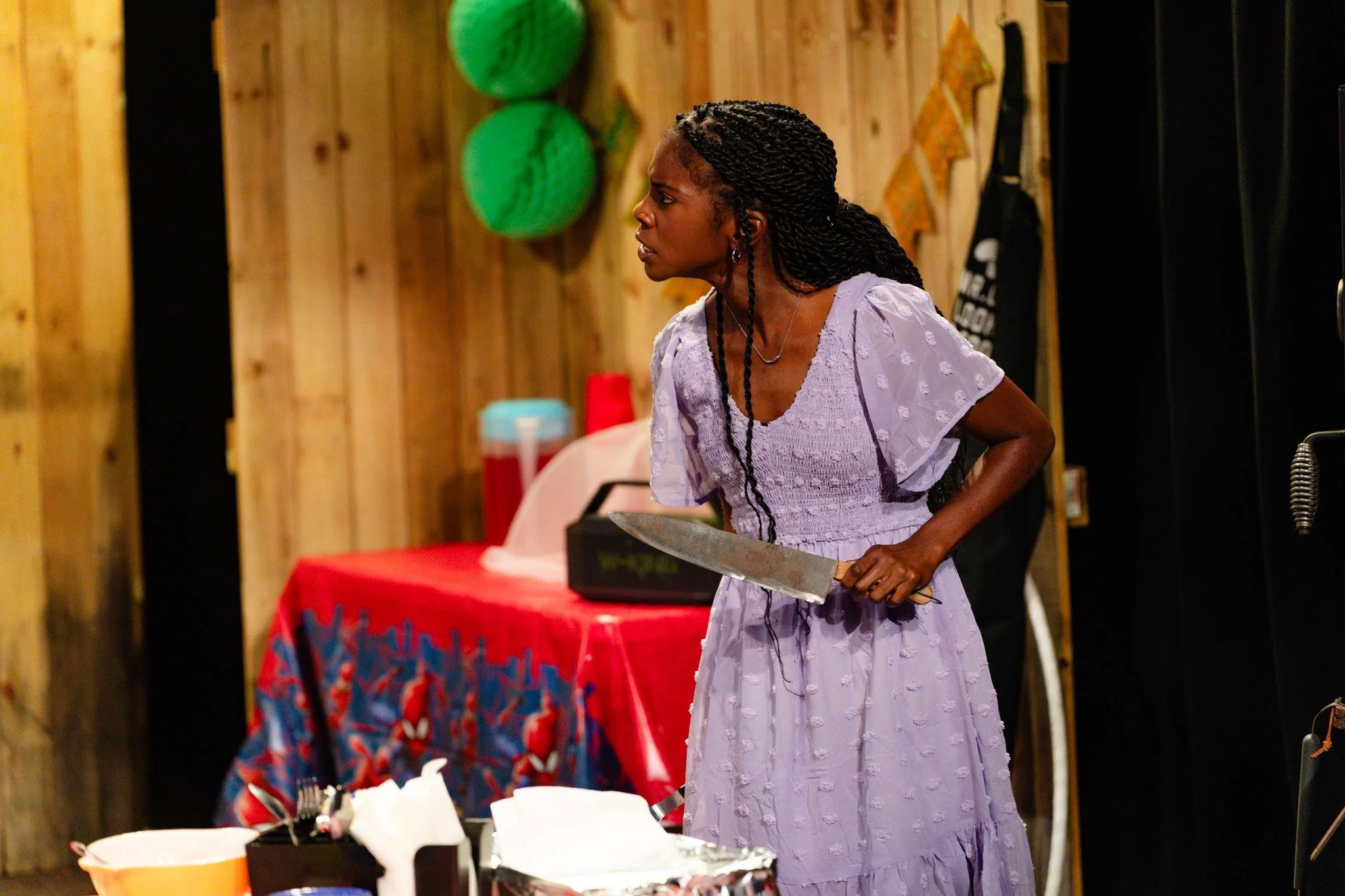
The family unit of Rabby (Cherish Robinson), Larry (Caleb Mosley), and Opal (Jori Jackson)—think Polonius, Laertes, and Ophelia—come into the plot as comic relief, but more. Mom Rabby is an opinionated church lady, blazing in a saved-in-the-Blood red suit, nervous about her children’s life choices. Larry is a Marine on leave, Juicy’s childhood best buddy—and maybe more, someday. Fierce Opal (Jackson is hilariously angry about the party dress Mom makes her wear) would happily go soldiering with Larry—who himself is having second thoughts about the “manly” world he’s entering. Will they find lives that feel true, not put on for Mom and the neighbors?
Fortunately, Juicy’s best friend is the show-stopping Tio (as in Hora-tio), whose therapist has been talking to him about “cycles” of violence—and Tio is always happy to share. So, he says to Juicy, “your Pap went to jail…and his Pop went to jail…and his Pop went to jail…” all the way back to slavery. Tio and Juicy are the only two characters who see the Ghost; they seem to have a direct line into each other’s heads. And though Tio sadly disappears for the middle of the play, he comes back full of thoughts (plus a dream/delirium story we won’t ever forget) that push the action toward some real choices and a funky, fantastic musical-comedy ending—a vision of what life could be in a world where we “choose pleasure over harm.” I felt Shakespeare thinking about that one.
There are clever bits of the Bard, in fact, scattered through Ijames’ script if you listen hard—something about a “rub,” and an “oh, to see what I have seen” that brings Mom Tedra to lean over Juicy and say “You bring up that damn white man one more time…”. But the longer the play goes on, the less we think of the old Hamlet and the more we consider our own world and the choices that hold us back or free us up for life and truth and joy.
Shakespeare and I think that’s a good thing.
WHEN: January 30, 2025 - February 8, 2026
WHERE: Kalita Humphreys Theater, 3636 Turtle Creek Blvd, Dallas
WEB: dallastheatercenter.org