‘Fort Worth Fringe Festival’ @ Theatre Network of Texas



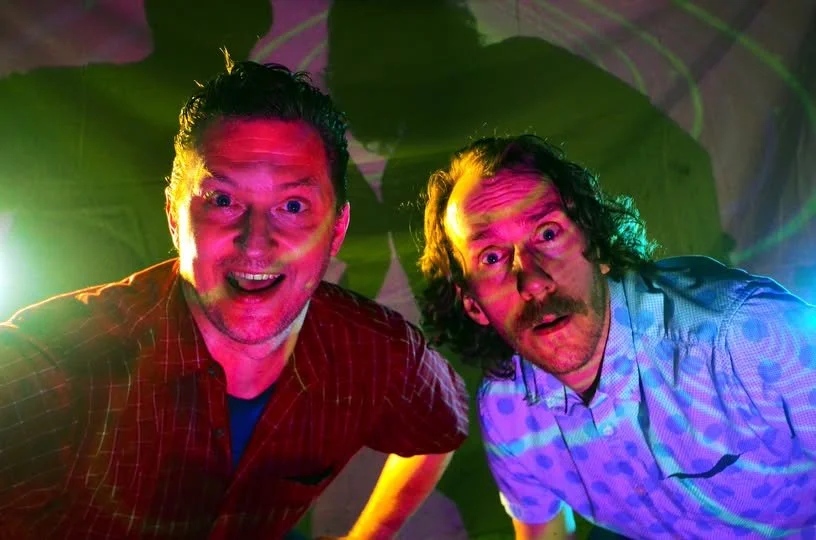
—Rickey Wax and Jan Farrington
[From editor/writer Jan]: I spent a fine stretch of time this weekend seeing most (though not all, alas) of the offerings of the 10th Annual Fort Worth Fringe Festival, which draws a lively crowd of constant, true-blue theatregoers, other actors, artistic directors and creatives, and of course friends and family. The event (produced by the Theatre Network of Texas, Inc.) was hosted for the second time in Stolen Shakespeare Guild’s perfectly-sized new theater, and continues Sunday afternoon.
As always, TNT’s hard-working executive director Dennis Yslas and Programs Manager Preston Isham were the perfect hosts—and the lobby conversations between shows added to the fun of comparing notes and sharing opinions.
And always, some show were covered more than others. I wish we could have gone to the trio of pieces we missed, and covered them equally in depth. The “coverage” varies with every festival, and I hope you’ll enjoy what we wrote…and come back for more next summer!
Here are my (Jan’s) thoughts on the shows I saw in no particular order, followed by Rickey’s review of A Lost Love Story:
I should have been on my guard with Charles Jackson Jr’s A Lost Love Story: everything was going so perfectly, just like clockwork. But there is no defense against the winning portrayals of the two one-time lovers (from school days on) played by Johanna Nchekwube as Ashley and Brian Chalk as Franklin. Their smiles alone make this relationship come alive—but with the help of director Theodore Moores, a whole history of their past spills out in humor, warmth, anger, grief, even play fights and chases. Playwright Jackson himself appears in a critical “wait a minute” role—and though I missed the first leg of this trilogy, A Different Love Story, Part Two made me want to see (with a good dose of sadness and curiosity) where Jackson goes next.
__________________________
kNOw is a brief, visually compelling dance experiment from ballet artist Olivia Giron (from El Paso, now a member of the Montgomery Ballet). Giron notes that she is currently creating “at the intersection of anatomy and improvisation”—with a particular interest in and it’s meaning as a metaphor for humanity’s striving to reach out toward others and into the living world. A tall order for such a short piece, and I can’t say I deciphered the code in any deeper sense. But I was caught by the physicality and intensity of Giron’s dancing, and the yearning it exposed. Sliding, crawling, arms extending in every direction, blind urges yet to be satisfied. Open to interpretation—but I enjoyed the trying.
—————————————-
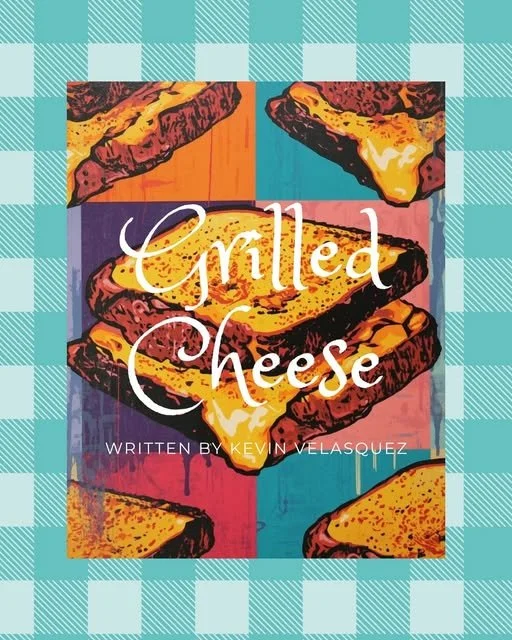
Grilled Cheese by local actor/playwright Kevin Velasquez has us guessing at the start, letting subtly dropped clues and revelations expand this story of a mother’s visit to her just-grown son’s new apartment into more layers of meaning and emotion than we could reasonably have expected. Actor Ben McElroy is remarkably right as son David, with Kim Brentham’s Mom convincing in her overlapping, co-existing, ping-ponging emotions. Add to that the presence of an Inner David (Monyette Whitlock; I loved the thought that David sees himself as this cool, kick-boxing dude) and an Inner Mom (Samanthat Turner in ‘50s Mom outfit, complete with little white gloves), and we have a typical situation that mushrooms into something much more complex—yet also, happening every day of the world to families trying to “figure it out.” The play never slips into pathos, but the sheer matter-of-factness of Velasquez’ sharply-observed script makes us feel for them all the more.
—————————————-
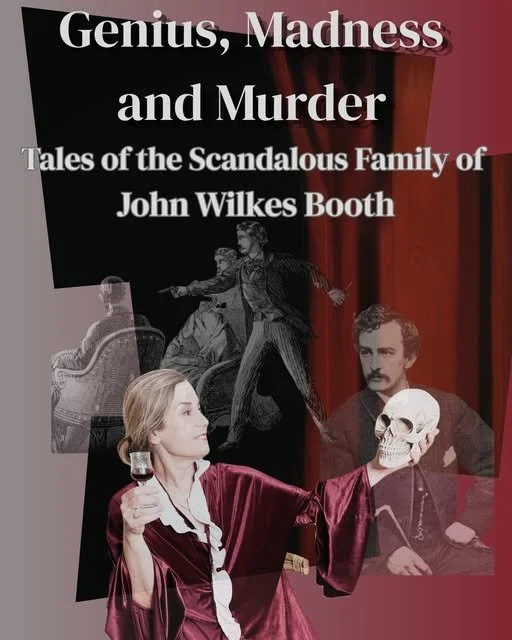
Genius, Madness and Murder starred Dawn Truax, who brought to live the almost-too-amazing story (and scandals) of the theatreical Booth family, which included Lincoln’s assassin John Wilkes Booth, and also its most famous 19th-century Hamlet, older brother Edwin Booth. The show, directed by J.L. Rey, came from Strange Girl Productions in Tampa—and for those who don’t know all the ins and outs of the Booths, it was a fun run-through. Truaz narrates the story as their sister Asia Booth Clark, who outlived them all. Elopements to America (with family left behind), shoot-em-up mining camp Shakespeare performances, finding Father (Junius Brutus Booth) in every saloon, and how “Johnny” was always Mother’s favorite—the only story they missed was the one about Edwin Booth and Lincoln’s son Robert Todd Lincoln. (Ask me sometime.)
__________________________
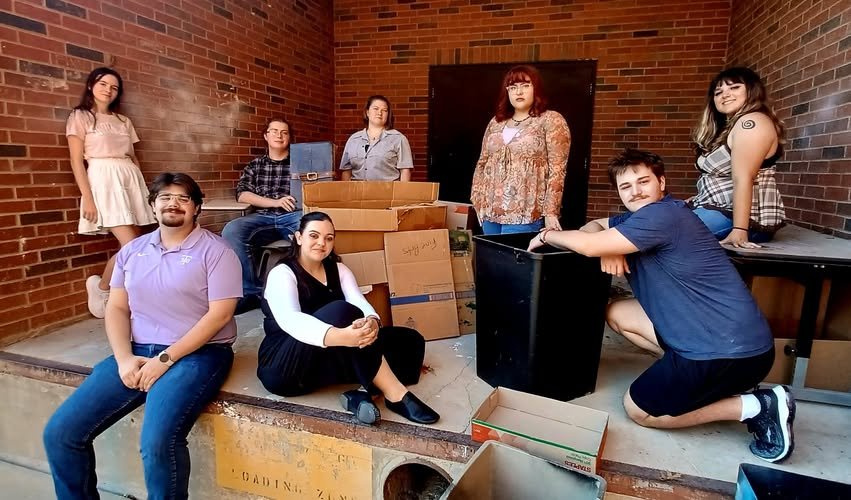
The comic joy of the day was Perpetual Stew from Fort Worth-based OneOff Theatre, a collective of local actors, writers and creatives. Writers Paul Heyduck and James Warila starred in the piece, accompanied by music from the Joe Rogers. The main action never quite stayed put, but zigged and zagged through lively videos and projections, comic song-and-dance interludes, and an apocalypse at least once during the proceedings. (I lost track, just a bit.) Both Warila and Heyduck nailed their initial backwoods and city-boy characters, and we watched every second to see what they’d do next. (Never once what we expected, that’s what.) Not sure whether the “perpetual stew” of the story is entirely meant to be the from-the-beginning quest for food aka survival (boiled down to one everlasting kettle full), or a side-by-side metaphor for the stinky mess we find ourselves in at the moment…but this was an LMAO experience, and I just might go again before the festival closes. I’ll be looking for more from this bunch.
We will try to catch more of next year’s 11th Annual Fort Worth Fringe… and kudos to the this-year shows we heard good things about, but couldn’t schedule to see: Optimal from Parcos Corpas in Stephenville; The Brain Storm Magic Show from Braden Daniels in Dallas; Mujeres Miedo (Women Without Fear) from Sound Culture in Fort Worth; and Bakti-The Unwavering Flame from Supraja Sundaresan of Euless (her compelling dance style amazed audiences at the 2024 festival).
————————————-
————————————-
A Lost Love Story by Charles Jackson Jr.
—Rickey Wax
What if the person who got away never really left you? What if years passed, lives changed, and some stubborn piece of love remained exactly where you left it? If given one more chance, would you finally say what you should have said then?
Fresh off his Broadway run as a co-producer of Proof, Charles Jackson Jr. has apparently decided that peace is overrated. Instead, he returned home and chose to break our hearts on a Sunday afternoon with A Lost Love Story, presented by his recently founded Blackberry Theatre at the 10th Annual Fort Worth Fringe Festival. (I’ll be sending a bill for my therapy.)
Jackson’s company centers Black experiences through storytelling, and A Lost Love Story, which exists in the same theatrical universe as his previous A Different Love Story, feels refreshingly specific. Its characters speak with the teasing cultural shorthand and occasional brutality of people who know exactly which buttons to push.
Ashley “Ash” Jordan (Johanna Nchekwube) and Franklin “Frankie” Perry (Bryson Chalk) were high-school sweethearts who have not spoken since their relationship ended. Now in their 30s, they are brought back into each other’s orbit.
Jackson (who also directs and plays a role) resists clutter. Inside the intimate black-box space, there are chairs, a table, and a bench. That is about it. The sparseness works. There is nowhere for the actors to hide, and the focus stays firmly on the story.
Frankie enters first and simply stands before us, with Ashley following shortly after. Dreamlike music fills the room while soft white and indigo lighting gives the stage an almost otherworldly quality. It feels romantic, but slightly strange.
Ashley addresses us directly, introducing Frankie as her first love, and memory takes over. Their teenage relationship comes alive through arguments over music, play fighting, flirtation and the wonderfully awkward moment when Ashley essentially demands that Frankie ask her to be his girlfriend. She quickly learns he has already written the love letter.
The production has fun with movement in both the memories and present-day reunion. Slow-motion sequences make the stage feel cinematic, almost like a romantic comedy that keeps threatening to become something else. The lightness makes the later emotional turns hit harder.
Nchekwube gives Ashley the toughness of that girl everybody knew in school, the one with a heart of gold whom you still knew better than to try. Around Frankie, her posture shifts and her face softens. She covers her mouth when she cannot contain a smile. Suddenly, the adult Ashley becomes that teenage girl again.
Nchekwube is especially strong when the play asks her to sit inside discomfort. She does not rush toward the biggest emotion. You can hear the strain creep into her voice before the anger fully arrives, making Ashley’s reactions feel immediate.
Chalk meets her with quieter energy. His Frankie listens and takes his time. Later, when the play turns toward what remains after love ends, Franklin reflects on how people can leave both “scars” and “beauty marks” in our lives. Chalk gives the monologue room and allows the language to do the work.
Together, Nchekwube and Chalk have undeniable chemistry. Their slow dance, juvenile play-fighting, and memories of driving around Fort Worth in Grandma’s Cavalier make it easy to understand why neither has completely released the other.
There were moments, however, when I wanted Moores to demand another beat of silence. As flirtation turns into an argument about Frankie’s marriage and the proposal Ashley rejected years ago, some transitions happen before the emotional wound fully opens. A little more room couldvmake the anger feel less immediate and more dangerous. I also wanted a sharper physical or vocal distinction between their teenage and thirty-something selves.
Then Jackson pulls the rug out.
Even now, I will not explain how, because I am not about to be the reason somebody cusses me out in the lobby of a future production—but a revelation forces us to reconsider almost everything that came before it. What appeared to be a romantic story about second chances becomes something stranger and much more painful.
Jackson himself enters as Devin, Franklin’s brother, and immediately changes the temperature of the room. His anger never feels one-dimensional because grief sits underneath it. Jackson lets frustration show through his body before it reaches his voice, and his restraint makes the eventual eruption much more effective.
It was around this moment I thought, Love Jones has wandered into an episode of The Twilight Zone.
Initially, I thought this was simply a story about reconnecting with an old flame. I soon realized Jackson was digging much deeper into grief, memory and our incessant need for closure. Ashley believes revisiting the past might help her move forward, only to discover that sometimes going back can make letting go even harder.
Jackson leaves us with the idea that love does not necessarily disappear simply because a relationship ends. Sometimes what we lose stays with us in ways we never expected.
A Lost Love Story is the second installment of Jackson’s planned trilogy, and after seeing where he takes this chapter, I cannot wait to see what he has in store for the third. If this is any indication, Blackberry Theatre should expect a few more emotional casualties ahead.
My therapy bill is already in the mail. Charles, please proceed responsibly.
WHEN: September 11-13, 2026
WHERE: Stolen Shakespeare Guild venue, 3623 Decatur Ave, Fort Worth
WEB: https://texastheatres.org/fringe/