‘Hairspray: The Broadway Musical’ @ Casa Mañana
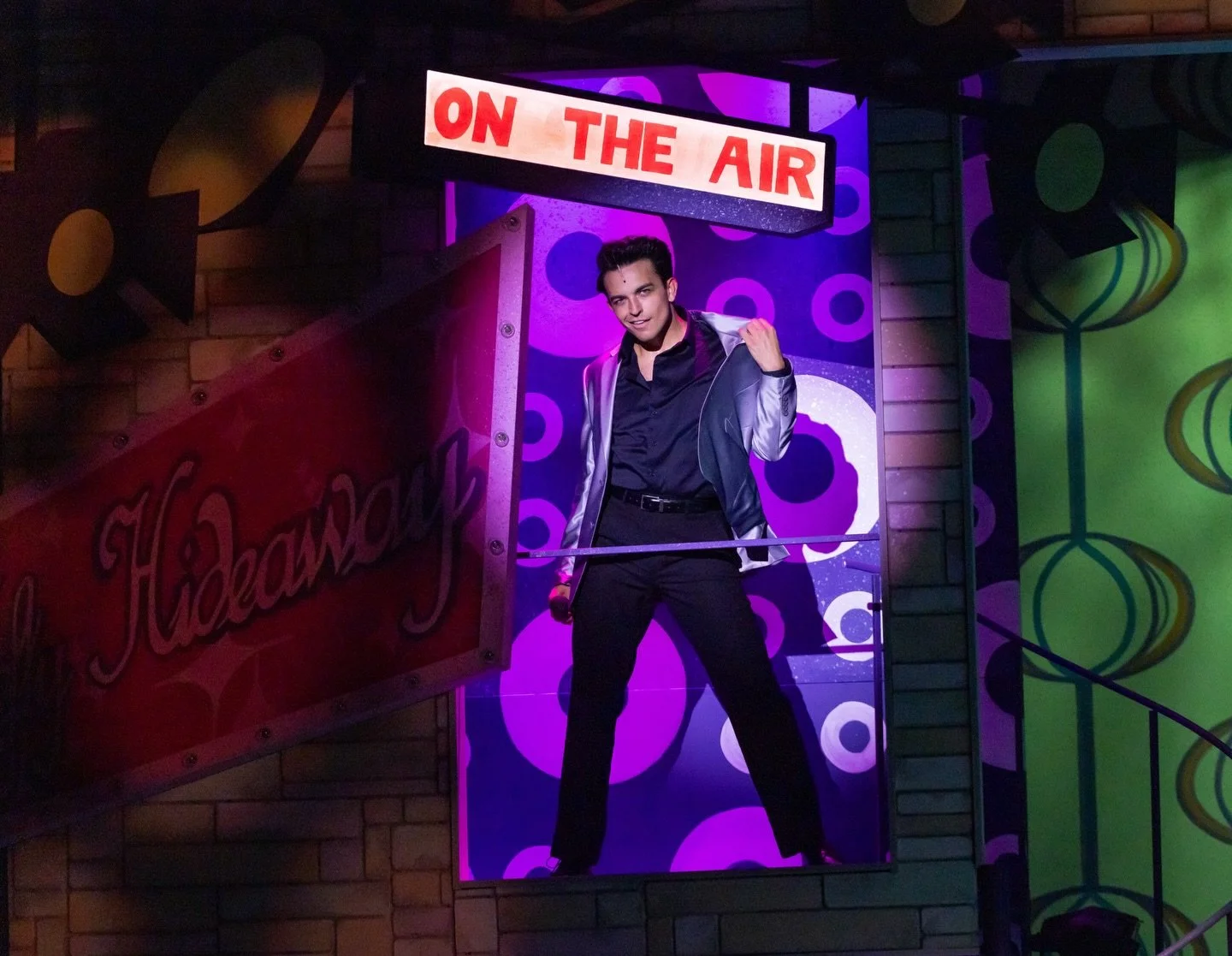
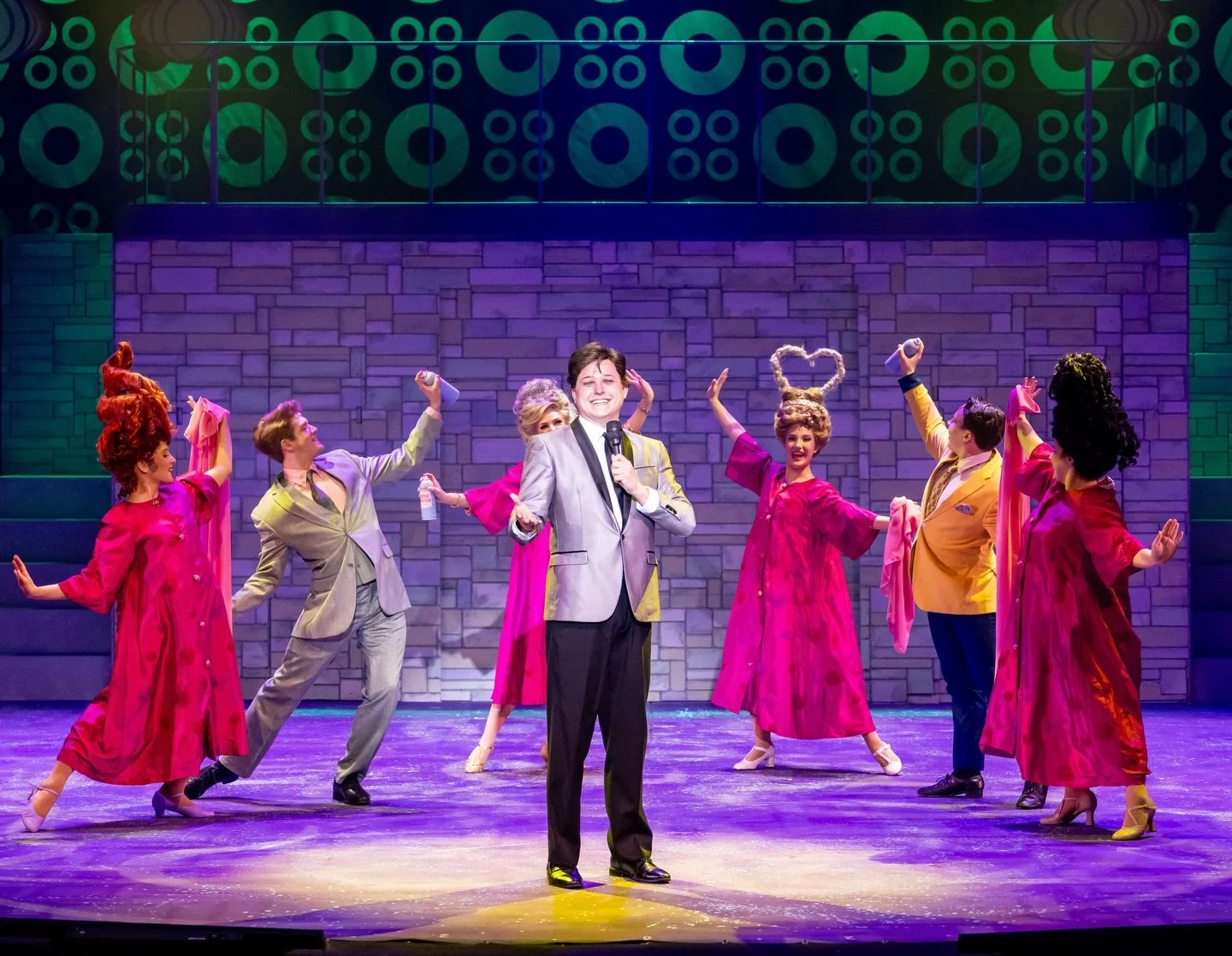
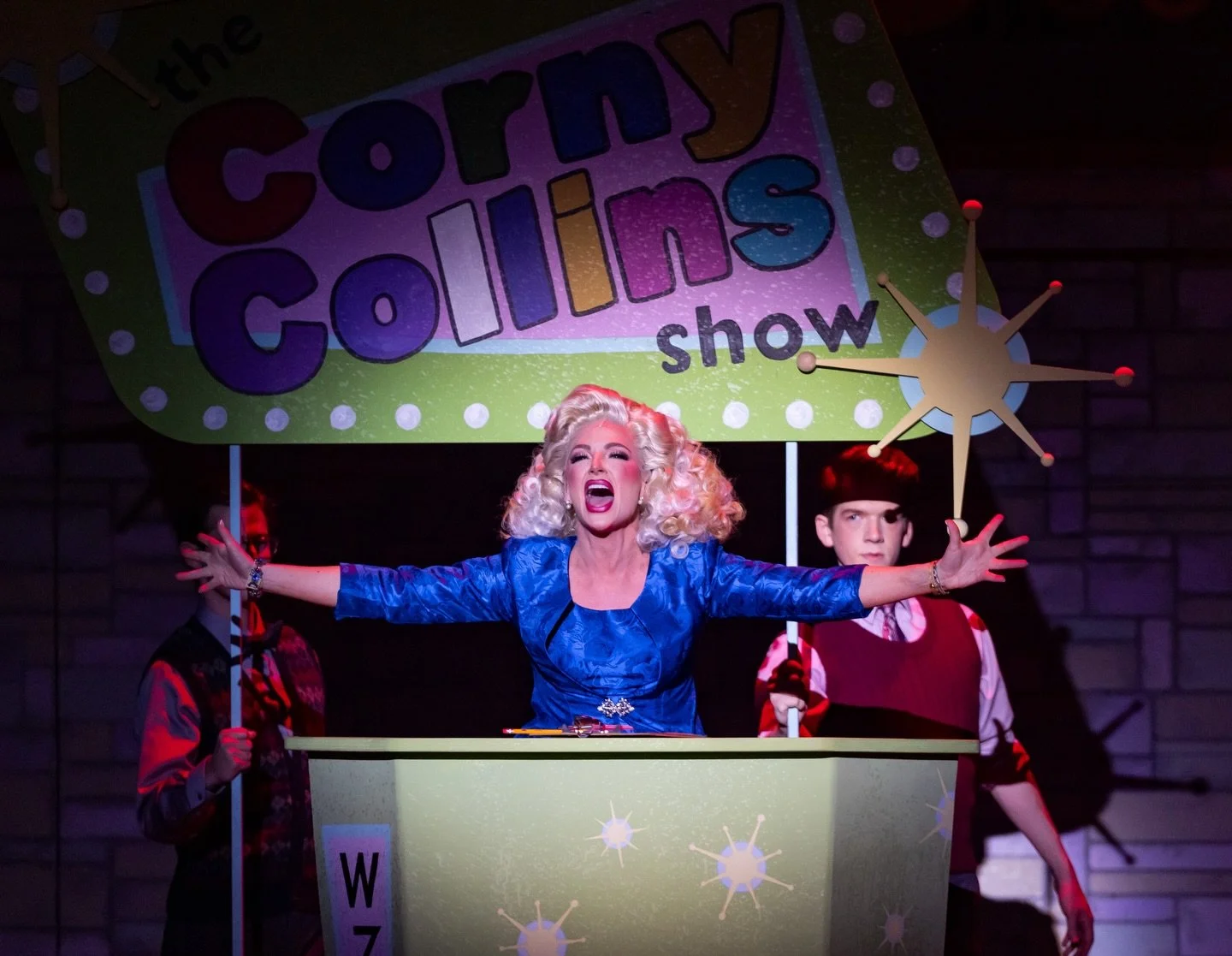
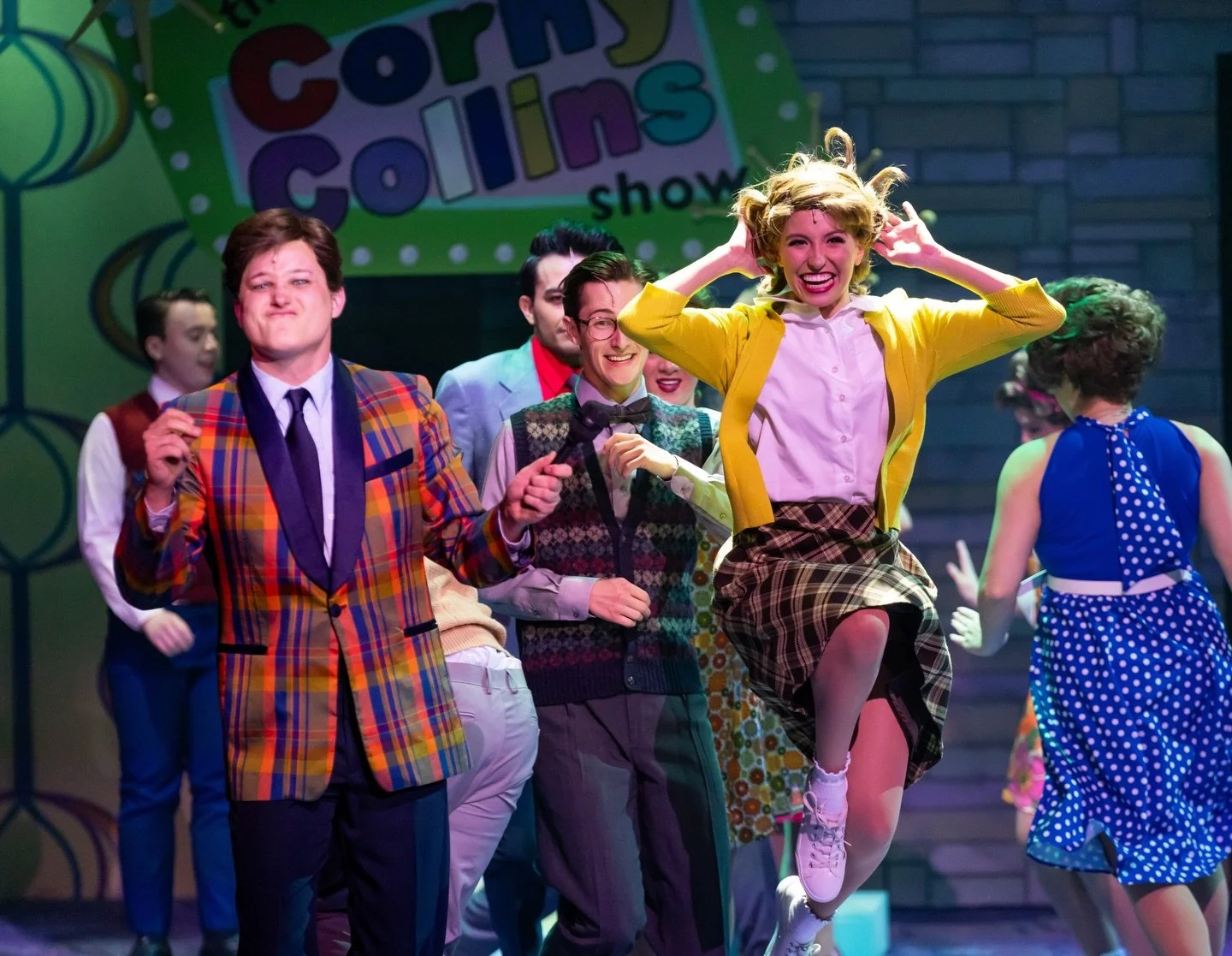

Photos by Nicki Behm
—Rickey Wax
Casa Mañana goes big with Hairspray, and that feels exactly right. The musical is built on
energy, optimism, and a healthy dose of theatrical excess, and this production leans into all of it.
With a book by Mark O’Donnell and Thomas Meehan, music by Marc Shaiman, and lyrics| by Shaiman and Scott Wittman, the 2002 Tony-winning hit is set in 1962 Baltimore, and
follows Tracy Turnblad, a teenager who dreams of dancing on the popular after-school TV program “The Corny Collins Show”—and soon finds herself challenging the segregation built into the show.
Director and choreographer Gerry McIntyre keeps things moving from the start. The show rarely pauses for long, and the ensemble stays in motion; the transitions between scenes flow
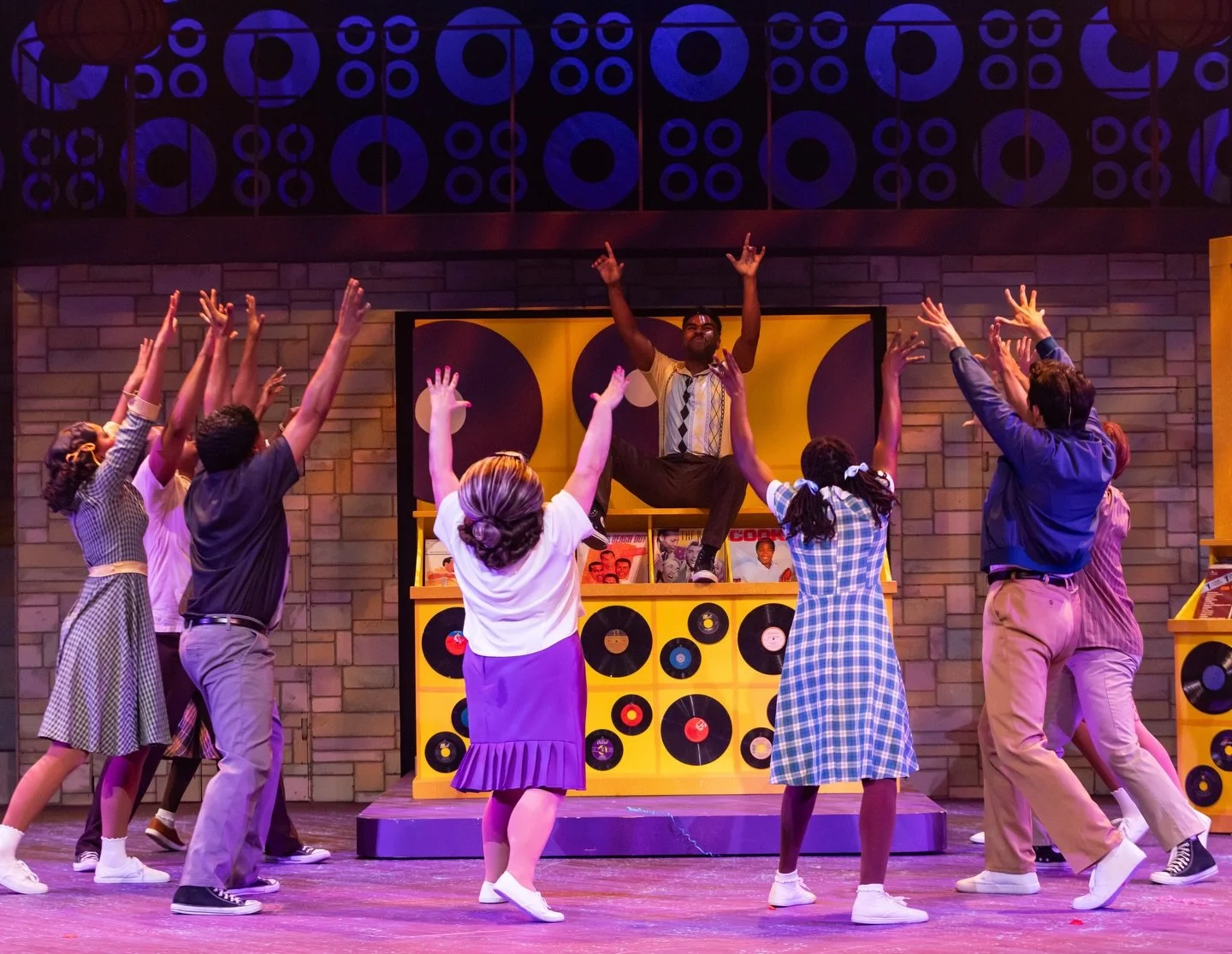
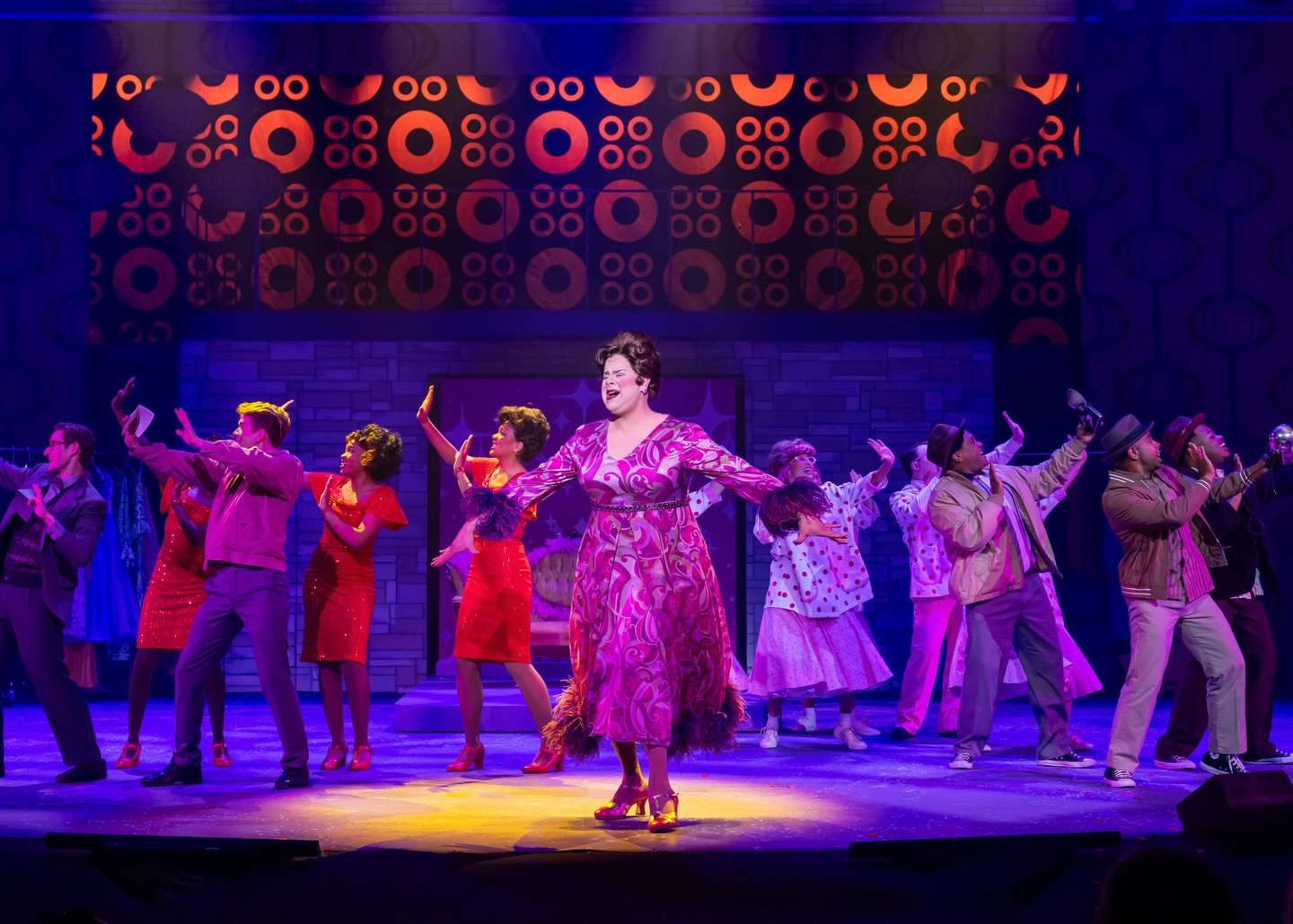
easily, which helps maintain the rhythm of the score. The set, designed by J. Branson, places the action inside a bright, stylized television world. Large mod shapes and circles frame the stage, recalling the graphic design of early-1960s television and Pop art. Under Samuel
Rushen’s lighting, the space shifts through washes of orange, magenta, and green, giving the stage the playful glow of a studio broadcast.
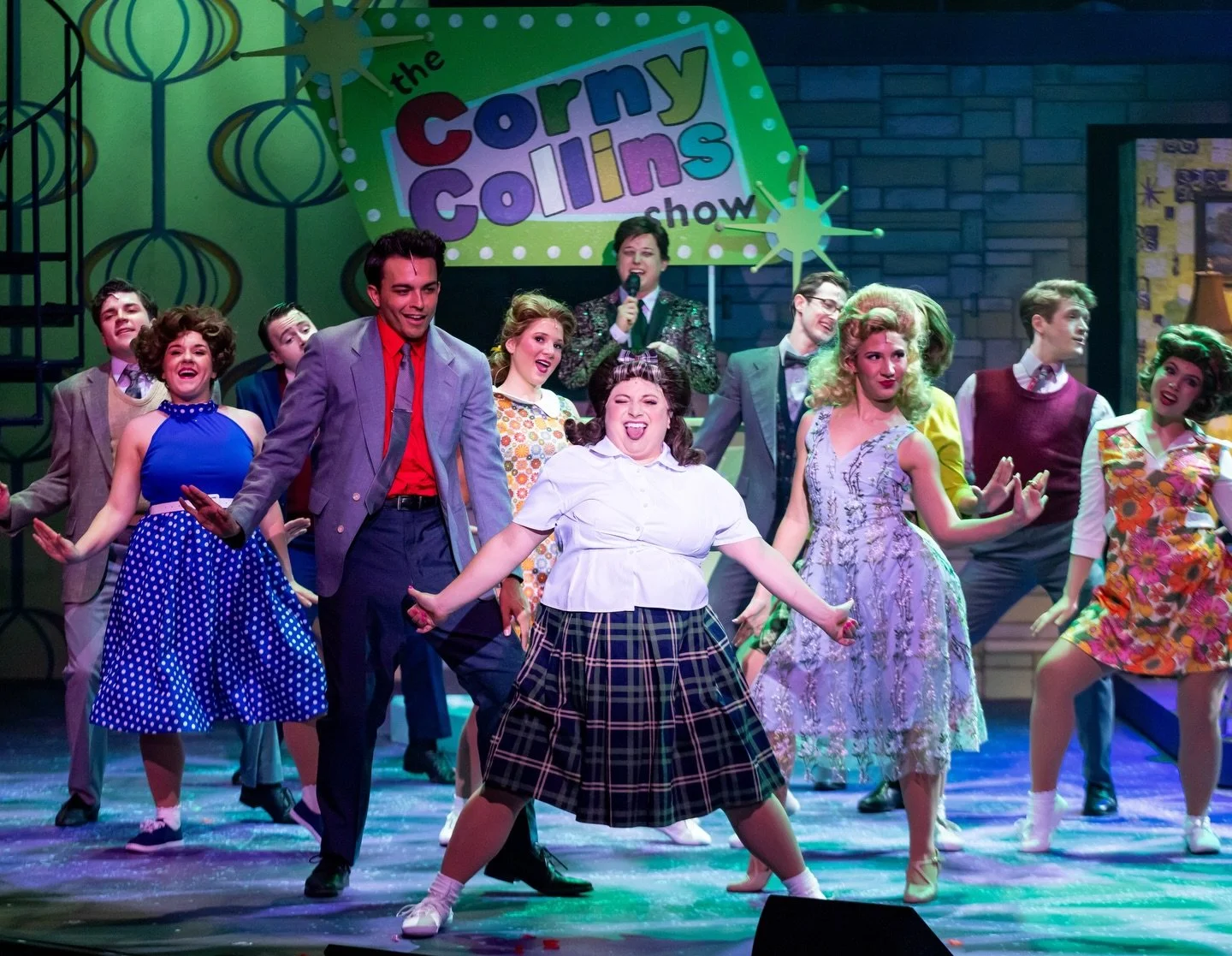
At the center of it all is Kaitlyn Louise Smith as Tracy Turnblad, who opens the show with “Good Morning Baltimore.” It is a demanding role. Tracy is rarely offstage and carries much of the musical’s momentum. Smith approaches it with enthusiasm and stamina, holding the audience’s attention through both the dance numbers and the quieter moments. It is a big musical to lead, and she keeps the energy consistent throughout the act. Her physical commitment to the choreography and character makes every return to the stage feel like a small event.
At school Tracy spends most of her time with best friend Penny Pingleton, played by Bella Gream, whose nervous energy gives the character an endearing awkwardness. (Even her costumes tell who she is; Jeffrey Meeks and Tammy Spencer’s period outfits have a lot to say about the characters.) When Tracy lands in detention, she meets ever-so-suave classmate Seaweed J. Stubbs, played by Justin Showell, whose cool presence shifts the show’s musical style toward rhythm and blues.
Soon Tracy’s attention turns to “The Corny Collins Show,” the popular dance program where Baltimore teens compete for airtime. The show’s resident heartthrob Link Larkin, played by Nick Cortazzo, quickly becomes Tracy’s crush. Cortazzo and Smith establish an easy chemistry that anchors the musical’s central romance. A second love story begins as Penny and Seaweed grow close, much to the horror of Penny’s strict mother, Prudy Pingleton (Kathryn Jacobson).
The studio also introduces the musical’s antagonists. Velma Von Tussle, played by Emmie Kivell, who runs the program with firm control and little patience for Tracy’s arrival. (The show’s on-air host Corny, played by Zak Reynolds, tries to curb Velma’s machinations with only fair success.) Velma’s daughter Amber (Grace Moore) shares that same competitive edge, and together they provide much of the show’s comic tension.
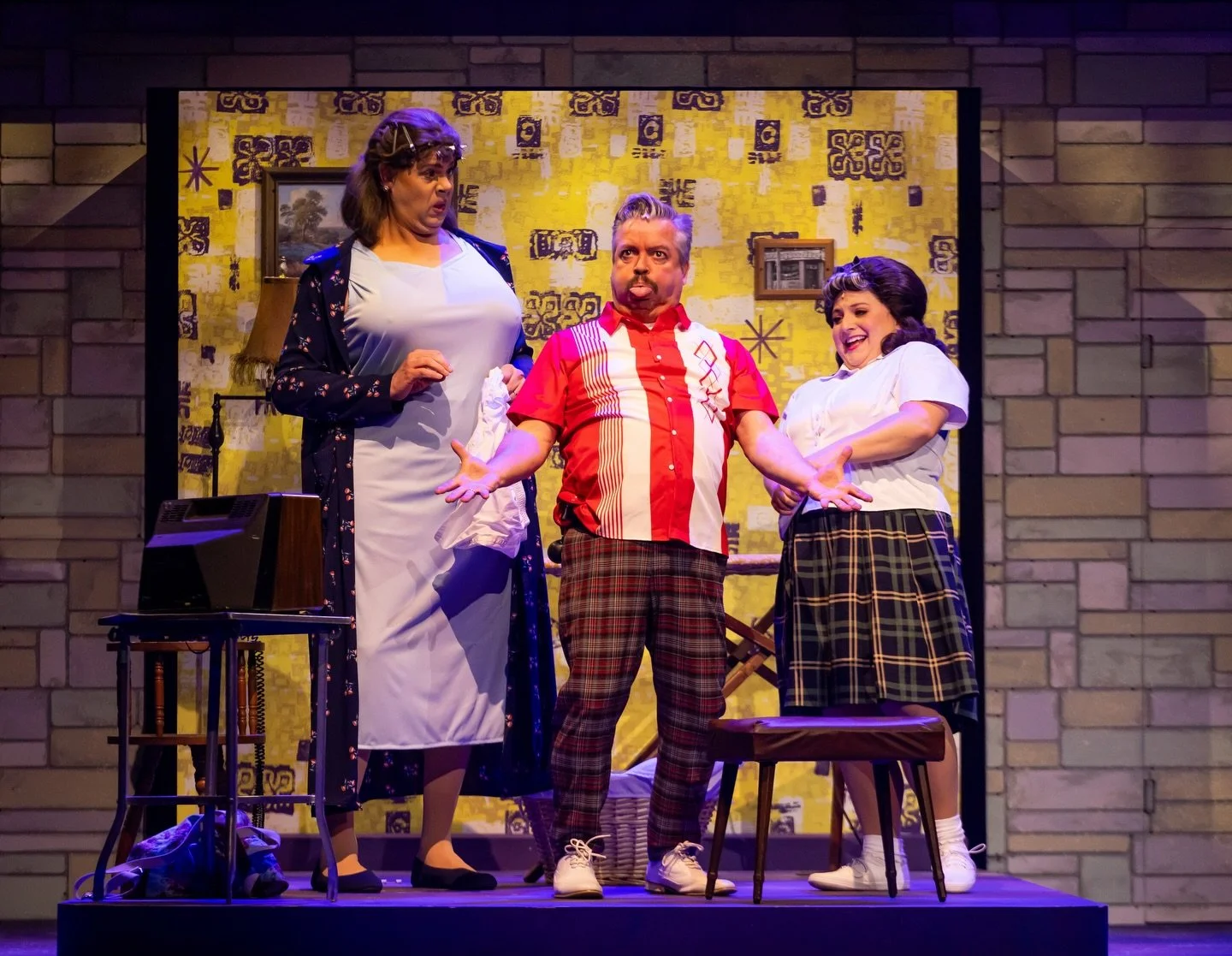
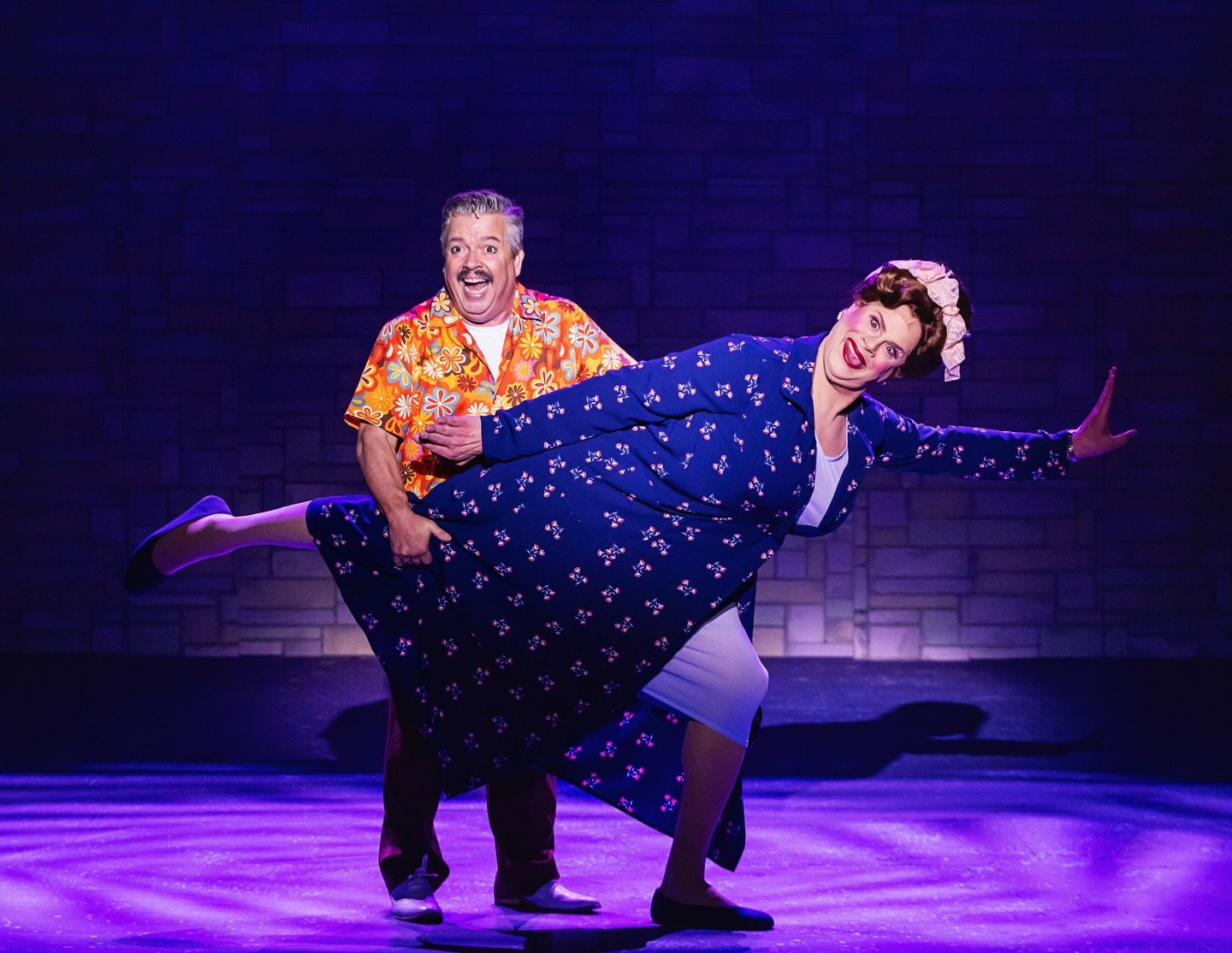
Back at the Turnblad household, Tracy’s parents bring a different kind of humor. BJ Cleveland plays Wilbur Turnblad with a larger-than-life voice and sharp comedic timing. His scenes with wife Edna—played by Andrew Levitt, aka “Nina West” in RuPaul’s Drag Race—add another theatrical layer to the production. Levitt plays Edna with sincerity rather than exaggeration (except when she slips comfortably into that bass-II register), which makes the character’s self-doubt and eventual confidence feel earned.
The choreography reflects familiar dance styles from early-1960s television—the Twist, the Pony, the Madison—all arranged in large ensemble patterns that keep the stage lively. McIntyre balances group energy with moments that allow characters like Tracy and Seaweed to step forward and shine.
The wigs, designed by Catherine Petty-Rogers, deserve their own recognition. Towering bouffants and sculpted curls become visual punchlines throughout the evening. During the number “Hairspray,” the stage looks like a Dr. Seuss illustration come to life, in the best possible way.
After she joins the dancers on the Collins show, Tracy learns more about the underlying discrimination involved in barring Black dancers from everything but a segregated “Negro Day” once a month. She and her friends organize a protest, gathering outside the television station holding signs and demanding integration. Their demonstration quickly leads to arrests, and the act closes with Tracy and several others being taken to jail.
It is a strong stopping point. The stage has been filled with music, movement, and color, but the story has also begun to reveal the deeper conflict underneath the fun.
The second act opens in jail: some are soon released, others not (Velma at work again). Both Tracy and Penny are imprisoned in different ways, and rescued—with everyone coming together in Motormouth Maybelle’s Record Shop. (Maybelle, played by Kennedy Salters, is Seaweed’s mom and the host of the once-a-month Negro Day show.)
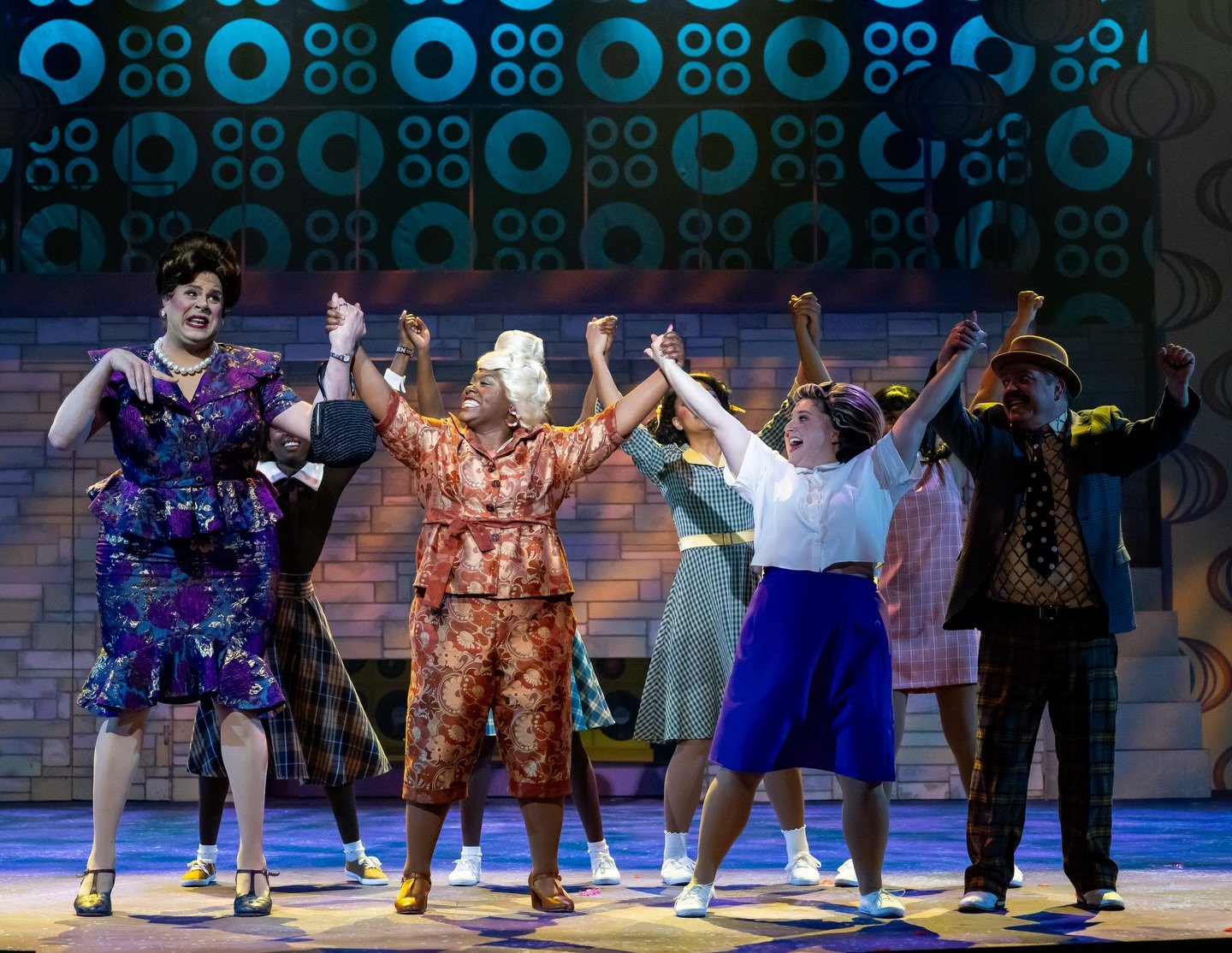
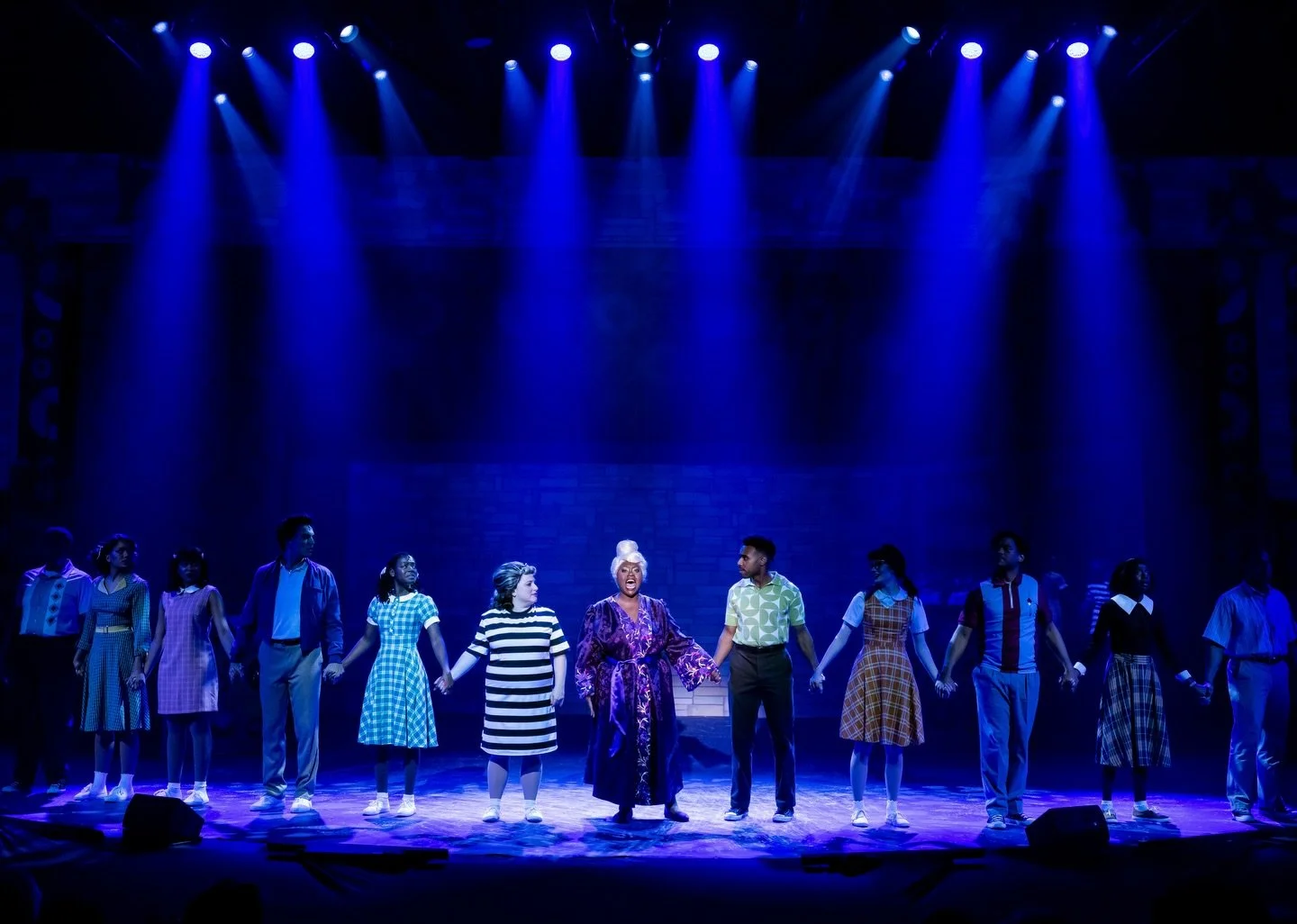
Emotions run high as Mayabelle steps forward to sing “I Know Where I’ve Been.” The number lands with real force and feels as timely as ever. In a show filled with comedy and dancing, the song pauses long enough to remind the audience of the civil-rights struggle running beneath the musical’s bright surface. Salters’ performance drew a standing ovation, and it’s easy to see why.
Beneath the hairspray, the dancing, and the bright costumes (and a string of infectiously happy endings in the show’s final moments) this is a story about young people refusing to accept the limits placed on them. Tracy doesn’t begin as a political figure; she simply believes everyone should have the same chance to dance on television. But that small belief grows into something larger. The musical reminds us that progress often starts with ordinary people deciding things can be better than they are.
As Edna says in the show, “We can’t get lazy when times get crazy.” Ain’t that the truth.
WHEN: February 28-March 8, 2026
WHERE: 3101 W Lancaster Ave, Fort Worth
WEB: casamanana.org