‘Hamilton’ @ Bass Performance Hall
Photos by Joan Marcus
—Rickey Wax
Okay, I’ve finally seen Hamilton, live and onstage—and I can confidently say it deserves every bit of the hype. More than a decade after redefining what American musical theatre could be, Lin-Manuel Miranda’s Pulitzer Prize-winning phenomenon remains as exhilarating as ever. Sitting inside Bass Performance Hall, I found myself thinking one thing repeatedly: I probably would have paid a lot more attention in history class if it had been this entertaining.
Miranda’s decision to cast actors of color as America’s Founding Fathers reframes the nation’s story through the lens of the America that exists today, reminding audiences that the country’s legacy belongs to everyone who continues to shape it. At nearly three hours, Hamilton should feel sprawling. Instead, it feels astonishingly lean, with each number building seamlessly into the next.
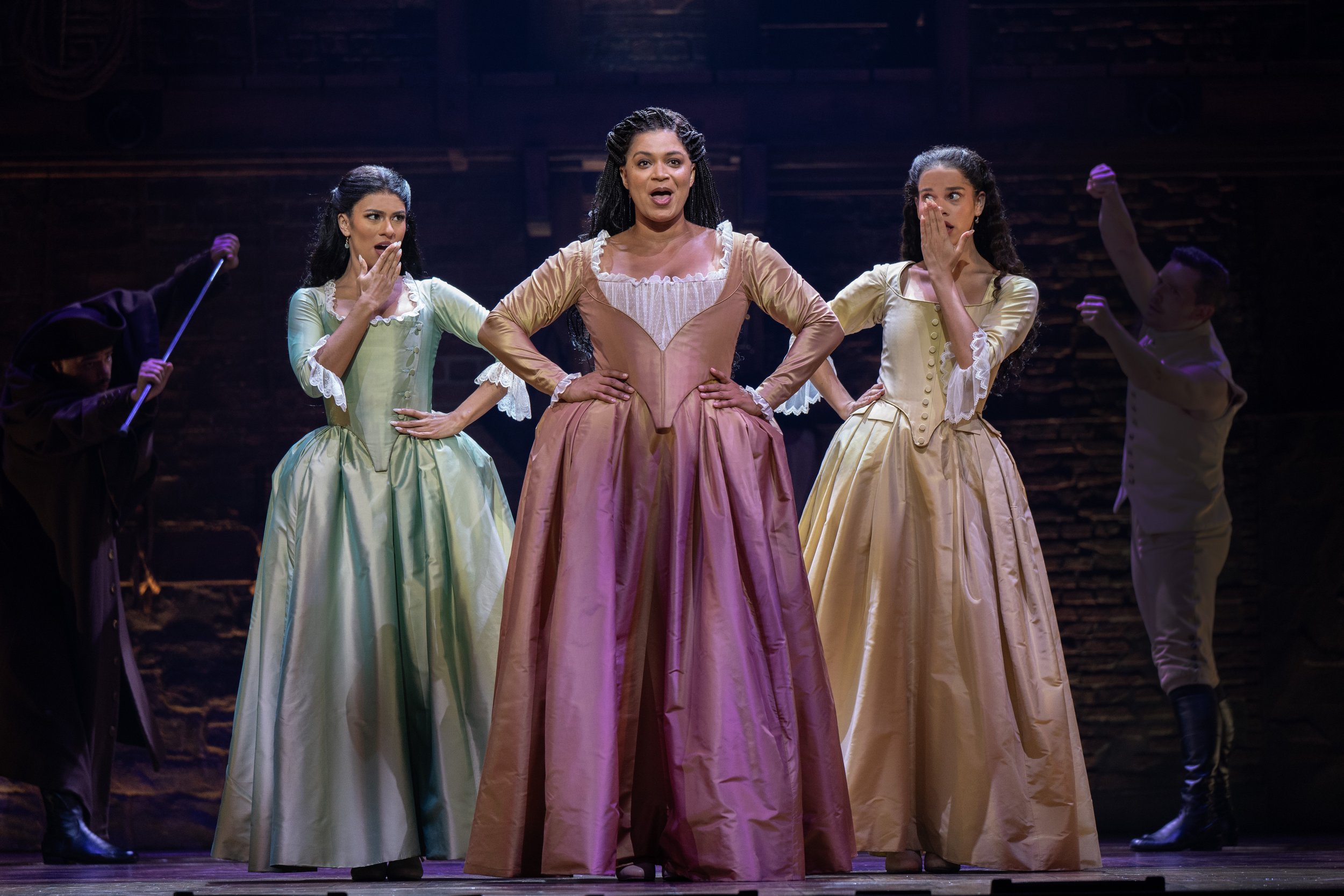
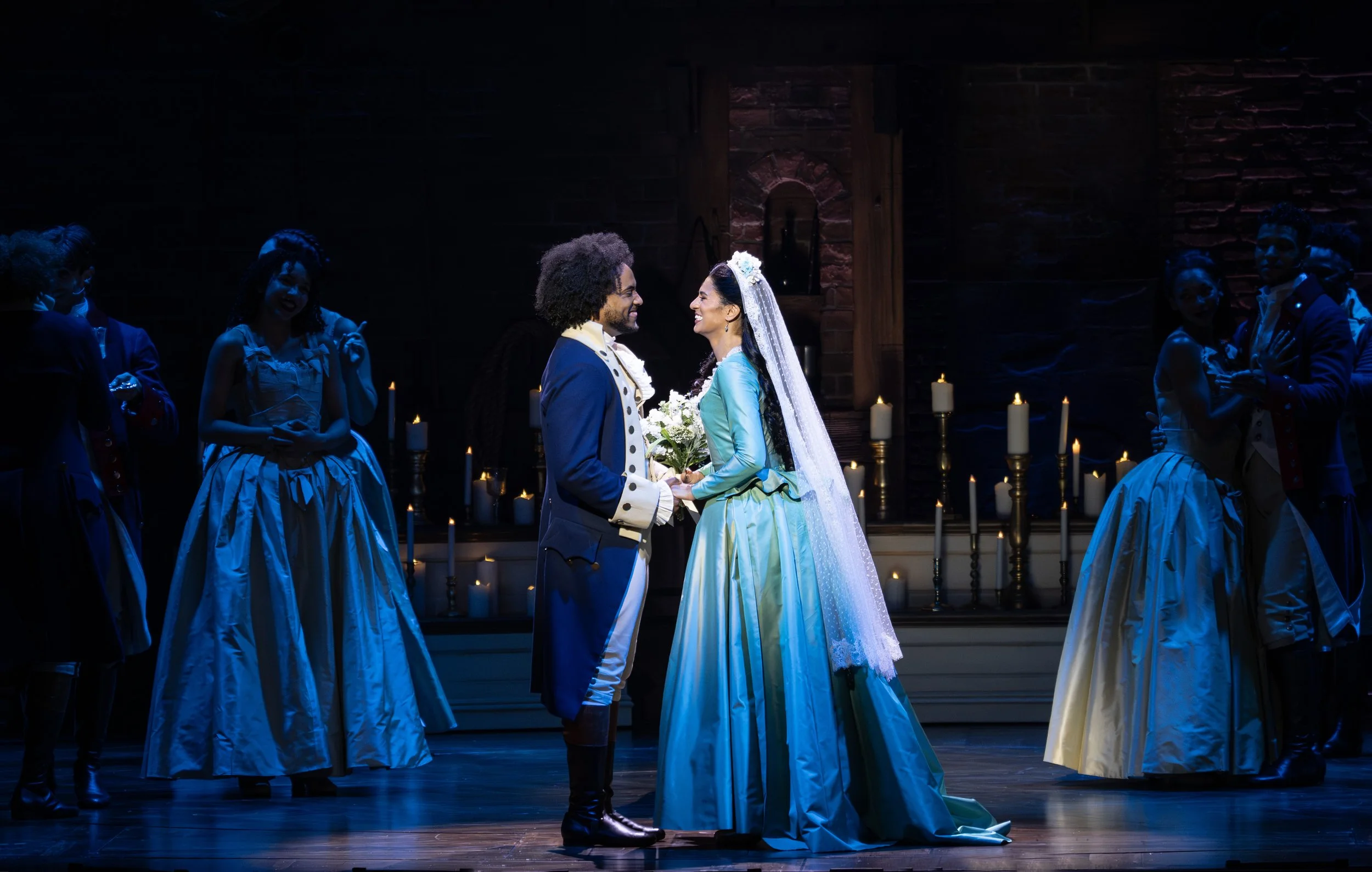
From the opening refrain of the song “Alexander Hamilton” the production wastes no time finding its pulse. David Korins’ minimalist wooden scaffold and iconic revolving turntable transform effortlessly from docks to battlefields, taverns to cabinet chambers, while the ensemble flows effortlessly among narrators, soldiers, politicians, and citizens. Paul Tazewell’s Tony Award-winning costumes complement the storytelling beautifully, dressing the ensemble in cream-colored waistcoats, breeches, and shirts that create a timeless foundation, while richly tailored velvet coats distinguish the principal players. The vivid scarlet uniforms of the British Army sharply contrast with the Continental Army’s dark-blue coats trimmed in red, making the opposing forces immediately recognizable. Together, the constantly rotating stage and fluid costume palette reinforce the production’s central idea that history never stops moving. I would happily raid Paul Tazewell’s costume racks, though I suspect a Texas July would make short work of those velvet coats and breeches.
Act One races through young Hamilton’s arrival in New York, the friendships that define his future, the Revolutionary War, his romance with Eliza Schuyler, and his meteoric rise in politics. Despite its relentless pace, the storytelling never feels rushed. Songs such as “The Schuyler Sisters,” “Satisfied,” and “Wait for It” pause just long enough to deepen character. Miranda’s recurring musical motifs quietly evolve alongside the characters, returning later with entirely different emotional significance, while Alex Lacamoire’s remarkable orchestrations fuse hip-hop, R&B, pop, traditional Broadway, and classical influences into a score that still feels revolutionary.
At the center is Tyler Fauntleroy, whose Hamilton burns with ambition while maintaining his vulnerability. Fauntleroy charts Hamilton’s evolution through subtle changes in posture, a progressively heavier stride, and a voice that gradually acquires the weight of experience. His breath control is particularly astonishing during the rapid-fire demands of “My Shot” and the marathon finale of “Non-Stop,” where every lyric lands with precision despite the score’s blistering pace.
Hamilton’s relationships become the emotional engine of the evening. Jimmie “JJ” Jeter gives Aaron Burr a restraint that serves as the perfect counterweight to Hamilton’s impulsiveness, allowing their rivalry to build naturally. The arrival of the Schuyler sisters softens the production’s energy, with Lily Soto introducing Eliza through delicate physicality and an airy, feather-light soprano that makes “Helpless” radiant with optimism. As the years pass, Soto subtly deepens both her vocal color and physical presence, revealing the emotional weight Eliza quietly carries. Reanne Acasio’s Angelica provides one of the evening’s emotional high points in a beautifully layered “Satisfied,'“ exposing the sacrifice beneath the character’s wit.
As the Revolution gives way to government, A.D. Weaver’s George Washington becomes the production’s moral center. Weaver’s authority relies on stillness, measured phrasing, and a resonant bass-baritone that gives “One Last Time” its quiet strength. Then, just when the emotional weight threatens to overwhelm, Matt Bittner’s King George III arrives to steal the show. Barely moving from his mark, Bittner mines every laugh through an intentionally nasal, petulant vocal delivery, flamboyant confidence, and rigid royal posture. The contrast between his regal composure and childish possessiveness makes “You’ll Be Back”one of the evening’s funniest' moments.
By the explosive conclusion of “Non-Stop,” an immigrant’s dream has become inseparable from the birth of a nation. Act Two wisely changes tempo, exchanging the exhilaration of revolution for the consequences of legacy. Political victories become personal failures as Hamilton’s greatest strength—his relentless drive—slowly becomes the source of his downfall. (Things gets very messy.)
More than a decade after its Broadway debut, Hamilton has lost none of its urgency, finding lasting power in its refusal to separate greatness from human imperfection.
Perhaps that’s why the final question lingers so long after the curtain falls: Can greatness ever exist without flaws and contradiction? I’m still wrestling with that myself. The only way to find your own answer is to experience it. The Hamilton tour is playing through the end of the week at Bass Performance Hall; if you haven’t yet taken your shot, now’s the time to see it.
WHEN: July 15-26, 2026
WHERE: Bass Performance Hall, 525 Commerce St, Fort Worth
WEB: www.basshall.com