‘Some Like It Hot’ @ Bass Performance Hall (PAFW)

Photos by Matthew Murphy
—Rickey Wax
Some Like It Hot sizzles in Fort Worth! The national tour lands in Bass Performance Hall this week as a big, brassy, unapologetically old-school musical comedy, refreshed with a contemporary pulse that keeps it firmly in the present. The choreography charges forward at full speed—often in heels—making a case for joy, reinvention, and chosen family as essential.
Adapted from the 1959 film, the premise remains intact. Two musicians witness a mob hit, scramble for survival, and disguise themselves as women to join an all-female band. What distinguishes this production, directed and choreographed by Casey Nicholaw, is its awareness that nostalgia alone cannot carry the evening. The show leans into loyalty and friendship, but also something more probing: the question of self-definition in a world eager to label and confine.
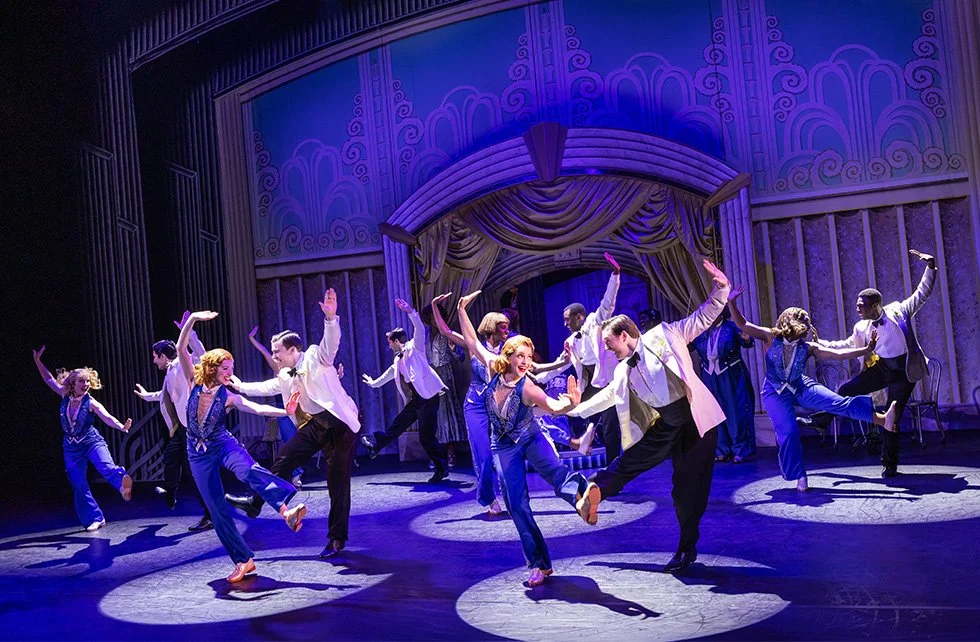
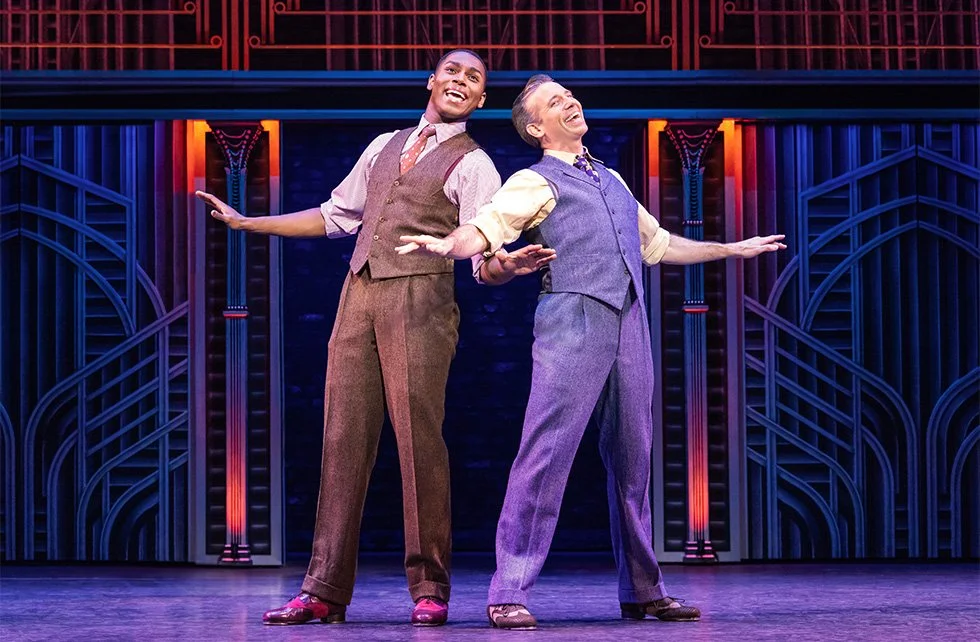
Matt Loehr’s Joe/Josephine drives the farce with a slippery charisma and a bold physicality that fills the stage. His Josephine is heightened but controlled, and with just enough chaotic energy. Tavis Kordell’s Jerry/Daphne offers a compelling counterbalance. Rather than treating Daphne as a gag, Kordell allows the character to emerge gradually, with small shifts in posture and presence that suggest something deeper taking root. Their chemistry clicks, particularly in the tap sequences, where precision meets personality and the storytelling continues through movement.
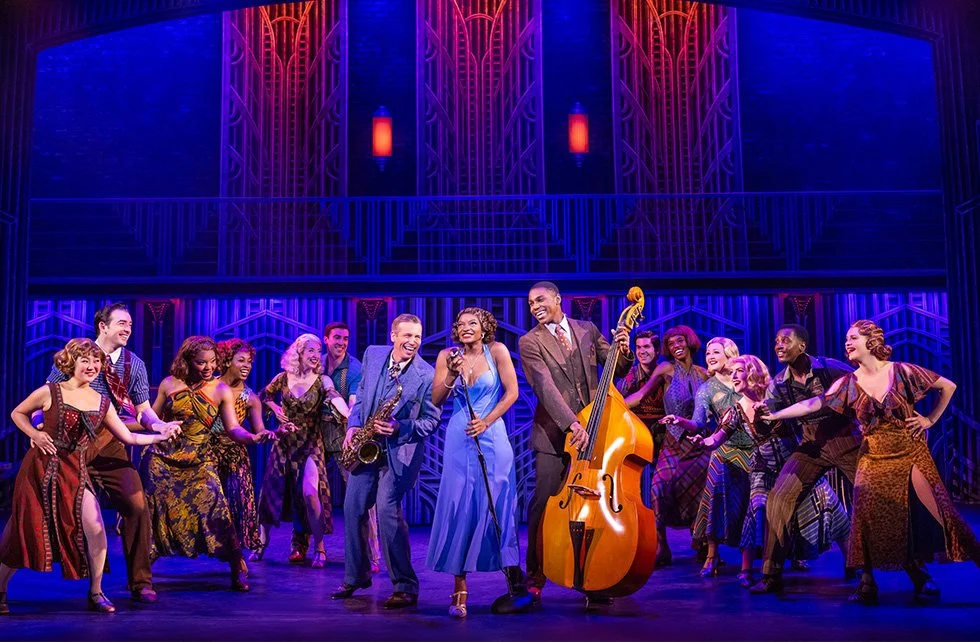
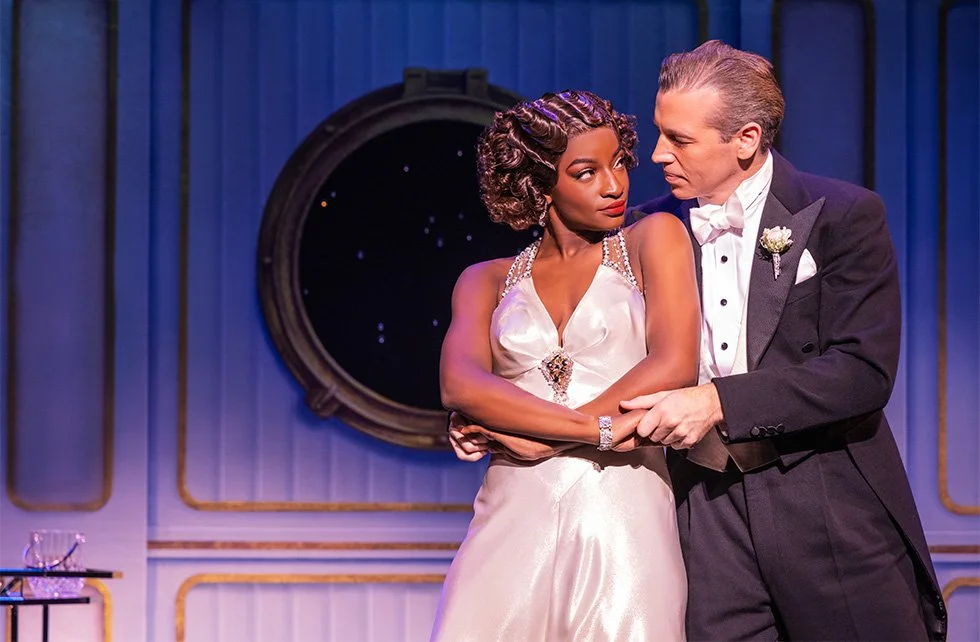
Leandra Ellis-Gaston’s Sugar Kane arrives with a confident saunter and a lightly worn Mid-Atlantic polish. Her performance balances glamour with longing, and her voice moves easily from smoky restraint to full belt. In “A Darker Shade of Blue,” she lands a soaring D♯5 that cuts cleanly through the production’s gloss. Edward Juvier’s rich-guy Osgood is eccentrically charming, his unthreatening posture masking some of the show’s boldest comedic choices. His pursuit of Daphne is sincere enough to make the joke land harder. DeQuina Moore’s Sweet Sue anchors the musical mayhem with sharp authority, and her conductor’s stick becomes a running bit of physical comedy that nearly steals scenes on its own.
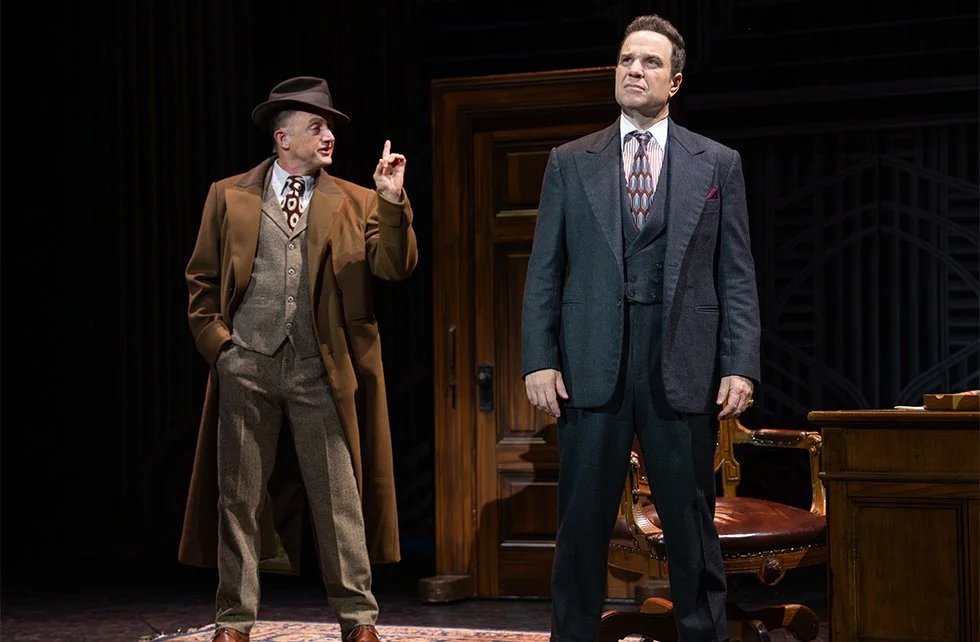
The show opens in Chicago, where Joe and Jerry hustle for work before stumbling into a mob hit. The staging wastes no time. Gunshots crack, bodies scatter, and the tone shifts instantly from scrappy to dangerous. Their solution comes quickly: join Sweet Sue’s all-female band—in disguise. The first transformation sequence sets the pace, a fast-moving blend of costume changes, choreography, and tightly timed humor.
On the train, the production finds its rhythm. The band’s introduction bursts forward in a full ensemble number that showcases Nicholaw’s choreography at its most exuberant. The movement draws heavily from tap, with touches of Lindy Hop and foxtrot that evoke the Jazz Age. This is where Sugar Kane makes her entrance, and the show briefly pauses to let her presence settle in.
Joe’s layered disguises begin to stack, each one more elaborate than the last as he attempts to win Sugar’s attention. Loehr plays these shifts with a knowing confidence that the audience meets eagerly. Jerry’s transition into Daphne starts broadly, with exaggerated walks and uneasy balance, but evolves as Kordell introduces more grounded choices. The humor remains, but it is no longer the only point.
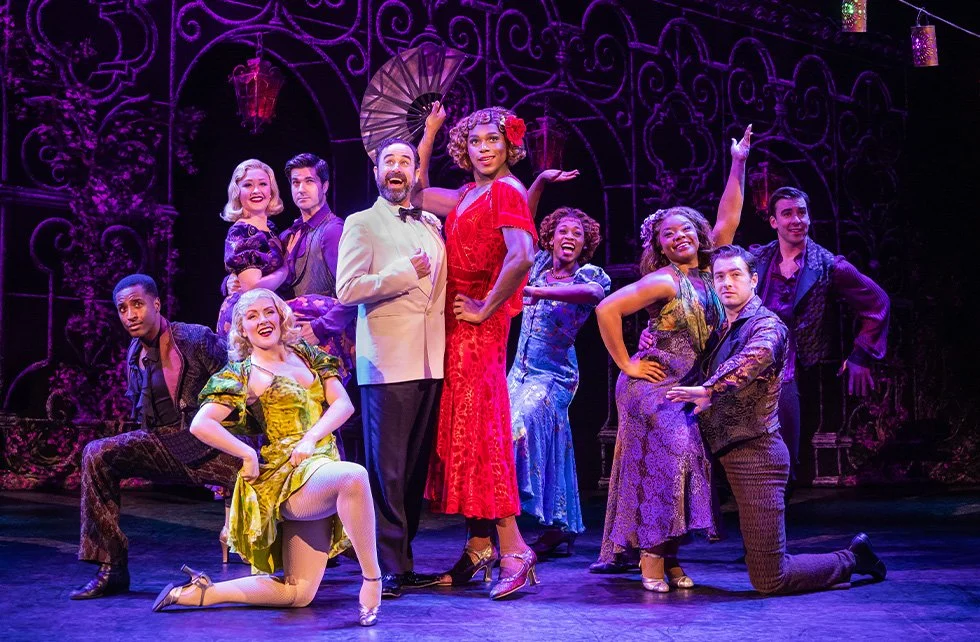
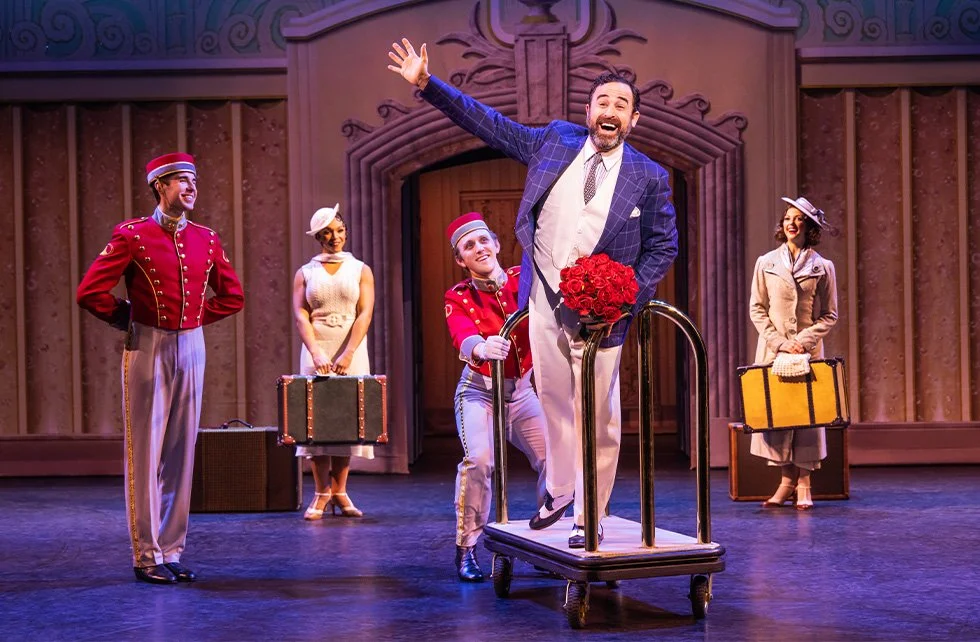
The move to California expands both the setting and the stakes. Osgood enters the picture, and with him, a new level of comedic escalation. His scenes with Daphne build steadily from flirtation to full pursuit, played with a sincerity that keeps the dynamic buoyant. At the same time, Daphne’s internal shift becomes clearer. This is no longer just about hiding.
A mid-act number centered on the band highlights one of the production’s strongest ideas. Under Sweet Sue’s leadership, the ensemble feels cohesive and protective, a chosen family navigating a precarious world together. Their unity stands in contrast to the instability Joe and Jerry carry with them.
As the mob closes in, the plot tightens into a series of near-misses and intersecting identities. Doors slam, disguises begin to crack, and the choreography sharpens into controlled chaos. By intermission, there’s a thematic question hanging in the air. How long can anyone sustain a version of themselves built purely for survival?
For all its spectacle, the production works because of what sits beneath it. Transformation here is existential. Beneath the jokes and the tap breaks is a quieter inquiry about identity, perception, and the cost of performance.
Osgood delivers one of the evening’s most telling lines: “The world reacts to what it sees, and in my experience, the world doesn’t have very good eyesight.”
WHEN: April 14-19, 2026
WHERE: Bass Hall/Performing Arts Fort Worth, 525 Commerce St, Fort Worth
WEB: www.basshall.com