‘The Murder of Roger Ackroyd’ @ Theatre Three
Photos by Jeffrey Schmidt
—Ryan Maffei
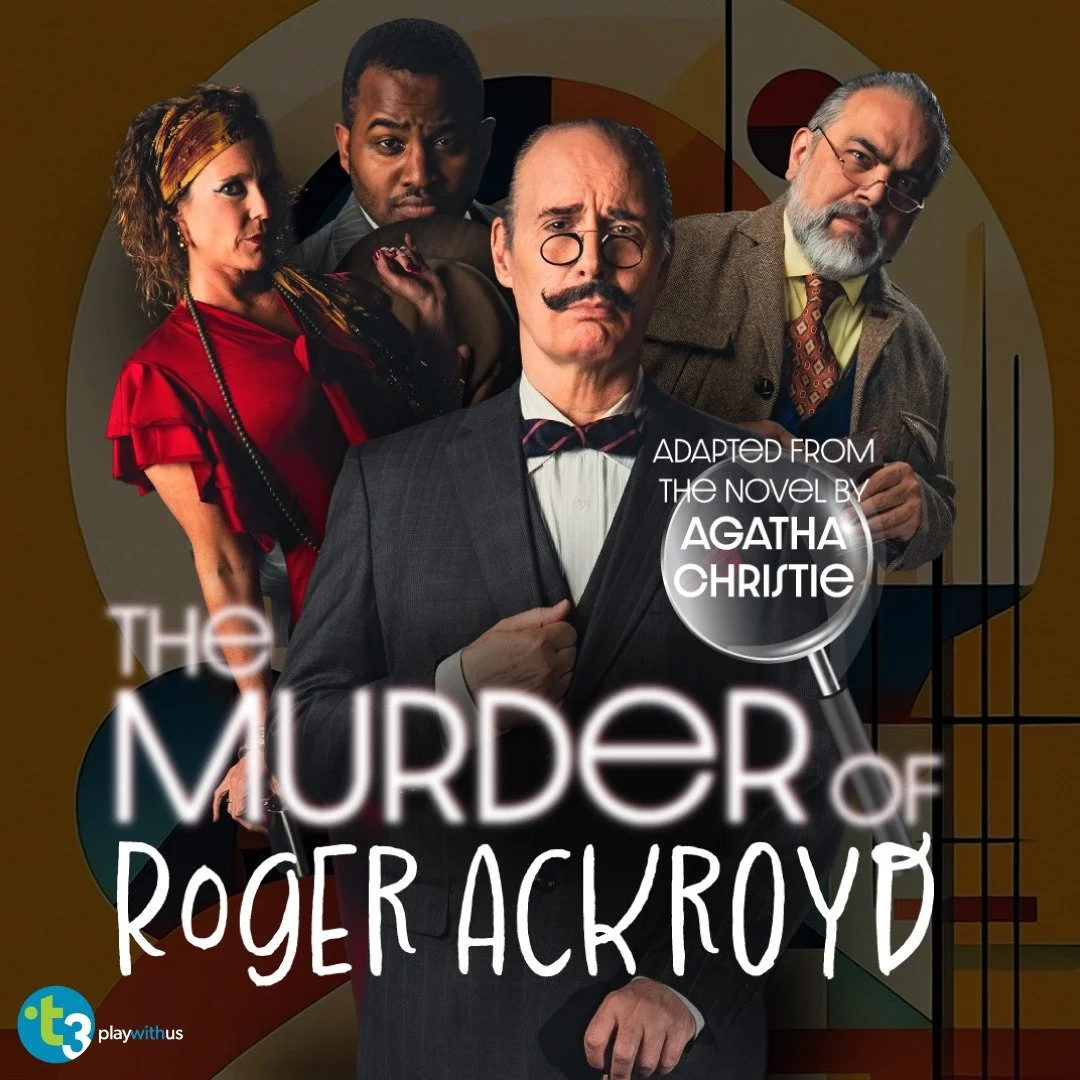
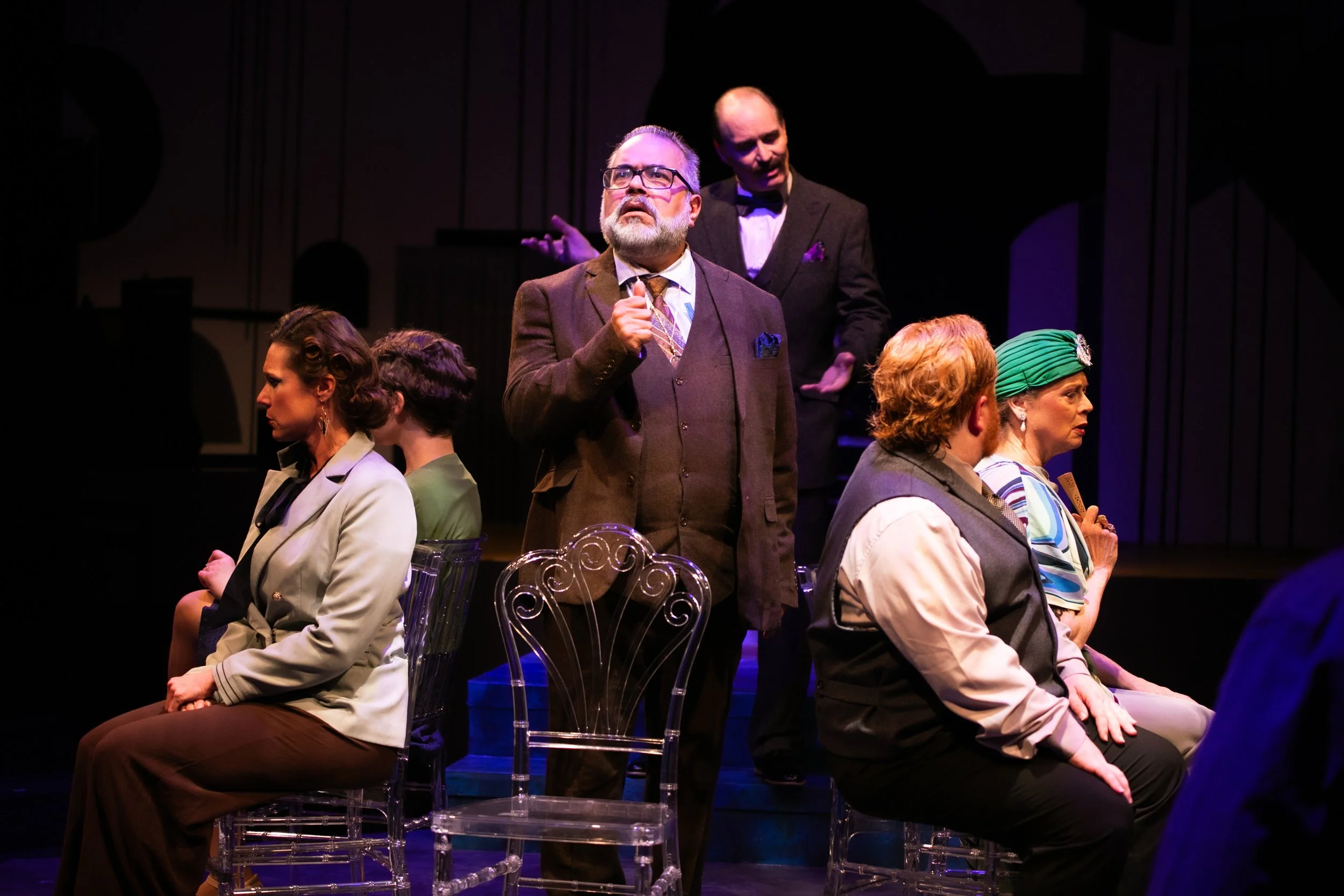
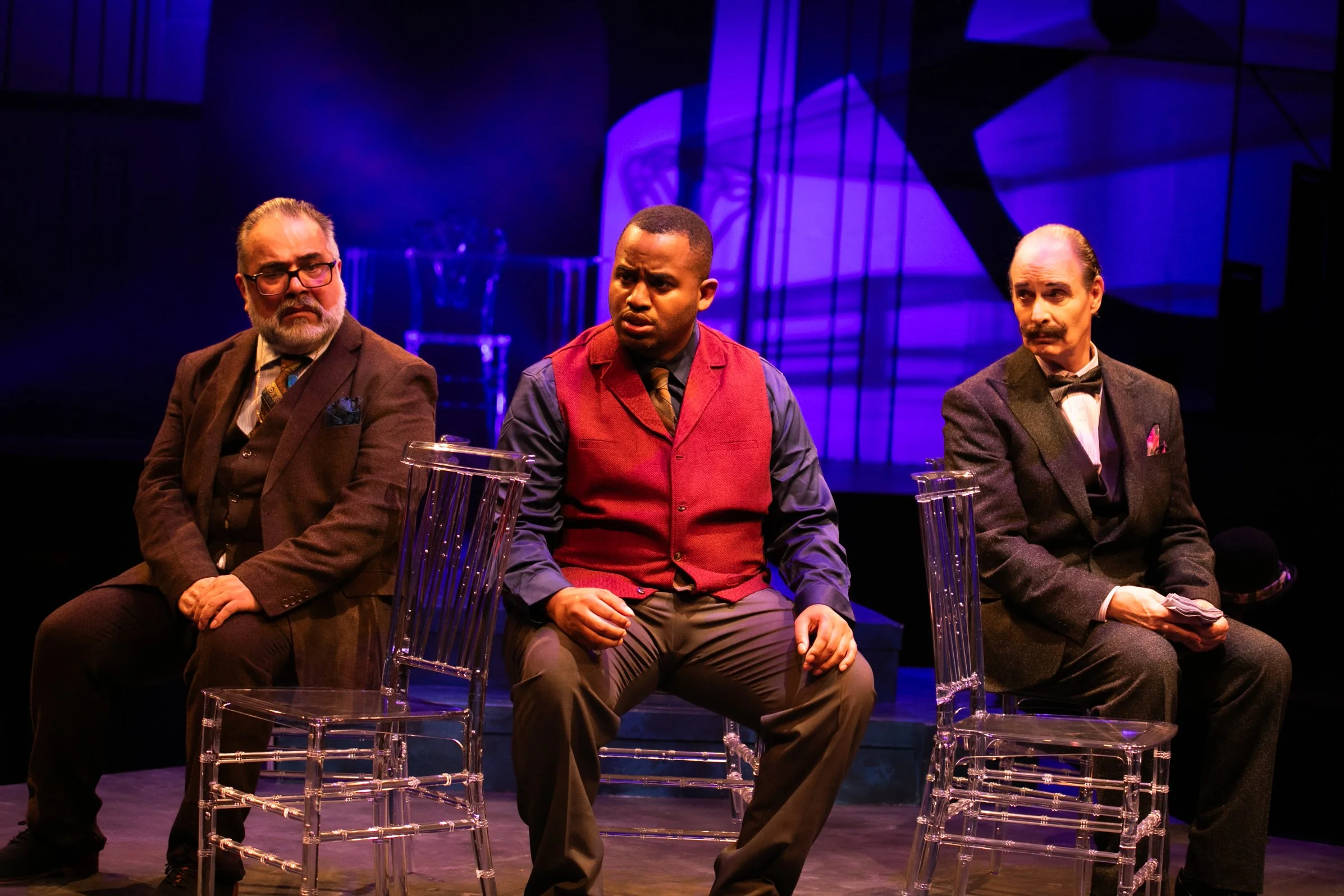
The striking set of Theatre Three’s production of Blake Hackler’s adaptation of Agatha Christie’s The Murder of Roger Ackroyd – sorry, I forgot to tell you to drink every time I say “of” – is nearly worth the price of entry. Keyed to a ravishing, Deco-inflected painted backdrop, clear furniture tastefully dots the multilevel stage, and further unforgettable touches appear and disappear: a giant, proudly symbolic pendulum in the archway, or a pseudo-surrealist found-object exhibit in a glass case. Jeffrey Schmidt has outdone himself here. That visual vibe extends to a piece that springs into life and plays inside the space with canny controlled chaos and clockwork intricacy.
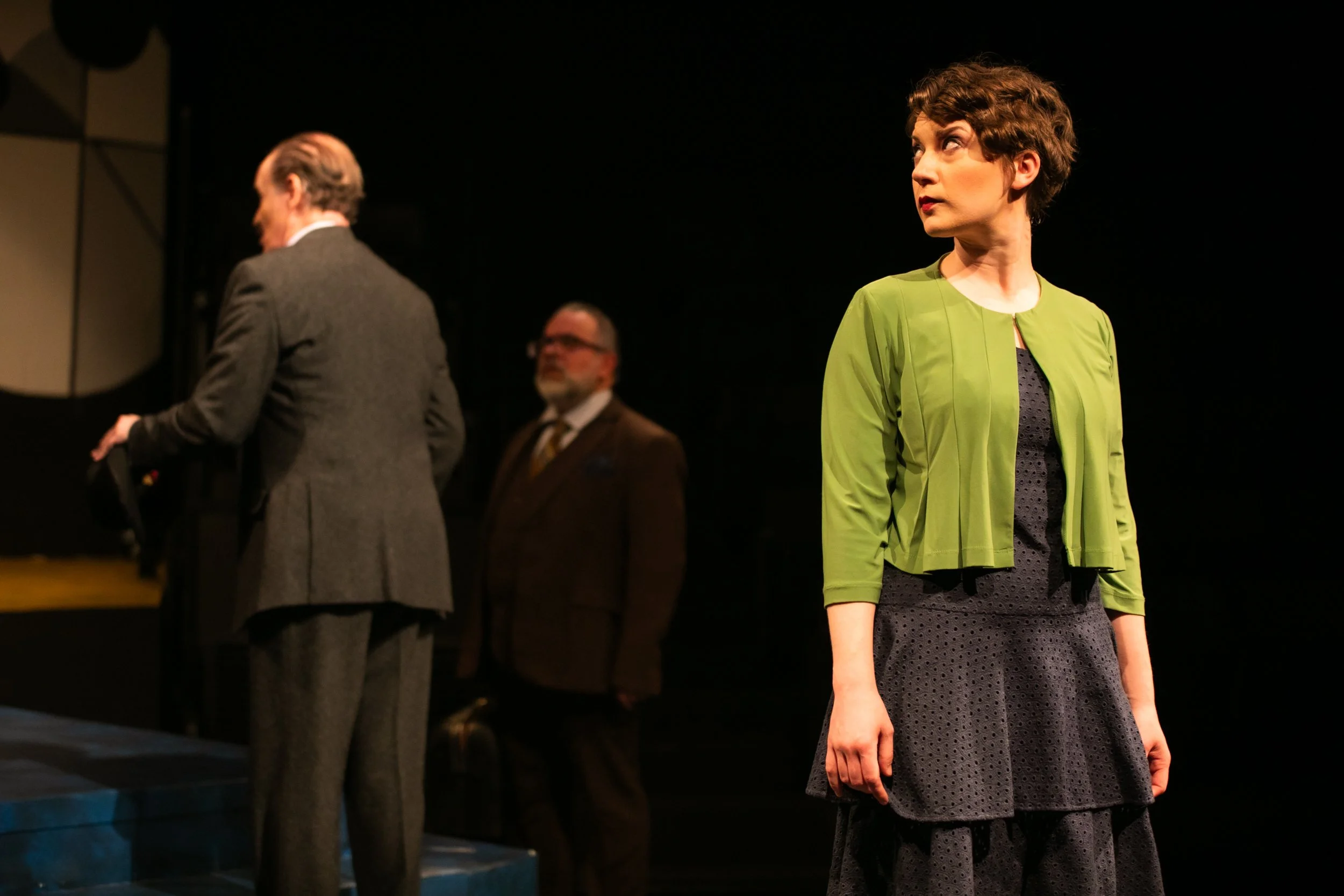
Crucially enhanced by Nicole Iannaccone’s fabulous lighting and Noah Heller’s judicious sound design, and aided immeasurably by Dr. Danielle Georgiou’s choreography, Schmidt pushes his pawns around in Hitchcockian fashion – the actors are a part of his machinery. It’s an inventive way to stage a mystery, and Schmidt has ensured you never get tired of just watching this show. Hackler’s rendition of the Christie landmark (avoid spoilers at all costs going in), commissioned by T3, fuels this approach. Expressly theatrical, it breaks up Christie’s carefully plotted potboiler with Brechtian interludes, new pathos, and triple the “meta” content Christie already favored.
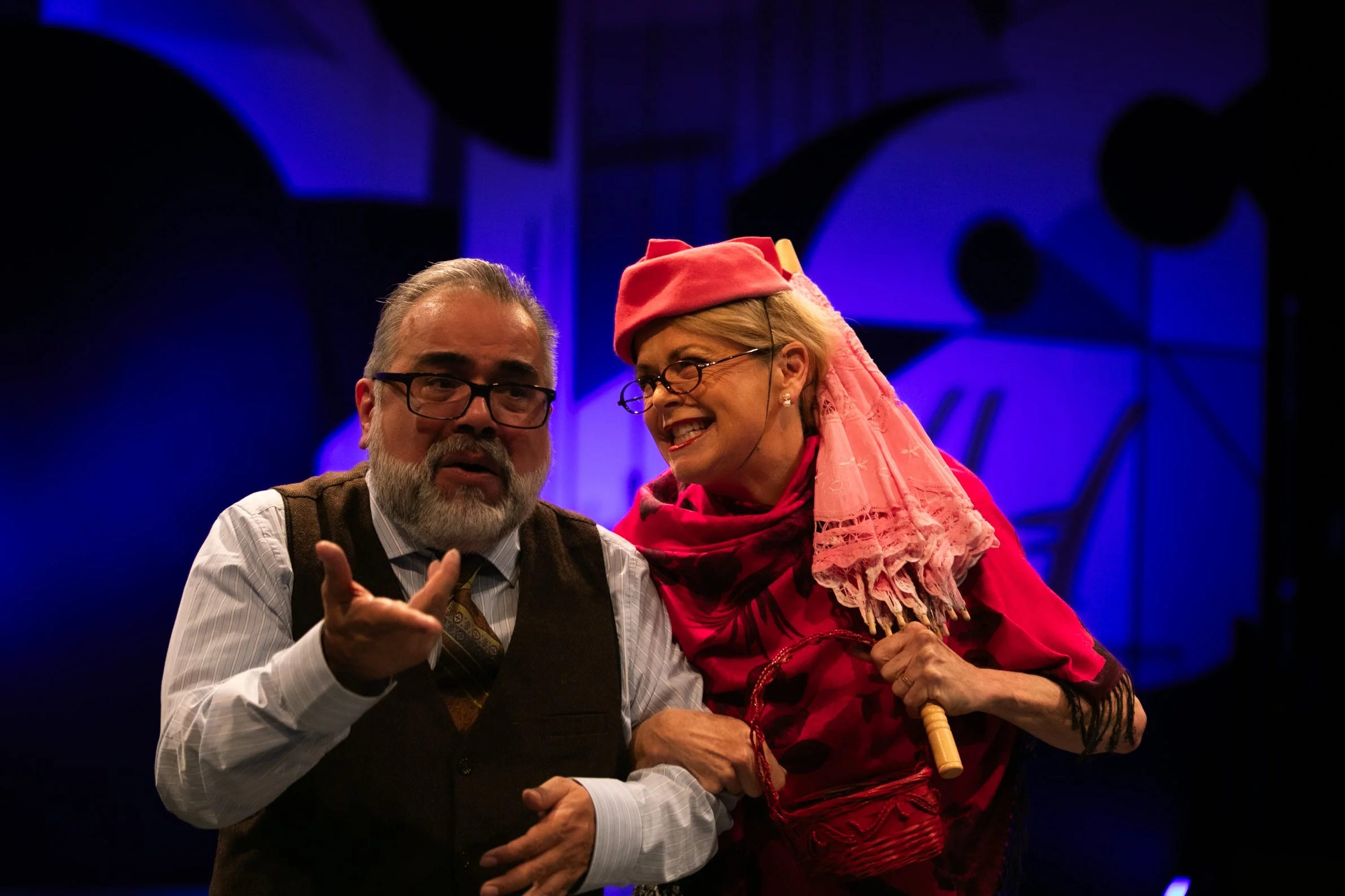
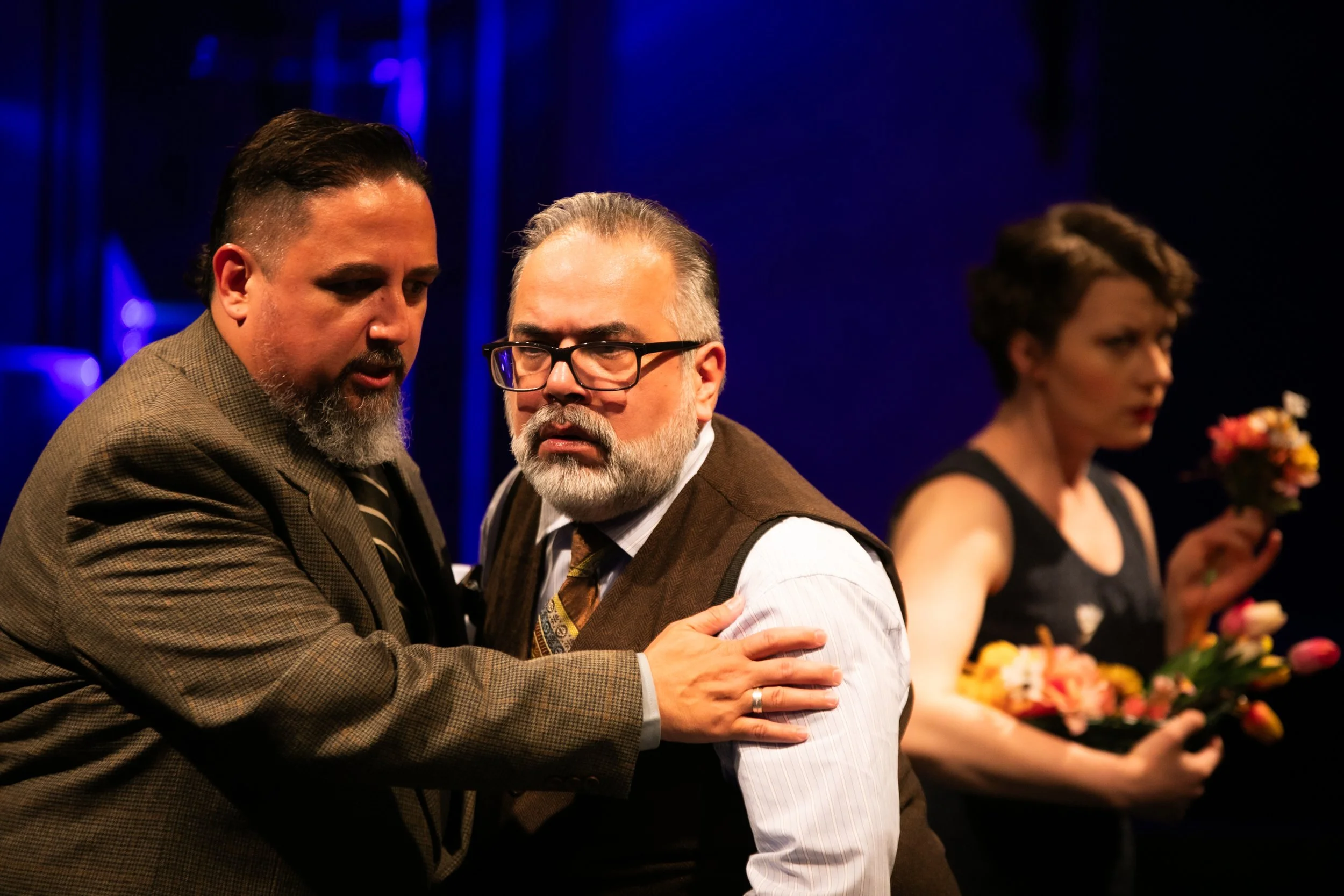
Schmidt told me at intermission that this proud theatricality is what he admires most; it’s clear from his direction as well. The actors, clad in ace Jessie Wallace outfits, have been encouraged into a chronic exaggeration that broadens and emboldens the play’s otherworldly whimsicality. It’s centered around a dream Poirot for any context – Paul T. Taylor, one of our finest actors at marrying nonstop wit and convincing emotional texture. But most of the performances follow John Flores’ suit. As the show’s narrator and functional Watson, Dr. Sheppard, Flores is affable and overstated, his deadpan a wallop, delightful and captivating without resorting to subtlety.
Schmidt shared that the tone and method are, as he views it, a relief from the source’s “stuffy” quality. But having shot-gunned the book in the days before to ensure I knew what the hell I was talking about (and the better to appreciate Hackler’s work), I have to wonder how long it’s been since the director picked up a Christie paperback. Christie had limits, and was a notorious bigot. But one thing she was absolutely not was lofty. Brisk, economical and user-friendly, she loved to undermine the haughty British through the lens of her deceptively clownish Belgian detective, and her great gift is her dry wit – there’s a laugh on every page, however far you see it coming.
Between her flaws as a writer and her flaws as a person, there was plenty for Hackler to do with this material. Nodding to the current age and outside world was not on his menu. Alongside the great lines lifted verbatim from the source, several sexist “women can’t x, women don’t y” lines not only survive but are weirdly foregrounded, and in the show’s tornado of detail you only hold onto so much language. His major innovations include some direct addresses from Poirot which, as they’re staggered, feel uncharacteristic – he’s a buffoonish eccentric first, then the humanity bubbles up through the cracks – and two self-reflexive gags that hit but don’t incite epiphanies.
OK, you ask, what if I didn’t read the novel? Sure: you don’t need, say, Poirot’s emphasis on the lost friend Dr. Sheppard reminds him of, for Taylor and Flores to uncover a bittersweet chemistry. But the misstep of Hackler’s adaptation is not a matter of taste. The novel’s chapters each correspond with a vignette about a different character; Christie ensures you don’t miss a thing. Having consulted my wildly intelligent companion, overheard chatter in the lobby, and reflected myself, I must sadly confirm: this Roger Ackroyd is not easy to follow. Plot details are swept up in the torrent of arresting spectacle, and no actor manages to strongly differentiate multiple roles. [And I should add that I saw a preview performance on April 18, very early on in the run.]
Now, to be fair, all of them do excellent stuff, almost to the point where you don’t care that you don’t care about the story. Apart from the best-in-show leads, Christian R. Black does the most effectively earnest and emotionally resonant work, while Rowan Gilvie adds ripples of laudable nuance to the sturdiest dialects in the entire show. (I’m sure Jessica Turner, the credited coach, did everything she could.) Shawn Gann cares not for finesse, but when he’s on, he’s very, very funny. A gonzo Laurie Carter Rose channels Gilda Radner, Dylan Todd is a riot as the hapless inspector, and you will laugh at every single word Catherine D. Dubord intones in her sort-of-Slavic accent.
Does storytelling matter, for the detective story many consider the greatest of all time, one that hinges on a famously ingenious twist? I mean, yeah. There was a zippy, savvily carpentered way to carry the viewer through Christie’s beats, and at his best, Hackler is easily a better writer than she was. But while theatergoers are in for a dynamic and momentous presentation, and a stage full of amazing performers you never stop rooting for, this production never quite forces you to care about the reason we’re here – the murder of Roger Ackroyd (or perhaps the fate of sweet, unlucky Ralph Paton, who probably didn’t do it but I’m not going to tell you either way, am I?).
And there is one other way this show does not seem to entirely succeed, one that might in fact be on Schmidt. It is not, unlike the source material, particularly funny. Granted, I guffawed at a number of choice moments, and the cast is an inspired group. But the three-quarters-full house was often deathly quiet, as reactions were being insisted on before them. The pace and energy level are built to accommodate wit, or just insanity, so outsized that your sides hurt (think of Circle’s sensory-assault Tartuffe two years ago), and everyone onstage seemed game to work it up. All the elements were there, yet sparks were strangely sparse. That mystery may remain unsolved.
WHEN: April 20–May 10, 2026
WHERE: Theatre Three, 2688 Laclede St, Dallas
WEB: theatre3dallas.com