‘Where We Stand’ @ Stage West Theatre
Photos by Evan Michael Woods; graphics by Jen Schultes
—Jan Farrington
Where We Stand at Stage West has the aura of a Biblical parable, the rhythms of a poetry slam, the tones of songs sung low around a campfire….and a story that asks us to stop waffling and choose how we might, in a divided time, handle the hard subject of who we hold accountable for the troubles that come our way—personal, communal, political. How quickly do we decide that something “gone wrong” is the fault of one human being Who Must Be Punished…and when is there a case to make that we’re all in this together, tangled up in both the problems and the solutions?
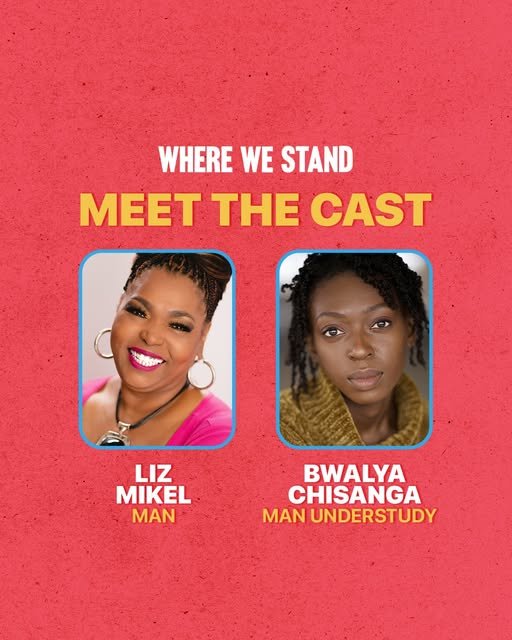
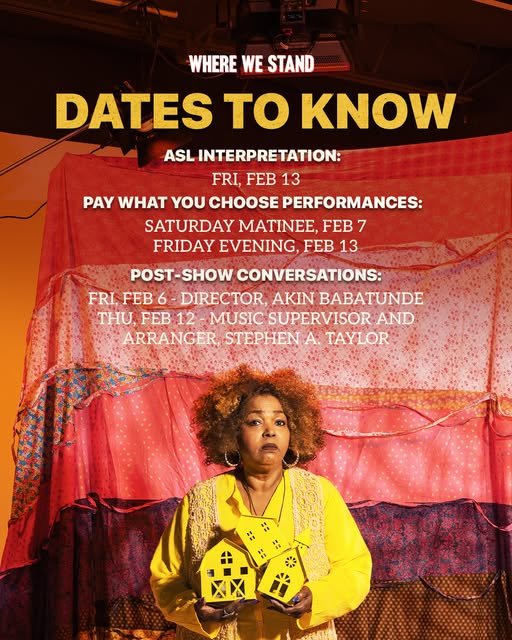
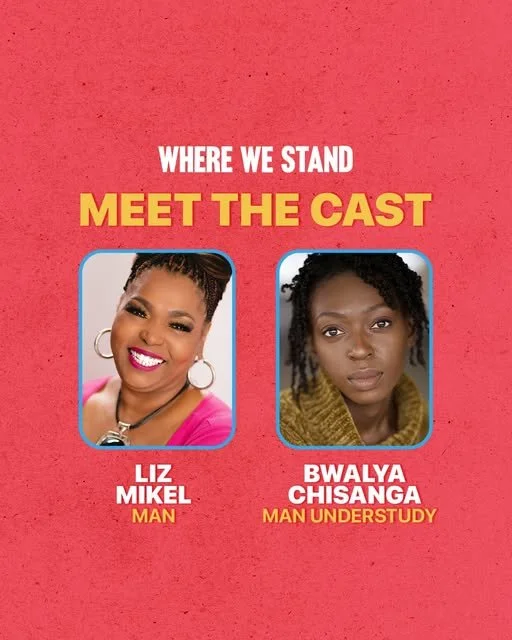
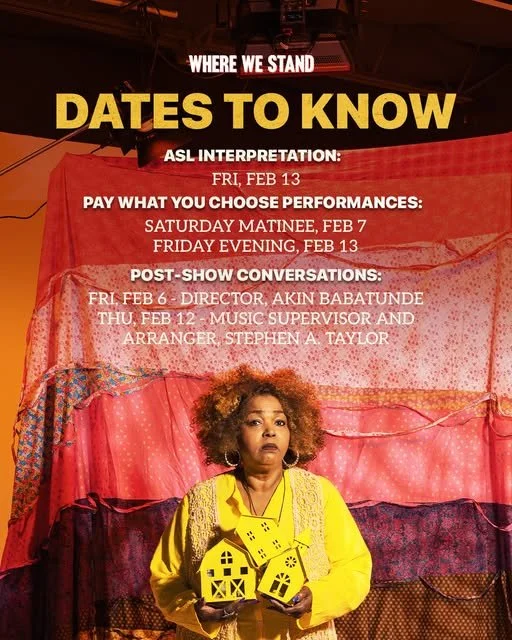
If you wonder how one actor on a stage can carry this weight and hold our attention…well, it’s Liz Mikel up there.
To continue the similes, there’s a whiff of Faust in Donnetta Lavinia Grays’ play about a poor, lonely Man who meets a shiny stranger with a life-changing offer. [The playwright has said that “Man” is akin to the medieval theatre’s “Everyman”—any human, no gender specified.] There’s the empty terrain of Robert Johnson’s meeting at the crossroads, and a bit of the dark underbelly of Damn Yankees too—all those stories of temptation, devilish offers of wealth and respect and power, at a high price.
And in this curious and compelling solo show, we’re asked to make a mental and emotional shift from being an audience to becoming a community—to hear Man’s story and decide Man’s fate—delivered with either justice or mercy. (The Man’s refrain is: “Yeahs and nays, and no halfways!”)
It’s up to us.
Where We Stand begins almost quietly as Man walks among us (it’s easy to warm up to Mikel’s expressive face, rich voice, weary posture), holding our hands, singing, clapping, waving arms to draw us into the songs. Man stands still to tell us of the loneliness—of working a patch of dry earth at the edge of town. Nobody notices: Man is “a highway marker” passed over by townspeople on their way to more important people and places.
But when Man meets a golden stranger who offers change from days that only “break you down,” new hopes rise up. Man dreams of moving up, and taking the town along, making a “used to be, once was” place thrive again. “Go spread that joy,” Man is told—and armed with the stranger’s gifts of a golden spade, seeds, and scythe, great things start to happen.
What’s the catch? The stranger’s pact says everything good that happens for the town is “in my name.” His image is everywhere: the town fills with golden statues and tributes—though all of it could be taken back if the “pact” is broken. Wealth and excess are everywhere, but it doesn’t feel like freedom. “Am I a king?” Man wonders, having a hard time remembering how this all began.
Director Akin Babatunde lets motion and rhythm set the pace and keep energy flowing, but at times the rush of Grays’ rhyming language (though beautiful) is a challenge to absorb. Where We Stand is a rather open-ended parable, ready for interpretation by anyone who experiences it.
For me, What stuck in my mind was the thought (not in the play, but drawn out by it) that troubled people come from troubled societies—and to change things, it takes a village. Did Man singlehandedly create the loneliness that led to accepting the stranger’s dangerous offer—or was it ? Might justice be found and nurtured in more places than courtrooms and jails? And are justice and mercy a binary choice—or could they be stirred together for a better world, each growing stronger as they blend?
No telling where your thoughts might roam in Where Do We Stand—but for sure, there’s a lot of room to grow that better world, in the space between Man’s dry patch of ground, and the town’s Golden Statues.
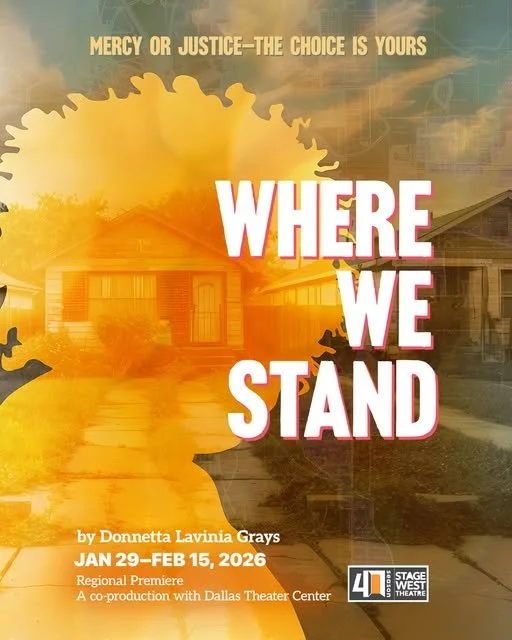
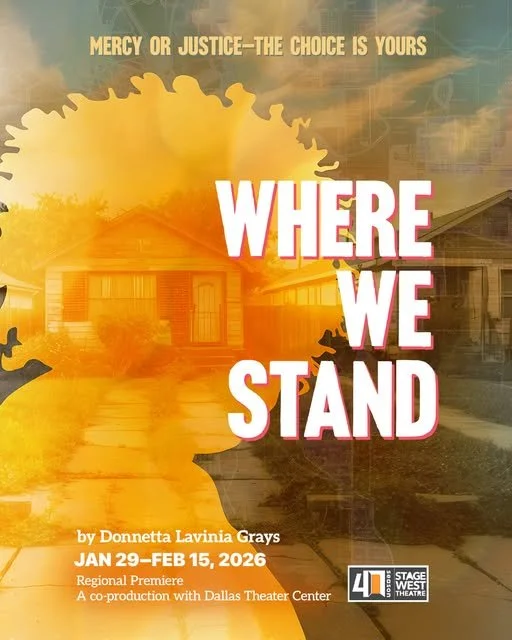
WHEN: January 29-February 15, 2026
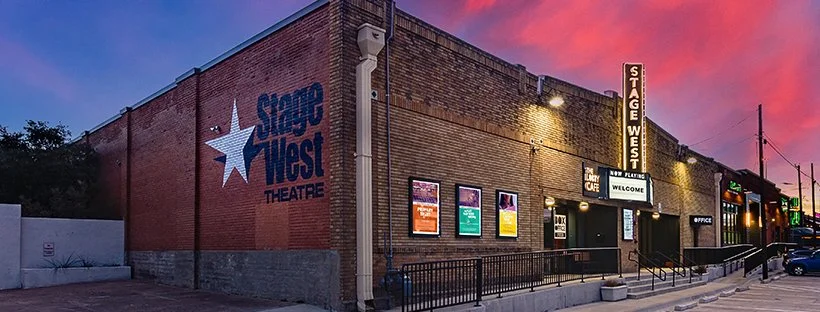
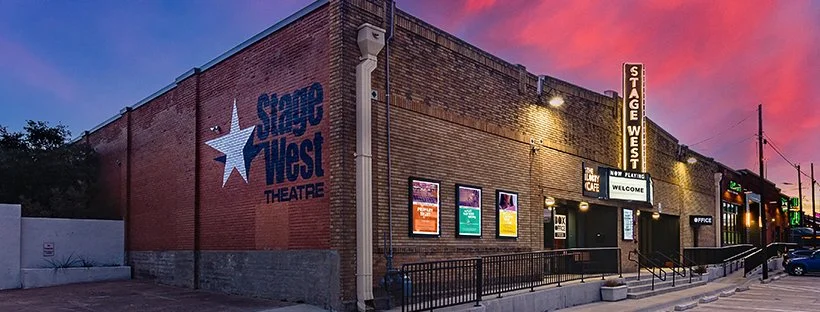
WHERE: Stage West, 821 West Vickery, Fort Worth
WEB: stagewest.org
Man Understudy: Bwalya Chisanga
Produced in association with the Dallas Theater Center
Set, Bob Lavallee; Lights, Bryan Stevenson, Costumes, Hope Cox; Sound, Claudia Jenkins Martinez; Music supervision/arrangement, Steven A. Taylor….