‘Spring Awakening’ @ Theatre Three
Photos by Jeffrey Schmidt
—Rickey Wax
If ignorance is bliss, the children of Spring Awakening are about to have one hell of an education.
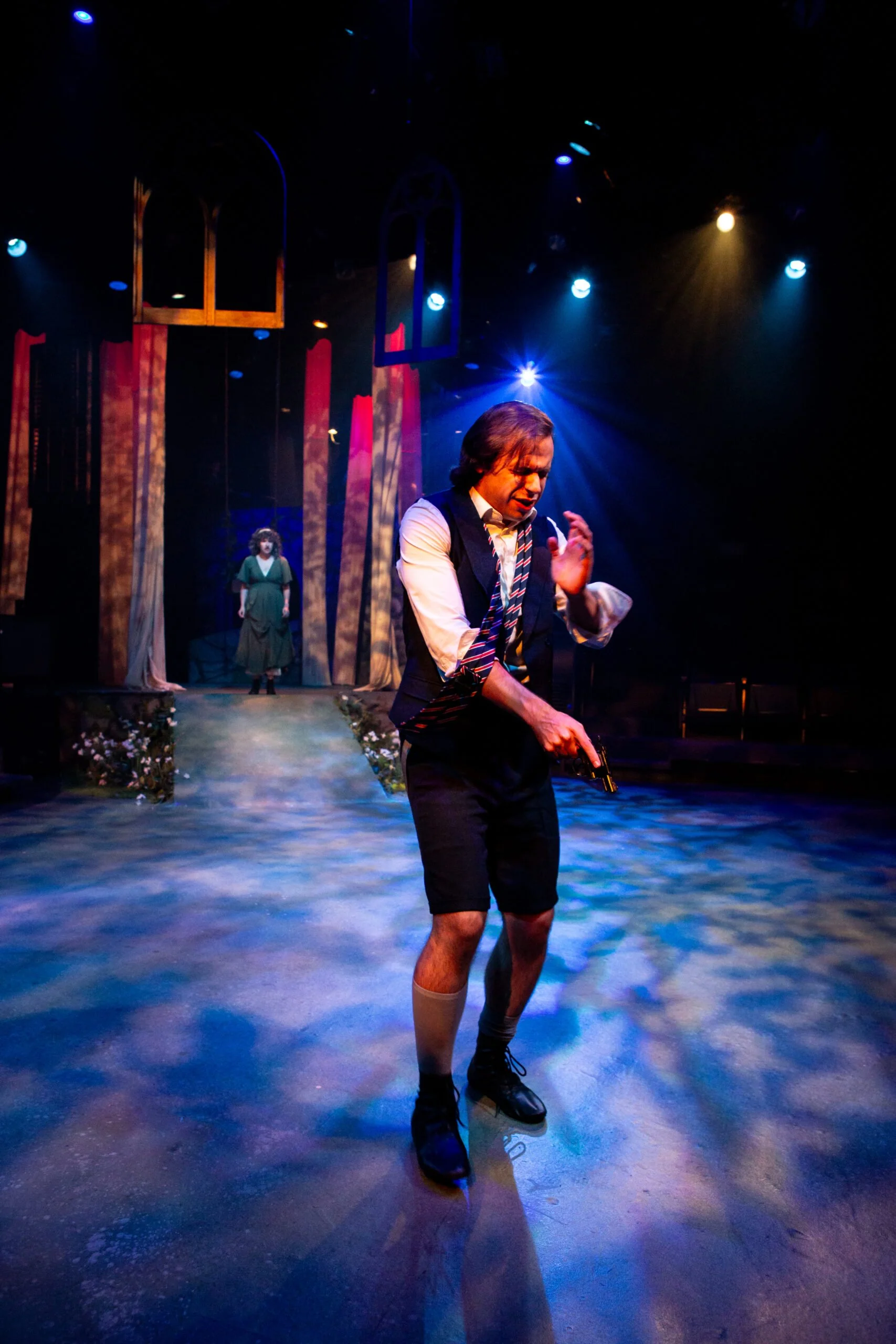
Theatre Three delivers it with intimacy, imagination and a restless youthful pulse. The company’s production of Steven Sater and Duncan Sheik’s Tony-winning musical begins almost like a fever dream. Figures emerge through smoky light carrying scarves that trail behind them like ribbons caught in the wind. They sweep across the stage until violinist Bethany Hardwick enters, instrument in hand, and the world begins to take shape. A swing hangs in a meadow beneath long pieces of draped fabric. It looks peaceful enough.
Don’t trust it.
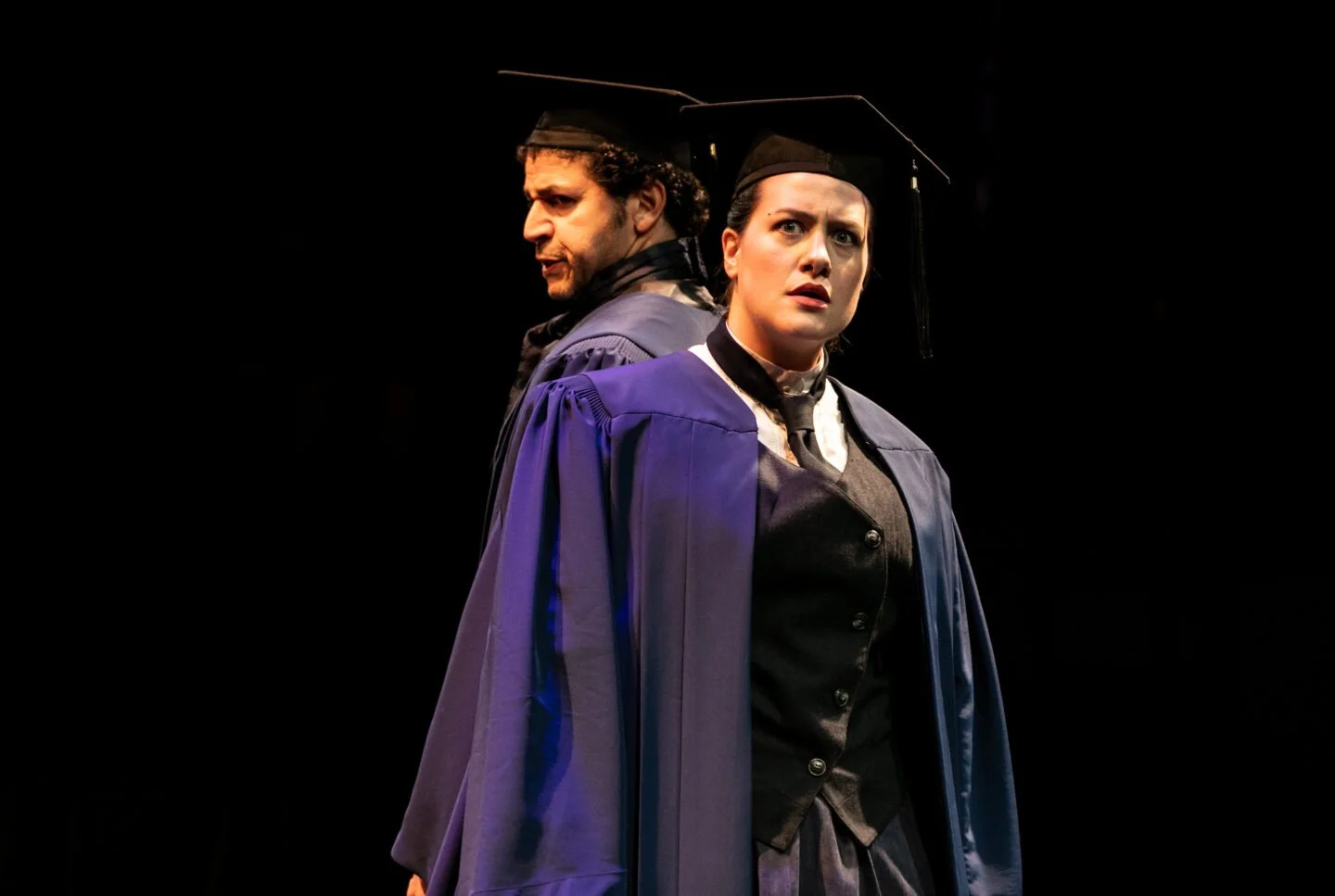
Adapted from Frank Wedekind’s controversial 1891 play, Spring Awakening follows teenagers in provincial Germany stumbling toward adulthood while the adults around them keep the facts of life conveniently out of reach. Wendla wants to understand where babies come from. Melchior knows more than his classmates and becomes their unofficial source of forbidden information. Moritz is buckling beneath academic expectations. Around them, other teenagers encounter abuse, desire and their emerging sexuality with very little guidance. What begins with curiosity gradually becomes something far more devastating.
Director Emily Gray understands that these children have been sent into adulthood without a map. The kids are not alright.
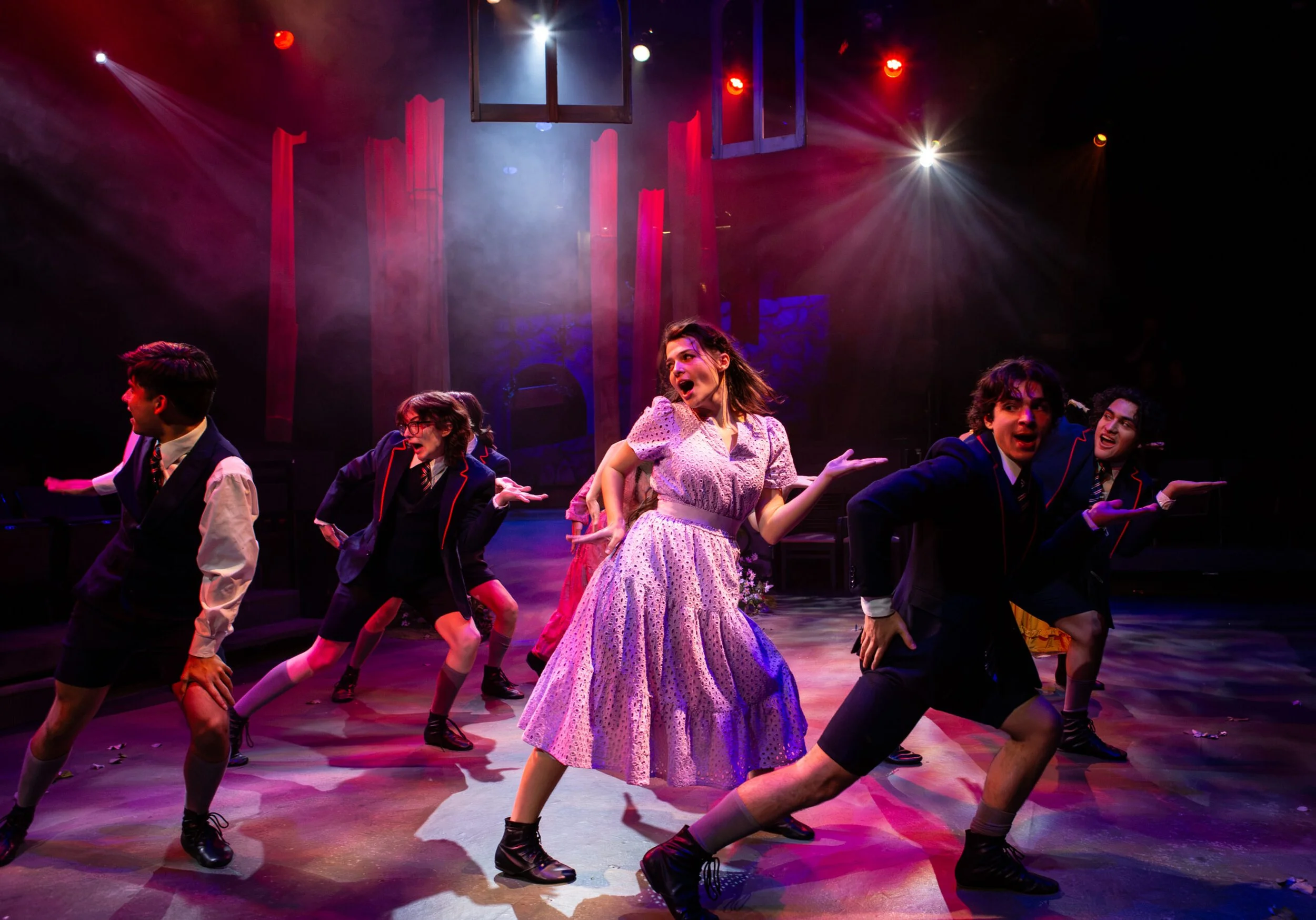
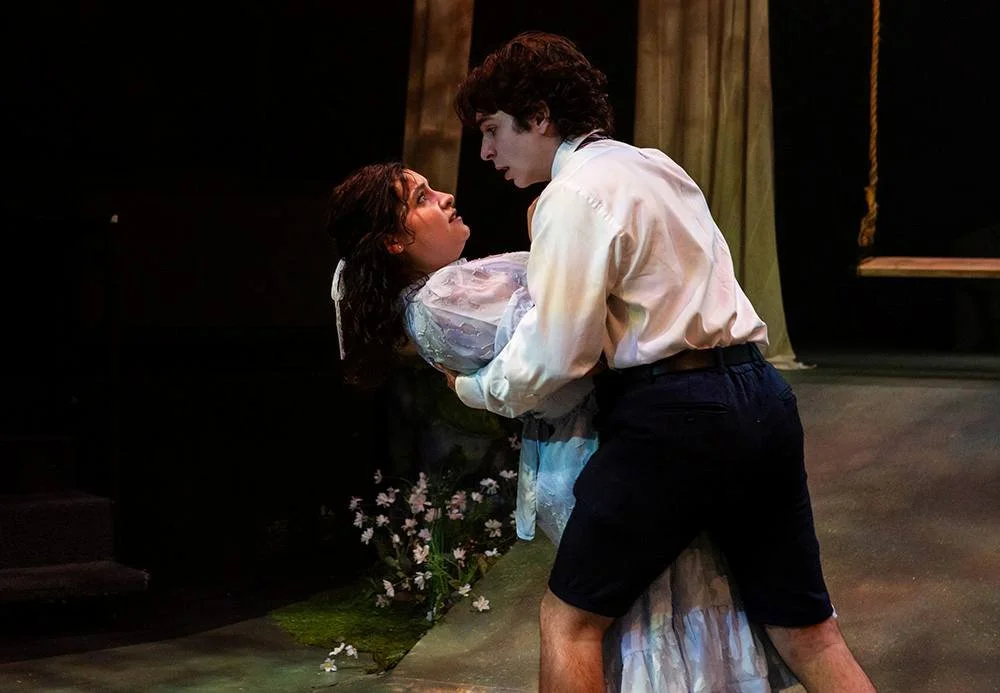
Produced in collaboration with the University of Texas at Arlington, the production brings emerging artists into Theatre Three’s professional arena, giving the musical’s restless youthfulness an added authenticity. Gisela Garcia makes Wendla’s curiosity visible. She tugs at her dress and carries herself with the giddiness of a girl whose eyes still widen at the world around her. Dominic Norris gives Melchior an entirely different physical vocabulary. His posture is upright and his voice carries an authority that rarely cracks. He moves like a young man accustomed to having the answer, even when experience is about to prove otherwise.
Their differences make their eventual intimacy particularly compelling.
The Broadway production became known partly for its sexual frankness, but Gray’s staging is less concerned with provocation. Intimacy coordinator Madison Claire Fountain told me that she and Gray carefully considered a scene whose written language can feel coercive. Wendla hesitates verbally while Melchior continues pressing forward. The licensed script itself preserves that uncomfortable tension before eventually giving Wendla greater physical agency.
Gray and Fountain allow that agency to arrive through the actors’ bodies. Garcia’s Wendla guides Melchior’s hands. The two watch each other and establish trust as the encounter develops. There is still uncertainty because these are two adolescents navigating something they barely understand, but both remain active participants in the moment. This type of distinction matters.
The scene retains an innocence that makes its aftermath even crueler. The real obscenity is not adolescent desire, but rather the adults who have left them unprepared for it.
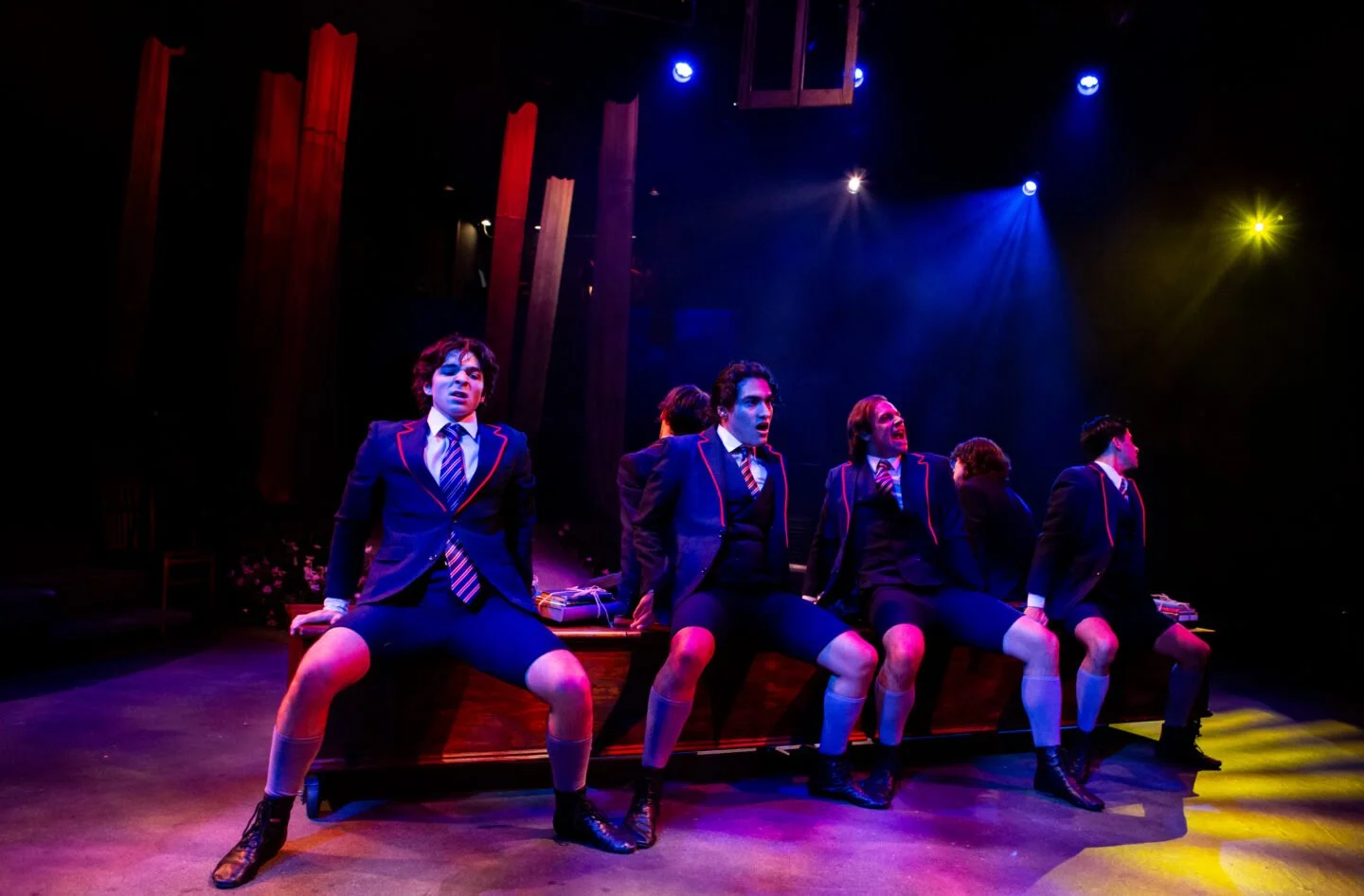
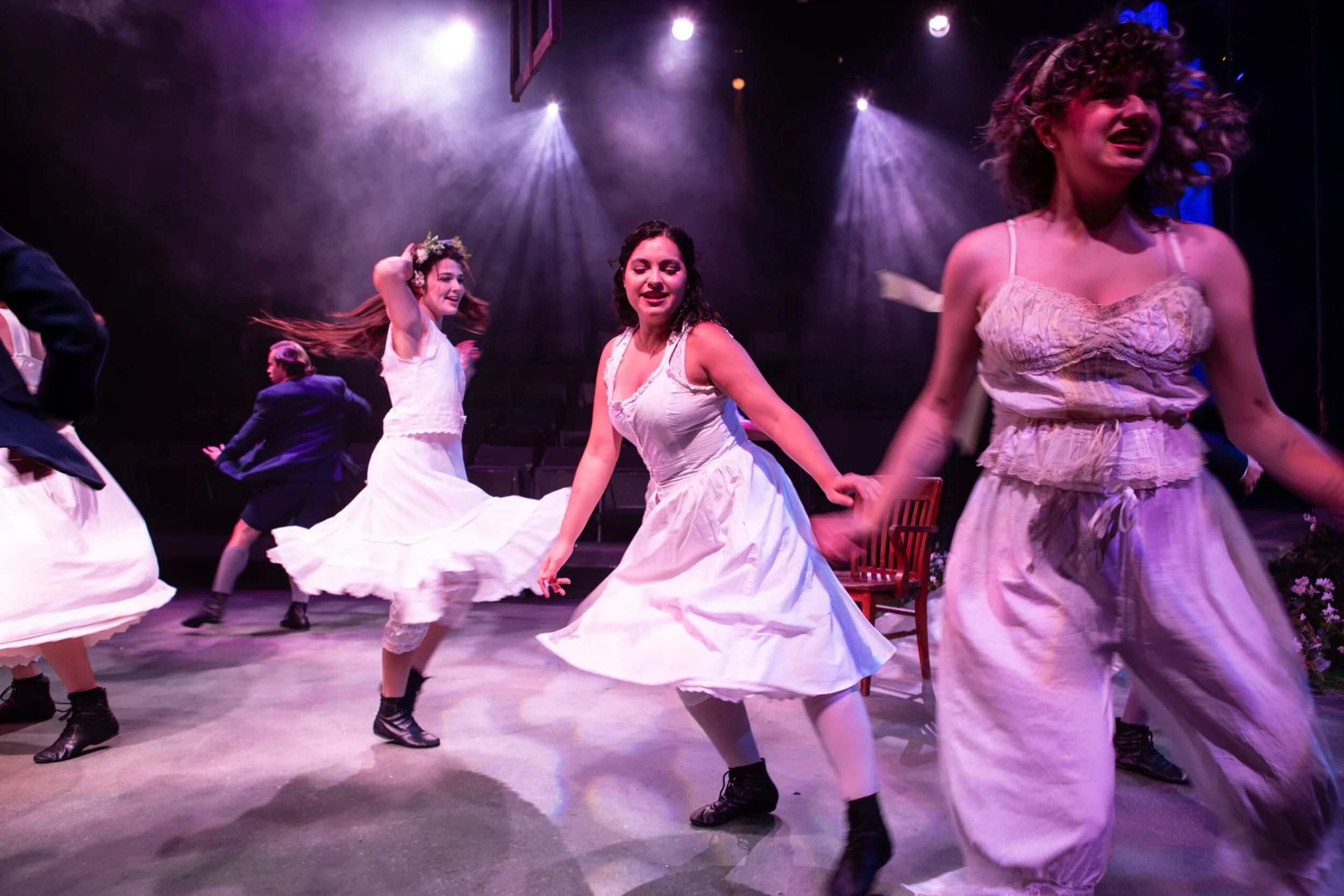
J. Austin Eyer’s choreography similarly refuses to treat these young people as museum pieces from another Spring Awakening (thank goodness). The movement feels restless and beauitfully unpredictable. During numbers such as “The Bitch of Living,” bodies seem unable to contain what is happening inside them. “Touch Me” takes that physical language somewhere more exploratory.
Eyer doesn’t restrict attraction to tidy boy-girl pairings as most would expect. Boys move with boys, girls with girls, and bodies weave among them all without demanding that every touch become a declaration of identity. It feels appropriate for characters discovering their desires—even if they do not possess the vocabulary to define them.
Theatre Three’s intimate arena makes that physicality especially potent. Gray and her creative team use nearly every available corner. Actors appear beside us, in front of us, sometimes behind us, while movement spills around the playing space and the audience rarely gets the luxury of observing from a comfortable distance. Even the musicians inhabit the world rather than disappearing into a pit. Piano, guitar and Hardwick’s violin remain visible in their corner throughout the evening. Watching live music breathe alongside the actors gives Sheik’s score a satisfying pulse.
The scenic world operates like a dream. Smoky lighting softens the edges of the meadow while the swing suggests the childhood these characters are rapidly leaving behind. Draped fabric periodically transforms the space, sometimes enclosing bodies and elsewhere obscuring them. Its precise symbolism is occasionally elusive, but perhaps that slipperiness suits a musical populated by young people trying to understand sensations they cannot yet name.
Perhaps this is why Spring Awakening still lands. Its profanity and sexuality may no longer shock as they once did (after all, it’s 2026), but its silences remain crowded with uncertainty, and full of questions no one is willing to answer.
When young people begin asking questions and the adults refuse to answer, they will eventually find those answers themselves.
The tragedy is what they may learn too late.
WHEN: September 10-27, 2026
WHERE: 2688 Laclede St, Dallas
WEB: www.theatre3dallas.com